To save content items to your account,
please confirm that you agree to abide by our usage policies.
If this is the first time you use this feature, you will be asked to authorise Cambridge Core to connect with your account.
Find out more about saving content to .
To save content items to your Kindle, first ensure no-reply@cambridge.org
is added to your Approved Personal Document E-mail List under your Personal Document Settings
on the Manage Your Content and Devices page of your Amazon account. Then enter the ‘name’ part
of your Kindle email address below.
Find out more about saving to your Kindle.
Note you can select to save to either the @free.kindle.com or @kindle.com variations.
‘@free.kindle.com’ emails are free but can only be saved to your device when it is connected to wi-fi.
‘@kindle.com’ emails can be delivered even when you are not connected to wi-fi, but note that service fees apply.
Restaurants may be important settings for interventions to reduce children’s energy intake. The objective of this study was to test the impact of a parent-focused social marketing campaign to promote healthy children’s meals on calories ordered and consumed by children at quick-service restaurants (QSR).
Design:
Using a repeated cross-sectional study design, two urban communities were randomised to intervention (IN) v. control (C) condition. A community-wide social marketing campaign was implemented in the IN community to empower Black and Latinx mothers who frequent QSR (priority population) to select healthier options for their child.
Setting:
Data were collected in 2016 at QSR located within the communities pre- and post-IN and analysed in 2017.
Participants:
Parents (n 1686; n 819 and n 867 for I and C conditions, respectively) were recruited after placing their QSR order; a survey, receipt and their child’s leftovers were collected.
Results:
Calories ordered did not differ significantly between the IN and C conditions (changeadj = –146·4 kJ (–35·0 kcal); 95 % CI –428·0 kJ (–102·3 kcal), 134·6 kJ (32·2 kcal)). In a sub-analysis of only the priority audience, children in the IN community ordered significantly fewer calories compared to C children in unadjusted models (changeunadj = –510·4 kJ (–122·0 kcal); 95 % CI –1013·4 kJ (–242·2 kcal), –7·5 kJ (–1·8 kcal)), but the trend did not persist after adjusting for covariates (changeadj = –437·2 kJ (–104·5 kcal); 95 % CI –925·5 kJ (–221·2 kcal), 50·6 kJ (12·1 kcal)). Calories consumed followed similar trends.
Conclusion:
The campaign did not significantly reduce children’s QSR calories ordered or consumed. However, a quantitatively important mean reduction in calories was suggested among the priority audience, indicating potential for community-wide promotion of healthful children’s meals.
Although compelling evidence from observational studies supports a positive association between consumption of cereal fibre and CVD risk reduction, randomised controlled trials (RCT) often target viscous fibre type as the prospective contributor to lipid lowering to reduce CVD risk. The objective of our study is to compare the lipids-lowering effects of viscous dietary fibre to non-viscous, cereal-type fibre in clinical studies. RCT that evaluated the effect of viscous dietary fibre compared with non-viscous, cereal fibre on LDL cholesterol and alternative lipid markers, with a duration of ≥ 3 weeks, in adults with or without hypercholesterolaemia were included. Medline, EMBASE, CINAHL and the Cochrane Central Register were searched through October 19, 2021. Data were extracted and assessed by two independent reviewers. The generic inverse variance method with random effects model was utilised to pool the data which were expressed as mean differences (MD) with 95 % CI. Eighty-nine trials met eligibility criteria (n 4755). MD for the effect of viscous dietary fibre compared with non-viscous cereal fibre were LDL cholesterol (MD = –0·26 mmol/l; 95 % CI: –0·30, −0·22 mmol/l; P < 0·01), non-HDL cholesterol (MD = –0·33 mmol/l; 95 % CI: –0·39, −0·28 mmol/l; P < 0·01) and Apo-B (MD = –0·04 g/l; 95 % CI: –0·06, −0·03 g/l; P < 0·01). Viscous dietary fibre reduces LDL cholesterol and alternative lipid markers relative to the fibre from cereal sources, hence may be a preferred type of fibre-based dietary intervention targeting CVD risk reduction.
Prior studies have found evidence of a relationship between food insecurity and functional limitations among older populations in the USA.
Design:
This is a longitudinal investigation of food security in relation to functional limitations, assessed as Activities of Daily Living (ADL) and Instrumental Activities of Daily Living (IADL) scores.
Setting:
The Greater Boston, MA area.
Participants:
1461 Boston Puerto Rican Health study participants, predominantly (70·5 %) female and aged 57·1 years (sd ± 7·6) at baseline followed for 6·2 (sd ± 0·98) years.
Results:
In cross-sectional analysis at baseline, participants reporting severe food insecurity had greater functional limitations (higher ADL; β = 2·34; 95 % CI (1·48, 3·19)) and higher IADL (β = 1·17, 95 % CI (0·68, 1·65)) compared with food secure participants. In longitudinal linear mixed models, severely food insecure participants at baseline had greater functional limitations over 5 years, as assessed by ADL (β = 1·74; 95 % CI (0·95, 2·53); P < 0·001) and IADL (β = 0·93, 95 % CI (0·48, 1·38)) compared with food secure participants. However, baseline food security did not significantly alter the 5-year trajectory in ADL (P-interaction between baseline food security and time for ADL and IADL = 0·41 and 0·47, respectively).
Conclusions:
In this cohort of Boston area Puerto Rican adults, those who are food insecure had consistently higher ADL and IADL scores over time, compared with those who are food secure. Baseline food security did not appear to alter the trajectory in ADL or IADL score.
Low intake or tissue concentrations of the n-6 PUFA, especially to the major n-6 PUFA linoleic acid (LA), and low exercise cardiac power (ECP) are both associated with CVD risk. However, associations of the n-6 PUFA with ECP are unknown. The aim of the present study was to explore cross-sectional associations of the serum total n-6 PUFA, LA, arachidonic acid (AA), γ-linolenic acid (GLA) and dihomo-γ-linolenic acid (DGLA) concentrations with ECP and its components. In total, 1685 men aged 42–60 years from the Kuopio Ischaemic Heart Disease Risk Factor Study and free of CVD were included. ANCOVA was used to examine the mean values of ECP (maximal oxygen uptake (VO2max)/maximal systolic blood pressure (SBP)) and its components in quartiles of the serum total and individual n-6 PUFA concentrations. After multivariable adjustments, higher serum total n-6 PUFA concentration was associated with higher ECP and VO2max (for ECP, the extreme-quartile difference was 0·77 ml/mmHg (95 % CI 0·38, 1·16, Pfor trend across quartiles < 0·001) and for VO2max 157 ml/min (95 % CI 85, 230, Pfor trend < 0·001), but not with maximal SBP. Similar associations were observed with serum LA concentration. Higher serum AA concentration was associated with higher ECP but not with VO2max or maximal SBP. The minor serum n-6 PUFA GLA and DGLA were associated with higher maximal SBP during exercise test and DGLA also with higher VO2max but neither with ECP. In conclusion, especially LA concentration was associated with higher ECP. This may provide one mechanism for the cardioprotective properties of, especially, LA.
Vitamin E is an important nutrient from the earliest stages of life. It plays key roles as an antioxidant and in the maintenance of the immune system, among others. Vitamin E deficiency (VED), which occurs more frequently in children, is rarely addressed in the literature. This narrative review aims to summarise the chemistry, biology, serum indicators and clinical trials that have evaluated the impact of fortification and other relevant aspects of vitamin E, in addition to the prevalence of its deficiency, in children worldwide. Vitamin E intake in recommended amounts is essential for this nutrient to perform its functions in the body. Serum α-tocopherol is the most widely used biochemical indicator to assess the prevalence of VED. VED has been associated with symptoms secondary to fat malabsorption and may lead to peripheral neuropathy and increased erythrocyte haemolysis. Reduced concentrations of α-tocopherol may be caused by the combination of diets with low amounts of vitamin E and inadequate consumption of fats, proteins and calories. The lowest prevalence of VED was found in Asia and the highest in North America and Brazil. High proportions of VED provide evidence that this nutritional deficiency is a public health problem in children and still little addressed in the international scientific literature. The planning, evaluation and implementation of health policies aimed at combatting VED in the paediatric population are extremely important.
Marketing influences consumers’ dietary purchases. However, little is known about marketing environments in Supplemental Nutrition Assistance Program (SNAP)-authorised stores. The present study explored SNAP-authorised store marketing environments in Louisiana by rurality, store ownership and store type (n 42). Sampling methods were designed to include randomly selected stores in each geographic area of the state. The GroPromo was used to measure placement, promotion, and child-focused aspects of marketing strategies used for healthier (fruits and vegetables) and less healthy products (chips, candy, sugar-sweetened beverages, child-focused cereal) in medium- and high-prominence marketing areas. In using multivariate analysis of variance (MANOVA) (P < 0⋅05) for data analysis, variations in GroPromo scores were found among SNAP-authorised stores by rurality (P < 0⋅05) and store ownership (P < 0⋅001); no differences were found by store type (P > 0⋅05). Future research, practice and policy strategies are required to understand the influence of marketing environments on SNAP participants’ dietary quality and to design responsive public health interventions.
The sulphur amino acids methionine (Met) and cysteine (Cys) and their derivative taurine (Tau) are metabolically active molecules with interlinked roles in nutritional requirements. Deficiencies in these nutrients are linked to poor growth and health; however, the impacts of these deficiencies on organ structure and function are largely unknown. This study examined the effects of dietary Met, Cys and Tau fed at different levels on yellowtail kingfish (YTK) liver histology and surface colour, plasma biochemistry and posterior intestine histology. Samples were collected from two dose–response feeding trials that quantified (1) the Tau requirement and sparing effect of Met by feeding YTK diets containing one of seven levels of Tau at one of two levels of Met and (2) the Met requirement and sparing effect of Cys by feeding YTK diets containing one of five levels of Met at one of two levels of Cys. YTK fed inadequate levels of dietary Met, Cys and Tau exhibited thicker bile ducts, less red livers, more intestinal acidic goblet cell mucus and supranuclear vacuoles and less posterior intestinal absorptive surface area. Further, thicker bile ducts correlated with less red livers (a*, R), whereas increased hepatic fat correlated with a liver yellowing (b*). Our results indicate a shift towards histological properties and functions indicative of improved intrahepatic biliary condition, posterior intestinal nutrient absorption and homoeostasis of YTK fed adequate amounts of Met, Cys and Tau. These findings may assist in formulating aquafeed for optimised gastrointestinal and liver functions and maintaining good health in YTK.
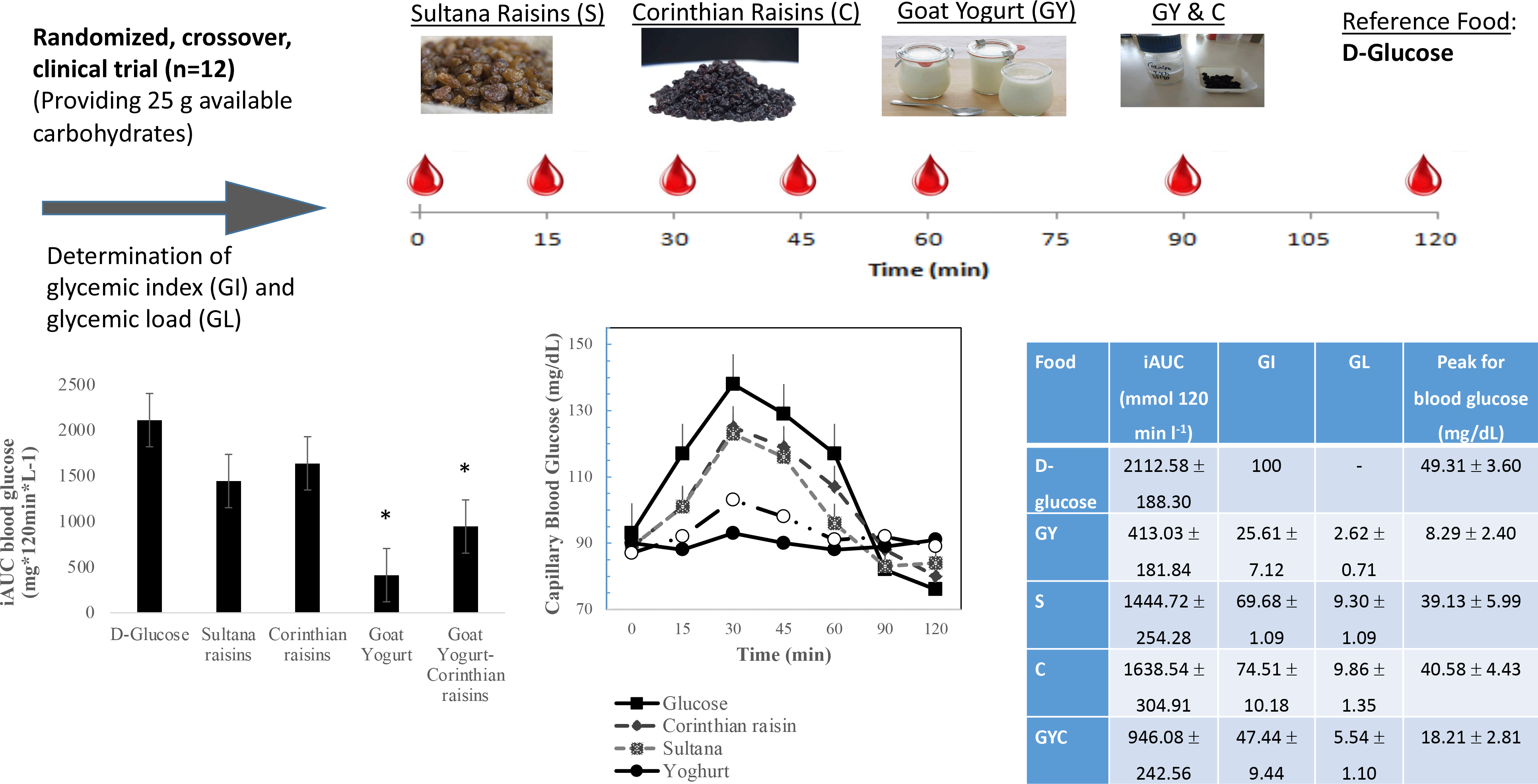
Goat milk yogurt (GMY) and raisins are popular foods with a favourable nutrient profile. Our aim was to determine the glycaemic index (GI) and postprandial responses to GMY-containing angiotensin-converting enzyme inhibitory (ACE-I) peptides carrying the RPKHPINHQ isracidin fragment and two Greek raisin varieties in an acute feeding setting. A total of twelve healthy participants (four male and eight female) consumed breakfast study foods containing 25 g available carbohydrate on seven occasions over a 3- to 9-week period: food 1: D-glucose (25 g) served as the control and was consumed on three separate occasions; food 2: GMY (617·28 g); food 3: Corinthian raisins (37·76 g); food 4: Sultana raisins (37·48 g) and food 5: GMY & C (308·64 g GMY and 18·88 g C). Postprandial glucose was measured over a 2 h period for the determination of GI and glycaemic load (GL). Subjective appetite ratings (hunger, fullness and desire to eat) were assessed by visual analogue scales (100 mm) at 0–120 min. Blood pressure (systolic and diastolic; BP) was measured at baseline and 120 min. GMY provided low GI (26), C and S provided high GI/low GL (75/10 and 70/9, respectively) and GMYC provided low GI (47) values on glucose scale compared with D-glucose. Peak blood glucose rise was significantly lower only for GMY and GMYC compared with reference food (D-Glucose), as well as C and S (Pfor all < 0·05). No differences were observed between test foods for fasting glucose, BP and subjective appetite. In conclusion, GMY and GMYC attenuated postprandial glycaemic responses, which may offer advantages to glycaemic control.
To evaluate the utility of three validated food responsiveness scales in measuring recall of, and responsiveness to, food marketing exposure on social media.
Design:
Cross-sectional survey among adolescents and adults who used the social media platform Twitch.tv (Twitch). Responsiveness to food marketing was self-reported as craving or purchasing any brands participants observed on Twitch. Participants completed three validated scales of food responsiveness: the revised 18-question Three Factor Eating Questionnaire (TFEQ), the external eating subscale of the Dutch Eating Behavior Questionnaire (DEBQ) and the External Food Cue Responsiveness (EFCR) scale. Adjusted linear regression models assessed the predictive ability of each scale on recall and responsiveness outcomes.
Setting:
Online survey.
Participants:
Five hundred and sixty-eight Twitch users (90·1 % male, 60·6 % White, 43·7 % aged 18–24, 25·9 % under 18).
Results:
In separate adjusted linear regression models, scores on the TFEQ were not related to any outcome, while DEBQ scores related to product cravings (OR: 1·10, 95 % CI 1·01, 1·19, P = 0·02). In contrast, scores on the EFCR scale were significantly associated with higher brand recall (incident rate ratio: 1·42, 95 % CI 1·20, 1·68, P < 0·001), product craving (OR: 3·93, 95 % CI 2·22, 7·17, P < 0·001) and purchasing behaviour (OR: 3·97, 95 % CI 1·99, 8·26, P < 0·001). A subset of three EFCR scale items related to influencer marketing were similarly associated with each outcome with greater precision in the point estimates than the overall EFCR.
Conclusions:
The EFCR scale predicted recall of and responsiveness to food marketing via Twitch, suggesting its utility in monitoring the effects of food marketing on social media.
Child malnutrition is the leading public health problem in Sub-Saharan Africa, resulting in poor health and economic losses. Ethiopia has one of the highest child undernutrition rates in the world that occurs to multifaceted factors, including food insecurity. Thus, we performed a cross-sectional study to assess the prevalence and risk factors for child undernutrition in largely food insecure areas of Ethiopia. Data were collected from 354 mother–child pairs from the Siraro district. Both bivariate and multivariate logistic regression was used for statistical analysis. Variables with a P-value of <0⋅05 in multivariate analysis were used to detect statistical significance at a 95 % confidence level. About 67 % of households are food insecure. The prevalence of stunting wasting and underweight were 42⋅7, 9⋅9 and 27⋅7 %, respectively. Female gender, higher age of the child (12–23 months v. 6–11 months), living in a household with five or more siblings, not getting therapeutic zinc supplement at least once, inadequate diet diversity, lack of growth monitoring service, and maternal own income increases the likelihood of child undernutrition. It can be concluded that child undernutrition is a severe public health problem in the study area. Improving primary healthcare services related to zinc supplementation, growth monitoring and promotion, and improving infant and child feeding practices can be considered as a strategy to address the problem.
To examine Hb level and anaemia status among infants under 6 months of age in rural China.
Design:
A cross-sectional survey collected data among infants under 6 months and their primary caregivers in Sichuan, China. Anaemia was defined using both the WHO and China Pediatrics Association thresholds. Multivariable linear regression was used to identify relevant factors among two age groups (<4 months; 4–5 months).
Setting:
Eighty townships were selected in Sichuan, China from November to December 2019.
Participants:
Nine hundred and forty-two infants under 6 months, while Hb level was tested for 577 infants.
Results:
The overall mean (±sd) Hb level was 106·03 (± 12·04) g/l. About 62·6 % (95 % CI 58·5, 66·6) of sample infants were anaemic using the WHO threshold, and 20·5 % (95 % CI 17·3, 24·1) were anaemic using the China Pediatrics Association thresholds. Anaemia rates rose with increasing age in months. Multivariable linear regressions revealed that lower Hb levels were significantly associated with lower birth weight (<4 months: β = 4·14, 95 % CI 0·19, 8·08; 4–5 months: β = 6·60, 95 % CI 2·94, 10·27) and delivery by caesarean section (<4 months: β = −4·64, 95 % CI −7·79, −1·49; 4–5 months: β = −4·58, 95 % CI −7·45, −1·71).
Conclusion:
A large share of infants under 6 months in rural western China are anaemic. Infants with low birth weight and caesarean delivered should be prioritised for anaemia testing. Future studies should move the point of focus forward to at least 4 months of age and examine the link between caesarean section and anaemia to promote health and development in infancy.
The relationship between vitamin B12 and gestational diabetes mellitus (GDM) remains controversial. To comprehensively evaluate the relationship between vitamin B12 and GDM, and to provide more information on GDM prevention, this study provides a systematic review and meta-analysis of vitamin B12 and GDM. As of September 22, 2021, 304 articles were searched in PubMed, Web of Science, EMBASE, and Cochrane databases, of which 15 studies met the inclusion criteria. Results presented there was no association between maternal vitamin B12 concentration during the first trimester with GDM, however, low vitamin B12 concentration in the second or third trimester of pregnancy was related to an increased risk of GDM. Compared with the non-GDM group, the vitamin B12 concentration in the GDM group was remarkably decreased (MD: –10·79; 95%CI: –21·37, –0·21), and vitamin B12 deficiency increased the risk for GDM (OR: 1·59; 95%CI: 1·10, 2·29). These effects were more significant among Asians. In addition, an increased ratio of high folate to low vitamin B12 in serum also increased the risk of GDM (OR: 1·87; 95% CI: 1·46, 2·41). These results suggest that more vitamin B12 may need to be provided during pregnancy.
Amino acids are an essential part of parenteral nutrition. This study aimed to determine the serum profile of amino acids and their loss in urine in patients with long-term home parenteral nutrition (HPN) during 12 h of infusion in comparison with similar parameters in the remaining 12 h as well as in healthy participants. We enrolled forty-five patients with long-term HPN for 6–75 (median, 33) months. The indication for HPN was short bowel syndrome secondary to radical resection of the small intestine following complications of Crohn’s disease. HPN was administered via two-chamber all-in-one bags prepared in a hospital pharmacy overnight for 12 h each day. The average dose of amino acids, carbohydrates and fats administered was 1·5, 3·4 and 0·68 g/kg per d, respectively, at an infusion rate of 0·11, 0·28 and 0·06 g/kg per h, respectively. The levels of essential amino acids in the serum of the patients were not significantly different from those in healthy individuals; however, of the non-essential amino acids, cystine and glutamine levels were lower and glycine and ornithine levels were higher in the patients (P < 0·05). Excretion of amino acids in the urine during 12 h of infusion at an infusion rate of 0·11 g/kg per h was 301 mg, while it was 104 mg during the remaining 12 h (P < 0·0001). Our patients on long-term HPN had a normal serum profile of essential amino acids. The total urinary excretion of amino acids during 12 h of infusion accounted for only 0·34 % (0·23–0·46) of the administered dose.
The role of dietary factors in osteoporotic fractures (OFs) in women is not fully elucidated. We investigated the associations between incidence of OF and dietary calcium, magnesium and soy isoflavone intake in a longitudinal study of 48 584 postmenopausal women. Multivariable Cox regression was applied to derive hazard ratios (HRs) and 95 % confidence intervals (CIs) to evaluate associations between dietary intake, based on the averages of two assessments that took place with a median interval of 2⋅4 years, and fracture risk. The average age of study participants is 61⋅4 years (range 43⋅3–76⋅7 years) at study entry. During a median follow-up of 10⋅1 years, 4⋅3 % participants experienced OF. Compared with daily calcium intake ≤400 mg/d, higher calcium intake (>400 mg/d) was significantly associated with about a 40–50 % reduction of OF risk among women with a calcium/magnesium (Ca/Mg) intake ratio ≥1⋅7. Among women with prior fracture history, high soy isoflavone intake was associated with reduced OF risk; the HR was 0⋅72 (95 % CI 0⋅55, 0⋅93) for the highest (>42⋅0 mg/d) v. lowest (<18⋅7 mg/d) quartile intake. This inverse association was more evident among recently menopausal women (<10 years). No significant association between magnesium intake and OF risk was observed. Our findings provide novel information suggesting that the association of OF risk with dietary calcium intake was modified by Ca/Mg ratio, and soy isoflavone intake was modified by history of fractures and time since menopause. Our findings, if confirmed, can help to guide further dietary intervention strategies for OF prevention.
We aimed to examine the association between the quantity and quality of dietary fat in early pregnancy and gestational diabetes mellitus (GDM) risk. In total, 1477 singleton pregnant women were included from Sichuan Provincial Hospital for Women and Children, Southwest China. Dietary information was collected by a 3-d 24-h dietary recall. GDM was diagnosed based on the results of a 75-g, 2-h oral glucose tolerance test at 24–28 gestational weeks. Log-binomial models were used to estimate relative risks (RR) and 95% CI. The results showed that total fat intake was positively associated with GDM risk (Q4 v. Q1: RR = 1·40; 95 % CI 1·11, 1·76; Ptrend = 0·001). This association was also observed for the intakes of animal fat and vegetable fat. After stratified by total fat intake (< 30 %E v. ≥ 30 %E), the higher animal fat intake was associated with higher GDM risk in the high-fat group, but the moderate animal fat intake was associated with reduced risk of GDM (T2 v. T1: RR = 0·65; 95 % CI 0·45, 0·96) in the normal-fat group. Vegetable fat intake was positively associated with GDM risk in the high-fat group but not in the normal-fat group. No association between fatty acids intakes and GDM risk was found. In conclusion, total fat, animal and vegetable fat intakes were positively associated with GDM risk, respectively. Whereas when total fat intake was not excessive, higher intakes of animal and vegetable fat were likely irrelevant with increased GDM risk, even the moderate animal fat intake could be linked to lower GDM risk.
The study was to evaluate the reproducibility and validity of the FFQ for residents of northeast China. A total of 131 participants completed two FFQ (FFQ1 and FFQ2) within a 3-month period, 125 participants completed 8-d weighed diet records (WDR) and 112 participants completed blood biomarker testing. Reproducibility was measured by comparing nutrient and food intake between FFQ1 and FFQ2. The validity of the FFQ was assessed by WDR and the triad method. The Spearman correlation coefficients (SCC) and intraclass correlation coefficients (ICC) for reproducibility ranged from 0·41 to 0·69 (median = 0·53) and from 0·18 to 0·68 (median = 0·53) for energy and nutrients and from 0·37 to 0·73 (median = 0·59) and from 0·33 to 0·86 (median = 0·60) for food groups, respectively. The classifications of same or adjacent quartiles ranged from 73·64 to 93·80 % for both FFQ. The crude SCC between the FFQ and WDR ranged from 0·27 to 0·55 (median = 0·46) for the energy and nutrients and from 0·26 to 0·70 (median = 0·52) for food groups, and classifications of the same or adjacent quartiles ranged from 65·32 to 86·29 %. The triad method indicated that validation coefficients for the FFQ were above 0·3 for most nutrients, which indicated a moderate or high level of validity. The FFQ that was developed for residents of northeast China for the Northeast Cohort Study of China is reliable and valid for assessing the intake of most foods and nutrients.
Compared with an omnivorous Western diet, plant-based diets containing mostly fruits, vegetables, grains, legumes, nuts and seeds, with restricted amounts of foods of animal origin, are associated with reduced risk and severity of COVID-19. Additionally, inflammatory immune responses and severe acute respiratory symptoms of COVID-19, including pulmonary oedema, shortness of breath, fever and nasopharyngeal infections, are associated with Na toxicity from excessive dietary Na. High dietary Na is also associated with increased risks of diseases and conditions that are co-morbid with COVID-19, including chronic kidney disease, hypertension, stroke, diabetes and obesity. This article presents evidence that low dietary Na potentially mediates the association of plant-based diets with COVID-19 prevention. Processed meats and poultry injected with sodium chloride contribute considerable amounts of dietary Na in the Western diet, and the avoidance or reduction of these and other processed foods in whole-food plant-based (WFPB) diets could help lower overall dietary Na intake. Moreover, high amounts of K in plant-based diets increase urinary Na excretion, and preagricultural diets high in plant-based foods were estimated to contain much lower ratios of dietary Na to K compared with modern diets. Further research should investigate low Na in WFPB diets for protection against COVID-19 and co-morbid conditions.