To save content items to your account,
please confirm that you agree to abide by our usage policies.
If this is the first time you use this feature, you will be asked to authorise Cambridge Core to connect with your account.
Find out more about saving content to .
To save content items to your Kindle, first ensure no-reply@cambridge.org
is added to your Approved Personal Document E-mail List under your Personal Document Settings
on the Manage Your Content and Devices page of your Amazon account. Then enter the ‘name’ part
of your Kindle email address below.
Find out more about saving to your Kindle.
Note you can select to save to either the @free.kindle.com or @kindle.com variations.
‘@free.kindle.com’ emails are free but can only be saved to your device when it is connected to wi-fi.
‘@kindle.com’ emails can be delivered even when you are not connected to wi-fi, but note that service fees apply.
We have previously demonstrated that calcium plus vitamin D supplementation during adolescent pregnancy reduces the magnitude of transient postpartum bone mass loss. In the present post hoc analysis, we further investigated the effect of calcium plus vitamin D supplementation during pregnancy in hip geometry throughout one year postpartum in Brazilian adolescents with low daily calcium intake (∼600 mg/d). Pregnant adolescents (14–19 years) were randomly assigned to receive calcium (600 mg/d) plus vitamin D3 (200 μg/d) or a placebo from 26 weeks of gestation until parturition. Dual-energy X-ray absorptiometry images were obtained at 5 (n 30 and 26 for calcium plus vitamin D and placebo, respectively), 20 (n 26 and 21) and 56 (n 18 and 12) weeks postpartum, and hip geometry parameters were analysed by Advanced Hip Assessment software. The effects of the intervention, time point and their interaction were assessed using repeated-measures mixed-effects models. No significant intervention effects or intervention × time interactions were observed on hip geometry parameters (P > 0·05). Time effects were observed in cross-sectional area, cross-sectional moment of inertia and section modulus parameters with decreases from the 5th to the 20th week postpartum followed by recovery from the 20th to the 56th week (P < 0·05). Our findings indicate that the postpartum period is associated with transient changes in the hip geometry of lactating adolescent mothers, regardless of the low calcium intake and the supplementation offered during pregnancy, suggesting that a physiological adaptation of these adolescents to low calcium intake is at play.
The increasing demand for food and especially proteins leads to the search for alternative protein sources. Meat co-products, which are available but little used in human food, provide a potential solution to this challenge. The present study aimed to evaluate the nutritional quality of two beef protein ingredients (greasy greaves recovered proteins (GGRP) and water recovered proteins (WRP)), both co-products of the fat rendering process. Their true ileal digestibility (TID), digestible indispensable amino acid score (DIAAS) and kinetics of plasma amino acids (AA) were measured in ten growing pigs, each fed the two co-products and a protein-free diet. Titanium dioxide was used as an indigestible marker. Digesta samples were collected for 9 h after meal ingestion, and blood samples were collected at ten time points during the same period. Total nitrogen (N) and AA contents were determined. Data were statistically analysed using linear mixed models. The TID of total N was not different between WRP and GGRP (81–84 %, P > 0·05). The first-limiting AA was Trp for both ingredients, with a DIAAS much higher for GGRP than for WRP (74 and 10 % for adults, respectively; P < 0·001). Postprandial plasma AA concentration peaked earlier for WRP (3 h) than for GGRP (5 h). Plasma concentrations of total and essential AA were higher (P < 0·001) with GGRP diet than WRP diet. Overall, GGRP has a nutritional quality suitable to meet the needs of adults for AA, while WRP needs to be supplemented with other protein sources to fulfil the dietary requirements.
Multiple reviews have examined the impact of nutritional interventions in patients with burn injuries; however, discrepancies among results cast doubt about their validity. We implemented this review to assess the impact of various nutritional interventions in adult patients with burn injuries. We conducted a thorough search of PubMed, Scopus and Web of Science databases until 1 August 2024, to identify relevant meta-analyses of intervention trials, examining the impact of nutritional interventions on burn patients. We adopted the random-effect models to determine the pooled effect sizes while employing the Grading of Recommendations Assessment, Development, and Evaluation (GRADE) to examine evidence certainty. Thirty-three original intervention trials from eleven meta-analyses were entered in our review. Early enteral nutrition could substantially reduce overall mortality (relative risk (RR): 0·36, 95 % CI: 0·19, 0·68, GRADE = moderate certainty), hospital stay (mean difference (MD): −15·3, 95 % CI: −20·4, −10·2, GRADE = moderate certainty) and sepsis risk (RR: 0·23, 95 % CI: 0·11, 0·45, GRADE = moderate certainty). Glutamine showed a notable decrease in the length of hospital stay (MD: −6·23, 95 % CI: −9·53, −2·94, GRADE = low certainty). However, other nutritional interventions, including combined immunonutrition, branched-chain amino acids, fish oil, ornithine α-ketoglutarate and trace elements, did not significantly affect the assessed clinical outcomes. Early enteral nutrition might impose a beneficial effect on mortality, hospital stay length and incidence of sepsis with moderate evidence. Lower length of hospital stay was also seen in burn patients supplemented with glutamine, although the evidence was weak.
Maternal iodine plays a central role in fetal neurodevelopment. It is recommended that pregnant women consume sufficient levels of iodine to accommodate increased need for mother and fetus. We examined associations among prenatal dietary and supplemental iodine intake and infant temperament.
Design:
The PRogramming of Intergenerational Stress Mechanisms (PRISM) study is an ongoing longitudinal pregnancy cohort. Data from 2011 to 2020 were used for this study. Women completed the Block98 FFQ ascertaining prenatal dietary and supplemental iodine intake and the Infant Behavior Questionnaire-Revised at infant age 6 months to ascertain infant temperament (Surgency/Extraversion, Negative Affectivity and Orienting/Regulation).
Setting:
USA.
Participants:
Mother–child dyads (n 892).
Results:
Women were primarily Black/Hispanic Black (44 %) and non-Black Hispanic (35 %) with 46 % reporting household income < $25 000/year. Nearly half had an estimated average requirement (EAR) < 160 µg/d (49 % based on dietary intake; 43 % based on diet and supplements). Girls born to women with an EAR ≥ 160 µg/d compared to girls born to women below this level had higher unadjusted extraversion scores for dietary plus supplemental intake (β = 0·23 (0·13, 0·33)); decreased to β = 0·05 (–0·08, 0·19) after adjusting for covariates. Boys born to women with an EAR ≥ 160 µg/d (based on diet and supplements) as compared to boys born to women below this level had statistically non-significant higher unadjusted negative affective score (β = 0·06 (–0·08, 0·20)) that became significantly lower upon covariate adjustment (β = –1·66 (–1·97, –1·35)).
Conclusions:
A significant proportion of these women reported suboptimal prenatal iodine intake. Suboptimal prenatal iodine intake may have implications for child neurodevelopment evident as early as infancy.
Dietary intake assessment is often complicated by intrinsic bias. This study investigated whether food purchase data could constitute a valid indication of dietary intake, by evaluating the extent to which diet quality as measured by supermarket food purchases is correlated with diet quality as measured by reported dietary intake. We used data from the Supreme Nudge cluster-randomised controlled supermarket trial (n 227). Data were collected at baseline from supermarket purchases (loyalty cards) and a dietary questionnaire (short forty-item FFQ) to compute two scores reflecting diet quality from purchasing data (purchased diet quality) and FFQ (consumed diet quality). Both scores constituted thirteen food groups and could theoretically range from 0 (low diet quality) to 130 (high diet quality). The relationship between purchased diet quality and consumed diet quality was assessed using correlation coefficients and the Bland–Altman limits-of-agreement method. Multiple linear regression was fitted between purchased diet quality and consumed diet quality, adjusted for age, sex, waist circumference, educational level and household size. Consumed and purchased diet qualities were modestly positively correlated (Pearson’s ρ = 0·31, 95 % CI 0·18, 0·42). A positive association from linear regression was found after confounding adjustments (βbaseline = 0·22, 95 % CI 0·10, 0·34). The purchased diet quality was systematically lower than the consumed diet quality. This study found that diet quality as measured by supermarket purchases provided a reasonable indication of diet quality as reported by short-FFQ, albeit modest.
This study aimed to explore the combined effects of serum vitamin-D level and tobacco exposure on the risk of overweight and obesity in children. This cross-sectional study analysed the data of 11 636 children aged 2–17 years from the National Health and Nutrition Examination Surveys database between 2007 and 2018. Univariable and multivariate weighted logistic regression models were used to analyse the associations of serum vitamin-D or cotinine levels with overweight and obesity in children as well as the combined effects of serum vitamin-D and cotinine on the risk of overweight and obesity in children. Subgroup analysis was performed in terms of gender, age, race and household smokers. OR with corresponding 95 % CI was presented. The elevated risk of overweight and obesity in children was found in those with serum vitamin-D < 20 ng/ml (OR = 1·44, 95 % CI: 1·29, 1·61). Also, the odds of overweight and obesity in children was 1·14 (OR = 1·14, 95 % CI: 1·01, 1·29) in children with cotinine ≥ 0·05 ng/ml. Relative to participants with serum vitamin-D ≥ 20 ng/ml and cotinine < 0·05 ng/ml, increased risk of overweight and obesity was identified in those with serum vitamin-D < 20 ng/ml and cotinine < 0·05 ng/ml (OR = 1·45, 95 % CI: 1·26, 1·68) and serum vitamin-D < 20 ng/ml and cotinine ≥ 0·05 ng/ml (OR = 1·62, 95 % CI: 1·38, 1·91). Serum vitamin-D and cotinine exposure had combined effects on the risk of overweight and obesity in children.
Tea is one of the most widely consumed beverages in the world. However, the association between tea and risk of pancreatic adenocarcinoma remains controversial. This study aimed to investigate the causal relationship between tea consumption and risk of pancreatic adenocarcinoma and to explore their mediating effects. The two-sample Mendelian randomisation (MR) analysis showed an inverse causal relationship between tea intake and pancreatic adenocarcinoma (OR: 0·111 (0·02, 0·85), P < 0·04). To examine the mediating effects, we explored the potential mechanisms by which tea intake reduces the risk of pancreatic adenocarcinoma. Based on the oral bioavailability and drug-like properties in Traditional Chinese Medicine Systems Pharmacology database, we selected the main active ingredients of tea. We screened out the fifteen representative targeted genes by Pharmmapper database, and the gene ontology enrichment analysis showed that these targeted genes were related to vascular endothelial growth factor (VEGF) pathway. The two-step MR analysis of results showed that only VEGF-D played a mediating role, with a mediation ratio of 0·230 (0·066, 0·394). In conclusion, the findings suggest that VEGF-D mediates the effect of tea intake on the risk of pancreatic adenocarcinoma.
Growing evidence indicates a link between diet and depression risk. We aimed to examine the association between an inflammatory diet index and depression utilising extensive data from UK biobank cohort. The energy-adjusted dietary inflammation index (E-DII) was calculated to quantify the potential of daily diet, with twenty-seven food parameters utilised. The E-DII scores were classified into two categories (low v. high) based on median value. To mitigate bias and ensure comparability of participant characteristics, propensity score matching was employed. To ascertain the robustness of these associations, sensitivity analyses were conducted. Subgroup analyses were performed to evaluate the consistency of these associations within different subpopulations. Totally, 152 853 participants entered the primary analyses with a mean age of 56·11 (sd 7·98) years. Employing both univariate and multivariate logistic regression models, adjustments were made for varying degrees of confounding factors (socio-demographics, lifestyle factors, common chronic medical conditions including type 2 diabetes and hypertension). Results consistently revealed a noteworthy positive correlation between E-DII and depression. In the context of propensity score matching, participants displaying higher E-DII scores exhibited an increased likelihood of experiencing incident depression (OR = 1·12, 95 % CI: 1·05, 1·19; P = 0·000316). Subgroup analysis results demonstrated variations in these associations across diverse subpopulations. The E-value for the point-estimate OR calculated from the propensity score matching dataset was 1·48. Excluding individuals diagnosed with type 2 diabetes or hypertension, the findings consistently aligned with the positive association in the primary analysis. These findings suggested that consumption of a diet with higher pro-inflammatory potential might associated with an increase of future depression risk.
The associations between obesity and liver diseases are complex and diverse. To explore the causal relationships between obesity and liver diseases, we applied two-sample Mendelian randomisation (MR) and multivariable MR analysis. The data of exposures (BMI and WHRadjBMI) and outcomes (liver diseases and liver function biomarker) were obtained from the open genome-wide association study database. A two-sample MR study revealed that the genetically predicted BMI and WHRadjBMI were associated with non-alcoholic fatty liver disease, liver fibrosis and autoimmune hepatitis. Obesity was not associated with primary biliary cholangitis, liver failure, liver cell carcinoma, viral hepatitis and secondary malignant neoplasm of liver. A higher WHRadjBMI was associated with higher levels of biomarkers of lipid accumulation and metabolic disorders. These findings indicated independent causal roles of obesity in non-alcoholic fatty liver disease, liver fibrosis and impaired liver metabolic function rather than in viral or autoimmune liver disease.
This study aimed to assess the effects of multi-strain probiotics on anthropometric and biochemical measures in Saudi adults with overweight or obesity.
Occupational Health Clinics at King Saud University Medical City, Riyadh, Saudi Arabia.
Participants:
Ninety-three Saudi participants with overweight or obesity were randomly assigned to receive twice-daily doses of either placebo (n 49) or 30 × 109 CFU/g of HEXBIO® containing three Lactobacillus and three Bifidobacterium species (n 44) in a double-blind manner over a 12-week period, respectively. Both groups adhered to a hypoenergetic diet. Anthropometric measurements, glycaemic indices and lipid profiles were evaluated at baseline and post-intervention.
Results:
Following the 12-week intervention, no statistically significant differences were found in all between the probiotic group and placebo group comparisons, except for fat intake, where the group*time interaction showed a significant decrease in favour of the probiotic group (P = 0·02). However, significant within-group reductions were observed in the probiotic group: body weight (–0·9 kg, P = 0·02), HC (–1·5 cm, P = 0·002), energy intake (–387·3 kcal/d, P = 0·002), fasting glucose (–0·7, P = 0·002) and LDL-cholesterol (–0·7, P = 0·02).
Conclusion:
Consumption of multi-strain probiotic supplementation over 12 weeks significantly decreased fat intake in Saudi adults with overweight or obesity, with the probiotic group highlighting improved anthropometric and biochemical parameters. Further research is needed to evaluate the long-term clinical significance of this dietary practice and whether it has a meaningful impact on overall health beyond the placebo effect.
We aimed at quantifying the effects of different tea and coffee on weight loss in adults. We searched PubMed, Scopus, CENTRAL and grey literature sources to July 2024. The study excluded cross-over trials without washout period, those in critically ill patients, pregnant or breast-feeding women, multicomponent interventions and active control groups with tea or coffee. A random-effects network meta-analysis with a Bayesian framework was performed to calculate the mean difference (MD) and 95 % credible intervals (CrIs). The certainty of evidence was rated using the Grading of Recommendations Assessment, Development, and Evaluation approach, and risk of bias was assessed using Cochrane tool. Twenty-two randomised controlled trials with 1710 participants (average intervention duration = 10 weeks) were included. Green tea was effective for weight loss compared with placebo (MD: −1·23 kg, 95 % CrI: −2·45, −0·02; low certainty evidence) or water (MD: −1·61 kg, 95 % CrI: −2·90, −0·35; very low certainty evidence), while other beverages (coffee, decaffeinated coffee, green coffee, black tea and sour tea) were not. Green tea was effective for weight loss compared with water in sensitivity analysis of healthy individuals (MD: −3·31 kg, 95 % CrI: −5·83, −1·04). Based on very low to low certainty evidence, green tea drinking may result in a small weight loss in adults. This study mainly focused on weight loss effects of green tea and coffee, with limited data on other teas. Only five trials had longer intervention durations, suggesting future research on long-term effects. Most trials had high bias risk and low certainty, requiring more high-quality trials.
The incidence of cognitive decline is rising, leading to increased attention on the preventive role of healthy foods on brain function. Previous reviews including primarily observational studies suggested that dietary proteins may improve cognitive performance, but evidence from individual randomised controlled trials (RCT) is less consistent. Therefore, this systematic review examined the long-term effects of dietary proteins from RCT, considering both their amount and type, on cognitive performance (psychomotor speed and attention, executive function, memory and global cognition). Alterations in cerebral blood flow (CBF) – a validated brain vascular function marker – were also considered. A total of 4747 studies were identified through a systematic search, resulting in twenty-three included papers reporting effects on cognitive performance (n = 23) and CBF (n = 3). Improvements were observed in three out of the nine studies that evaluated psychomotor speed which compared a dietary protein intervention with a non-protein or lower-protein control. Of the six beneficial observations on working memory (n = 12), declarative memory (n = 10) and visuospatial memory (n = 10), five were nut interventions from three different trials. Limited studies focusing on global cognition suggested that specific target populations, namely subacute stroke or dementia, may benefit more than healthy individuals from increased dietary protein intake. From the three studies involving CBF, improvements in regional blood flow were associated with most cognitive performance outcomes. The comparative effects of different protein types warrant further investigation. Overall, this review encourages additional research into protein-rich foods or supplements which could potentially prevent or mitigate cognitive decline.
This study evaluates the maintenance of a clinically meaningful weight loss (≥ 5 %) after 12 and 36 months of participation in an intervention to promote fruit and vegetable (FV) consumption. A randomised controlled trial was conducted in a primary health care service. For 7 months, participants in the control group (CG) and in the intervention group (IG) performed guided physical exercise three times/week; the IG also participated in collective activities to promote FV consumption. This study selected participants (n 267) who showed clinically meaningful weight loss after nutritional intervention. Sociodemographic, health and body weight data were collected in a face-to-face interview at baseline (T0) and after intervention (T1). Participants were reassessed after 12 (T2) and 36 months (T3) by telephone interview, and the self-reported weight was corrected. The outcome measures weight changes at three time points: M1, comparing T2 with T1; M2, comparing T3 with T2; and M3, comparing T3 with T1. The generalised estimating equation, adjusted for individual characteristics, was used. Participants in the CG showed an increase of 4·2 kg (P < 0·001) at M1 and 4·6 kg (P < 0·001) at M3, while IG individuals showed an increase of 3·6 kg (P < 0·001) at M1 and 3·8 kg (P < 0·001) at M3. The between-group analyses show the effect of nutritional intervention on the maintenance of weight loss at M2 (P = 0·033). Although CG and IG participants increased in weight, the nutritional intervention was associated with maintenance over the long term. This reveals the importance of the promotion of FV consumption for body weight maintenance.
Community-based management of acute malnutrition (CMAM) relies on a food-based approach. However, a comprehensive assessment of their nutrient composition and its impact on treatment outcomes is currently lacking in the extant literature. This narrative review summarises recent evidence on the efficacy of formulations that contain dairy protein and maintain the density of essential nutrients (type I and type II) in managing uncomplicated acute malnutrition at the community level. The literature used for the evidence synthesis was identified using a two-stage screening process. An electronic search was run on PubMed and Cochrane Library, followed by a backward snowball search to identify efficacy studies. A total of twenty-six efficacy studies involving food formulations used to treat uncomplicated severe and moderate acute malnutrition were identified. The review found that, while more evidence favours the inclusion of dairy in formulations as efficacious in supporting recovery from malnutrition, ambiguity in the conclusive findings between dairy and non-dairy formulations remains due to the varied percentages of dairy protein in different formulations. The type of protein source used in a formulation matters, but other approaches, including fortification, can aid in maintaining the nutrient density of formulations, thereby improving the chances of recovery. However, the inclusion of high amounts of added sugar in therapeutic formulations exceeding the World Health Organization norms is a concern that warrants more attention. Future clinical research should assess outcomes such as lean or fat mass changes to confirm the benefits of using dairy or non-dairy formulations to treat moderate and severe acute malnutrition.
This study compared the efficacy and tolerability of three enteral formulas in critically ill patients with COVID-19 who were ventilated and in the prone position: (a) immunomodulatory (IMM), (b) ω3 and (c) maltodextrins (MD). Primary outcome was the percentage of patients who received both 80 % of their protein and calorie targets at 3 d after enrolment. Secondary, mechanical ventilation-free time, ICU mortality and markers of nutritional status. Tolerance of enteral nutrition was evaluated by diarrhoea and gastroparesis rate. A total of 231 patients were included, primary outcome achieved was in ω3 group (76·5 % v. 59·7 and 35·2 %, P < 0·001) v. IMM and MD groups. Mechanical ventilation-free time was longer in ω3 and MD groups: 23·11 (sd 34·2) h and 22·59 (sd 42·2) h v. 7·9 (sd 22·6) h (P < 0·01) in IMM group. Prealbumin final was 0·203 ± 0·108 g/L and 0·203 ± 0·095 g/L in IMM and ω3 groups v 0·164 ± 0·070 g/L (p < 0·01) MD group. Transferrin were 1·515 ± 0·536 g/L and 1·521 ± 0·500 g/L in IMM and ω3 groups v 1·337 ± 0·483 g/L (p < 0·05) MD group. Increase of lymphocytes was greater in ω3 group: 1056·7 (sd 660·8) cells/mm3v. 853·3 (sd 435·9) cells/mm3 and 942·7 (sd 675·4) cells/mm3 (P < 0·001) in IMM and MD groups. Diarrhoea and gastroparesis occurred in 5·1 and 3·4 %, respectively. The findings of this study indicate that enteral nutrition is a safe and well-tolerated intervention. The ω3 formula compared with IMM and MD did improve protein and calorie targets.
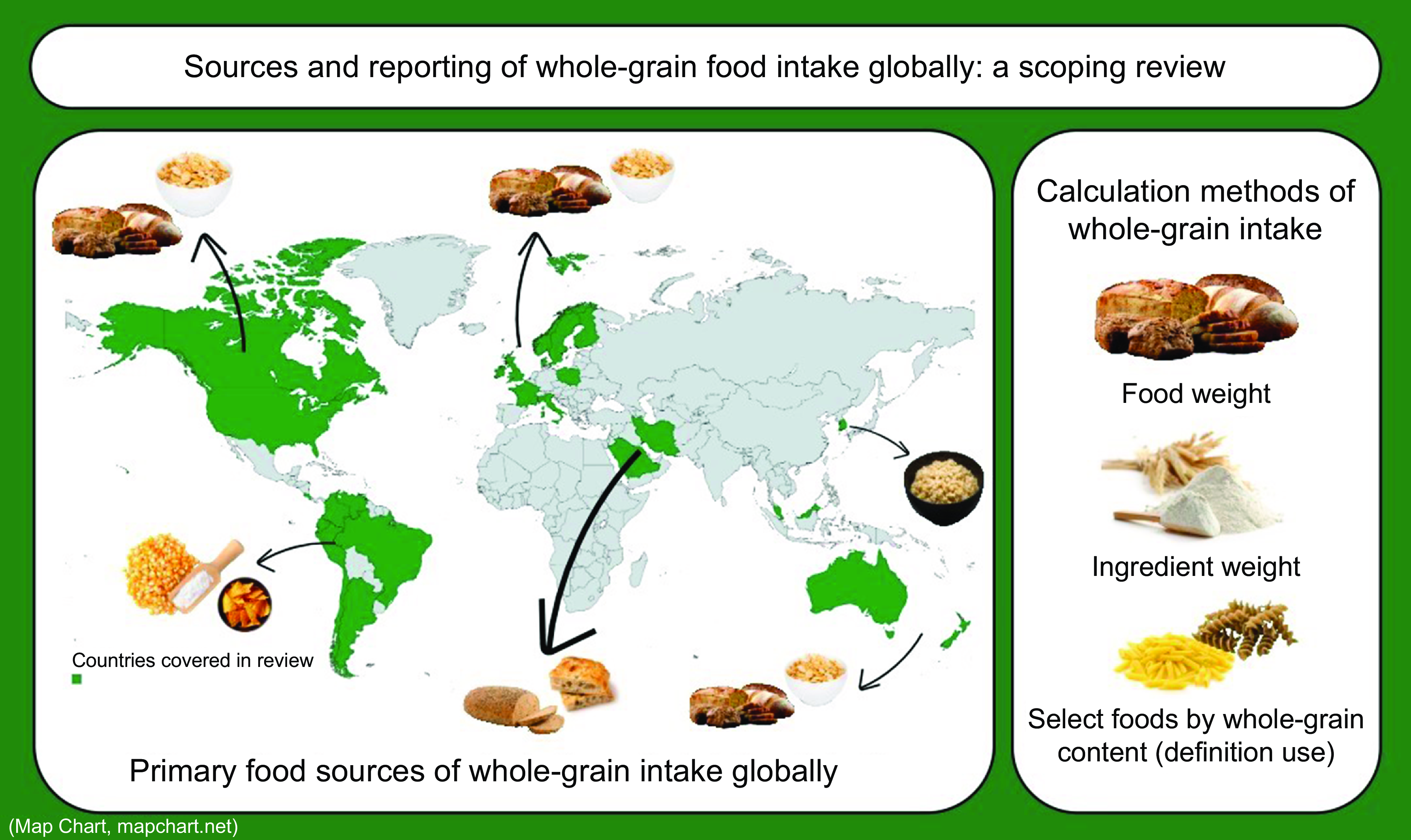
Whole-grain intake is associated with reduced risk of non-communicable diseases. Greater understanding of major food sources of whole grains globally, and how intake has been quantified, is essential to informing accurate strategies aiming to increase consumption and reduce non-communicable disease risk. Therefore, the aim of this review was to identify the primary food sources of whole-grain intake globally and explore how they are quantified and reported within literature, and their recommendation within respective national dietary guidelines. A structured scoping review of published articles and grey literature used a predefined search strategy across electronic databases. Data were extracted and summarised based on identified outcomes (e.g. primary sources of whole-grain intake and quantification methods). Dietary intake values were noted where available. Thirteen records across twenty-four countries identified bread and bread rolls, and ready-to-eat cereals as primary sources of whole-grain intake in Australia, New Zealand, Europe, the UK and Northern America. Elsewhere, sources vary and for large parts of the world (e.g. Africa and Asia), intake data are limited or non-existent. Quantification of whole grain also varied across countries, with some applying different whole-grain food definitions, resulting in a whole-grain intake based on only consumption of select ‘whole-grain’ foods. National dietary guidelines were consistent in promoting whole-grain intake and providing examples of country-specific whole-grain foods. Consistency in whole-grain calculation methods is needed to support accurate and comparative research informing current intake evidence and promotional efforts. National dietary guidelines are consistent in promoting whole-grain intake; however, there is variability in recommendations.
To explore the associations between nutrition literacy (NL) and possible sarcopenia in older Chinese adults. A cross-sectional study was conducted. NL was assessed using a twelve-item short-form NL scale. Possible sarcopenia was identified using SARC-CALF. Logistic regression was used to calculate OR and 95 % CI for NL and the incidence of possible sarcopenia. A total of 1338 older individuals, aged 71·41 (sd 6·84) years, were enrolled in this study. After confounders were adjusted for, older adults in the upper quartile of NL were found to be 52 % less likely to have possible sarcopenia than those in the lower quartile of NL (OR = 0·48, 95 % CI: 0·29, 0·77). The associations between NL and possible sarcopenia were present only in those who lived in rural areas (OR: 0·38, 95 % CI: 0·19, 0·77), had a primary school education or less (OR: 0·21, 95 % CI: 0·09, 0·48), had a monthly income < 3000 RMB (OR: 0·39, 95 % CI: 0·22, 0·70) and had chronic diseases (OR: 0·37, 95 % CI: 0·22, 0·63). Moreover, an interaction effect was observed between having a chronic disease and junior high school education and being in the upper quartile of NL. The prevalence of possible sarcopenia in older Chinese adults is substantial, with prevalence decreasing with increasing NL. Moreover, the association between NL and possible sarcopenia varies by residence type, education level, monthly income and chronic disease experience. Targeted NL interventions are required to prevent and manage sarcopenia in older adults, particularly those with low socio-economic status and chronic diseases.
The associations between circulating PUFA and cardiovascular risk factors and events in healthy Asian populations have been less examined robustly compared with Western populations. This systematic review aimed to summarise current evidence on the associations between n-3 and n-6 PUFA biomarkers and cardiovascular risk factors and events in healthy Asian populations. Four databases were searched for observational studies from 2010 until 2024. Twenty-three studies were eligible, which covered six Asian countries and included events (n 7), traditional risk factors such as blood pressure and lipids (n 4), physical signs such as arterial stiffness (n 4), non-traditional lipid markers (n 1), markers of inflammation (n 4), markers of thrombosis (n 2) and non-invasive imaging-based markers (n 5). Biological sample types included plasma (n 6), serum (n 14) and erythrocyte (n 3). Higher circulating total n-3 PUFA appeared to be associated with lower hypertension risk and specifically EPA and DHA to be associated with lower myocardial infarction risk, reduction in TAG and inflammation. Higher circulating linoleic acid was associated with improved lipid profiles and lower inflammation. Limited evidence led to inconclusive associations between circulating n-6 PUFA biomarkers and CVD events and blood pressure. No consistent associations with arterial stiffness, obesity, thrombosis and imaging-based biomarkers were observed for circulating PUFA biomarkers in Asian populations. Limited studies exist for each outcome; hence, results should be interpreted with caution. More high-quality and prospective studies in Asian populations are warranted. Several recommendations such as sample size justification and reporting of non-respondents rate are proposed for future studies.
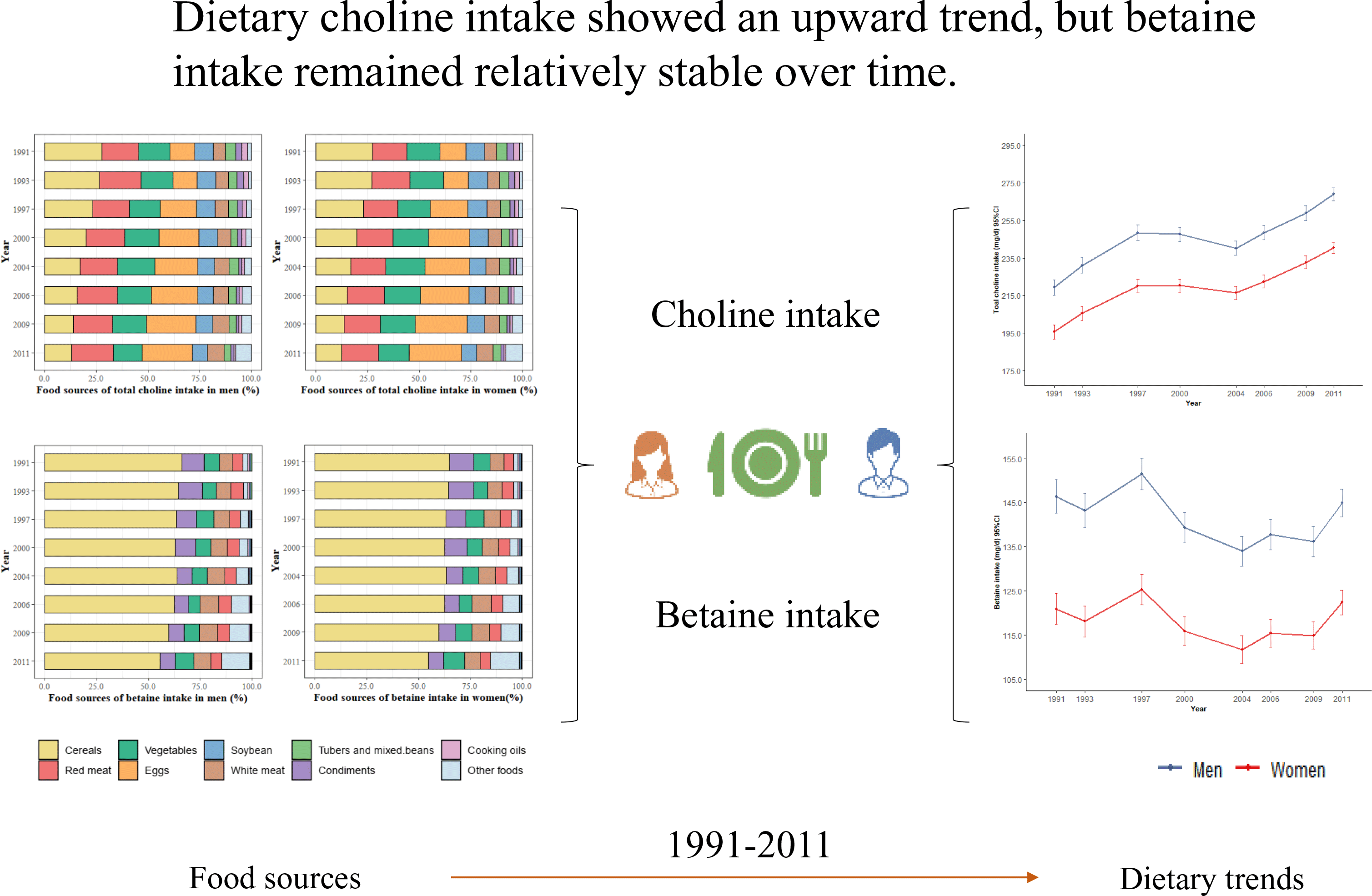
Choline and betaine are important in the body, from cell membrane components to methyl donors. We aimed to investigate trends in dietary intake and food sources of total choline, individual choline forms and betaine in Chinese adults using data from the China Health and Nutrition Survey (CHNS) 1991–2011, a prospective cohort with a multistage, random cluster design. Dietary intake was estimated using three consecutive 24-h dietary recalls in combination with a household food inventory. Linear mixed-effect models were constructed using R software. A total of 11 188 men and 12 279 women aged 18 years or older were included. Between 1991 and 2011, total choline intake increased from 219·3 (95 % CI 215·1, 223·4) mg/d to 269·0 (95 % CI 265·6, 272·5) mg/d in men and from 195·6 (95 % CI 191·8, 199·4) mg/d to 240·4 (95 % CI 237·4, 243·5) mg/d in women (both P-trends < 0·001). Phosphatidylcholine was the major form of dietary choline, and its contribution to total choline increased from 46·9 % in 1991 to 58·8 % in 2011. Cereals were the primary food source of total choline before 2000, while eggs had ranked at the top since 2004. Dietary betaine intake was relatively steady over time with a range of 134·0–151·5 mg/d in men (P-trend < 0·001) and 111·7–125·3 mg/d in women (P-trend > 0·05). Chinese adults experienced a significant increase in dietary intake of choline, particularly phosphatidylcholine during 1991–2011 and animal-derived foods have replaced plant-based foods as the main food sources of choline. Betaine intake remained relatively stable over time. Future efforts should address the health effects of these changes.
Few studies investigated the association between Mediterranean-DASH Intervention for Neurodegenerative Delay (MIND) diet and metabolic health status, particularly among adolescents. The present study was designed to investigate the association of MIND diet with metabolic health status in Iranian adolescents with overweight/obesity. This cross-sectional study was done among 203 adolescents with overweight/obesity (12–18 years) in Isfahan, Iran. A validated FFQ was applied to collect dietary intakes. Anthropometric indices and blood pressure were also measured by standard procedures. Fasting blood samples were obtained to determine serum insulin, glucose and lipid profile. To categorise participants as being with metabolically healthy overweight/obesity (MHO) or metabolically unhealthy overweight/obesity (MUO), two methods including International Diabetes Federation (IDF) criteria and IDF plus Homeostasis Model Assessment of Insulin Resistance (HOMA-IR) were applied. Participants had a mean age of 13·98 years and 50·2 % of them were girls. In fully adjusted models, participants with highest MIND diet adherence had lower odds of MUO status based on IDF (OR = 0·20; 95 % CI 0·08, 0·51) and IDF/HOMA-IR (OR = 0·22; 95 % CI 0·08, 0·59) criteria. Stratified analyses revealed that this association was stronger among girls and was only significant among individuals with overweight. An inverse association was also found between MIND diet score and odds of hyperglycaemia and insulin resistance (IR). Higher MIND diet adherence was associated with lower odds MUO in adolescents with overweight/obesity. Inverse associations were also found between MIND diet and odds of hyperglycaemia and IR. Future longitudinal prospective studies are necessary to confirm our results.