To save content items to your account,
please confirm that you agree to abide by our usage policies.
If this is the first time you use this feature, you will be asked to authorise Cambridge Core to connect with your account.
Find out more about saving content to .
To save content items to your Kindle, first ensure no-reply@cambridge.org
is added to your Approved Personal Document E-mail List under your Personal Document Settings
on the Manage Your Content and Devices page of your Amazon account. Then enter the ‘name’ part
of your Kindle email address below.
Find out more about saving to your Kindle.
Note you can select to save to either the @free.kindle.com or @kindle.com variations.
‘@free.kindle.com’ emails are free but can only be saved to your device when it is connected to wi-fi.
‘@kindle.com’ emails can be delivered even when you are not connected to wi-fi, but note that service fees apply.
After the endorsement of the United Nations Guiding Principles on Business and Human Rights (UNGPs) by the Human Rights Council on 16 June 2011, 15 March 2024 marked another milestone for transnational corporate governance. That day, a qualified majority of the member states of the European Union (EU) voted in favour of the Directive on Corporate Sustainability Due Diligence (CSDDD) setting human rights and environmental obligations for large companies in their global value chains.1 The CSDDD is the first region-wide due diligence legislation, yet it is also a political compromise among EU member states, which civil society and business have been watching closely. This piece explains the main elements of the CSDDD and outlines some of its implications beyond the EU.
The social welfare function (SWF) framework converts the possible outcomes of governmental policy choice into vectors (lists) of interpersonally comparable well-being numbers, measuring the lifetime well-being of each individual in the population of interest. The SWF proper is a rule for ranking these vectors. The utilitarian SWF adds up well-being numbers. A prioritarian SWF adds up well-being numbers plugged into a strictly increasing and strictly concave transformation function. Governmental policies are conceptualized as probability distributions over well-being vectors. A recent literature applies the SWF framework to health policy. This article first provides a brief overview of the SWF framework and then reviews some of the key concepts and findings that have emerged from this literature. One such concept is the “social value of risk reduction” (SVRR): the marginal social value (as calculated by the SWF) per unit of reduction in fatality risk for a given individual. The SVRR is the analogue, within the SWF framework, to the value-of-statistical-life (VSL) concept within benefit–cost analysis. This article explicates the SVRR concept and reports on recent theoretical findings and simulations that illustrate the properties of utilitarian and prioritarian SVRRs and their differences from VSL.
Effectuation has become the basis for educating entrepreneurs and managers. Derived from cognitive and behavioral economic studies of expert entrepreneurs, effectuation shows how to cocreate value in highly uncertain situations. The framework of effectuation consists in techniques that minimize the use of predictive information and ways to turn control itself into strategy. In doing so, the effectual process opens up radically new ways to rethink a variety of fundamental concepts in all the social sciences. This ranges from risk and return to markets and governments in economics; attitudes toward ends and means in psychology; opportunism and altruism in social psychology; and even success and failure in strategic management. Effectuation theory inverts several older approaches in what Herbert Simon referred to as the 'sciences of the artificial'. These inversions suggest an entrepreneurial method based on non-predictive control that complements the predictive control techniques of the scientific method.
The business and human rights (BHR) framework has regularly been considered the superior legal regime of corporate accountability for business-related human rights abuses, which must be both protected from and incorporated into investment treaties. However, investment treaties have surpassed the BHR framework in an important respect: certain investment treaties impose strict international legal obligations, including human rights-related obligations, directly on investors, thereby going beyond the normatively ambiguous corporate responsibility to respect. Investment treaty reform initiatives, including those seeking to align investment treaties with the BHR agenda, should, therefore, take care to avoid inadvertently undoing this advance towards investors’ legal accountability.
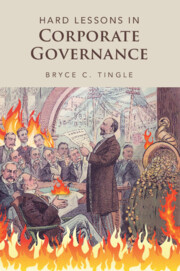
How should corporations be run? Who should get a say, and what results can we expect? Hard Lessons in Corporate Governance provides an accessible introduction to the various failed attempts at using corporate governance to improve society. It introduces the record of these failures and illuminates hard lessons spread across thousands of empirical studies. If we look at the outcomes generated by various corporate governance 'best' practices, we find that none of the practices work. If we look at the theories and assumptions that support modern corporate governance, we find they are likely wrong. And if we look at the prospect of corporate governance to improve political, environmental, and social outcomes, we find ample evidence that governance will fail us here too. After documenting these failures, Bryce Tingle K.C. turns to the most important lesson: How to fix this important, but broken, system.
This Element examines the recent history of nonprofit sector-wide advocacy at the federal level, focusing on work done by national nonprofit infrastructure organizations and national charities, to advocate on issues, such as tax incentives for charitable giving, that affect a broad range of nonprofits. The Element draws on interviews with thirty-nine national and state nonprofit leaders and federal policymakers as well as published papers and journalistic accounts. It finds that many policymakers are only weakly supportive of the nonprofit sector. In the end, this Element points to an uneasy, shifting balance in nonprofit sector advocacy between informal, decentralized, issue-based coalitions focused on short-term, if vital, legislative victories, on one hand, and the public good mandate embraced by some sector-wide advocates, which attends to longer time horizons and a broad conception of the defense of civil society, on the other. This title is also available as Open Access on Cambridge Core.
While nonspeech communication and “metaphorical” silence (in opposition to voice) have benefited from a considerable academic attention, less is known about quiet environments and the intentional practice of silence. We theorize these silences as potential catalysts of internal and collective reflection. Such silences can strongly impact individual and organizational processes and outcomes, notably in the workplace. The meaning, valence, and effects of these silences are highly context- and perspective-dependent. By characterizing and studying these silences and their effects, we show how they are functional or dysfunctional to individuals or organizations. These silences can notably serve as emotion regulators and generate an environment favorable to individual and collective decision making. Examining what is lost by individuals and organizations due to a lack of these silence and what can be gained with a better harnessing of their power is promising.
Despite voters' distaste for corruption, corrupt politicians frequently get reelected. This Element provides a framework for understanding the conditions under which corrupt politicians are reelected. One unexplored source of electoral accountability is court rulings on candidate malfeasance, which are increasingly determining politicians' prospects. I find that (1) low-income voters – in contrast to higher income voters – are responsive to such rulings. Unlike earlier studies, we explore multiple tradeoffs voters weigh when confronting a corrupt candidate, including the candidate's party, policy positions, and personal attributes. The results also surprisingly show (2) low-income.
We highlight an important but overlooked characteristic of financial fragility: “Fragile” stocks command higher liquidity. This reduces their sensitivity to corporate actions with price impact and affects the firms’ incentives to engage in such actions. We show that fragile firms have lower share repurchases, issue more equity, and invest more. We establish causality by relating changes in corporate actions to exogenous changes in fragility induced by mergers of asset managers. Our results suggest that financial fragility has direct but unexpected real implications for corporate actions.
This text consults seven variants of institutional theory to explore how these can be applied to strategic management. These variants are New Institutional Economics, Old Institutionalism, New Institutionalism, institutional entrepreneurship and change, intra organizational institutionalization, institutional logics, and institutional work. In doing so, three strategic management styles are distinguished: competitiveness based strategic management, legitimacy based strategic management, and performativity based strategic management. While the competitive based style sees institutional theory submitting to mainstream strategy research, offering additional variables and considerations to explain competitive advantage, the legitimacy based style makes institutional theory a strategy theory in its own right by providing an explanation for an organization's viability that emphasizes legitimacy over competitive advantage. The performativity based style is an even more radical departure from mainstream strategizing by purporting that a future is actively created with organizations making contributions as emerging issues are being dealt with.
The American craft beer industry’s creation narrative is rooted in countercultural food politics. Popular stories describe how plucky brewers pioneered complex and hoppy beers that revolutionized a bland American beer industry dominated by industrial lagers. Hops are now the most celebrated ingredient in the craft beer industry and serve as visual representations of the artisanal and revolutionary values of small brewers that contrasts with the industrial and bland products of the nation’s massive lager brewers. The history of hops and brewing presented here, however, demonstrates the connections between big and small brewers and the environmental impacts of craft brewers’ hoppy beers otherwise obscured by their preferred dichotomous narrative. Craft beer grew in tandem with the modern hop industry and became enmeshed with big business and industrial agricultural practices to access their signature commodity, hops. By integrating environmental and business history, this article explores how brewers, scientists, farmers, and nonhumans influenced each other to create the modern craft brewing industry. This approach demonstrates the often-obscured connections between big and small firms by examining the environments, organisms, and supply chains they depend upon.
In an era when the public and shareholders increasingly demand greater accountability from institutions for racial injustice and slavery, scholarship on corporate reparations is more and more essential. This article argues that corporations have played a significant role in the cultural dehumanization of Blackness and therefore have a particular responsibility to make repair. Cultural dehumanization refers to embedding anti-Blackness into US culture in service of capitalist profit accumulation, which has resulted in status and material inequalities between Blacks and whites that have persisted from slavery to the present. More specifically, the article argues corporations have a moral duty to offer reparations to Black Americans regardless of any redress offered by other perpetrators of anti-Blackness. It appeals to tort law in providing a moral justification for corporate reparations to Black Americans.
Some regulations do not only reduce human deaths, injuries, and illnesses; they also protect nonhuman animals. Regulatory Impact Analyses, required by prevailing executive orders, usually do not disclose or explore benefits or costs with respect to nonhuman animals, even when those benefits or costs are significant. This is an inexcusable gap. If a regulation prevents dogs, horses, or cats from being killed or hurt, the benefits should be specified and quantified. This proposition holds even if those benefits are in some sense incidental to the main goal of the regulation. At the same time, turning the relevant benefits into monetary equivalents raises serious challenges, akin to those raised by the valuation of statistical children.
Intelligence is a concept that occurs in multiple contexts and has various meanings. It refers to the ability of human beings and other entities to think and understand the world around us. It represents a set of skills directed at problem-solving and targeted at producing effective results. Thus, intelligence and governance are an odd couple. We expect governments and other governing institutions to operate in an intelligent manner, but too frequently we criticize their understanding of serious public problems, their decisions, behaviors, managerial skills, ability to solve urgent problems, and overall governability wisdom. This manuscript deals with such questions using interdisciplinary insights (i.e., psychological, social, institutional, biological, technological) on intelligence and integrating it with knowledge in governance, administration, and management in public and non-profit sectors. We propose the IntelliGov framework, that may extend both our theoretical, methodological, analytical, and applied understanding of intelligent governance in the digital age.
This chapter adopts a practical approach, focusing on the effective management of risks in the “new era” for businesses operating in China. The ever-evolving larger environment has led to a significant transformation in the nature of risks faced by companies in China over the past decade. Unfortunately, many foreign companies are not adequately prepared to address these emerging risks, which puts them at risk of encountering unforeseen challenges. Since China's declaration of entering a new era in 2017, char-acterized by consumption-led growth, innovation, territorial integrity, and a proactive role in addressing global challenges, the ramifications of this shift have had an impact on foreign companies operating in the country. Among the various risks that have emerged, three particularly challenging ones are heightened national pride, economic nationalism, and sporadic antiforeign sentiments. As China experiences a surge in national pride and a growing sense of economic nationalism, foreign companies must navigate a more complex and sensitive operating environment. The rise of consumer nationalism, triggered by patriotic sentiments and a desire to support domestic businesses and products, has created unique challenges for foreign brands. Moreover, occasional antiforeign sentiments arising from territorial disputes, historical tensions, or controversies can further complicate the business landscape.
This chapter provides a comprehensive risk management discussion while placing specific emphasis on examining significant instances of consumer nationalism in China over the past five years. It aims to offer practical strategies that could have been implemented by companies to effectively manage such risks. To assess companies’ resilience levels, a scale is proposed based on Shimp and Sharma's Consumer Ethnocentrism Tendencies Scale (CETSCALE) and the Consumer Ethnocentrism Extended Scale (CEESCALE). By analyzing major consumer nationalist actions in China, this chapter sheds light on the specific challenges that foreign companies have faced in this evolving landscape. It explores instances where consumer ethnocentrism has influenced consumer behavior and preferences, leading to shifts in brand perception and consumption patterns. Understanding the underlying factors that contribute to consumer nationalism is crucial in formulating effective risk management strategies. Drawing on the insights provided by Shimp and Sharma's CETSCALE and CEESCALE, this chapter proposes a resilience assessment scale. This scale aims to measure companies’ ability to navigate and withstand the challenges posed by consumer nationalism.
This chapter aims to provide readers with a comprehensive historical context surrounding the phenomenon of Chinese consumers’ nationalism, shedding light on the distinct characteristics exhibited by each wave throughout time. By delving into pivotal moments, such as the renowned narrative of “The Shop of the Lin Family,” which vividly portrays the eruption of nationalistic consumer boycotts in China back in 1932, to the more recent events like the fervent public backlash against South Korea and its impact on Lotte Mart in Beijing's Wangjing district in 2017, this chapter offers a captivating journey through the evolution of consumer nationalism in the country.
Within the pages of this chapter, readers will find answers to pressing questions regarding the transformations witnessed in Chinese consumer nationalism in recent years. By examining the changing dynamics, it seeks to unravel the multifaceted nature of this phenomenon and explore the various factors that have contributed to its evolution. Specifically, the chapter endeavors to shed light on the role played by the government and state media in each wave, deciphering their influence and exploring their motivations. This chapter also contemplates the ramifications that may arise from the emergence of a new wave of consumer nationalism. By drawing upon historical insights and analyzing current trends, it endeavors to provide a forward-looking perspective on the potential consequences of this evolving phenomenon. As society navigates through this new wave, it becomes increasingly crucial to understand the implications it may have on various aspects, including politics, economics, and social cohesion.
Ultimately, this chapter serves as an invaluable resource for readers seeking to grasp the intricate tapestry of Chinese consumers’ nationalism through-out history. By examining each wave's characteristics, unraveling the role of government and state media, and anticipating the potential outcomes of a burgeoning new wave, it invites readers to engage critically with this complex and ever-evolving aspect of Chinese society.
History of Chinese Consumers’ Nationalism
Consumer nationalism emerged as a recurring theme in the dynamic relationship between China and the Western world, gaining notable prominence during the late nineteenth century and reaching its zenith between the 1900s and the 1940s. Throughout this period, several pivotal instances of consumer nationalist movements unfolded, leaving a lasting impact on Sino-Western relations.
This chapter delves into a crucial aspect of the existing research on nationalism in China, highlighting a notable issue that has emerged. The prevailing approach has tended to examine Chinese nationalistic sentiments as a unified whole, neglecting the inherent complexity and diversity within this phenomenon. Taking such a holistic perspective is overly simplistic and fails to account for the multifaceted nature of Chinese nationalists’ motivations and actions.
To rectify this oversight, it is imperative to categorize the various manifestations of consumer nationalism in China based on a range of indices. By doing so, we can gain a more nuanced understanding of this complex phenomenon. Therefore, this chapter aims to explore the distinct types of consumer nationalistic actions observed in China and elucidate the varying consequences associated with each type. In order to substantiate this argument, the chapter will present several illustrative cases.
The central contention put forth in this chapter is that contemporary consumer nationalism in China can be effectively classified into three distinct types, each engendering a different level of consequences. By differentiating these types, we can discern the specific motivations, behaviors, and outcomes associated with each category. This nuanced approach not only enriches our comprehension of consumer nationalism in China but also contributes to a more comprehensive analysis of nationalism studies in general.
Mapping the Field
Nationalism, as a widely acknowledged sentiment shaping both public and private spheres, has been prevalent since the late eighteenth century. Its influence on global politics can be understood through the concept of identifying the state or nation with its people. However, to grasp the concept of “consumer nationalism,” it is essential to differentiate it from related terms such as economic nationalism, commercial nationalism, consumer ethnocentrism, political consumerism, and consumer nationalism.
Economic nationalism
The term “economic nationalism” has a historical origin that can be traced back to the early twentieth century. It gained recognition through the works of notable economists and scholars who examined the concept in depth. One of the earliest instances of using this term can be attributed to American economist Alvin Johnson in 1917, who is renowned as one of the cofounders of the New School for Social Research.