To save content items to your account,
please confirm that you agree to abide by our usage policies.
If this is the first time you use this feature, you will be asked to authorise Cambridge Core to connect with your account.
Find out more about saving content to .
To save content items to your Kindle, first ensure no-reply@cambridge.org
is added to your Approved Personal Document E-mail List under your Personal Document Settings
on the Manage Your Content and Devices page of your Amazon account. Then enter the ‘name’ part
of your Kindle email address below.
Find out more about saving to your Kindle.
Note you can select to save to either the @free.kindle.com or @kindle.com variations.
‘@free.kindle.com’ emails are free but can only be saved to your device when it is connected to wi-fi.
‘@kindle.com’ emails can be delivered even when you are not connected to wi-fi, but note that service fees apply.
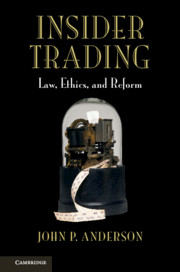
As long as insider trading has existed, people have been fixated on it. Newspapers give it front page coverage. Cult movies romanticize it. Politicians make or break careers by pillorying, enforcing, and sometimes engaging in it. But, oddly, no one seems to know what's really wrong with insider trading, or - because Congress has never defined it - exactly what it is. This confluence of vehemence and confusion has led to a dysfunctional enforcement regime in the United States that runs counter to its stated goals of efficiency and fairness. In this illuminating book, John P. Anderson summarizes the current state of insider trading law in the US and around the globe. After engaging in a thorough analysis of the practice of insider trading from the normative standpoints of economic efficiency, moral right and wrong, and virtue theory, he offers concrete proposals for much-needed reform.
This Element shapes the discussion about corporate governance and boards of directors. The arena for boards and corporate governance is not static. In Boards, Governance and Value Creation (Cambridge, 2007) Morten Huse accumulated knowledge about boards with a focus on behavioural perspectives. The present contribution reflects on what has been happening during recent years. It contributes to the literature around sustainable value creation in business and society. This Element brings an update of the content of the 2007 book, and thus provides a resource for students - as well as for reflective practitioners.
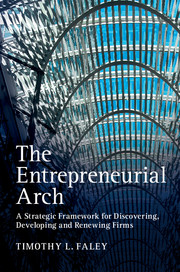
As the number of universities offering entrepreneurial programs continues to increase, there is a growing need for a suitable framework for the teaching of entrepreneurship beyond the operational side of the business and the preparation of a business plan. This book offers a fresh approach to entrepreneurship by teaching readers how to discover and create a new firm, or grow an existing one, starting from a firm's or team's capabilities. The core methodology is based on the 'entrepreneurial arch' which provides a more holistic view of entrepreneurship by dividing the business development process into six distinct segments. An important feature of this model is the inclusion of learning units focusing on opportunity identification, business design and risk reduction before the business planning stage is attempted. Illustrated with various real-world examples, this structured and concise book will appeal to students, as well as to practitioners looking to develop their entrepreneurial skills.
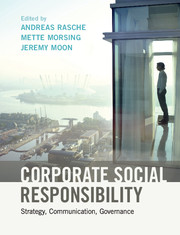
This upper-level textbook offers an original and up-to-date introduction to issues in corporate social responsibility (CSR) from a global perspective. Written by an international team of experts, it guides students through key themes in CSR including strategy, communication, regulation and governance. Balancing critiques of CSR with a discussion of the opportunities it creates, it includes chapters devoted to critical issues such as human rights, anti-corruption, labour rights and the environment. Pedagogical features include customised case studies, study questions, key term highlighting, practitioner pieces and suggestions for further resources. The book is also complemented by a companion website featuring adaptable lecture slides, teaching notes for cases and links to related resources. Tailored for upper-level undergraduate and postgraduate courses on corporate social responsibility, sustainability and business ethics, it is also relevant to non-business courses in political science, international relations and communications.
Now in its third edition, this textbook develops the economic way of thinking through problems that MBA students will find relevant to their career goals. Theory and mathematics are kept as simple as possible and illustrated with real-life scenarios. The textbook package includes online video tutorials on key concepts and complex arguments, and topics likely to be assessed in exams. The distinguished author team has developed this textbook over twenty years of teaching microeconomics to MBA students. Chapters are clearly structured to support learning: Part I of each chapter develops key economic principles, whilst Part II draws on those principles to discuss organizational and incentive issues in management and focuses on solving the 'principal-agent' problem to maximize the profitability of the firm - lessons that can be applied to problems MBA students will face in the future. Economics and management are treated equally; this unique textbook presents economics as part of the everyday thinking of business people.
There is now widespread agreement that innovation holds the key to future economic and social prosperity in developed countries. Experts studying contemporary capitalism also agree that the battle against unemployment and relocations can only be won through innovation. But what kind of innovation is required and what is the best way to manage, steer and organize it? Grounded on experiences of innovative firms and based on recent design theories, this book argues that instead of relying on traditional R&D and project management techniques, the strategic management of innovation must be based on innovative design activities. It analyses and explains new management principles and techniques that deal with these activities, including innovation fields, lineages, C-K (Concept-Knowledge) diagrams and design spaces. The book is ideal for advanced courses in innovation management in industrial design schools, business schools, engineering schools, as well as managers looking to improve their practice.
The second edition of this popular book offers an accessible yet sophisticated analysis of the game-changing events and trends that are transforming the world beyond recognition. For the first time in human history, more people live in cities than in the countryside, and greater numbers suffer from obesity than from hunger. During the next few decades, India will become the biggest country in terms of population, China the largest in output, and the United States the richest among the major economies on a per capita income basis. Food and water shortages will likely become humankind's most important challenges. With four new chapters on the rise of the global middle class, the transformative power of technology, institutions and the entrepreneurial spirit, and the trials and tribulations of the financial system, this book provides a thorough introduction to the challenges facing business and society in the twenty-first century.
This second edition provides a rigorous yet accessible graduate-level introduction to financial economics. Since students often find the link between financial economics and equilibrium theory hard to grasp, less attention is given to purely financial topics, such as valuation of derivatives, and more emphasis is placed on making the connection with equilibrium theory explicit and clear. This book also provides a detailed study of two-date models because almost all of the key ideas in financial economics can be developed in the two-date setting. Substantial discussions and examples are included to make the ideas readily understandable. Several chapters in this new edition have been reordered and revised to deal with portfolio restrictions sequentially and more clearly, and an extended discussion on portfolio choice and optimal allocation of risk is available. The most important additions are new chapters on infinite-time security markets, exploring, among other topics, the possibility of price bubbles.
The Business Environment of Europe is the first textbook to provide a complete overview of Europe's business landscape, examining the region's diverse economies and government policies within historical, political, and cultural contexts. This well-researched text examines the European Union and select European nations, and leads students to a full understanding of the structure and dynamics of specific industries, the impact of globalization on European companies, and the future challenges facing the region's business environment. Numerous tables, maps, figures, case studies and chapter-specific bibliographies support students with little background knowledge of the subject, and lead them to total mastery of the material. Ideal for business students seeking background on the historical and cultural foundations of European business, and for international studies students seeking specific information on European governments, policies and economics, this introductory textbook provides a comprehensive and interdisciplinary overview of the subject.
Suitable for a one- or two-semester course for undergraduate and graduate students, this interdisciplinary textbook explains the diverse aspects of innovation and social networks, which occupy a central place in business and policy agendas. Its unified approach presents networks as nested systems that can span organisations, industries, regions, and markets, giving students a holistic perspective and reducing the amount of effort required to learn the theoretical framework for each layer. With engaging real-world examples, the text also provides a practical guide on how to manage networks to increase innovation and improve performance. Topics covered include forming teams to foster creativity, selecting partners and leveraging partnerships for learning, managing organisational change, and sponsoring technologies in communities. Students will learn the metrics used in social network analysis and how they are interpreted and applied. Suggested reading lists and online resources offer opportunities for further review and practice.
Thoroughly revised according to classroom feedback, Industrial Organization: Markets and Strategies offers an up-to-date and rigorous presentation of modern industrial organization that blends theory with real-world applications and derives implications for firm strategy and competition policy. This comprehensive textbook acquaints readers with the most important models for understanding strategies chosen by firms with market power and shows how such firms adapt to different market environments. The second edition includes new and revised formal models and case studies. Formal models are presented in detail, and analyses are summarized in 'lessons' which highlight the main insights. Theories are complemented by numerous real-world cases that engage students and lead them to connect theories to real situations. Chapters include review questions, exercises, and suggestions for further reading to enhance the learning experience, and an accompanying website offers additional student exercises, as well as teaching slides.
Written specifically for executives and MBA students, the third edition of this successful textbook provides a step-by-step guide to designing an organization, from diagnosis, to design and implementation. It provides comprehensive coverage of the key aspects of organizational design, including goals, strategy, process, people, coordination, control, and incentives. Following a new diamond model, fully tested in practice, the book guides readers through an integrated methodology for organizational assessment and planning. It includes a new chapter on project managing organizational change on a practical level, new case studies, extended discussions of new organizational forms, architecture design and knowledge systems, and new practical steps for implementation and change. Visit www.cambridge.org/burton3 for free access to a selection of organizational diagnosis, design and implementation models in Excel, as well as additional case studies, figures and tables from the book.
Many companies are not single businesses but a collection of businesses with one or more levels of corporate management. Written for managers, advisors and students aspiring to these roles, this book is a guide to decision-making in the domain of corporate strategy. It arms readers with research-based tools needed to make good corporate strategy decisions and to assess the soundness of the corporate strategy decisions of others. Readers will learn how to do the analysis for answering questions such as 'Should we pursue an alliance or an acquisition to grow?', 'How much should we integrate this acquisition?' and 'Should we divest this business?'. The book draws on the authors' wealth of research and teaching experience at INSEAD, London Business School and University College London. A range of learning aids, including easy-to-comprehend examples, decision templates and FAQs, are provided in the book and on a rich companion website.
The notion of happiness at work is becoming increasingly important for human resource management research. Despite the widespread existence of different constructs that capture positive attitudes, a comprehensive measure of individual-level happiness is necessary. Starting from Fisher’s conceptualisation of happiness at work, Salas-Vallina, Alegre, and Fernández developed a 31-item scale to measure happiness at work. This scale accurately captures the different dimensions of happiness in the workplace context. However, it is a long scale. Shorter scales provide major improvements in efficiency and efficacy. Our study, conducted with two diversified samples, conceptualises and measures happiness at work. Following the steps suggested by Stanton, Sinar, Balzer, and Smith and Kacmar, Crawford, Carlson, Ferguson, and Whitten, we provide a shortened version of the happiness at work scale, while maintaining its psychometric properties. We argue that this new measurement scale presents a high statistical potential to widely capture positive attitudes at work and opens undeveloped research possibilities.
Family business owners and researchers tend to overwhelmingly focus on the top-level structure of firms but ignore the middle-level practice – involving family members in the middle-management team. Compared to top managers at the strategic apex, middle-level managers are mainly responsible for internal operations and control, and the composition of the middle-management team has an immediate and direct impact on the overall workforce efficiency of family firms. Integrating agency theory and organizational justice perspective, we proposed that family involvement in middle management would have a negative impact on the labor productivity of family firms. We further corroborated this effect by identifying three boundary conditions at the individual (i.e., familial CEO), organizational (i.e., firm size), and regional (i.e., labor mobility) levels. Using a sample of 1,284 privately owned family firms in China, we found that family involvement in middle management, measured as the percentage of familial middle-level managers, was negatively associated with labor productivity. Furthermore, this negative relationship existed only when the CEO is a family member rather than a professional manager, when the size of the firm is large rather than small, or when the firm is located in regions with low rather than high labor mobility. These findings contribute to family business literature and provide practical implications for human resource management in family firms.