To save content items to your account,
please confirm that you agree to abide by our usage policies.
If this is the first time you use this feature, you will be asked to authorise Cambridge Core to connect with your account.
Find out more about saving content to .
To save content items to your Kindle, first ensure no-reply@cambridge.org
is added to your Approved Personal Document E-mail List under your Personal Document Settings
on the Manage Your Content and Devices page of your Amazon account. Then enter the ‘name’ part
of your Kindle email address below.
Find out more about saving to your Kindle.
Note you can select to save to either the @free.kindle.com or @kindle.com variations.
‘@free.kindle.com’ emails are free but can only be saved to your device when it is connected to wi-fi.
‘@kindle.com’ emails can be delivered even when you are not connected to wi-fi, but note that service fees apply.
Architected materials play an essential role in achieving next-generation electrochemical systems with unprecedented power and energy capabilities. The geometry and chemistry of architected materials can be engineered to address key areas of performance, including electrochemical kinetics and mechanics. Electrochemical kinetics impact key metrics such as power density, efficiency, and lifetime in batteries, fuel cells, and sensors. Additionally, electrochemical reactions can dramatically change material composition, which may result in large strains (in the hundreds of percent) that cause mechanical failure. In this article, we summarize advances in energy storage offered by architected materials and highlight fabrication methods used to realize these advances. We also discuss electrochemistry as an enabling tool for architected materials with functionality beyond energy storage and sensing.
Porphyrinic compounds are of increasing interest to the materials science community, yet little attention has been paid to crystallographically controlled voids and channels in these materials. We have conducted an initial survey of the voids and channels in a random subset of 1000 porphyrinic compounds with known crystal structures. From calculations using a rolling-probe subroutine, we have found that about 5% of these compounds have line-of-sight channels, which differ in their topology depending on the crystallography. A small but significant number of porphyrinic compounds have calculated void contents of >25 volume %. We discuss in detail the void and channel characteristics, including pore-size distribution, of four representative compounds, with technological implications.
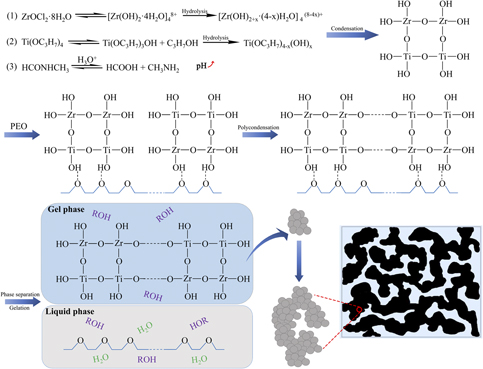
Macro-mesoporous zirconium titanate monoliths have been successfully prepared via a sol–gel process accompanied by phase separation, with poly(ethylene oxide) (PEO) as a phase separation inducer and N-methylformamide (NFA) as a gelation accelerator. The size and morphology of macropores are controlled by the PEO and NFA amount. By choosing appropriate starting composition, the co-continuous structure could be obtained. The as-dried gel is amorphous, the pore size is in the range of 0.05–0.5 μm, the porosity is 46%, and the surface area is 111 m2/g. After heat treatment at 500 °C, the gel transforms into the phase ZrTiO4, the macropore diameter decreases slightly, the porosity increases to 63%, and the surface area decreases to 40 m2/g. Moreover, the macroporous structure is well maintained, and the skeleton becomes dense and smooth. The samples have macropores, mesopores, and micropores before and after heat treatment.
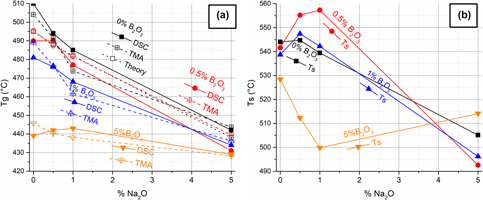
In the recent years, there has been high interest in renewable energy and highly efficient devices, promoted by the need to stop changing weather patterns. One of the most interesting methods for this is using thermoelectric materials, which are low cost and highly durable. However, the need for higher efficiency values and a higher resistance to oxidation leads to a technological problem in the field of coating. Due to its diverse properties, glass coating has been proposed as a solution to both sublimation of the thermoelectric materials and oxidation. Lead silicate glasses with 30% PbO were doped with 0–5% of Na2O and B2O3 to produce glasses with different properties. Differential scanning calorimetry and dilatometry measurements showed that the glass temperature can vary between 428 and 505 °C. The softening temperature is varied between 493 and 560 °C. Below Tg, the coefficient of thermal expansion is varied between 5.9 and 9 ppm/K and above Tg it varied between 17 and 58 ppm/K. This allows the tuning of the glass composition for each thermoelectric material, such as 0.5% B and 1% Na doped PbO -SiO2 glass for skutterudites and 1% doped B and 1% Na doped for Mg2Si, PbTe, and GeTe.
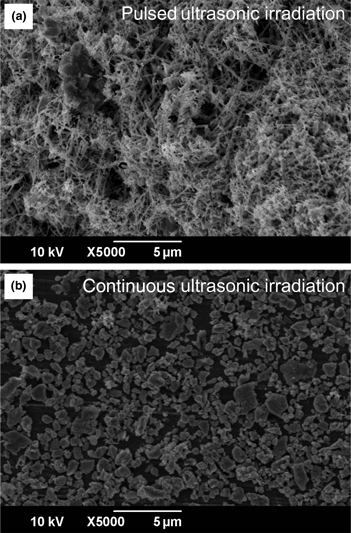
To examine the influence of ultrasonic irradiation on electrochemical migration (ECM), the morphology of micro/nanodeposits and current change were studied. The morphology of deposits synthesized by ECM varied with the types of ultrasonic irradiation: continuous or pulsed irradiation generates only particles or deposits composed of wires, dendrites, and particles. The measured ECM current change over time concludes that both mechanical and sonochemical effects contributed to the morphological change of deposits. Shock waves by cavitation mechanically formed the fragmented deposits and the sonochemical effect decreases the ionic concentration corresponding to decreasing current, inhibiting the formation of wires and dendritic deposits.
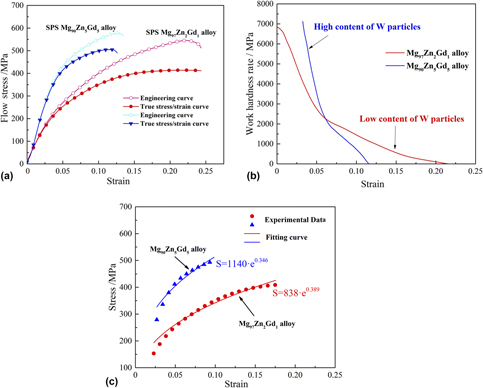
Two rapidly solidified (RS) Mg ribbons with the compositions of Mg97Zn2Gd1 and Mg90Zn5Gd5 (at.%) were first prepared by the planar flow casting method. These RS ribbons were subsequently consolidated by spark plasma sintering (SPS). The use of SPS on the RS ribbons was demonstrated to be an effective processing route to control W-phase precipitation process while keeping fine grains. The size of W-phase particles was less than 200 nm in Mg97Zn2Gd1 alloy and smaller than 500 nm in Mg90Zn5Gd5 alloy. The content of W phase was approximately 34 vol% and 41 vol% in the two SPS bulks, respectively. The compressive properties showed that the yield compressive stress (YCS) and ultimate compressive stress of the Mg97Zn2Gd1 alloy reached 200 MPa and 390 MPa, respectively, and an elongation of 0.24. The corresponding values for the Mg90Zn5Gd5 alloy were 313 MPa, 504 MPa, and 0.14, respectively. Based on the results of the quantitative analysis, W-phase nanoparticles with size less than 100 nm exhibited obviously strengthening effect in the Mg alloys. It highlighted that the W-phase nanoparticles contributed a large proportion of the YCS in the Mg97Zn2Gd1 alloy and a relatively small proportion for that of the Mg90Zn5Gd5 alloy.
A piezoelectric biomedical microelectromechanical system (bioMEMS) cantilever device was designed and fabricated to act as either a sensing element for muscle tissue contraction or as an actuator to apply mechanical force to cells. The sensing ability of the piezoelectric cantilevers was shown by monitoring the electrical signal generated from the piezoelectric aluminum nitride in response to the contraction of iPSC-derived cardiomyocytes cultured on the piezoelectric cantilevers. Actuation was demonstrated by applying electrical pulses to the piezoelectric cantilever and observing bending via an optical detection method. This piezoelectric cantilever device was designed to be incorporated into body-on-a-chip systems.
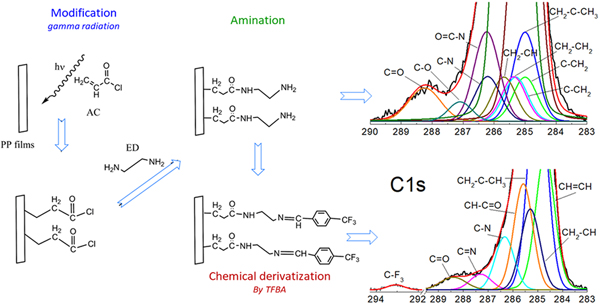
Development of biomaterials with primary amine surfaces is very important for the study of some cells of the immune systemuch as macrophages. Currently, the modification can be carried out by physical or chemical methods with several disadvantages due to the presence of additives or subproducts in the system. To overcome this problem, modified polypropylene (PP) films were synthesized by gamma radiation. In this work, radiation grafting of acryloyl chloride onto PP has been employed to form an acyl chloride. Then, the radiation-grafted films were reacted with ethylenediamine in several solvents to obtain the different concentration of the primary amine. The surface amine concentration was determined by derivatization with 4-trifluoromethyl benzaldehyde and characterized by x-ray photoelectron spectroscopy (N/C ratios), Fourier transform infrared spectroscopy with attenuated total reflection, contact angle, scanning electron microscopy, atomic force microscopy, and elementary analysis. The stability of the amines was measured up to 90 days, without the occurrence of aging as was found by plasma modification.
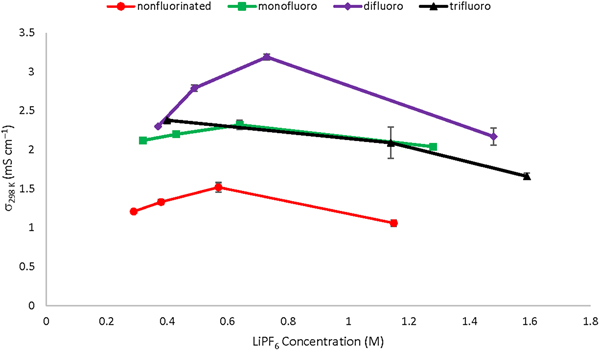
Increasing fluorination of organosilyl nitrile solvents improves ionic conductivities of lithium salt electrolytes, resulting from higher values of salt dissociation. Ionic conductivities at 298 K range from 1.5 to 3.2 mS/cm for LiPF6 salt concentrations at 0.6 or 0.7 M. The authors also report on solvent blend electrolytes where the fluoroorganosilyl (FOS) nitrile solvent is mixed with ethylene carbonate and diethyl carbonate. Ionic conductivities of the FOS solvent/carbonate blend electrolytes increase achieving ionic conductivities at 298 K of 5.5–6.3 mS/cm and salt dissociation values ranging from 0.42 to 0.45. Salt dissociation generally decreases with increasing temperature.
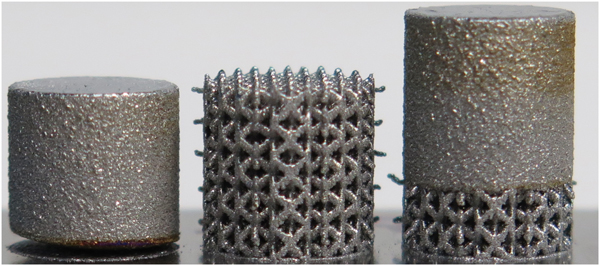
The authors report on pulsed laser powder bed fusion fabrication of nitinol (NiTi) shape memory materials. The authors first performed single-track laser parameter sweeps to assess melt pool stability and determine energy parameters and hatch spacing for larger builds. The authors then assessed the melt pool chemistry as a function of laser energy density and build plate composition. Brittle intermetallics were found to form at the part/build plate interface for both N200 and Ti-6-4 substrates. The intermetallic formation was reduced by building on a 50Ni–50Ti substrate, but delamination still occurred due to thermal stresses upon cooling. The authors were able to overcome delamination on all substrates and fabricate macroscopic parts by building a lattice support structure, which is both compliant and controls heat transfer into the build plate. This approach will enable scalable fabrication of complex NiTi parts.
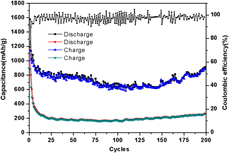
Iron sulfides have attracted much interests for their potential as anode materials in energy storage devices in view of their low costs, and environmentally benign and high theoretical capacities. Among them, Fe1−xS is relatively rarely investigated. In this work, Fe1−xS@rGO has been synthesized using a facile in situ hydrothermal method. After wrapped by rGO, the morphology of Fe1−xS particles changes from hexagonal flakes to irregular particles with much smaller sizes. As the anode material for lithium ion batteries, Fe1−xS@rGO exhibits excellent lithium storage ability. It can deliver an initial discharge capacity of 1575.5 mA h/g in the potential window of 0.005–3 V, and a reversible capacity of 907.8 mA h/g can be maintained after 200 cycles at 100 mA/g. Its improved electrochemical performance can be attributed to the effect of enhanced contact area and shortened Li+ ion transport distance because of rGO’s contribution.
Structure and optical properties have been successfully determined for a series of niobium- and tantalum-containing layered alkaline-earth silicate compounds, Ba3(Nb6−xTax)Si4O26 (x = 0.6, 1.8, 3.0, 4.2, 5.4). The structure of this solid solution was found to be hexagonal P-62m (No. 189), with Z = 1. With x increases from 0.6 to 5.4, the lattice parameter a increases from 8.98804(8) to 9.00565(9) Å and c decreases from 7.83721(10) to 7.75212(12) Å. As a result, the volume decreases from 548.304(11) to 544.479(14) Å3. The (Nb/Ta)O6 distorted octahedra form continuous chains along the c-axis. These (Nb/Ta)O6 chains are in turn linked with the Si2O7 groups to form distorted pentagonal channels in which Ba ions were found. These Ba2+ ions have full occupancy and a 13-fold coordination environment with neighboring oxygen sites. Another salient feature of the structure is the linear Si–O–Si chains. When x in Ba3(Nb6−xTax)Si4O26 increases, the bond valence sum (BVS) values of the Ba sites increase slightly (2.09–2.20), indicating the size of the cage becoming progressively smaller (over-bonding). While SiO cages are also slightly smaller than ideal (BVS range from 4.16 to 4.19), the (Nb/Ta)O6 octahedral cages are slightly larger than ideal (BVS range from 4.87 to 4.90), giving rise to an under-bonding situation. The bandgaps of the solid solution members were measured between 3.39 and 3.59 eV, and the x = 3.0 member was modeled by density functional theory techniques to be 3.07 eV. The bandgaps of these materials indicate that they are potential candidates for ultraviolet photocatalyst.
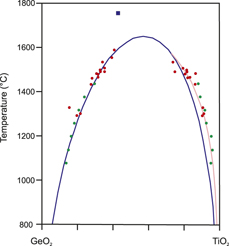
The system GeO2–TiO2 was studied experimentally at high pressure and temperature to measure the miscibility of the two components and to test its applicability as a temperature sensor in high-pressure experiments. Significant solubility between the two end-members was found, with two coexisting solid solutions at high pressure exhibiting mutual solubility that increases with temperature along a solvus. The two solid solution compositions at the solvus can be distinguished readily by X-ray diffraction. At higher temperatures, a complete solid solution exists between the two end-members. The complete solution occurs above a critical line in P–T space (a critical point at each pressure). The critical point is located near 1630 °C and mole fraction ${X_{{\rm{Ti}}{{\rm{O}}_{\rm{2}}}}} = 0.57$ at 6.6 GPa and changes by 60 ± 5° per GPa in the region from 4 to 7 GPa. A model for the shape of the solvus is developed using X-ray diffraction data points from a series of quench experiments and an in situ experiment, and the model is used to estimate the thermal gradients in a Kawai-type multianvil assembly.
The crystal structure of bisoprolol fumarate Form I has been solved and refined using synchrotron X-ray powder diffraction data and optimized using density functional techniques. Bisoprolol fumarate Form I crystallizes in space group P-1 (#2) with a = 8.165 70(5) Å, b = 8.516 39(12) Å, c = 16.751 79(18) Å, α = 89.142(1)°, β = 78.155(1)°, γ = 81.763(1)°, V = 1128.265(10) Å3, and Z = 2. The neutral side chain of the bisoprolol cation is probably disordered. The cation and anion are linked by N–H⋯O and O–H⋯O hydrogen bonds. The cations are also linked by N–H⋯O hydrogen bonds. The result is alternating layers of hydrophilic and hydrophobic layers parallel to the ab-plane. The density of the structure is relatively low at 1.130 g cm−3, but there are no obvious voids in the structure. The powder pattern is included in the Powder Diffraction File™ as entry 00-066-1625.
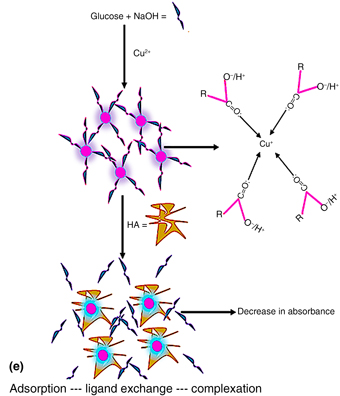
A glucose-reduced, room temperature-synthesized colloidal Cu2O solution (CCS) was used for the first time to detect humic acid (HA), a carcinogen-promoting substance in aqueous solution. The CCS sensor was characterized using standard spectroscopy and microscopy techniques. The sensor evolved as a carboxylic acid-capped peach-pink solution after synthesis. The result of the interaction of the sensor with HA in phosphate buffer solution (pH 7) showed a detection limit of 1.5891 × 10⁻² mg/L over a concentration range of 0.00–0.41 mg/L. This finding suggests that the sensor may be useful for monitoring low levels of HA in aqueous environments.
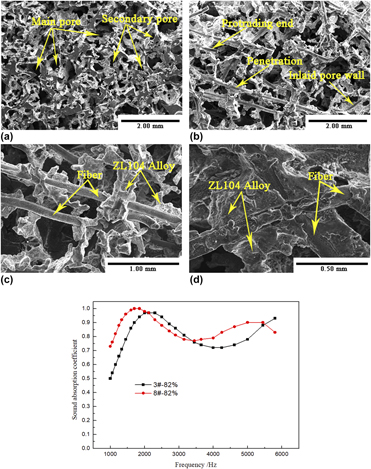
ZL104 alloy foam and ZL104 alloy/aluminum fiber composite foams with a porosity of 71–90% were prepared by an infiltration casting method. The pore structure and the sound absorption properties of these two kinds of foams were studied. The results show that fibers partially embedded in the porous pore walls and partially extending out of the pore in the composite foams. The sound absorption coefficient of the foams has a sound absorption peak and a sound absorption trough with increasing frequency. The fiber composite foam possesses better sound absorption properties compared with the alloy foam. As porosity, fiber diameter, and fiber content increases, the average sound absorption coefficient of the composite foam first increases and then decreases. The average sound absorption coefficient (0.88) of the composite foam with a fiber content of 5 vol%, a fiber diameter of 0.1 mm, and a porosity of 82% increased 10% compared with that of the alloy foam. The surface roughness and specific surface area of the foam increase after fiber compounding, and the sound wave drives the fibers to vibrate to enlarge the consumption of sound energy.
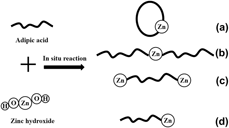
In this work, two types of zinc adipate β-nucleating agents, Adi-Zn(OH)2 (1:1) and Adi-ZnO (1:1), for polypropylene (PP) were prepared and their performances were evaluated and compared with commercial β-nucleating agent (named CNA). Results showed that Adi-Zn(OH)2 (1:1) was more effective in promoting PP to form β-crystals and improving the impact strength of PP in the range of nucleating agent addition (0–0.4 wt%). Based on these findings, the ratio of adipic acid to zinc hydroxide and the nonisothermal crystallization kinetics of the optimum ratio of adipic acid to zinc hydroxide were systematically studied; results showed that at 0.2 wt%, Adi-Zn(OH)2 (1:2), the nucleated PP displayed the highest impact strength, which was 2.6 times that of pure PP and 42% higher than that of CNA. Besides, Adi-Zn(OH)2 (1:2) could also afford to induce the formation of a high content of β-crystals and shorten the crystallization half time (t1/2) and accelerate the crystallization of PP.