To save content items to your account,
please confirm that you agree to abide by our usage policies.
If this is the first time you use this feature, you will be asked to authorise Cambridge Core to connect with your account.
Find out more about saving content to .
To save content items to your Kindle, first ensure no-reply@cambridge.org
is added to your Approved Personal Document E-mail List under your Personal Document Settings
on the Manage Your Content and Devices page of your Amazon account. Then enter the ‘name’ part
of your Kindle email address below.
Find out more about saving to your Kindle.
Note you can select to save to either the @free.kindle.com or @kindle.com variations.
‘@free.kindle.com’ emails are free but can only be saved to your device when it is connected to wi-fi.
‘@kindle.com’ emails can be delivered even when you are not connected to wi-fi, but note that service fees apply.
Written by a pioneer in the field, this text provides a complete introduction to X-ray microscopy, providing all of the technical background required to use, understand and even develop X-ray microscopes. Starting from the basics of X-ray physics and focusing optics, it goes on to cover imaging theory, tomography, chemical and elemental analysis, lensless imaging, computational methods, instrumentation, radiation damage, and cryomicroscopy, and includes a survey of recent scientific applications. Designed as a 'one-stop' text, it provides a unified notation, and shows how computational methods in different areas are linked with one another. Including numerous derivations, and illustrated with dozens of examples throughout, this is an essential text for academics and practitioners across engineering, the physical sciences and the life sciences who use X-ray microscopy to analyze their specimens, as well as those taking courses in X-ray microscopy.
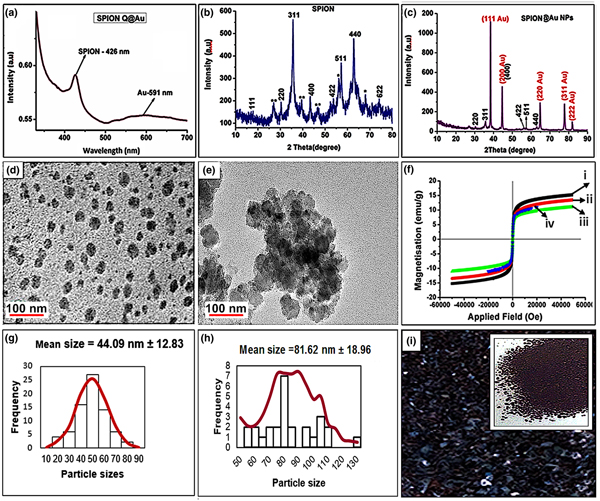
A low-cost synthesis approach was developed for the fabrication of four symmetric meso-substituted water-soluble thiolated polyethylene glycol gold-coated superparamagnetic iron oxide nanoparticles–porphyrin (p-hydroxyphenyl [THPP], 3,5-dimethoxyphenyl [TdMPP], 3-pyridyl[T-3-PyP], and 1-methylpyridinium-3-yl[T3-Py+P4I−]) conjugates to achieve materials with enhanced absorption and therapeutic properties. After evaluation of their antibacterial inhibition characteristics against four nocosomial pathogens (Staphylococcus aureus, Escherichia coli, Pseudomonas aeruginosa, and Enterococcus faecalis), THPP and TdMPP conjugates showed some remarkable minimum inhibitory concentration values of 0.104 and 0.625 mg/mL against E. coli and E. faecalis, respectively, making these materials to be alternative agents for the inhibition of these pathogens in the environmental and clinical fields.
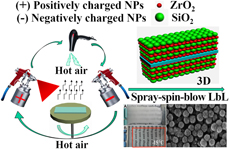
Multifunctional antifogging (AF) coatings consisting of alternating layers of positively charged ZrO2 nanoparticles (NPs) and negatively charged SiO2 NPs were rapidly fabricated via spray-spin-blow layer-by-layer electrostatic assembly followed by calcination. The resultant coatings of only three bilayers exhibited excellent AF, superhydrophilic, antireflective (AR), and self-cleaning (SC) properties, as well as high mechanical stability. These were demonstrated by various methods, e.g., transmission and scanning electron microscopy, X-ray diffraction, UV-Vis spectrometry, a contact angle test, a boiling test (constant 100 °C), a low-temperature test, and mechanical stability tests. ZrO2 and SiO2 NPs were synthesized and utilized as building blocks for fabricating the coatings. The resultant coatings exhibited excellent AF and SC properties due to the superhydrophilicity of the coating, showed excellent AR properties due to the quarter-wave coating with a low refractive index, and exhibited excellent superhydrophilic properties due to a rough microtextured surface. The simplicity of the fabrication process, easy availability of the nanomaterials, and excellent adhesion to substrates for the coating preparation might make the low-cost, nontoxic, and eco-friendly multifunctional coatings potentially useful in optical and display devices.
We report on enhanced mechanical, tribological, and surface-wettability characteristics of polymeric films dispersed with inorganic fullerene (IF)-type tungsten disulfide (WS2) nanoparticles derived through a two-step hydrothermal route. Imaging through transmission electron microscopy suggests the occurrence of polyhedral cage-like structures with a visibly nonspherical hollow ranging 55–75 nm. The mechanical stability of IF-type WS2 dispersed in polyvinyl alcohol (PVA) gets improved with increasing nano-inclusions, and upto 6 wt% loading. As compared with nanosheets, the IF-WS2 in PVA at the critical loading offers nearly 28.6, 33.6, and 42% respective improvements as regards, breaking stress, elongation at break, and toughness. Moreover, Stribeck curves in the mixed lubricating regime have revealed a nearly ∼80% reduction of coefficient of friction (COF) due to inclusion of IF-type WS2 in PVA. In the hydrodynamic region, the COF is drastically lowered from a typical value of 0.55 to 0.15 at the maximal sliding velocity with nanoparticle loading and despite the fact that the tribo feature gives a rising trend for a particular curve. Furthermore, exhibiting a progressive increase in water contact angle, a clear transition from the hydrophilic (∼64°) to hydrophobic (∼107°) surface of the nanocomposite films has been witnessed after inclusion of nano IF-WS2. An increased hydrophobicity and lowered surface adhesion and COF values along with marginal drop in surface energy are ensured in the investigated specimens. Investigation of responsive tribological and wetting–dewetting transition would find scope not only in coating and textile industry but also in smart miniaturized components.
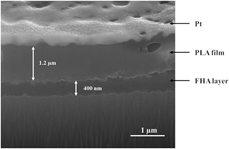
Magnesium (Mg) alloys have received considerable attention as favorable orthopedic implant materials. However, their uncontrolled degradation in the physiological environment has led to premature implant failure. Thus, to address this problem, the present study was focused on developing protective monolayer coatings of fluorine-doped hydroxyapatite (FHA) and a bilayer coating of FHA and poly(lactic acid) (FHA–PLA) on AZ31 Mg. The synthesis involved microwave irradiation which helped in rapid synthesis of FHA coatings and spin coating for developing the PLA layer. Results revealed the formation of dense and defect-free FHA–PLA hybrid coatings. Importantly, they helped in significant reduction of galvanic–corrosion reactions of AZ31 in a physiological medium. The corrosion current density of FHA/PLA–coated samples was about two orders of magnitude lower than uncoated samples. Their lower weight losses further confirmed the coatings’ corrosion resistance. Combined, the as-synthesized FHA–PLA coatings can provide favorable corrosion protection to AZ31 Mg.
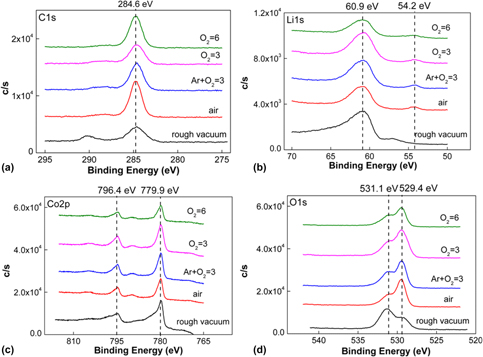
The LiCoO2 films were directly deposited on stainless steel (SS) using medium-frequency magnetron sputtering, and the effects of annealing parameters, such as ambiences, temperatures, holding times, and heating rates, were systematically compared based on surface morphologies, crystal structures, and electrochemical properties. The results demonstrate that an aerobic atmosphere with 3.5 Pa is the most important parameter to maintain the performance of LiCoO2 films. The influence of the annealing temperature (>550 °C) ranks second because the formed (101) or (104) planes of LiCoO2 facilitate Li+ migration. A short holding time of 20 min and a moderate heating rate of 3 °C/min are selected to reduce the oxidation or inter-diffusion between the LiCoO2 films and the SS substrate. Finally, the optimal annealing process is confirmed and corresponds to the initial discharge capacity of 37.56 μA h/(cm2 μm) and the capacity retention of 83.81% at the 50th cycle.
Depth-sensing transmission electron microscopic (TEM) in situ mechanical testing has become widely utilized for understanding deformation in irradiated materials. Until now, compression pillars have primarily been used to study the elastic properties and yield of irradiated materials. In this study, we utilize TEM in situ compression pillars to investigate plastic deformation in two ion-irradiated alloys: Fe–9% Cr oxide dispersion strengthened (ODS) alloy and nanocrystalline Cu–24% Ta. We develop an algorithm to automate the extraction of instantaneous pillar dimensions from TEM videos, which we use to calculate true stress–strain curves and strain hardening exponents. True stress–strain curves reveal intermitted plastic flow in all specimen conditions. In the Fe–9% Cr ODS, intermitted plastic flow is linked to strain bursts observed in TEM videos. Low strain hardening or strain softening is observed in all specimen conditions. TEM videos link the strain softening in irradiated Fe–9% Cr ODS to dislocation cross-slip, and in Cu–24% Ta to grain boundary sliding.
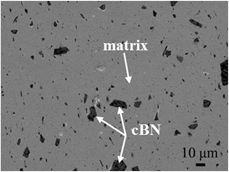
Composites of 0–20 vol% Ti-coated cBN (cBN@Ti) particles dispersed in WC–Ni were densified by spark plasma sintering under 50 MPa at 1300 °C. The cBN particles were distributed homogeneously with a Ti-rich interfacial layer between the cBN particles and WC–Ni matrix. Increasing cBN@Ti to 20 vol% decreased the sample densification, but all the composites were still >97.5% dense. The Vickers hardness and flexural strength initially increased and then decreased, reaching the maximum values of 1820 HV10 with 15 vol% cBN@Ti and 1500 MPa with 5 vol% cBN@Ti, respectively, whereas the fracture toughness KIC gradually increased from 8 to 13 MPa m1/2. For cutting rocks, the wear significantly decreased with 5–15 vol% cBN@Ti but increased with 20 vol% cBN@Ti because of cBN particles pull-out.
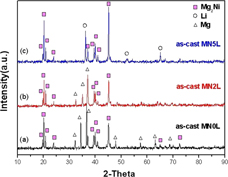
Lithium was added to the hypereutectic Mg–Ni alloy to investigate the effect of volatilization of Li on the hydrogen storage characteristics of the eutectic Mg–Ni alloy at 300 °C. After fully activated at 300 °C, Li was almost completely volatilized and the structure of Li-containing Mg82Ni18 alloy was converted to the structure of Li-free Mg82Ni18 alloy, but hydrogen absorption capacity significantly decreased. This is because volatilization of Li weakened the bonding between eutectic Mg and Mg2Ni, lowering the catalytic effect of Mg2Ni on Mg. The decrease in hydrogen absorption capacity was more obvious with increasing Li content. In addition, experimental alloy in powder form could increase surface area, causing Li to volatilize at 300 °C.
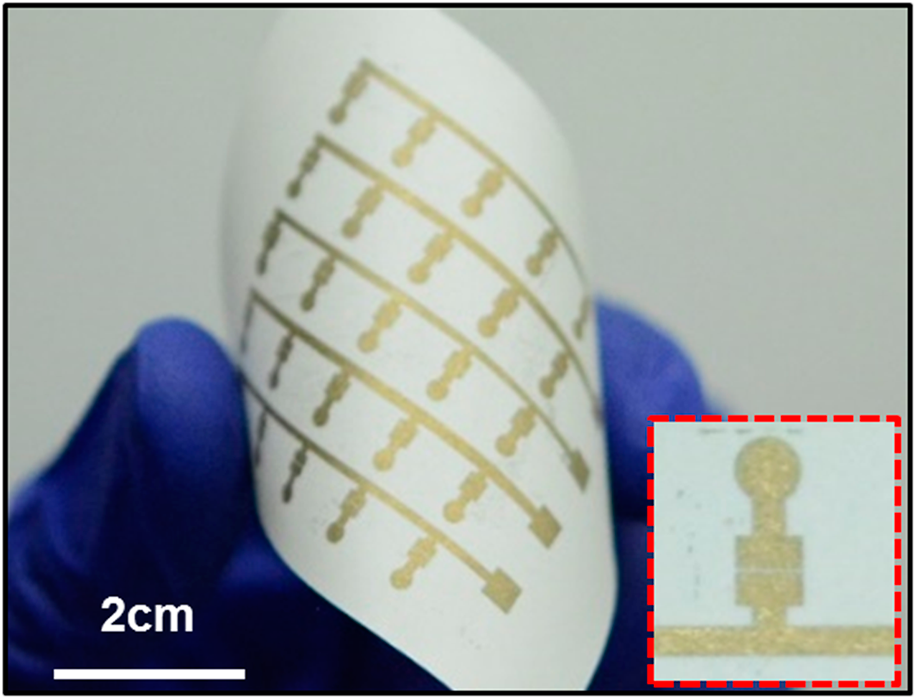
Paper transistors are indispensable devices for paper-based electronic biosensing systems. Existing paper transistors mainly use paper as a mechanical support in a passive fashion. By taking advantage of the cellulose fibers in paper, here we report a transistor-in-paper where paper is employed as an essential part to allow for low-voltage operation, which addresses the long-standing challenge of high-voltage operation with existing paper transistors. Such a low-threshold voltage is because of the ion gel/cellulose fiber composite dielectric formed by modifying the paper with ion gels. We further developed paper-based inverters as examples of logic gates and an integrated tactile sensing mat based on a transistor array–enabled multiplexing device. The results collectively indicate that the ion gel–modified paper leads to a class of flexible, low-voltage transistors and integrated electronic devices, which hold promise in many applications.
In the three-phase (pure donor, pure acceptor, and mixed phases) morphologies of organic solar cells, the mixed phases produce an energy cascade that promotes the generation of free carriers. However, how to optimize the content of the mixed phases is a challenging problem. The authors proposed to control different content of mixed phases in DRTB-T and IDIC blends by additive and solvent vapor annealing (SVA). The authors first formed the largest extent amount of mixed phases by the additive cinene (2%) to inhibit the crystallization of DRTB-T and IDIC. And then, different amounts of mixed phases were achieved by further SVA for different times (from 0 to 50 s) to increase the content of pure DRTB-T and IDIC phases. The energetic offsets (ΔE) of pure and mixed phases gradually decrease from 0.529 to 0.477 eV for different content of mixed phases. When ΔE was 0.498 eV, the highest photocurrent density (Jsc) was obtained. The power conversion efficiency was increased from 3.23% (without any treatment) to 8.54%. Therefore, the authors demonstrated that the optimized content of the mixed phases is critical to device performance.
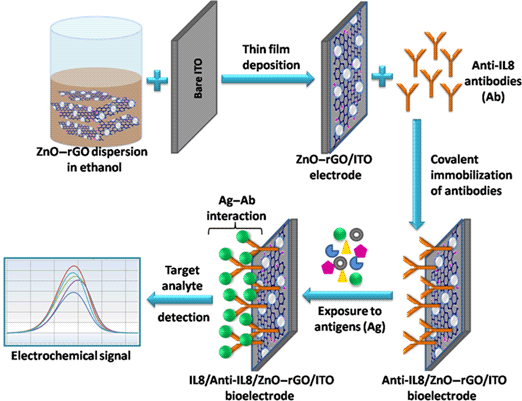
Multifunctional materials with excellent biocompatibility and electron-transport properties are critical for the pursuit of point-of-care biosensing devices. The authors report the synthesis of zinc oxide–reduced graphene oxide (ZnO–rGO) nanocomposite for the fabrication of an electrochemical immunosensing test-bed for noninvasive onsite detection of oral cancer biomarker (interleukin-8, IL8). The immunosensor showed successful detection of IL8 at low concentration ranges, i.e., 100 fg/mL–5 ng/mL with a sensitivity of 12.46 ± 0.82 µA mL/ng and a detection limit of 51.53 ± 0.43 pg/mL. These results have been validated through in vitro investigations using real saliva samples spiked with IL8.
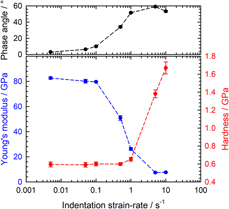
Constant strain rate nanoindentation is a popular technique for probing the local mechanical properties of materials but is usually restricted to strain rates ≤0.1 s−1. Faster indentation potentially results in an overestimation of the hardness because of the plasticity error associated with the continuous stiffness measurement (CSM) method. This can have significant consequences in some applications, such as the measurement of strain rate sensitivity. The experimental strain rate range can be extended by increasing the harmonic frequency of the CSM oscillation. However, with commercial instruments, this is achievable only by identifying higher CSM frequencies at which the testing system is dynamically well behaved. Using these principles, a commercial system operated at the unusually high harmonic frequency of 1570 Hz was successfully used to characterize of the strain rate sensitivity of a Zn22Al superplastic alloy at strain rates up to 1 s−1, i.e., an order of magnitude higher than with standard methods.
An analysis of indentation cyclic behavior of polymers is carried out with the aim to tackle time-dependent behavior of polymer at several time scales by one test. The method consists in cycling the load between a positive close-to-zero value and a maximum peak value (10 mN in this study) for long time with constant loading rate. The short time scale is characterized through the instantaneous elastic modulus determined from reloading curves at each cycle. The advantages of determination of instantaneous elastic modulus from reloading instead of commonly used unloading curves are discussed. The energy dissipation describes viscoelasticity and plasticity at the time scale of one cycle. The evolution of both parameters with cycles along with the cyclic creep describes the long-time viscoelasticity. The cyclic indentation behavior of poly(methyl methacrylate), PR520 epoxy, and high-density polyethylene (HDPE) polymers is analyzed, and a comparison with the macroscopic cyclic behavior of HDPE is presented.
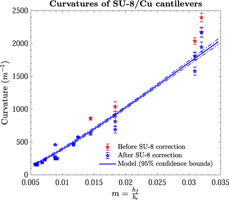
Elastic modulus and residual stress in freestanding ultrathin films (<100 nm) are characterized using bilayer cantilevers. The cantilevers comprise a test film and a well-characterized reference material (SU-8). When released from the substrate, residual stresses in the bilayer cantilever cause it to deflect with measurable curvatures, allowing the determination of both stiffness and residual stress of the test film. The technique does not require sophisticated mechanical test equipment and serves as a useful metrology tool for characterizing coatings immediately after fabrication in a clean room assembly line. The measured biaxial modulus and residual strain of 75 nm copper films are 211 ± 19 GPa and (7.05 ± 0.22) × 10−3, respectively. Additional experiments on the freestanding structures yield a mean Young’s modulus of 115 GPa. These properties are in close agreement with those measured from additional residual stress–driven structures developed on the same coatings by the authors.