Refine search
Actions for selected content:
106129 results in Materials Science

An auto-combustion synthesis and luminescence properties of polyhedral YVO4: Ln3+ (Ln = Eu, Sm, Yb/Er, Yb/Tm) microcrystals
-
- Journal:
- Journal of Materials Research / Volume 34 / Issue 21 / 14 November 2019
- Published online by Cambridge University Press:
- 14 October 2019, pp. 3636-3644
- Print publication:
- 14 November 2019
-
- Article
- Export citation
JMR volume 34 issue 19 Cover and Front matter
-
- Journal:
- Journal of Materials Research / Volume 34 / Issue 19 / 14 October 2019
- Published online by Cambridge University Press:
- 14 October 2019, pp. f1-f5
- Print publication:
- 14 October 2019
-
- Article
-
- You have access
- Export citation

Dual light-emitting Yb3+,Er3+-doped La(IO3)3 iodate nanocrystals: up-conversion and second harmonic generation
-
- Journal:
- MRS Communications / Volume 9 / Issue 4 / December 2019
- Published online by Cambridge University Press:
- 14 October 2019, pp. 1221-1226
- Print publication:
- December 2019
-
- Article
- Export citation
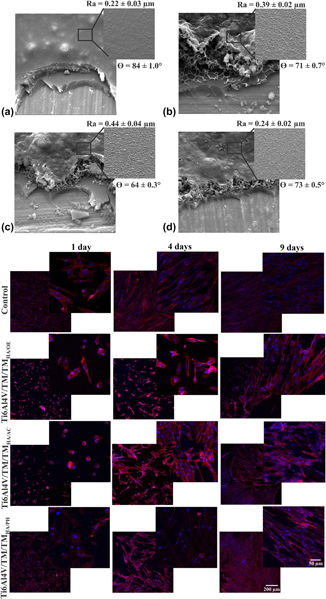
Osteogenic differentiation of mesenchymal stem cells on hybrid coatings sterilized by different processes
-
- Journal:
- Journal of Materials Research / Volume 34 / Issue 20 / 28 October 2019
- Published online by Cambridge University Press:
- 14 October 2019, pp. 3400-3411
- Print publication:
- 28 October 2019
-
- Article
- Export citation
JMR volume 34 issue 19 Cover and Back matter
-
- Journal:
- Journal of Materials Research / Volume 34 / Issue 19 / 14 October 2019
- Published online by Cambridge University Press:
- 14 October 2019, pp. b1-b2
- Print publication:
- 14 October 2019
-
- Article
-
- You have access
- Export citation
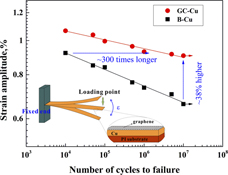
Bilayer graphene-covered Cu flexible electrode with excellent mechanical reliability and electrical performance
-
- Journal:
- Journal of Materials Research / Volume 34 / Issue 21 / 14 November 2019
- Published online by Cambridge University Press:
- 11 October 2019, pp. 3645-3653
- Print publication:
- 14 November 2019
-
- Article
- Export citation
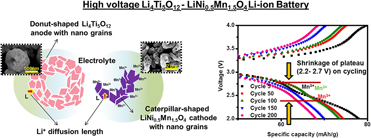
Synergic effect of nanostructuring and excess Mn3+ content in the electrochemical performance of Li4Ti5O12–LiNi0.5Mn1.5O4 Li-ion full-cells
-
- Journal:
- Journal of Materials Research / Volume 35 / Issue 1 / 14 January 2020
- Published online by Cambridge University Press:
- 11 October 2019, pp. 42-50
- Print publication:
- 14 January 2020
-
- Article
- Export citation
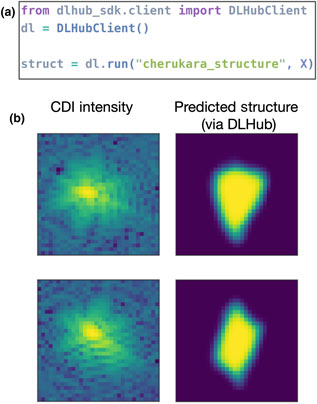
A data ecosystem to support machine learning in materials science
-
- Journal:
- MRS Communications / Volume 9 / Issue 4 / December 2019
- Published online by Cambridge University Press:
- 10 October 2019, pp. 1125-1133
- Print publication:
- December 2019
-
- Article
- Export citation
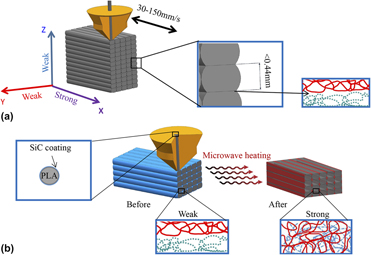
Improved mechanical properties of 3D-printed SiC/PLA composite parts by microwave heating
-
- Journal:
- Journal of Materials Research / Volume 34 / Issue 20 / 28 October 2019
- Published online by Cambridge University Press:
- 09 October 2019, pp. 3412-3419
- Print publication:
- 28 October 2019
-
- Article
- Export citation

Investigation of the flexural and thermomechanical properties of nanoclay/graphene reinforced carbon fiber epoxy composites
-
- Journal:
- Journal of Materials Research / Volume 34 / Issue 21 / 14 November 2019
- Published online by Cambridge University Press:
- 09 October 2019, pp. 3678-3687
- Print publication:
- 14 November 2019
-
- Article
- Export citation

Role of oligomer structures in the surface chemistry of amidinate metal complexes used for atomic layer deposition of thin films
-
- Journal:
- Journal of Materials Research / Volume 35 / Issue 7 / 14 April 2020
- Published online by Cambridge University Press:
- 07 October 2019, pp. 720-731
- Print publication:
- 14 April 2020
-
- Article
-
- You have access
- HTML
- Export citation
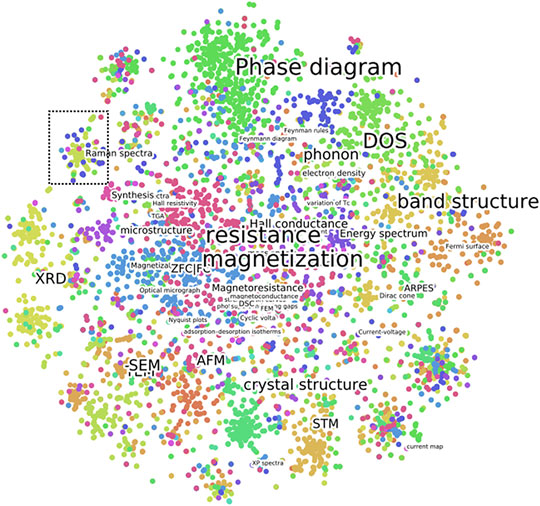
A picture is worth a thousand words: applying natural language processing tools for creating a quantum materials database map
-
- Journal:
- MRS Communications / Volume 9 / Issue 4 / December 2019
- Published online by Cambridge University Press:
- 07 October 2019, pp. 1134-1141
- Print publication:
- December 2019
-
- Article
- Export citation
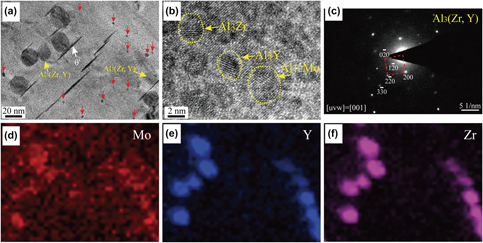
Effect of Mo, Zr, and Y on the high-temperature properties of Al–Cu–Mn alloy
-
- Journal:
- Journal of Materials Research / Volume 34 / Issue 22 / 28 November 2019
- Published online by Cambridge University Press:
- 07 October 2019, pp. 3853-3861
- Print publication:
- 28 November 2019
-
- Article
- Export citation
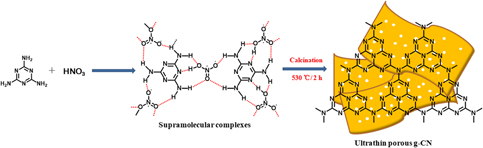
Ultrathin porous g-CN nanosheets fabricated by direct calcination of pre-treated melamine for enhanced photocatalytic performance
-
- Journal:
- Journal of Materials Research / Volume 34 / Issue 20 / 28 October 2019
- Published online by Cambridge University Press:
- 07 October 2019, pp. 3462-3473
- Print publication:
- 28 October 2019
-
- Article
- Export citation
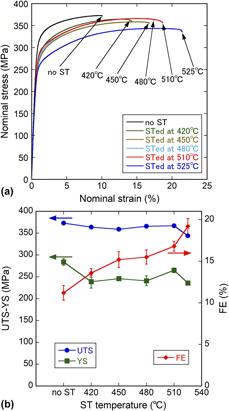
Improvement of mechanical properties of extruded AZX912 magnesium alloy using high-temperature solution treatment
-
- Journal:
- Journal of Materials Research / Volume 34 / Issue 21 / 14 November 2019
- Published online by Cambridge University Press:
- 02 October 2019, pp. 3725-3734
- Print publication:
- 14 November 2019
-
- Article
- Export citation

Effect of void defect on c-axis deformation of single-crystal Ti under uniaxial stress conditions: Evolution of tension twinning and dislocations
-
- Journal:
- Journal of Materials Research / Volume 34 / Issue 21 / 14 November 2019
- Published online by Cambridge University Press:
- 02 October 2019, pp. 3699-3706
- Print publication:
- 14 November 2019
-
- Article
- Export citation
-
Deformation twins have a major role in the microstructure evolution of hexagonal close packed (HCP) metals. Voids are common defects in metals and have a significant impact on their properties. In this work, using molecular dynamics, a tension simulation of single-crystal titanium (Ti) with different void sizes under uniaxial stress conditions was performed. The results showed that the evolution and dominance of the $\left\{ {10\bar{1}2} \right\}$ twin system using the Henning potential was not consistent with the Schmid criterion when the single-crystal Ti contained void defects. From a microscopic perspective, the authors analyzed the relationship between the nucleation and growth of twins and the emission of dislocation loops. The authors found that the existence of voids not only contributes to the emission of dislocation loops but also hinders the movement of these loops. With the increase in void size, the peak dislocation density of ${1 \over 3}\left\langle {\bar{1}100} \right\rangle$ partial dislocation loops decreased. This work is helpful to further investigate the nucleation and evolution of tension twins and to form an effective growth criterion for twins to study the twinning process of HCP metals during plastic deformation.


Recommended reading
-
- Journal:
- MRS Bulletin / Volume 44 / Issue 10 / October 2019
- Published online by Cambridge University Press:
- 10 October 2019, p. 820
- Print publication:
- October 2019
-
- Article
-
- You have access
- HTML
- Export citation
LOOK AGAIN
-
- Journal:
- MRS Bulletin / Volume 44 / Issue 10 / October 2019
- Published online by Cambridge University Press:
- 10 October 2019, p. 824
- Print publication:
- October 2019
-
- Article
- Export citation
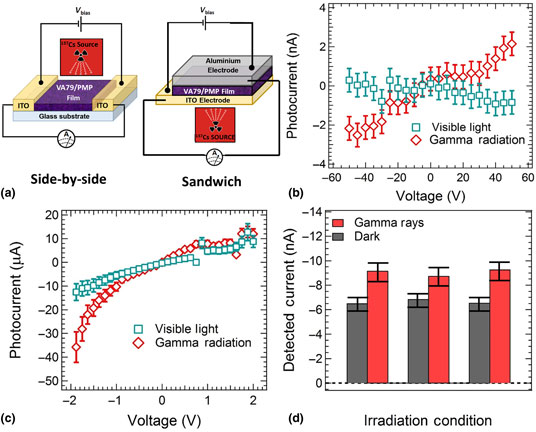
Printable ionizing radiation sensors fabricated from nanoparticulate blends of organic scintillators and polymer semiconductors
-
- Journal:
- MRS Communications / Volume 9 / Issue 4 / December 2019
- Published online by Cambridge University Press:
- 01 October 2019, pp. 1206-1213
- Print publication:
- December 2019
-
- Article
- Export citation
Intermetallic samarium cobalt deforms without dislocation activity
-
- Journal:
- MRS Bulletin / Volume 44 / Issue 10 / October 2019
- Published online by Cambridge University Press:
- 10 October 2019, p. 744
- Print publication:
- October 2019
-
- Article
-
- You have access
- HTML
- Export citation
