To save content items to your account,
please confirm that you agree to abide by our usage policies.
If this is the first time you use this feature, you will be asked to authorise Cambridge Core to connect with your account.
Find out more about saving content to .
To save content items to your Kindle, first ensure no-reply@cambridge.org
is added to your Approved Personal Document E-mail List under your Personal Document Settings
on the Manage Your Content and Devices page of your Amazon account. Then enter the ‘name’ part
of your Kindle email address below.
Find out more about saving to your Kindle.
Note you can select to save to either the @free.kindle.com or @kindle.com variations.
‘@free.kindle.com’ emails are free but can only be saved to your device when it is connected to wi-fi.
‘@kindle.com’ emails can be delivered even when you are not connected to wi-fi, but note that service fees apply.
The crystal structure of cefprozil monohydrate has been solved and refined using synchrotron X-ray powder diffraction data and optimized using density functional techniques. Cefprozil monohydrate crystallizes in space group P21 (#4) with a = 11.26513(6), b = 11.34004(5), c = 14.72649(11) Å, β = 90.1250(4)°, V = 1881.262(15) Å3, and Z = 4. Although a reasonable fit was obtained using an orthorhombic model, closer examination showed that many peaks were split and/or had shoulders, and thus the true symmetry was monoclinic. DFT calculations revealed that one carboxylic acid proton moved to an amino group. The structure thus contains one ion pair and one pair of neutral molecules. This protonation was confirmed by infrared spectroscopy. There is an extensive array of hydrogen bonds resulting in a three-dimensional network. The powder pattern has been submitted to ICDD® for inclusion in the Powder Diffraction File™.
A novel solid-clad-by-liquid method was developed to form a 10-m long by 10-mm wide by 80-μm thick Ni–5 at.% W/Ni–9.3 at.% W/Ni–5 at.% W composite tape. Three deformation routes (cold rolling, cold rolling with intermediate annealing, and cold rolling combined with warm rolling) have been investigated in short Ni–5 at.% W/Ni–9.3 at.% W/Ni–5 at.% W composite substrate. To optimize the dynamic continuous annealing parameters for the long composite substrates, air-cooled and furnace-cooled annealing procedures were compared in short Ni–5 at.% W/Ni–9.3 at.% W/Ni–5 at.% W composite substrates. Improved cube texture of 98.7% in a 10-m long by 10-mm wide by 80-μm thick Ni–5 at.% W/Ni–9.3 at.% W/Ni–5 at.% W composite substrate was achieved via warm rolling deformation at 550 °C and two-step dynamic continuous annealing (750 °C for 1 h followed by 1200 °C for 1 h). The yield strength, Curie temperature, and saturation magnetization of 176 MPa, 324 K, and 18 emu/g, respectively, were obtained.
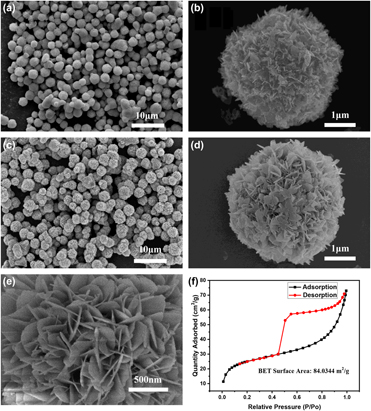
The hierarchical Au-loaded SnO2 nanoflowers were synthesized using a new developed self-reductive hydrothermal method, of which the gas-sensing properties were enhanced significantly. The SnO2 hierarchical nanoflowers were composed of well-defined nanosheets with a specific surface area of around 84 m2/g. Gas sensors made of pure and Au-doped SnO2 were fabricated, and their gas-sensing properties were characterized. The 1.0 at.% Au-loaded SnO2 sensor prepared by the new developed self-reductive method showed much more excellent selectivity toward ethanol at 200 °C than the one prepared with the conventional hydrothermal method. Its response to ethanol was around 3 times higher than that of the pure SnO2 sensor. A very wide detection range of 1–500 ppm for ethanol, good repeatability, and long-term stability were also approved.
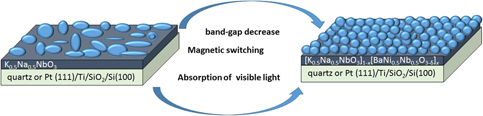
[K0.5Na0.5NbO3]1−x[BaNi0.5Nb0.5O3−δ]x (KNBNNO, 0 ≤ x ≤ 0.3) films have been fabricated on different substrates for the first time, using a modified chemical solution deposition method. The microstructure, optical properties, ferromagnetism, and substrate effects of KNBNNO films were assessed, and we found that BaNi0.5Nb0.5O3−δ (BNNO) content was a key factor in determining the properties of the final products. The lower band gap of KNBNNO is due to the band-to-band transition from hybridized Ni 3d and O 2p to Nb 4d states. Moreover, with increasing x from 0 to 0.3, the magnetism transition process of the samples from diamagnetism to ferromagnetism may originate from the competition between ferromagnetic exchange interactions in Ni2+–VO2−–Ni2+ and superexchange interactions in Ni2+–Ni2+. Notably, absorption behaviors in the visible light wave band for KNBNNO films have been realized, which makes it possible to use KNBNNO films for perovskite solar cell applications.
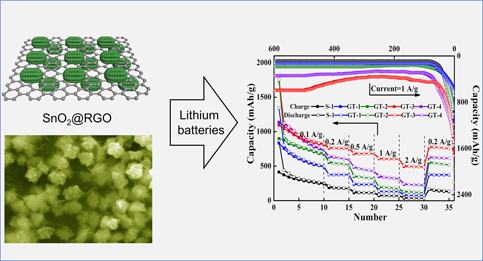
Three-dimensional nano-mulberries consisting of SnO2 nanoparticles have been successfully anchored onto the surfaces of reduced graphene oxide (RGO) to construct hierarchical hybrids—SnO2@RGO with a one-pot approach. The SnO2 nano-mulberries with different amounts of RGO have been produced for optimizing their composition effect on Li storage performance. Specifically, SnO2@RGO hybrids incorporated with optimized amount of RGO nanosheets (∼20.8%) exhibit highly enhanced capacity of ∼1025 mA h/g at 0.1 A/g and a reversible capacity of 750 mA h/g over 100 cycles at 0.2 A/g. The materials also deliver much better rate performance with average specific capacity of ∼498 mA h/g at 2 A/g in comparison with that of SnO2 nano-mulberries. After cycling for 600 times at 1 A/g, the SnO2@RGO electrodes still maintain high reversible capacity of ∼602 mA h/g, corresponding to 35% of the second cycle and 133% of the 70th discharge capacity.
Three-dimensional graphene (3D-GN)/Cu/Fe3O4 composite support materials were synthesized by a modified chemical reduction method using graphene oxide precursor. A 3D-GN/Cu/Fe3O4 biosensor was prepared by coating the electrode with laccase. The electrochemical properties of the biosensor were investigated by cyclic voltammetry (CV) and differential pulse voltammetry using potassium ferricyanide, phosphate-buffered saline (PBS) solution, and bisphenol A (BPA) solution. The current response of 3D-GN/Cu/Fe3O4 biosensors presents a remarkable sensitivity based on CV. The linear range of BPA is 7.2–18 μM using differential pulse voltammetry in PBS solution (pH = 4.0). A linear fitting equation of the laccase biosensor was observed for the current response as a function of BPA concentration. The detection limit was decreased to 1.7 μM. The detection approach herein turns out to be highly sensitive, has a wide linear range, and exhibits excellent stability.
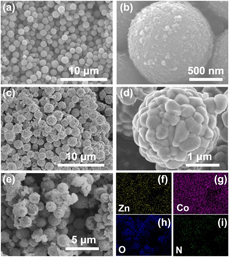
Metal oxides are promising candidates as the anodes of next-generation lithium ion batteries. However, the low electronic conductivities hinder their practical applications. Herein, through a facile calcination process using ammonium bicarbonate (NH4HCO3) as the N source, the nitrogen heteroelement was introduced into the ZnO/CoO micro-/nanospheres, which greatly improves the conductivity of the composites. As the lithium-ion battery anode, the N-doped ZnO/CoO micro-/nanosphere demonstrates much enhanced electrochemical performance. It displays a high initial capacity of 911.8 mA h/g at a current density of 0.2 A/g and long-term cycling stability, with a reversible capacity of 977.8 mA h/g remained after 500 cycles at a current density of 1 A/g. Furthermore, the N-doped ZnO/CoO composite presents an outstanding rate performance, with 605 mA h/g remained even at 5 A/g. The excellent electrochemical properties make N-doped ZnO/CoO micro-/nanospheres a promising candidate as high-performance anodes for next-generation rechargeable LIBs.
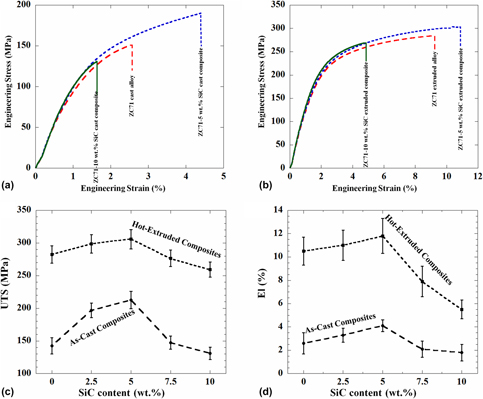
Effects of adding different amounts of SiCp on the microstructure and mechanical properties of the as-cast and as-extruded Mg–7% Zn–1.5% Cu (ZC71) alloys were studied. The as-cast ZC71 alloy consisted of α-Mg phase that encircled with the MgZnCu and Mg(Zn,Cu)2 intermetallics. Hot extrusion has led to a grain-refined structure with distributed intermetallics along the extrusion direction. Adding SiCp decreased the grain size values for the as-extruded composites. The Vickers hardness values increased with SiCp addition for both conditions. The ultimate tensile strength and tensile elongation (El%) values reached the optimum level with 5 wt% SiCp addition. More SiCp additions led to more agglomerations and decrement in strength and elongation. The yield tensile strength also increased with SiC additions. Adding 5 wt% SiCp changed the brittle fracture to the more quasi-cleavage. Hot extrusion altered the fracture mode to more ductile for all composites.
3-[1-[4-(2-Methylpropyl)phenyl]ethyl]-6-(4-fluorophenyl)-1,2,4-triazolo[3,4-b]-1,3,4-thiadiazole (C21H21FN4S) has been synthesized as a member of a series of triazolothiadiazoles having NSAIDs moieties with cytotoxic activity. The crystal structure of this new compound has been solved and refined using conventional laboratory X-ray powder diffraction data and optimized using density functional techniques. The final structure solution was achieved by Rietveld refinement using soft restraints on all non-H atom bond lengths and angles. This compound crystallizes in $P\bar{1}\;$ space group, with the unit cell parameters a = 5.5880(4) Å, b = 9.3074(7) Å, c = 19.497(4) Å, α = 99.311(10)°, β = 91.925(9)°, γ = 98.199(6)°, and V = 988.8(2) Å3. To complement and verify the structure solution of the compound, the density functional theory (DFT) calculations were performed by using the local density approximation and the generalized gradient approximation for exchange-correlation energy. In order to see the effect of the van der Waals interactions on the electronic structure, the relevant structure was also optimized with B3LYP-D2, PBE-D2, and optB88-vdW functionals. The refined crystal structure was confirmed by the DFT calculations. The best agreement with the experimental structure was achieved by optB88-vdW functional.
The crystal structure of cloxacillin sodium monohydrate has been solved and refined using synchrotron X-ray powder diffraction data and optimized using density functional techniques. Cloxacillin sodium monohydrate crystallizes in space group P212121 (#19) with a = 7.989 36(12), b = 10.918 09(10), c = 25.559 3(6) Å, V = 2229.50(5) Å3, and Z = 4. The crystal structure is characterized by corner-sharing chains of irregular NaO5 polyhedra along the a-axis. The carboxylate group chelates to the Na and bridges two Na cations. The coordination sphere is completed by the water molecule and a carbonyl group. The Na–O bonds are mostly ionic but have some covalent character. The bond valence sum of the Na is 1.14. The water molecule acts as a donor to the carboxylate group and a carbonyl oxygen. It is an acceptor in C–H⋯O hydrogen bonds from a methyl group and a ring carbon. The crystal structure of cloxacillin sodium monohydrate is very similar to that of the fluorinated derivative (CSD Refcode BEBCAM), reflecting the similarity of the lattice parameters. The powder pattern has been submitted to ICDD for inclusion in the Powder Diffraction File™.
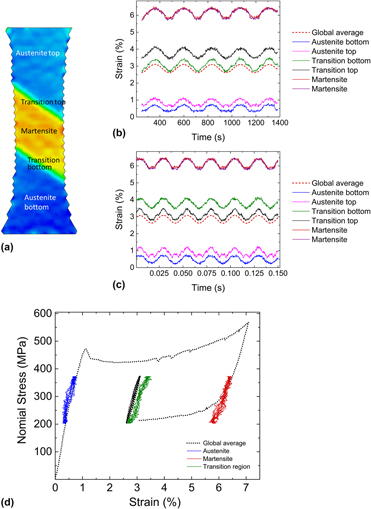
Fatigue of superelastic Nitinol in the mixed austenite–martensite state was examined in tension using center-tapered dog-bone specimens. A prestraining procedure, mimicking the load history of a medical device component, was applied prior to cycling: specimens were loaded to a fully martensitic state, unloaded partway into the lower plateau to a mixed-phase state, and then subjected to sinusoidal displacement cycles. Strain maps, obtained using digital image correlation, showed substantial variation in local mean and alternating strains across the gage section. In situ surface imaging using a high-speed camera confirmed crack initiation in a narrow transition zone between austenite and martensite that undergoes cyclic stress-induced martensitic transformation (SIMT). Fatigue life data showed an abrupt transition from high-cycle runouts to low-cycle fatigue failures at a stress amplitude level corresponding to the threshold for activating cyclic SIMT. The fatigue threshold can be estimated from the tensile loading–unloading curve.
High-current switching performance of ovonic threshold switching (OTS) selectors have successfully enabled the commercialization of high-density three-dimensional (3D) stackable phase-change memory in Intel’s 3D Xpoint technology. This bridges the huge performance gap between dynamic random access memory (DRAM) and Flash. Similar to phase-change memory, OTS uses chalcogenide-based materials, but whereas phase-change memory reversibly switches between a high-resistance amorphous phase and a low-resistance crystalline phase, OTS freezes in the amorphous phase. In this article, we review recent developments in OTS materials and their performance in devices, especially current density and selectivity. Advantages and challenges of OTS devices in the integration with the phase-change memory are discussed. We introduce the evolution of theoretical models for explaining the OTS behavior, including thermal runaway, field-induced nucleation, and generation/recombination of charge carriers.
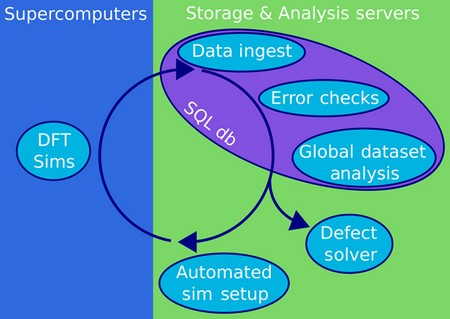
Computational acceleration of performance metric-based materials discovery via high-throughput screening and machine learning methods is becoming widespread. Nevertheless, development and optimization of the opto-electronic properties that depend on dilute concentrations of point defects in new materials have not significantly benefited from these advances. Here, the authors present an informatics and simulation suite to computationally accelerate these processes. This will enable faster and more fundamental materials research, and reduce the cost and time associated with the materials development cycle. Analogous to the new avenues enabled by current first-principles-based property databases, this type of framework will open entire new research frontiers as it proliferates.
The lightest element has carried a heavy burden for half a century. Expectations for the hydrogen economy, first proposed in the 1970s, have been high. But hydrogen as a renewable, low-carbon fuel for vehicles, heating, and energy storage has remained evasive, held back by high costs, low efficiency, and a lack of infrastructure and storage technologies.
Phase-change materials (PCMs) have demonstrated a wide range of potential applications ranging from electronic memories to photonic devices. These applications are enabled by the unconventional portfolio of properties that characterizes crystalline PCMs. Here, we address the origin of these unusual properties and how they are related to the application potential of these materials. Evidence will be presented that the properties are related to an unconventional bonding mechanism. Employing a novel map, which separates solids according to the number of electrons transferred and shared between adjacent atoms, it is shown that PCMs occupy a well-defined region. Depicting physical properties such as the optical dielectric constant as the third dimension in the map reveals systematic property trends. Such trends can be utilized to unravel the origins of the unconventional materials properties or alternatively, as a means to optimize them.
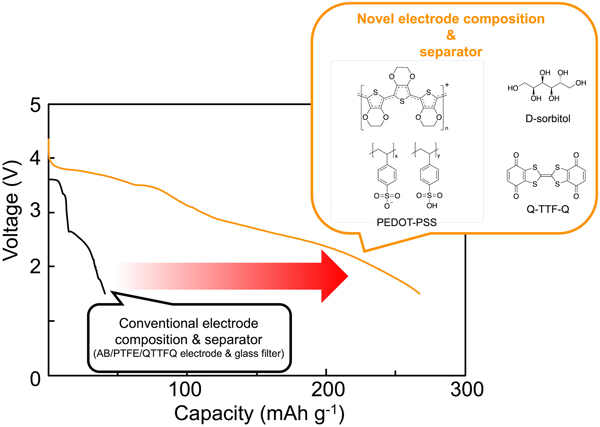
The practical realization of rechargeable organic batteries is stalled by their low electron conductivity, which limits the organic-active material content in the electrode composite and results in a low net electrode energy density. Additionally, the dissolution of active materials into the electrolyte causes a short cycle life. In this study, a conductive polymer mixture, poly(3,4-ethylenedioxythiophene)/polystyrenesulfonate, containing a small amount of sugar alcohol was used as the binder and separator in a rechargeable organic battery. Consequently, the active material content was increased up to 80 wt%, and the cycle life was extended.
The rapidly growing demand for data storage and processing, driven by artificial intelligence (AI) and other data-intensive applications, is posing a serious challenge for current computing devices based on the von Neumann architecture. For every calculation, data sets need to be shuffled sequentially between the processor, and multiple memory and storage units through bandwidth-limited and energy-inefficient interconnects, typically causing 40% power wastage. Phase-change materials (PCMs) show great promise to break this bottleneck by enabling nonvolatile memory devices that can optimize the complex memory hierarchy, and neuro-inspired computing devices that can unify computing with storage in memory cells. The articles in this issue of MRS Bulletin highlight recent breakthroughs in the fundamental materials science, as well as electronic and photonic implementations of these novel devices based on PCMs.
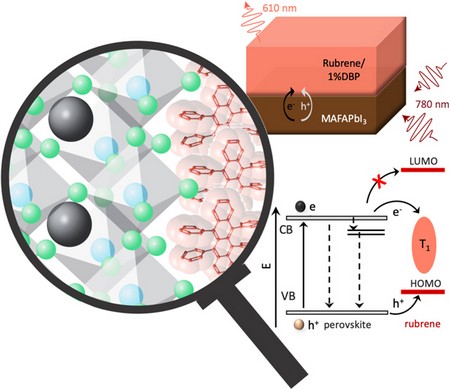
The processes of singlet fission and triplet fusion could allow state-of-the-art photovoltaic devices to surpass the Shockley–Queisser limit by optimizing the utilized solar spectrum by reducing thermal relaxation and inaccessible sub-bandgap photons, respectively. Triplet fusion demands precise control of the spin-triplet state population, and requires a sensitizer to efficiently populate the triplet state of an acceptor molecule. In this perspective, we highlight the established field of sensitized upconversion and further examine alternative triplet sensitization routes, including the possibility of bulk solid-state semiconductors as triplet sensitizers, which provide a new avenue for charge transfer-based triplet sensitization rather than excitonic triplet energy transfer.