To save content items to your account,
please confirm that you agree to abide by our usage policies.
If this is the first time you use this feature, you will be asked to authorise Cambridge Core to connect with your account.
Find out more about saving content to .
To save content items to your Kindle, first ensure no-reply@cambridge.org
is added to your Approved Personal Document E-mail List under your Personal Document Settings
on the Manage Your Content and Devices page of your Amazon account. Then enter the ‘name’ part
of your Kindle email address below.
Find out more about saving to your Kindle.
Note you can select to save to either the @free.kindle.com or @kindle.com variations.
‘@free.kindle.com’ emails are free but can only be saved to your device when it is connected to wi-fi.
‘@kindle.com’ emails can be delivered even when you are not connected to wi-fi, but note that service fees apply.
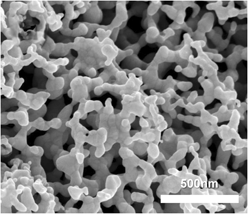
Gold, palladium, and platinum aerogels were prepared by a rapid, direct solution-based reduction synthesis with densities of 0.54, 0.065, and 0.055 g/cm3, respectively. Salt solutions were reduced at 1:1 (v/v) with dimethylamine borane and sodium borohydride to rapidly form gels within seconds to minutes above a threshold salt concentration and were then rinsed and freeze dried. Au, Pd, and Pt aerogels had no presence of oxide phases confirmed by X-ray diffractometry. Specific surface areas determined with gas physisorption were 3.06, 15.43, and 20.56 m2/g for Au, Pd, and Pt. Electrochemically determined specific capacitances using electrochemical impedance spectroscopy and cyclic voltammetry were 2.18, 4.13, and 4.20 F/g, and 2.67, 7.99, and 5.12 F/g for Au, Pd, and Pt, respectively. The rapid synthesis, high solvent accessible specific surface area, conductivity, and capacitance make these noble metal aerogels candidates for many of catalytic, energy, and sensor applications.
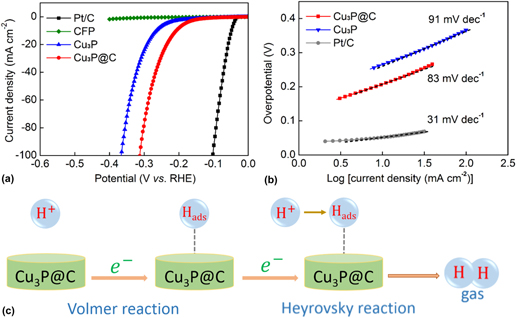
Developing highly efficient and low-cost electrocatalysts with robust stability for hydrogen evolution reaction (HER) is a significant but challenging work for energy conversion and storage in recent years. In the present work, in situ carbon-decorated Cu3P particles (Cu3P@C) were facially synthesized by a one-pot rapid reaction with the precursors of copper acetylacetonate [Cu(acac)2] and triphenylphosphine (PPh3) at 425 °C for 1 h via a vacuum encapsulation technique. Compared with pure Cu3P particles, the Cu3P@C hybrid catalyst exhibits an enhanced electrocatalytic water-splitting performance for hydrogen evolution with excellent stability. The investigation shows that the hybridization with carbon efficiently facilities the charge transport for the electrochemical reaction. Such results of our study make the present Cu3P@C-based hybrid a promising catalyst for practical applications toward energy conversion and pave way for designing and fast fabricating in situ carbon-decorated HER catalysts from the organometallic precursors.
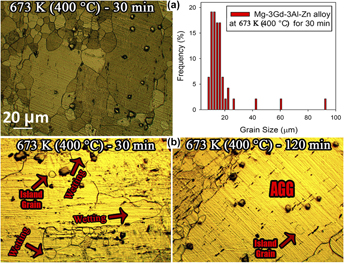
The behavior of extruded Mg–Gd–Al–Zn magnesium alloys at elevated temperatures was studied to elucidate the effect of intermetallic compounds on thermal stability, grain coarsening mode, and grain growth kinetics. The presence of the fine and widely distributed intermetallic (Mg,Al)3Gd phase in the extruded microstructure of the Mg–4.8Gd–1.2Al–1Zn alloy was found to be quite effective in inhibiting grain growth. This was not the case for the Mg–3Gd–3Al–1Zn alloy, where the extruded microstructure showed that the grain boundaries are not effectively pinned by the main Al2Gd intermetallic phase. The grain coarsening situation was found to be more severe for the Mg–6Al–1Zn alloy because no second phases were present to pin the grain boundaries at elevated temperatures. The simultaneous presence of Al and Gd was found to be helpful in increasing the solidus temperature, and in this way, it further contributes to increasing thermal stability of the magnesium alloys. The abnormal grain growth occurred by penetrating into grain boundaries of smaller grains and by the formation of discrete islands inside large abnormal grains, which provided evidence for the occurrence of the solid-state wetting mechanism in this magnesium alloy.
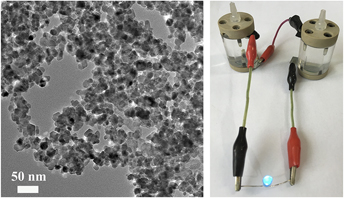
The transition metal compound catalysts have been taken a great part in renewable energy conversion and storage systems. Herein, we report the uniform CoFe2O4 nanoparticles with abundant oxygen vacancies and specific active surface exposed through the simple hydrothermal reaction for improving the electrocatalytic performance and stability. They show good electrocatalytic performance for hydrogen evolution reaction in 0.5 M H2SO4 with an onset potential of 20 mV, the overpotential of 45 mV (at j = 10 mA/cm2), and remarkable long-term stability more than 100 h at different current densities and better oxygen reduction reaction activity with lower overpotential in 0.1 M KOH. Moreover, the home-made primary Zn–air batteries, using CoFe2O4 nanoparticles as an air–cathode display the high open-circuit voltage of 1.47 V and the maximum power density of 142 mW/cm2. The two-series-connected batteries fabricated by CoFe2O4 nanoparticles can support a light-emitting diode to work for more than 48 h.
A method comprising a two-step alkali/acid treatment of poly (vinylidene fluoride) (PVDF) polymer is developed for the fabrication of flat-sheet PVDF membranes functionalized with labile hydroxyl groups. This method involves the application of a short-duration modification in alkali medium (5% KOH). Extensive characterizations were performed on the prepared membranes. Modification of the polymer altered the crystallinity of the PVDF from a mixture of both α and β phases to a predominant β phase. Lower work of adhesion of the modified membrane indicated the formation of a more hydrophobic and wetting-resistant membrane surface. Centrifugation of the polymer dope after the modification had a pronounced impact on the properties of the resultant membranes. This protocol could be utilized in fine-tuning the properties of PVDF membranes for various target-specific applications such as membrane distillation. This method can also be used in functionalizing PVDF membranes further by exploiting the labile –OH group present on the membrane surface.
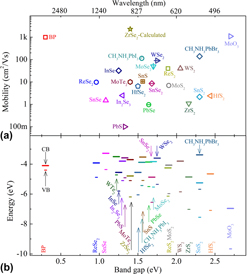
Atomically thin transition metal dichalcogenides (TMDCs), such as WS2 and MoS2, have opened up new opportunities for the next generation of optoelectronics owing to their unique properties such as optical transparency, high carrier mobility, widely tunable band gap, and strong light–matter interaction. The photodetection performance relies primarily on the light absorption efficiency and separation efficiency of photoexcited electron–holes. The photodetectors with all broadband response, high photoconductive gain, high response speed, and high detectivity is arduous challenge to realize using one photo-active material. Building of photodetectors composed of two or more light absorber materials of different band gaps was an efficient route to realize high performance light detection. The application of a thin sensitizing layer atop the TMDCs has proven to be a viable route to improve the photodetection performance due to the efficient charge separation at the interface, and fast charge transfer process due to the high carrier mobility. In this article, we review the progress made toward hybrid photodetector based on TMDCs with various sensitizers from metal to large band-gap semiconductor in architectures from zero-dimensional quantum dot to two-dimensional crystal.
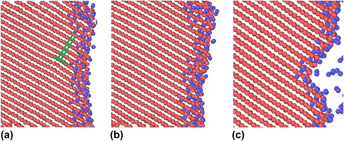
Atomistic simulations are carried out to analyze the influence of oxygen environment on nickel and copper surface roughness and notch initiation. The early stages of oxidation of nickel and copper surfaces are first simulated and compared with experimental observations. Various oxygen superstructures observed on metal surfaces are reproduced as well as the nucleation of small NiO embryos. Nickel and copper surface oxidation mechanisms are different and different “oxide” nano layers are formed. None of these superficial nano layers has a major influence on the mechanical behavior of surface slips as they do not change the surface roughness fatigue evolution and micro-notch production. These atomistic results agree with experimental studies which report similar development of persistent slip band surface relief in inert and in air environment. A general model for the estimation of surface slip irreversibility is also provided and the models of environment-assisted surface relief evolution and microcrack initiation are revisited.
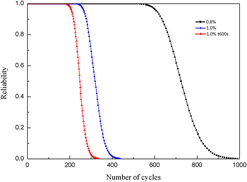
Extrusion is an efficient hot working process to aluminum production and AISI H13 (4Cr5MoSiV1) as the main material of extrusion tool suffers from fatigue and creep damage due to its extreme working condition. A new mean plastic strain life prediction has been proposed based on the energy method. In addition, statistical analysis is also taken into consideration to complement this physic-based model due to other unmeasured and unknown exogenous influences. To validate the model, a series of AISI H13 fatigue and fatigue–creep tests were conducted at 500 °C close to the practical aluminum extrusion process. The strain-controlled tests were used for obtaining the parameters, while the stress-controlled tests were utilized for validating the proposed model. It shows that the model predictions were in good agreement with the experimental results.
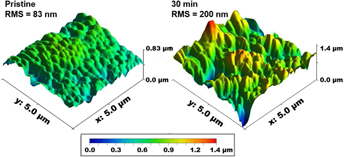
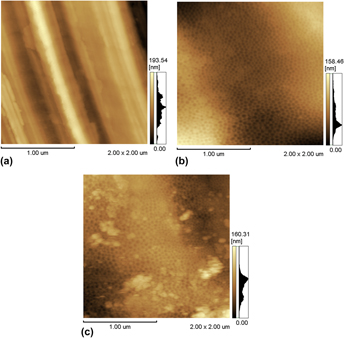
Ti6Al4V alloys usually need to undergo some kind of surface treatment to enable good bone growth and implant integration. In this work, three treatments that modify the titanium alloy surface were studied with the aim of promoting osteogenic differentiation of human-embryonic-stem-cell-derived mesenchymal progenitors (hESC-MPs). The surface treatments used were mechanical polishing and electropolishing for 4 or 12 min in an H2SO4/HF/glycerine solution. The samples were characterised by atomic force microscopy, profilometry, X-ray photoelectron spectroscopy, and wettability. Samples were seeded with hESC-MPs in osteogenic media, and the cell number and alkaline phosphatase activity were measured. The electropolishing surface treatments influenced the nanometric morphology and wettability. However, the electropolished surfaces contributed in the same way as the mechanically polished surface to osteogenic differentiation, indicating that differentiation was strongly influenced by microroughness, which did not differ among the treatments used in the present work.
In the present work, the evolution of microstructure and mechanical properties of high-strength low-alloy D6AC steel containing the Ce element was synthetically investigated by means of electron backscatter diffraction, scanning electron microscope, Transmission electron microscope, and tensile and impact tests. The experimental results show that adding a certain amount of Ce into HSLA-D6AC steel can refine grains and martensite laths, as well as increase the fine VC precipitates, which not only enhance the strength of the steel but also improve the toughness and plasticity. Meanwhile, the morphology of martensite in HSLA-D6AC steel changes from twin martensite to dislocation martensite. It is found that after adding Ce, HSLA-D6AC steel exhibits a distinct necking stage in the tensile test, and the impact toughness value increases from 83 to 136 J. With the appearance of some more and deeper homogeneous dimples, the quasi-cleavage fracture transforms into a ductile fracture characterized by microvoid coalescence, demonstrating that HSLA-D6AC steel with the Ce element achieves excellent comprehensive mechanical properties.
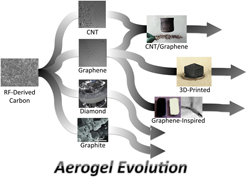
Carbon aerogels (CAs) are a unique class of high surface area materials derived by sol–gel chemistry. Their high mass-specific surface area and electrical conductivity, environmental compatibility, and chemical inertness make them very promising materials for many applications, such as energy storage, catalysis, sorbents, and desalination. Since the first CAs were made via pyrolysis of resorcinol–formaldehyde (RF)-based organic aerogels in the late 1980s, the field has really grown. Recently, in addition to RF-derived amorphous CAs, several other carbon allotropes have been realized in aerogel form: carbon nanotubes (CNTs), graphene, graphite, and diamond. Furthermore, the popularity of graphene aerogels has inspired research into aerogels made of a host of graphene analog materials (e.g., boron nitride, transition metal dichalcogenides, etc.), with potential for an even wider array of applications. Finally, the development of three-dimensional-printed aerogels provides the potential for CAs to have an even broader impact on energy-related technologies. Here, we will present recent work covering the novel synthesis of RF-derived, CNT, graphene, graphite, diamond, and graphene analog aerogels.
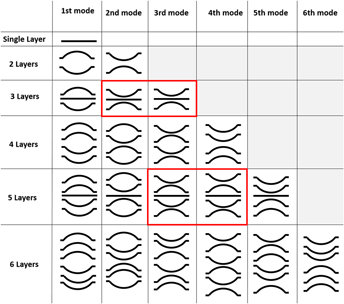
Graphene, a two-dimensional (2D) crystalline material exhibits unique electronic, optical, and mechanical properties which makes it a promising candidate for optomechanical and optoelectronic devices. The giant plasmonic activity of graphene sheets enables low-dimensional confinement of light and enhanced light–matter interaction leading to significant enhancement of optical forces which may give rise to large mechanical deformations on account of ultralow mass density and flexibility of graphene. The multilayer stack and heterostructures of 2D materials provide access to a spectrum of guided modes which can be used to tailor the optical forces and mechanical states of graphene sheets. Here, we study the optical forces arising from the coupling of guided modes in layered structures of graphene sheets. We obtain the mechanical deformation states corresponding to each guided mode and demonstrate that the optical forces can be adjusted by changing the interlayer spacing as well as the chemical potential of graphene layers. Our results can be used for various designs of graphene-based optomechanical devices.
The decrease in quality of Australian iron ore, coupled with the demand for more efficient energy use, means that closer monitoring and optimisation of process conditions for iron ore sinter production is required. Here, the suitability of using partial least-squares regression analysis of powder X-ray diffraction data, collected for iron ore sinter samples, for the prediction of iron ore sinter strength has been further assessed. In addition, a preliminary assessment of the effect of 2θ range on the quality of prediction has been made. For the purposes of process control, the level of correlation between predicted strength and actual sinter strength would inform an operator whether or not the process was operating within the acceptable limits, or whether there was a potential problem requiring further investigation or rapid intervention. Reducing the 2θ range was found to reduce the level of correlation between predicted and actual strength, to a point where the particular analysis may no longer be suitable for process control.
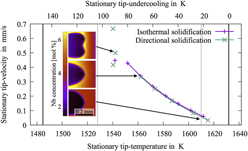
We develop a phase field model for the simulation of chemical diffusion-limited solidification in complex metallic alloys. The required thermodynamic and kinetic input information is obtained from CALPHAD calculations using the commercial software-package ThermoCalc. Within the case study on the nickel-base superalloy Inconel 718, we perform simulations of solidification with the explicit consideration of 6 different chemical elements. The stationary dendritic tip velocities as functions of the constant undercooling temperature obtained from isothermal solidification are compared with the stationary tip temperatures as functions of the imposed pulling velocity obtained during directional solidification. We obtain a good quantitative agreement between the two different velocity—undercooling functions. This indicates that the model provides a self consistent description of the solidification. Finally, the simulation results are discussed in light of experimental solidification conditions found in single crystalline casting experiments of Inconel 718.
The crystal structure and powder patterns were prepared for the distorted perovskite series R(Co3/4Ti1/4)O3 (R = La, Pr, Nd, Sm, Eu, Gd, Dy, Ho). The R(Co3/4Ti1/4)O3 members are isostructural with each other and are crystallized in the orthorhombic crystal system with space group Pnma, Z = 4. From R = La to Ho, the lattice parameters a range from 5.4614(3) to 5.5368(2) Å, b range from 7.7442(4) to 7.4859(2) Å, and c range from 5.5046(3) to 5.2170(2) Å. The unit-cell volumes, V which range from 232.81(2) to 216.237(11) Å3 follow the trend of “lanthanide contraction”. The structure distortion of these compounds is evidenced in the tilt angles θ, ϕ, and ω, which represent rotations of an octahedron about the pseudo-cubic perovskite [110]p, [001]p and [111]p axes. All three tilt angles increase across the lanthanide series (for R = La to R = Ho: θ increases from 8.34° to 17.00°, ϕ from 6.24° to 8.53°, and ω from 10.41° to 18.96°), indicating a greater octahedral distortion as the ionic radius of R3+ [r(R3+)] decreases. The bond valence sum values for the (Co/Ti) site and the R site of R(Co3/4Ti1/4)O3 reveal no significant bond strain in these compounds. X-ray diffraction patterns of the R(Co3/4Ti1/4)O3 samples were submitted to the Powder Diffraction File.
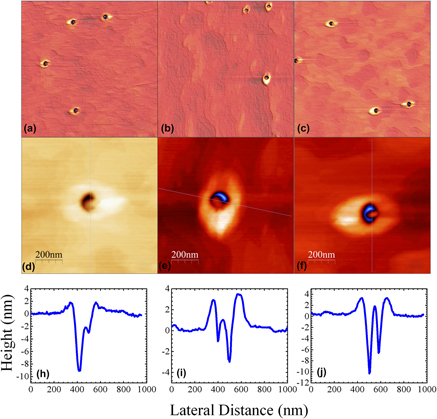
Isolated single quantum dots (QDs) enable the investigation of quantum-optics phenomena for the application of quantum information technologies. In this work, ultralow-density InAs QDs are grown by combining droplet etching epitaxy and the conventional epitaxy growth mode. An extreme low density of QDs (∼106 cm−2) is realized by creating low-density self-assembled nanoholes with the high temperature droplet etching epitaxy technique and then nanohole-filling. The preferred nucleation of QDs in nanoholes has been explained by a theoretical model. Atomic force microscopy and the photoluminescence technique are used to investigate the morphological and optical properties of the QD samples. By varying In coverages, the size of InAs QDs can be controlled. Moreover, with a thin GaAs cap layer, the position of QDs remains visible on the sample surface. Such a low density and surface signature of QDs make this growth method promising for single QD investigation and single dot device fabrication.