To save content items to your account,
please confirm that you agree to abide by our usage policies.
If this is the first time you use this feature, you will be asked to authorise Cambridge Core to connect with your account.
Find out more about saving content to .
To save content items to your Kindle, first ensure no-reply@cambridge.org
is added to your Approved Personal Document E-mail List under your Personal Document Settings
on the Manage Your Content and Devices page of your Amazon account. Then enter the ‘name’ part
of your Kindle email address below.
Find out more about saving to your Kindle.
Note you can select to save to either the @free.kindle.com or @kindle.com variations.
‘@free.kindle.com’ emails are free but can only be saved to your device when it is connected to wi-fi.
‘@kindle.com’ emails can be delivered even when you are not connected to wi-fi, but note that service fees apply.
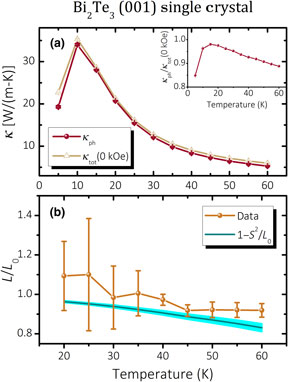
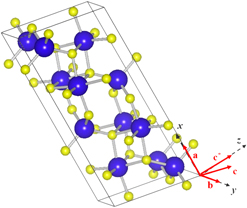
We use a magnetothermal resistance method to measure the lattice thermal conductivity of single-crystal Bi2Te3 from 5 to 60 K. Lattice thermal conductivity is calculated by extrapolating the thermal conductivity versus electrical conductivity curve to a zero electrical conductivity value. Our results show that the measured phonon thermal conductivity follows the ${\rm e}^{{\it\Delta} _{{\rm min}}/T}$ temperature dependence and the Lorenz ratio corresponds to the modified Sommerfeld value in the intermediate temperature range. Our low-temperature experimental data and analysis on Bi2Te3 are a complement to previous measurements of Goldsmid (Ref. 17) and theoretical calculations by Hellman et al. (Ref. 18) at higher temperature 100–300 K.
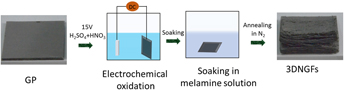
Three-dimensional nitrogen-doped graphene frameworks (3DNGFs) hold great promise in the application of supercapacitors for the advantages of superior conductivity, well-connected porous structure, and additional N-containing active sites for charge storage. Nevertheless, the developed techniques for preparing 3DNGFs always suffer from the drawbacks of high cost or complex processes for large-scale application. Herein, a new and cost-effective method has been developed to massively prepare monolithic 3DNGFs by a simple and scalable electrochemical oxidation process. Benefiting from the enhanced electrical conductivity, the increase in the pore volume for fast diffusion increased the electrode–electrolyte contact area and additional active sites resulting from the incorporation of nitrogen species, the 3DNGFs showed a high specific capacitance of 2250.3 mF/cm2 at 4 mA/cm2, with good rate capability. Furthermore, this 3DNGFs electrode also owns an excellent long-term cycling stability that can retain more than 97.5% of its original capacitance after 10,000 cycles.
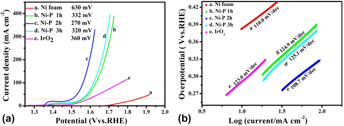
Recently, highly active, easy-to-make, and efficient bifunctional electrocatalysts have attracted tremendous attention because of their potential applications in clean energy. Herein, we report a simple, one-step approach for fabricating three-dimensional (3D) Ni–P nanorod arrays by direct phosphorization of commercial nickel foam (Ni foam) with different times. When used as a 3D electrode for oxygen evolution reaction, the obtained Ni–P nanorods with two hours of phosphatization treatment display high activity with an overpotential of 270 mV required to generate a current density of 30 mA/cm2 and excellent stability in 1.0 M KOH. Additionally, the Ni–P nanorod arrays are also highly active for electrocatalyzing the hydrogen evolution reaction in the alkaline media. As a result, the bifunctional Ni–P catalysts enabled a highly performed overall water splitting, in which a low applied external potential of 1.6 V led to a stabilized catalytic current density of 10 mA/cm2 over 12 h.
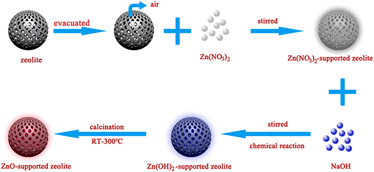
To improve the antimicrobial properties of ZnO, ZnO-supported 13X zeolite (X-ZnO) was prepared via the facile chemical method. Antimicrobial activities of X-ZnO and ZnO were tested against Gram-negative (Escherichia coli) and Gram-positive (Staphylococcus aureus) bacteria. X-ZnO showed noticeable antimicrobial activities against E. coli and S. aureus under visible light conditions, especially against E. coli. The minimum inhibitory concentration (MIC) of X-ZnO against E. coli was 0.12–0.24 mg/mL. However, there were still much bacteria alive in the nano-ZnO suspensions at the same concentration. To elucidate the antimicrobial activities of X-ZnO, the average concentration of the total reactive oxygen species (ROS) and Zn2+ ions released from X-ZnO and nano-ZnO were quantitatively analyzed. The obtained results indicated that the average concentration of ROS produced by supported ZnO was much higher than that of nano-ZnO. And the released Zn2+ ions from X-ZnO and nano-ZnO suspensions were much lower than the MIC of Zn2+. Thus, it is believed that the production of ROS in X-ZnO and nano-ZnO suspensions resulted in the difference of antibacterial activities.
This work reports an investigation of electron transport in monoclinic β-Ga2O3 based on a combination of density functional perturbation theory based-lattice dynamical computations, coupling calculation of lattice modes with collective plasmon oscillations, and Boltzmann theory-based transport calculations. The strong entanglement of the plasmon with the different longitudinal optical (LO) modes makes the role LO-plasmon coupling crucial for transport. The electron density dependence of the electron mobility in β-Ga2O3 is studied in the bulk material form and also in the form of a two-dimensional electron gas. Under high electron density, a bulk mobility of 182 cm2/V s is predicted, while in the 2DEG form, the corresponding mobility is about 418 cm2/V s when remote impurities are present at the interface and improves further as the remote impurity center moves away from the interface. The trend of the electron mobility shows promise for realizing high-electron mobility in dopant-isolated electron channels. The experimentally observed small anisotropy in mobility is traced through a transient Monte Carlo simulation. It is found that the anisotropy of the IR-active phonon modes is responsible for giving rise to the anisotropy in low-field electron mobility.
A customized-built high-temperature tensile creep setup is introduced. Dog-bone shaped miniaturized specimens made from Nimonic-75 were tested as reference materials at temperatures of 850 and 1000 °C under constant load to verify the setup’s accuracy. The results were compared to tensile creep tests with conventional (standard size) specimens at identical experimental conditions. The shape of the creep curves obtained in the miniaturized specimens exhibits a pronounced minimum creep rate, thus, being seemingly different from the ones obtained for the bulk samples which reveal a clear steady-state regime. This is partly due to the continuous increase of stress under constant load testing conditions and very likely affected by the much higher surface to volume ratio of the miniaturized specimens leading to the premature onset of tertiary creep. Still, a good agreement was obtained between the two specimen sizes with respect to the dependence of the steady-state (standard size) and minimum (miniaturized size) strain rate on applied stress at various temperatures leading to also comparable activation energies of the creep.
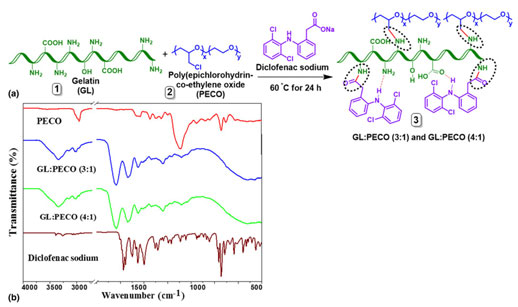
Gelatin/poly(epichlorohydrin-co-ethylene oxide) [GL : PECO] composites are synthesized in a one-step process by the incorporation of elastic PECO and diclofenac. [GL : PECO] fibers are prepared by Forcespinning®. GL : PECO fibers are capable of diclofenac, by conjugation via a labile amide linkage. Fourier transform infrared spectroscopy (FTIR) results confirmed the chemical reactions and hydrogen bonds between gelatin, PECO, and diclofenac. Diclofenac drug release from GL : PECO fibers are measured for 15 days and prolonged drug release is observed. The cell viability is studied with NIH/3T3 and excellent results are observed. The sustained drug release and cytotoxicity results reveal that GL : PECO fibers could be promising substitutes for skin tissue engineering, wound healing, and drug delivery.
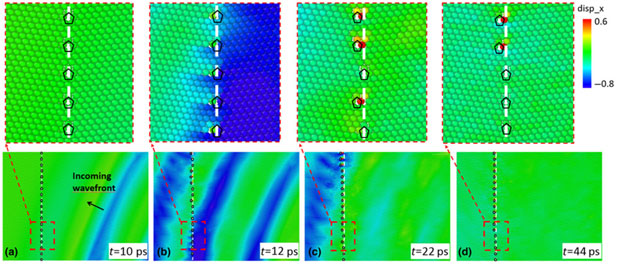
This work presents the recent progress in the development of the concurrent atomistic-continuum (CAC) method for coarse-grained space- and time-resolved atomistic simulations of phonon transport. Application examples, including heat pulses propagating across grain boundaries and phase interfaces, as well as the interactions between phonons and moving dislocations, are provided to demonstrate the capabilities of CAC. The simulation results provide visual evidence and reveal the underlying physics of a variety of phenomena, including phonon focusing, wave interference, dislocation drag, interfacial Kapitza resistance caused by quasi-ballistic phonon transport, etc. A new method to quantify fluxes in transient transport processes is also introduced.
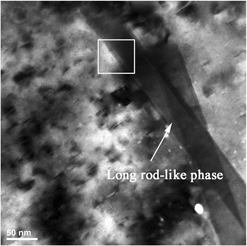
The effect of mold temperature on microstructure and mechanical properties of a rheo-squeeze casting (RSC) Mg–3Nd–0.2Zn–0.4Zr (NZ30K) alloy were investigated. The results indicated that the rise of mold temperature contributed to the increase of particle size and alloy density and the decrease of dislocation density. The rapid coarsening and then the normal growth of the particles during solution treatment were observed, and the long-rod-like Zn2Zr3 phase occurred. After age treatment, rod-like β′ precipitate was found in the conventional squeeze casting (CSC) alloy, while two types of precipitates including β′ phase and small plate-like β″ phase were observed in the RSC alloy. The amount of Zn2Zr3 phase was increased with rising mold temperature. Compared with the T6-treated CSC sample, the T6-treated RSC sample presented higher mechanical properties due to the larger precipitation strengthening contribution, and the yield strength, ultimate tensile strength, and elongation were up to 160 MPa, 296 MPa, and 7.7%.
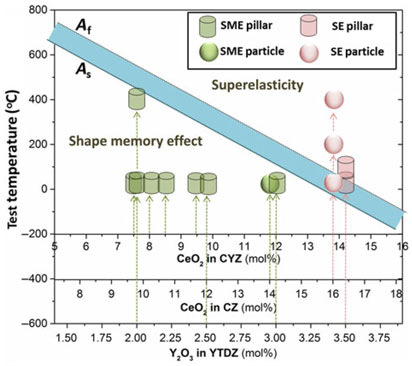
Shape memory ceramics show potential for energy damping and actuation applications. In particular, small-scale structures of zirconia-based ceramics demonstrate significantly enhanced shape memory and superelastic properties compared with their bulk counterparts, mainly because an oligocrystalline or single-crystal microscale structure reduces mismatch stresses amongst grains. In this Prospective article, we review recent experiments that explore the shape memory properties of small-scale zirconia-based ceramics, including the effects of composition, sample and grain size, and cyclic loading. These factors are reviewed with an eye toward rendering shape memory ceramics more useful in future applications.
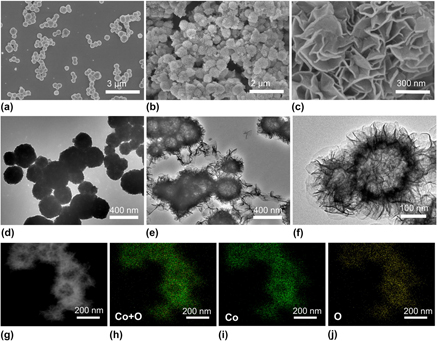
Electrocatalytic water splitting for the production of H2 is increasingly becoming a significant method to mitigate the current energy crisis and environmental pollution. However, oxygen evolution reaction (OER), a slow four-electron progress, is the bottle neck of water splitting. Thus, developing new, low cost, and effective catalysts for OER is a research hotspot in material and energy resource fields. Therefore, the research of nonprecious, metal-based OER catalysts has been popular. In this work, it is validated that 3D hollow Co(OH)2 nanoflowers synthesized by a facile template-based strategy at room temperature are effective electrocatalysts for OER. The catalysts display high activity with a current density of 10 mA/cm2 at an overpotential of 310 mV and a small Tafel slope of 68.9 mV/dec in alkaline condition. It’s noteworthy that this material is stable for over 20 h of chronopotentiometry. This work offers a simple and promising way to prepare efficient and durable electrocatalysts.
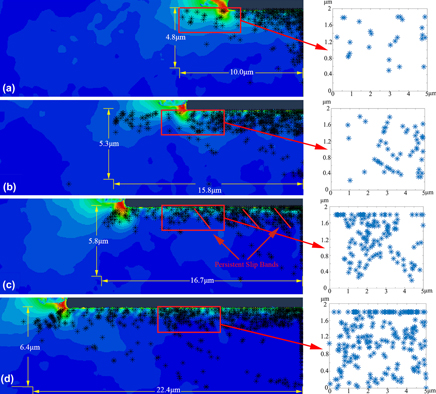
Subsurface microstructure alteration has been a major concern to implement micromachining of titanium alloy in the high-tech industry. To quantitatively promulgate the underlying mechanisms of this alteration, a discrete dislocation dynamics-based model is proposed and used to simulate the subsurface defects and their evolution under different cutting conditions. The model considers the subsurface dislocation configuration and inner stress distribution during the orthogonal cutting of titanium alloy. The results show that subsurface defect structure consists of plenty of dislocation dipoles, twining dislocation bands, and refined grains after cutting. In the primary shear zone, two different characteristics of subsurface damage layers can be found, the near-surface damage layer and deep-surface damage layer, which have different structural natures and distribution features. Moreover, it is found that high cutting speed and small depth of the cut can suppress the formation and propagation of subsurface defects. A powerful inner stress state would promote the distortion of the lattice and result in a microcrack within the subsurface matrix. The simulation results have been compared with experimental findings on the machined surface and subsurface of similar materials, and strong similarities were revealed and discussed.
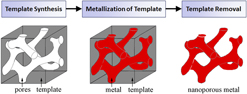
Nanoporous metallic foams with high surface area and novel functional behavior are positioned to stimulate new multifunctional and metamaterial applications. However, there are fundamental challenges in achieving uniform nanopores and tailorable morphology. Emerging templating methods offer a wide range of applicable metallic species while enhancing control of pore morphology, uniformity, and interconnectivity. Here, a critical review of nanoporous metal fabrication is presented, with focus on templating methods utilizing nanoporous polymeric templates. Metals are introduced into percolative nanochannels of sacrificial templates by deposition, and subsequent removal of templates yields ordered nanoporous metals. We introduce approaches for preparing nanoporous templates, including utilizing block copolymer self-assembly that yields periodic gyroid networks. While metallization of templates by electrodeposition has been demonstrated, electroless deposition permits uniform deposition by many metallic species and infiltration of narrow pores. Examples of nanoporous metals with uniform pore sizes below 50 nm fabricated by templating methods are examined.
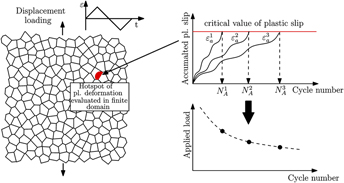
Fatigue is an important mechanism for the failure of components in many engineering applications and a significant proportion of the fatigue life is spent in the crack initiation phase. Although a large number of research work addresses fatigue life and fatigue crack growth, the problem of modeling crack initiation remains a major challenge in the scientific and engineering community. In the present work, a micromechanical model is developed and applied to study fatigue crack initiation. In particular, the effect of different hardening mechanisms on fatigue crack initiation is investigated. To accomplish this, a model describing the evolution of the particular dislocation structures observed under cyclic plastic deformation is implemented and applied on randomly generated representative microstructures to investigate fatigue crack initiation. Finally, a method is presented to calculate the S–N curve for the polycrystalline materials. With this work, it is demonstrated how the micromechanical modeling can support the understanding of damage and failure mechanisms occurring during fatigue.
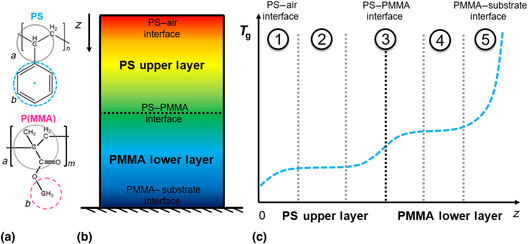
We investigate how the local glass-transition temperature (Tg) depends on film thickness in monolayer and bilayer thin films with a polystyrene (PS) upper-layer and a poly(methyl methacrylate) (PMMA) lower-layer using coarse-grained simulations. Interactions between overlapping interphases demonstrate a superposition principle for describing their glass-transition behaviors. For supported bilayer films, the free surface effect on a PS film upper-layer is effectively eliminated due to an enhanced local Tg near the PS–PMMA interface, which cancels out depressed Tg near the free surface. However, at very low PMMA lower-layer thicknesses, the PMMA-substrate effect can penetrate through the polymer–polymer interface, leading to enhanced Tg in the PS upper-layer.
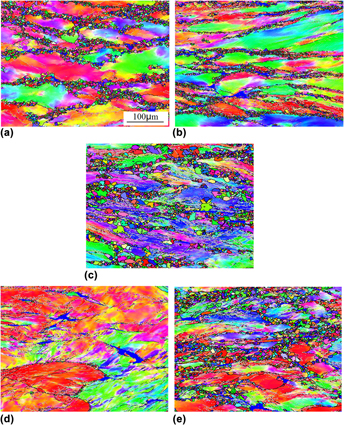
Hot deformation behavior and microstructure evolution of as-cast Mn18Cr18N austenitic stainless steel were investigated by isothermal compression experiments. The results indicate that the microstructure evolution of the as-cast Mn18Cr18N steel is sensitive to strain rates. Discontinuous dynamic recrystallization, characterized by nucleation and growth controlled by grain boundary migration, occurs at lower strain rates. However, higher strain rates result in higher adiabatic temperature rise, which could be contributed to dynamic recrystallization (DRX) nucleation and growth by acceleration boundary migration. In addition, at higher strain rates, a large number of deformation microbands in the interior of coarse columnar grains were observed, which would provide potential nucleation sites for DRX. Meanwhile, a great number of Σ3 twins were observed, which reveals that twinning accelerates the separation of subgrains from bulging grain boundaries, and the iterative processing among Σ3 twins and its variants promotes the transformation from specific CSL grain boundaries to random high-angle boundaries.
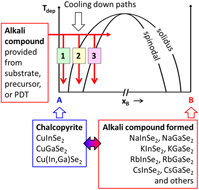
The efficiency of Cu(In,Ga)Se2 (CIGS)-based solar cells could be continuously increased up to 22.6% by employing alkali metal dopants like Na, K, Rb, and Cs. The alkali metals are supplied to the CIGS layer from the glass substrate during deposition, from precursor layers or by a post deposition treatment. The alkali metal distribution in CIGS is not homogenous. Independently of the alkali metals used, their concentration at grain boundaries is much higher than that inside the grains. In this contribution, we discuss thermodynamic limitations for alkali metals in CIGS and show that in higher concentrations they are responsible for secondary phase separation. Applying the concept of immiscibility of phases for alkali metals in CIGS, we suggest how segregation at grain boundaries, formation of clusters in CIGS grains, sporadic formation of microstructures in the CIGS layer (hotspots, nodules), and separation of secondary phases with ordered structures can be interpreted.
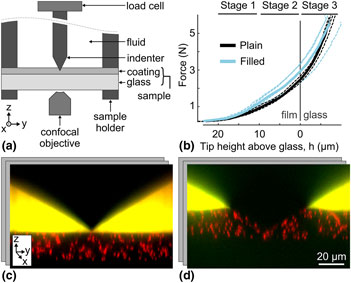
We present an indentation-scope that interfaces with confocal microscopy, enabling direct observation of the three-dimensional (3D) microstructural response of coatings on substrates. Using this method, we compared microns-thick polymer coatings on glass with and without silica nanoparticle filler. Bulk force data confirmed the >30% modulus difference, while microstructural data further revealed slip at the glass-coating interface. Filled coatings slipped more and about two times faster, as reflected in 3D displacement and von Mises strain fields. Overall, these data indicate that silica-doping of coatings can dramatically alter adhesion. Moreover, this method compliments existing theoretical and modeling approaches for studying indentation in layered systems.
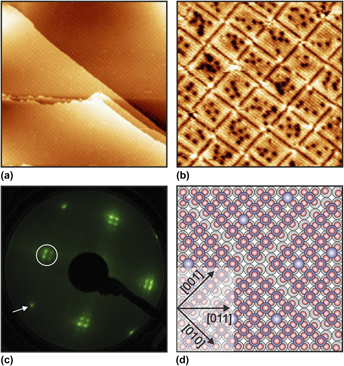
The epitaxial growth of two-dimensional oxide layers on metal surfaces is examined in view of the 1949 van der Merwe proposition that epitaxy requires a pseudomorphic monolayer. It is argued that this limitation is relaxed in the 2-D case and that ordered oxide phases can grow out of a variety of interface scenarios, ranging from pseudomorphic to incommensurate. Prototypical examples of binary and ternary oxides supported on noble metal surfaces are presented, and the structural peculiarities of 2-D oxide phases are emphasized. The usually strong coupling at the oxide–metal interface leads to the stabilization of novel structure concepts that are not encountered in the, respective, bulk phases. The structural flexibility of 2-D lattices is discussed, and their ability to accommodate strain in generating novel 2-D oxide phases is emphasized. In the case of weakly coupled systems, it is reported that more subtle interactions at the interface can create periodic nanoscale morphologies and particular growth patterns in subsequent layers.
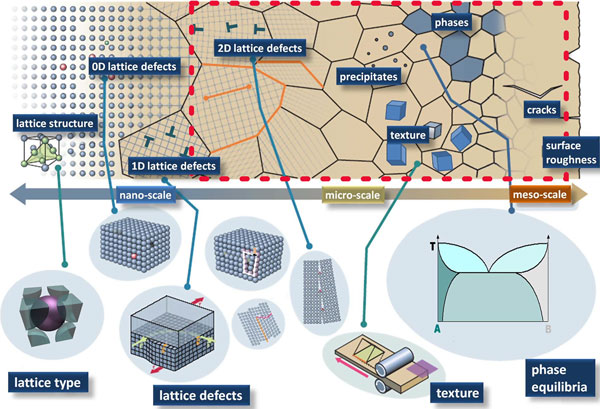
Continuum modeling approaches are well established in materials science and engineering of metals. They enable the quantitative investigation of diverse questions related to the improved understanding of mechanics and microstructure evolution of various material classes. Applicable to time and length scales relevant in manufacturing and service, continuum modeling approaches are widely used to study engineering-related phenomena such as recrystallization, strain localization, fracture initiation, and phase transformations. However, focusing on individual physical aspects hampers the wider routine use of continuum modeling tools for many engineering applications. With the advent of multi-physics modeling tools developed with the help of and parametrized by (sub-)micrometer-scale simulations and experiments, a huge variety of applications such as hot rolling, bake-hardening, and case-hardening comes within reach for full-field integrated computational materials engineering. Moreover, the integration of experimentally characterized microstructures and the use of user friendly simulation and evaluation tools render powerful modeling approaches feasible for a broad materials science user community. The state of the art and future trends of mechanical, thermodynamic, and kinetic continuum modeling of metallic materials at the grain scale are outlined in this prospective article.