To save content items to your account,
please confirm that you agree to abide by our usage policies.
If this is the first time you use this feature, you will be asked to authorise Cambridge Core to connect with your account.
Find out more about saving content to .
To save content items to your Kindle, first ensure no-reply@cambridge.org
is added to your Approved Personal Document E-mail List under your Personal Document Settings
on the Manage Your Content and Devices page of your Amazon account. Then enter the ‘name’ part
of your Kindle email address below.
Find out more about saving to your Kindle.
Note you can select to save to either the @free.kindle.com or @kindle.com variations.
‘@free.kindle.com’ emails are free but can only be saved to your device when it is connected to wi-fi.
‘@kindle.com’ emails can be delivered even when you are not connected to wi-fi, but note that service fees apply.
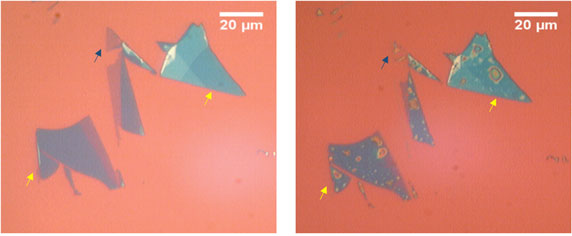
The long-term stability of mechanically exfoliated MoS2 flakes was compared for storage in the air and storage under vacuum. Significant changes in MoS2 flakes were observed for samples stored in the air, whereas similar flakes on samples stored in vacuum underwent no change. Small speckles were observed to appear on the surface of flakes stored in the air, followed by thinning and eventual decomposition of MoS2 flakes. The speckles are suspected to be formed by oxidation of MoS2 in the presence of atmospheric oxygen and water molecules, resulting in the formation of hydrated MoO3.
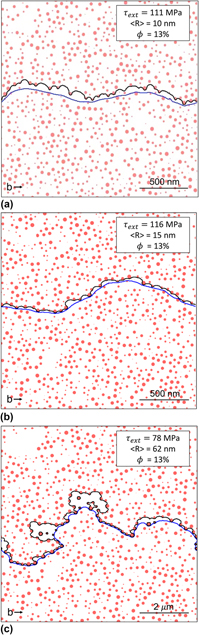
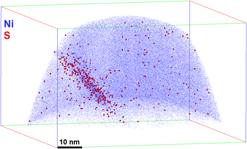
Two-dimensional dislocation dynamics (DD) simulations are performed to simulate the increase in strength of ferritic superalloys strengthened by ordered β′(B2)–NiAl precipitates. Parametric studies for three precipitate volume fractions (10, 13, and 20%) and various radii (from 1 to 75 nm) predict strengthening via a mixture of precipitate bypassing and shearing by single- and super-dislocations of edge or screw character. DD strength contributions for various precipitate radii (for a 13% volume fraction) are compared to analytical models for ordered precipitate strengthening: good agreement exists in the overaged state, but not in the peak-aged and underaged states for either dislocation configurations. DD strength contributions, converted to hardness values, are compared to experimental hardness values from previously reported literature on a ferritic superalloy [Fe–10Cr–10Ni–6.5Al–3.4Mo–0.25Zr–0.005B (wt%)] aged at various temperatures and times. DD hardness values from the single-edge dislocation simulations accurately predict the experimental peak hardness, but not the under- and over-aged hardness values or trends. By incorporating the effect of secondary NiAl nanoprecipitates formed on cooling and solid solution strengthening of Fe in the primary precipitates, reasonable agreement is achieved in the overaged condition.
X-ray powder diffraction data, unit-cell parameters, and space group for acetamidinium formate, C3H8N2O2, are reported [a = 6.4564(5) Å, c = 13.021 (3) Å, unit-cell volume V = 542.8(3) Å3, M.p. = 215(1)°C, ρc = 1.274 g.cm−3, ρm = 1.269 g.cm−3, Z = 4, and space group P43212]. The front-loaded technique got sample with strong preferred orientation because of plate-like shape of crystallites, so the capillary packing was used for final powder data collection. All measured lines were indexed and are consistent with the P43212 space group. No detectable impurities were observed.
Elemental, chemical, and structural analysis of polycrystalline materials at the micron scale is frequently carried out using microfocused synchrotron X-ray beams, sometimes on multiple instruments. The Maia pixelated energy-dispersive X-ray area detector enables the simultaneous collection of X-ray fluorescence (XRF) and diffraction because of the relatively large solid angle and number of pixels when compared with other systems. The large solid angle also permits extraction of surface topography because of changes in self-absorption. This work demonstrates the capability of the Maia detector for simultaneous measurement of XRF and diffraction for mapping the short- and long-range order across the grain structure in a Ni polycrystalline foil.
The article focuses on the fatigue performance after a moderate heat treatment of nanocrystalline (nc) nickel, which leads to the formation of a bimodal microstructure in the nc to ultrafine grained (ufg) regime. Electrodeposition was used to produce nc macro nickel samples with grain sizes of about 40 nm for mechanical testing. The thermal stability of the material as well as the influence on the mechanical properties and the fatigue crack propagation behavior was investigated. The results of tensile and fatigue tests are discussed in respect to the chosen production method and boundary conditions. In this context, the influence of the bath additives used during the plating process was investigated and rated as the major challenge for a further improvement of the thermal stability and mechanical properties of the material. Finally, a co-deposition of nickel and metal oxides with enhanced thermal stability is presented.
X-ray fluorescence spectrometry was used in mapping and spot analysis modes, to help identify which elements are useful for understanding the composition of ancient papyrus inks, for 25 papyri from four age groups. We report seven elements (Al, Si, P, S, Ca, Ti, Fe) which provide sufficient contrast to be useful for mapping analysis, and 16 elements (P, S, Cl, K, Ca, V, Mn, Ni, Cu, Zn, Rb, Sr, Nb, Ag, Ba, and Pb) which show significant differences through time. Only one element – Pb – showed sufficient contrast in the thin ink layer to be significantly different when measured on the ink and adjacent papyrus. There is greater complexity in the elemental compositions of the papyrus and ink than can be understood with a study this size and additional work is required to develop and explain the patterns observed here.
GaN field-effect transistors with impressive power switching characteristics have been demonstrated. Preventing their widespread field deployment are reliability and instability concerns. Some emanate from the use of a dielectric in the gate stack. Under typical operation, the gate dielectric comes periodically under intense electric field. This causes trapping and detrapping of electrons and introduces transient shifts in the threshold voltage, a phenomenon known as Bias-Temperature Instability (BTI). A high electric field also results in the formation of defects inside the dielectric. Over time, the defects accumulate and eventually result in the abrupt creation of a conducting path that shorts the dielectric and renders the device inoperable. This process, known as Time-Dependent Dielectric Breakdown (TDDB), often imposes a maximum lifetime for the FET technology. This article presents a methodology for the study of BTI and TDDB in insulated-gate GaN FETs. Our findings paint a picture of BTI and TDDB that in many respects is similar to that of Si transistors but with some unique characteristics. Understanding the physics and developing appropriate lifetime models is essential to enabling the deployment of this important new power electronics technology.
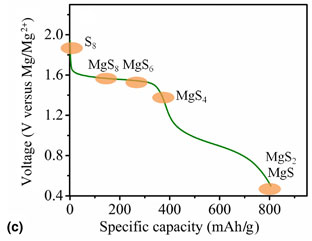
Rechargeable magnesium (Mg) battery has been considered as a promising candidate for future battery generations because of its potential high-energy density, its safety features and low cost. The challenges lying ahead for the realization of Mg battery in general are to develop proper electrolytes fulfilling a multitude of requirements and to discover cathode materials enabling high-energy Mg batteries. The combination of Mg anode with a sulfur cathode is one of the promising electrochemical couples due to its advantages of safety, low costs, and a high theoretical energy density of over 3200 Wh/L. However, the research on magnesium–sulfur (Mg–S) battery is just at its beginning and the development of suitable electrolytes has been the key challenge for further improvement, and, thus, in the focus of recent research. In this review, we highlight the recent progress achieved in Mg electrolytes and Mg–S batteries and discuss the major technical issues, which must be resolved for the improvement of Mg–S batteries.
Polyurethane-based bioadhesive was synthesized with polyols derived from castor oil (chemically modified and unmodified) and hexamethylene diisocyanate with chitosan addition as a bioactive filler. The objective was to evaluate the effect of type of polyols with the incorporation of low-concentrations of chitosan on the mechanical and biological properties of the polymer to obtain suitable materials in the design of biomaterials. The results showed that increasing physical crosslinking increased the mechanical and adhesive properties. An in vitro cytotoxic test of polyurethanes showed cellular viability. The biocompatibility of the polyurethanes favors the adhesion of L929 cells at 6, 24, and 48 h. The polyurethanes showed bacterial inhibition depending on the polyol and percentage of chitosan. The antibacterial effect of the polyurethanes for Escherichia coli decreased 60–90% after 24 h. The mechanical and adhesive properties together with biological response in this research suggested these polyurethanes as external application tissue bioadhesives.
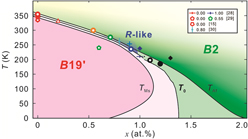
Many issues concerning the transformation behaviors in the Ni-rich Ti–Ni system remain unresolved, such as the isothermal nature of the B19′-martensitic and R-phase transformations and the precursor phenomena in the B2-parent phase. To clarify the origins of these behaviors, we investigated the transformation latent heat, specific heat, and superelastic behaviors of several Ni-rich Ti–Ni alloys in terms of the entropy change. An anomalous, very wide hump in the specific heat was detected for the B2-parent phase, which can likely be attributed to the precursor phenomenon in the B2-parent phase. In the critical region where the anomalous hump intersects the B19′-martensitic transformation, some evidences of the R-phase transformation were observed, such as a tweed-like microstructure and a specific heat peak with first-order-transformation characteristics. These findings suggest a strong relationship between the R phase and the precursor state in the B2-parent phase.
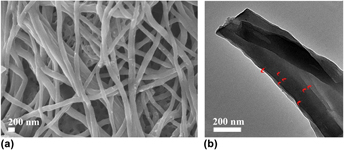
Carbon nanofibers are prepared via the electrospinning method accompanied by the phase-separation process using polyacrylonitrile as a carbon precursor. Effects of preoxidation and carbonation temperatures on electrochemical performance are studied and optimized in detail. The morphology and porous structure are characterized by scanning electron microscope, transmission electron microscope, and nitrogen adsorption and desorption measurements, respectively; the electrochemical performances are measured by the CHI660E workstation. The results show that the diameter of carbon nanofibers is about 150–200 nm with a uniform and smooth surface. The optimized preoxidation temperature is 280 °C with a carbonation temperature of 700 °C. The highest capacitance is up to 155 F/g, and the symmetric supercapacitor delivers a maximum energy density of 7.78 W h/kg with a power density of 400 W/kg and a maximum power density of 4000 W/kg with an energy density of 2.0 W h/kg. The symmetric supercapacitor also exhibits good cycle stability 91.0% of initial specific capacitance after 5000 cycles.
A polycrystalline sample of a new triple molybdate AgMg3Ga(MoO4)5 was obtained by solid-state reaction techniques. Structural refinement based on X-ray powder diffraction data showed that the crystal structure is isotypic with NaMg3In(MoO4)5 (sp. gr. P$\bar 1$). In the structure pairs of edge-shared (Mg, Ga)O6, octahedra are connected by common vertices to form a three-dimensional framework. Large framework cavities involve Ag+ cations. The title compound was found to melt at 1079 K.
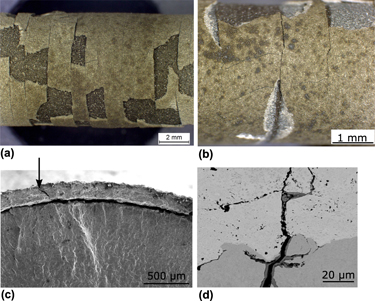
The ferritic steel 16Mo3 coated with the nickel-base alloy IN625mod by high-velocity oxy-fuel (HVOF) spraying was investigated under uniaxial and biaxial fatigue loading at 200 and 500 °C. Furthermore, bulk HVOF-sprayed specimens of the coating material IN625mod were also investigated under uniaxial isothermal fatigue loading at 200 and 500 °C. Moreover, the thermo-mechanical fatigue behavior of 16Mo3 was studied under in-phase (IP) and out-of-phase (OP) loading between 200 and 500 °C. The fatigue lives of the bulk coating and the compound material are presented. In particular, the thermo-mechanical OP loading leads to a strong reduction of the lifetimes compared to the IP loading. A conservative estimation of the fatigue lives of the thermo-mechanical loading can be given by isothermal tests at 500 °C. The comparison of the uniaxial loading with the biaxial loading cases shows reasonable coincidence by using the distortion energy hypothesis according to von Mises.
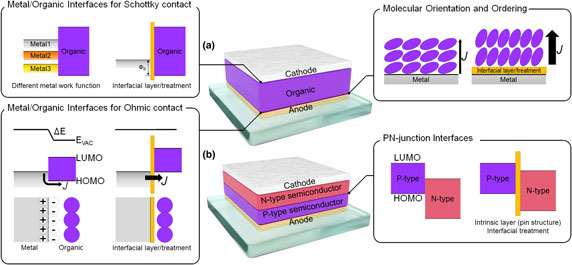
The demand for high-frequency (HF) and low-cost rectifiers has encouraged many researchers to investigate organic rectifiers. Recently, organic rectifiers with enhanced intrinsic carrier mobility and charge injection efficiency have enabled operating frequencies to reach up to a gigahertz (GHz). The metal/organic and organic/organic interfaces have played a significant role in determining the electrical properties of the organic rectifiers. In this prospective article, we review the structure of organic rectifiers and present the current state-of-the-art to attain their HF performance. We discuss methods for improving their electrical properties using interface engineering and present future prospects for practical use of GHz-operable organic rectifiers.
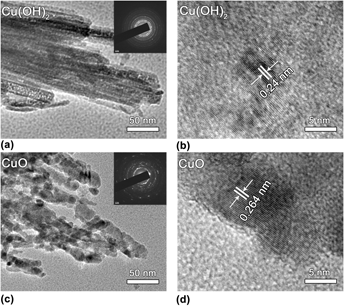
Herein, we report the synthesis of Cu(OH)2 nanobelts with high yield at low cost by a simple aqueous solution reaction. The Cu(OH)2-FTO electrode was then fabricated by a facile electrophoresis deposition method with the as-prepared Cu(OH)2 nanobelts, which require no binding agents. By subsequent heat treatment at 300 °C for 2 h, the Cu(OH)2-FTO electrode was converted to the CuO-FTO electrode. The investigation of electrocatalysis of the Cu(OH)2-FTO and CuO-FTO electrodes for water oxidation was conducted in a 0.2 M phosphate buffer solution at pH 12. The CuO-FTO electrode can catalyze water oxidation with an impressive onset overpotential of 370 mV and an overpotential of 500 mV for a current density of 1 mA/cm2 with a low Tafel slope of 57 mV/dec. This facile fabrication strategy is appealing for realizing the practical application of Cu-based electrocatalysts for water oxidation and is expected to be extended to prepare other heterocatalyst electrodes.
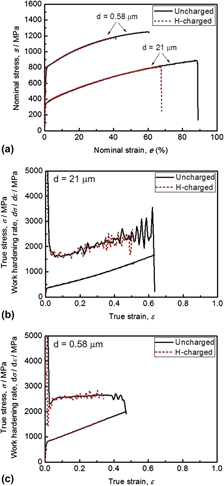
Hydrogen embrittlement behaviors of a 22Mn–0.6C (mass%) twinning induced plasticity (TWIP) steel with the grain sizes of 21 μm (coarse grain) and 0.58 μm (ultrafine grain) were investigated by means of hydrogen precharging and subsequent slow strain rate tensile tests. The total elongation and fracture stress for both of the coarse-grained and ultrafine-grained specimens decreased by hydrogen charging. The area fraction of the brittle fracture surfaces in the ultrafine-grained specimen was much smaller than that in the coarse-grained specimen. Three-point bending test also showed that the reduction of the fracture toughness by the introduction of hydrogen was much smaller in the ultrafine-grained specimen than that in the coarse-grained specimen. It was concluded that the suppressed hydrogen embrittlement by grain refinement in the 22Mn–0.6C TWIP steel was probably due to the smaller hydrogen contents per unit grain boundary area in the finer grain-sized material.