To save content items to your account,
please confirm that you agree to abide by our usage policies.
If this is the first time you use this feature, you will be asked to authorise Cambridge Core to connect with your account.
Find out more about saving content to .
To save content items to your Kindle, first ensure no-reply@cambridge.org
is added to your Approved Personal Document E-mail List under your Personal Document Settings
on the Manage Your Content and Devices page of your Amazon account. Then enter the ‘name’ part
of your Kindle email address below.
Find out more about saving to your Kindle.
Note you can select to save to either the @free.kindle.com or @kindle.com variations.
‘@free.kindle.com’ emails are free but can only be saved to your device when it is connected to wi-fi.
‘@kindle.com’ emails can be delivered even when you are not connected to wi-fi, but note that service fees apply.
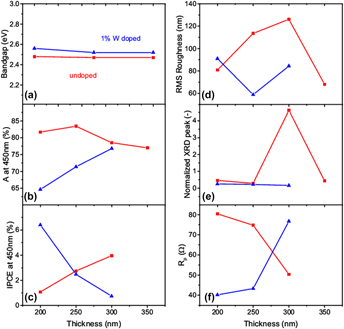
The removal of organics by photoelectrocatalytic oxidation offers a viable option to remove the contaminants at low concentrations. In this paper, we propose a BiVO4 thin films synthesized via spray pyrolysis for photoelectrocatalyic oxidation of phenol with solar light. We compare the properties of BiVO4 with those of the commonly used photocatalyst TiO2. In addition, BiVO4 films with W gradient doping were fabricated and tested for improving the photocatalytic performance of BiVO4. X-ray diffraction, atomic force microscopy, incident photon to current efficiency and spectrophotometry have been conducted for BiVO4 films of different thicknesses, as well as for TiO2. The electrochemical impedance spectroscopy and dark conductivity measurements were conducted. Phenol removal has been measured for both the TiO2 and BiVO4 samples. The best performance was found to be for a 300 nm undoped BiVO4 film, being able to reduce the phenol concentration up to 30.0% of the initial concentration in four hours.
Electrocatalysts for oxygen evolution reaction (OER) has been at the center of attention for water splitting reactions. In this article we have presented a methodology to significantly improve the OER catalytic efficiency of electrodeposited Ni3Se2 films. Specifically, the pristine Ni3Se2 on surface nanostructuring induced through electrochemical etching shows a remarkable decrease of overpotential (@10 mA cm−2) to 190 mV, making it as one of the best OER elecrocatalyst known till date. Through detailed structural and morphological characterization of the catalyst film, we have learnt that such enhancement is possibly caused by the increased surface roughness factor and electrochemically active surface area of the etched film. The morphology of the film also changed from smooth to rough on etching further supporting the enhanced catalytic activity. Detailed characterization also revealed that the composition of the film was unaltered on etching. Ni3Se2 film was also active for HER in alkaline medium making this a bifunctional catalyst capable of full water splitting in alkaline electrolyte with a cell voltage of 1.65 V.
The high-temperature flow behavior and flow stress sensitivity of BT25y alloy were investigated. Results show that hot deformation is accompanied by the dynamic competition between work hardening and flow softening. The strain rate sensitivity exponent m tends to decrease with the strain rate after a first rise, and reaches the maximum at strain rate of 0.1 s−1. There is a large temperature range exhibiting m values above 0.2 at strain rates of 0.01–0.1 s−1. The temperature sensitivity exponent s shows an overall dropping trend with elevated temperature. The strain hardening exponent n first decreases and then increases with the strain at strain rate of 0.01 s−1. Large positive n values lie in areas with high strain rate, and small negative n values are located in areas with lower temperature and small strain rate. Secondary lamellar α appears near the phase transition temperature. The microstructure presents elongated characteristics at high strain rate.
A series of Ag2S/Ag2WO4 composite microrods with different Ag2S contents (10–50 wt%) were synthesized via a facile successive precipitation route. The texture and optical properties of the pure Ag2S, Ag2WO4, and Ag2S/Ag2WO4 composites were intensively characterized by some physicochemical characterizations like N2 physical adsorption, x-ray diffraction, scanning electron microscopy, Fourier transform infrared spectroscopy, Ultraviolet–visible spectroscopy, x‐ray photoelectron spectroscopy, photoluminescence spectroscopy, and photocurrent measurements. Under visible light irradiation, different organic dyes, e.g., methylene blue and methyl orange dye were applied to evaluate the photocatalytic performances by their photocatalytic degradation reactions. The Ag2S/Ag2WO4 composite microrods exhibited superior photocatalytic activity and stability. The high crystallinity of Ag2WO4 and improved texture properties of Ag2S/Ag2WO4 resulted in their enhanced photocatalytic property. More importantly, the Ag2S/Ag2WO4 heterojunctions with matching electronic band structures obviously enhanced the separation of photo‐generated electrons and holes, further promoting the photocatalytic reaction.
Nickel–molybdenum (Ni–Mo) materials are widely used functional oxide catalysts for the hydrogen evolution reaction. In this work, we investigate the high activity of Ni–Mo by depositing size-controlled Ni nanocrystals (NCs) onto Mo substrates. We observe a synergistic increase in catalytic activity that does not scale with the Ni–Mo interface length. This evidence points to a bulk electronic interaction of the two metals that is separate from the mechanism of enhancement seen in conventionally co-deposited Ni–Mo electrocatalysts. In addition to elucidating the catalytic behavior of the Ni–Mo system, this work offers a general NC-based paradigm for investigating fundamental interactions and synergistic effects in electrocatalytic materials.
A new technology for preparing and forming ceramic particle-reinforced metal matrix composites, powder thixoforming, has been proposed. The effect of the SiCp volume fraction on the microstructure and tensile properties of thixoforged SiCp/2024 Al-based composites was studied. The results indicated that the volume fraction affected the effective liquid fraction, primary particle size and shape, and microstructure compactness. A composite with 10 vol% SiCp had the best comprehensive tensile properties, an ultimate tensile strength of 388 MPa, a yield strength of 295 MPa, and an elongation of 3.8%, representing increases of 29.3 and 33.5%, and a decrease of 63.5%, respectively, compared with the values for the thixoforged 2024 Al matrix alloy. During tensile testing, cracks were initiated in the secondary solidified structures, the debonded SiC/Al interface, and the cracked SiCp. For composites containing over 10 vol% SiCp, agglomerated SiCp acted as additional zones of crack initiation.
Mechanical reliability is a critical issue in all forms of energy conversion, storage, and harvesting. In Li-ion batteries, mechanical degradation caused by the repetitive swelling and shrinking of electrodes upon lithiation cycles is now well recognized; however, the impact of mechanical stresses on Li transport and hence the capacity of batteries is less obvious and underestimated. In particular, the stress field within the heterogeneous electrodes is complex, making the characterization of the chemomechanical behaviors of electrodes a challenging task. We develop a finite element program that computes the coupled Li diffusion and stresses in three-dimensional composite electrodes. We employ the reconstructed models of both cathode and anode materials to investigate the mechanical interactions of the constituents and their influence on the accessible capacity. The state of charge in the percolated particles is highly inhomogeneous regulated by the stress field. An ample space of design is open for the optimization of the capacity and mechanical performance of electrodes by tuning the size, shape, and pattern of active particles, as well as the properties of the inactive matrix.
Historically, alloy development with better radiation performance has been focused on traditional alloys with one or two principal element(s) and minor alloying elements, where enhanced radiation resistance depends on microstructural or nanoscale features to mitigate displacement damage. In sharp contrast to traditional alloys, recent advances of single-phase concentrated solid solution alloys (SP-CSAs) have opened up new frontiers in materials research. In these alloys, a random arrangement of multiple elemental species on a crystalline lattice results in disordered local chemical environments and unique site-to-site lattice distortions. Based on closely integrated computational and experimental studies using a novel set of SP-CSAs in a face-centered cubic structure, we have explicitly demonstrated that increasing chemical disorder can lead to a substantial reduction in electron mean free paths, as well as electrical and thermal conductivity, which results in slower heat dissipation in SP-CSAs. The chemical disorder also has a significant impact on defect evolution under ion irradiation. Considerable improvement in radiation resistance is observed with increasing chemical disorder at electronic and atomic levels. The insights into defect dynamics may provide a basis for understanding elemental effects on evolution of radiation damage in irradiated materials and may inspire new design principles of radiation-tolerant structural alloys for advanced energy systems.
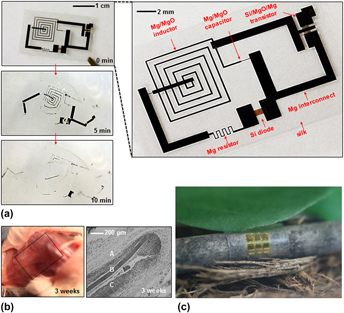
Recent advancement of inorganic dissolvable electronics nucleates around a realization that single-crystal silicon nanomembrane undergoes hydrolysis in biologically relevant conditions. The silicon-based high-performance dissolvable electronic devices are initially conceived for biomedical implants that function for a programmed timeframe followed by a complete dissolution to eliminate the need for recollection. The technology developed for biomedicine also presents unique opportunities in security devices that physically destruct and in environmentally benign electronics that dissolve without a trace to reduce electronic wastes. The new class of devices with this emerging technology complements the existing efforts in organic biodegradable devices. Compatible with state-of-the-art fabrication facilities for commercial microelectronics, the technology has a huge potential for future commercialization. This mini review will first discuss the relevant materials for the inorganic dissolvable electronics and then present the demonstrated applications in functional devices, followed by a perspective for the future developments.
We demonstrate fabrication and characterization of photovoltaic (PV) devices made using pencil, paper, and commonly available economical chemicals with a power conversion efficiency of ∼1.8%. The current collecting electrode of the device composed of multilayered graphene (MuLG) was hand-drawn on the cellulosic paper using an H2B pencil. CdSe quantum dots (QD) were used for charge generation, and 3,4,9,10-perylenetetracarboxylic dianhydride (PTCDA) as a bridging molecule to facilitate transfer of the photo-induced charges to the electrodes through MuLG. MuLG acted both as charge carrier and current collector electrode. The device fabrication and testing were accomplished in a wet lab under ambient conditions with minimum use of sophisticated instrumentation. The materials and devices were characterized using UV–visible, fluorescence, x-ray diffraction spectroscopy, and scanning and transmission electron microscopy. I–V characteristics of the PV devices fabricated on paper and polyester transparency substrates were performed using a solar simulator (AM 1.5) under ambient wet laboratory conditions. The use of pencil and paper makes the device fabrication simple, environmentally responsible, and accessible to layperson thus opening a new window for low cost PV and opto-electronic devices.
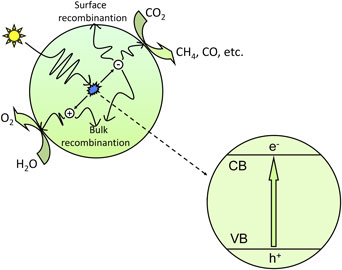
Photocatalytic reduction of carbon dioxide (CO2) into renewable hydrocarbon fuels using solar energy has gained much attention in the effort to conserve energy and enhance carbon cycling. This paper begins with a brief description of the basic concepts of the photocatalytic reduction of CO2, introduces some experimental challenges in the gas photoreaction system and provides a review of perovskite oxide semiconductor catalysts, including tantalates, niobates, titanates, zirconates and cerates, for use in the gas phase photoreduction of CO2. The prospects for the future research of CO2 photoreduction are also presented.
The object of this paper is to propose a novel method to evaluate the maximum inclusion size in medium strength steel by ultrasonic fatigue testing. The inclusion sizes in the medium strength steel were evaluated by ultrasonic fatigue testing using the fatigue specimen with a large risk volume under water-cooling condition. To ensure fatigue specimens of medium strength steel fracture from the internal inclusion, heat treatment and oxynitrocarburization were conducted to increase the strength of the specimen and to protect the specimen from surface corrosion induced by cooling water. The results show that evaluation of the inclusion size by the proposed method is more accurate than traditional approaches, which are based on inclusion size characterization from arbitrary two dimensional cross sections. Additionally, as the method is based on fatigue testing in the ultrasonic frequency regime, it can be conducted in a reasonable amount of time.
A novel and efficient photocatalyst of three dimensional (3D) Ba5Ta4O15 flower-like microsphere was synthesized via an alkaline etch under hydrothermal condition. The influence of reaction temperature, reaction time, and alkaline concentration on the morphology were investigated for the 3D Ba5Ta4O15 flower-like microsphere photocatalyst. The morphology and structure of the 3D Ba5Ta4O15 were characterized using x-ray diffraction, scanning electron microscope, transmission electron microscope, and high-resolution transmission electron microscopy. The results show that the elegant flower-like structure was composed of Ba5Ta4O15 nanosheets. The 3D Ba5Ta4O15 flower-like microspheres show a higher photocatalytic activity in the degradation of methylene blue under ultraviolet light than the bulk Ba5Ta4O15 microcrystal by the solid-state-reacted synthesized. The UV–vis diffuse reflectance spectra, photoluminescence spectra, volumetric adsorption method, and photocurrent response of the Ba5Ta4O15 photocatalyst were characterized indicated that the higher photocatalytic activity of flower-like Ba5Ta4O15 microspheres was due to the high crystallinity, large surface area and the effective charge separation.
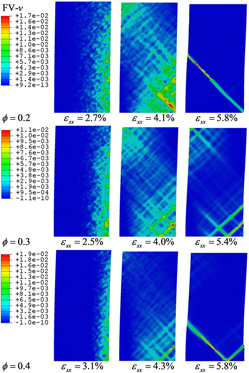
In this paper, the compressive behaviors of Zr-based bulk metallic glass (BMG) were experimentally studied under different testing conditions. To deeply reveal the inherent deformation mechanisms, numerical study was systematically conducted to analyze the shear banding evolution in BMGs, and the effect of testing machine stiffness, contact friction, and sample parallelism on the compressive ductility was therefore elucidated. Among them the effect of contact friction was carefully studied experimentally and the inherent deformation mechanisms was numerically analyzed in terms of the formation of shear bands. Free-volume theory was incorporated into ABAQUS finite element method code as a user material subroutine UMAT. The numerical method was firstly compared with the corresponding experimental results, and then parameter analyses were performed to discuss the impacts of testing conditions on the malleability of the BMG samples. The present work will shed some light on the interpretation of failure mechanisms in BMGs under different loading conditions.
Engineering of a novel heterostructured oxide interface was used to enhance the oxygen surface exchange kinetics of La0.6Sr0.4Co0.2Fe0.8O3−δ (LSCF113) thin films. A single-layer decoration of mixed (LaSr)2CoO4±δ (LSC214) and La1−xSrxCoO3−δ (LSC113) and a double-layer decoration of stacked LSC214 and LSC113 grown on the LSCF113 markedly enhanced the surface exchange coefficients of the LSCF113 by up to ~1.5 orders of magnitude relative to the undecorated LSCF113. It is hypothesized that two different types of surface decorations can enable Sr segregation at the interface and surfaces of LSC113 and LSC214, leading to enhancement of the oxygen surface exchange kinetics of decorated LSCF113.
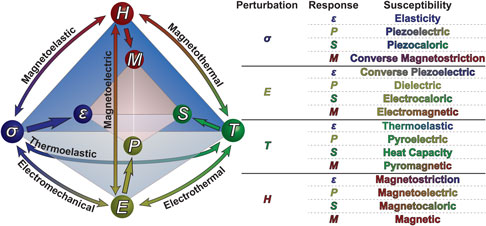
Multifunctional, complex oxides capable of exhibiting highly-coupled electrical, mechanical, thermal, and magnetic susceptibilities have been pursued to address a range of salient technological challenges. Today, efforts are focused on addressing the pressing needs of a range of applications and identifying, understanding, and controlling materials with the potential for enhanced or novel responses. In this prospective, we highlight important developments in theoretical and computational techniques, materials synthesis, and characterization techniques. We explore how these new approaches could revolutionize our ability to discover, probe, and engineer these materials and provide a context for new arenas where these materials might make an impact.
The particle size of Fe3O4 nanoparticles is controlled using a simple oxidation–precipitation method without any surfactant. The structure, morphology and physical properties of the synthesized Fe3O4 NPs were characterized using x-ray diffraction, scanning electron microscopy, transmission electron microscopy, x-ray photoelectron spectroscopy, Brunauer–Emmett–Teller, and vibrating sample magnetometer. As-prepared magnetite samples exhibited spherical morphology with average diameters of 30, 70, 250, and 600 nm, respectively. Activity of the synthesized Fe3O4 NPs was evaluated for the Fenton-like reaction, using rhodamine B (RhB) as a model molecule. The results showed that catalytic activity increases with the reduced particle size. The significant higher catalytic activity of the fine Fe3O4 NPs mainly originated from the higher specific surface area, due to the increase in exposed active site number and adsorption capacity. The reusability of 30 nm Fe3O4 NPs was also investigated after three successive runs, in which the RhB degradation performances showed a slight difference with the first oxidation cycle. This investigation is of great significance for the promising application of the heterogeneous Fenton catalyst with enhanced activity in the oxidative degradation of organic pollutants.