Refine search
Actions for selected content:
106117 results in Materials Science
Transport in Semiconductor Mesoscopic Devices David K. Ferry: IOP Publishing, 2015 316 pages, $91.72 (Kindle edition with audio/video $137.52) ISBN 978-0-7503-1102-1
-
- Journal:
- MRS Bulletin / Volume 41 / Issue 8 / August 2016
- Published online by Cambridge University Press:
- 02 August 2016, pp. 636-637
- Print publication:
- August 2016
-
- Article
-
- You have access
- HTML
- Export citation

Formation mechanism and stability of the phase in the interface of tungsten carbide particles reinforced iron matrix composites: First principles calculations and experiments
-
- Journal:
- Journal of Materials Research / Volume 31 / Issue 16 / 29 August 2016
- Published online by Cambridge University Press:
- 29 July 2016, pp. 2376-2383
- Print publication:
- 29 August 2016
-
- Article
- Export citation

Electromagnetic wave absorption properties of FeCoNiCrAl0.8 high entropy alloy powders and its amorphous structure prepared by high-energy ball milling
-
- Journal:
- Journal of Materials Research / Volume 31 / Issue 16 / 29 August 2016
- Published online by Cambridge University Press:
- 29 July 2016, pp. 2398-2406
- Print publication:
- 29 August 2016
-
- Article
- Export citation

Growth and characteristics of AlGaN/GaN heterostructures on sp2-bonded BN by metal–organic chemical vapor deposition
-
- Journal:
- Journal of Materials Research / Volume 31 / Issue 15 / 15 August 2016
- Published online by Cambridge University Press:
- 28 July 2016, pp. 2204-2213
- Print publication:
- 15 August 2016
-
- Article
- Export citation
-
AlGaN/GaN heterostructures were grown by metal–organic chemical vapor deposition (MOCVD) on sp2-bonded BN using AlN as a nucleation layer. The best x-ray diffraction rocking curve full-width-at-half-maximums (FWHMs) are 0.13° and 0.17° for the GaN (0002) and ( $10\bar 12$ ) diffraction peaks. Hall-effect measurements show room temperature mobility near 2000 cm/V·s with sheet carrier density of ∼1 × 1013 cm−2, comparable to the best values obtained on sapphire using Fe-doped GaN buffers. The best low temperature mobility of the 2-dimensional electron gas (2DEG) is ∼33,000 cm2/V·s; indicating that the dominant scattering mechanism limiting the transport of 2DEG is interface roughness. Good quality BN grown directly onto sapphire is shown to be effective for reducing parallel conduction that exists due to residual donor impurities in the buffer. Luminescence measurements indicate good optical quality of the GaN/BN/sapphire. The residual strain in the GaN layer is found to be almost completely eliminated when it is released from the substrate.


Transamidation of dimethylformamide during alkylammonium lead triiodide film formation for perovskite solar cells
-
- Journal:
- Journal of Materials Research / Volume 32 / Issue 1 / 13 January 2017
- Published online by Cambridge University Press:
- 28 July 2016, pp. 45-55
- Print publication:
- 13 January 2017
-
- Article
-
- You have access
- Open access
- HTML
- Export citation

Density functional theory investigation of the electronic structure and defect chemistry of Sr1−x Kx FeO3
-
- Journal:
- MRS Communications / Volume 6 / Issue 3 / September 2016
- Published online by Cambridge University Press:
- 27 July 2016, pp. 145-150
- Print publication:
- September 2016
-
- Article
-
- You have access
- HTML
- Export citation
JMR volume 31 issue 14 Cover and Back matter
-
- Journal:
- Journal of Materials Research / Volume 31 / Issue 14 / 28 July 2016
- Published online by Cambridge University Press:
- 27 July 2016, pp. b1-b2
- Print publication:
- 28 July 2016
-
- Article
-
- You have access
- Export citation
JMR volume 31 issue 14 Cover and Front matter
-
- Journal:
- Journal of Materials Research / Volume 31 / Issue 14 / 28 July 2016
- Published online by Cambridge University Press:
- 27 July 2016, pp. f1-f5
- Print publication:
- 28 July 2016
-
- Article
-
- You have access
- Export citation

Prediction of residual stress components and their directions from pile-up morphology: An experimental study
-
- Journal:
- Journal of Materials Research / Volume 31 / Issue 16 / 29 August 2016
- Published online by Cambridge University Press:
- 26 July 2016, pp. 2392-2397
- Print publication:
- 29 August 2016
-
- Article
- Export citation
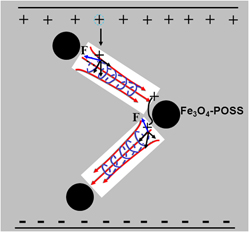
Electrospun polyacrylonitrile/magnetic Fe3O4–polyhedral oligomeric silsesquioxanes nanocomposite fibers with enhanced filter performance for electrets filter media
-
- Journal:
- Journal of Materials Research / Volume 31 / Issue 17 / 14 September 2016
- Published online by Cambridge University Press:
- 26 July 2016, pp. 2662-2671
- Print publication:
- 14 September 2016
-
- Article
- Export citation
X-ray powder diffraction data for monomenthyl succinate, C14H24O4
-
- Journal:
- Powder Diffraction / Volume 31 / Issue 4 / December 2016
- Published online by Cambridge University Press:
- 26 July 2016, pp. 301-303
-
- Article
- Export citation
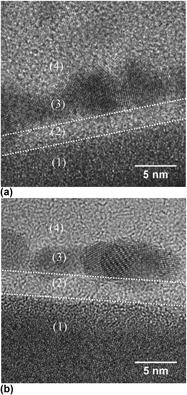
Bilayer amorphous carbon films synthesized by filtered cathodic vacuum arc deposition
-
- Journal:
- Journal of Materials Research / Volume 31 / Issue 20 / 28 October 2016
- Published online by Cambridge University Press:
- 25 July 2016, pp. 3161-3167
- Print publication:
- 28 October 2016
-
- Article
- Export citation
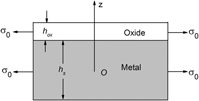
Residual stress analysis with stress-dependent growth rate and creep deformation during oxidation
-
- Journal:
- Journal of Materials Research / Volume 31 / Issue 16 / 29 August 2016
- Published online by Cambridge University Press:
- 22 July 2016, pp. 2384-2391
- Print publication:
- 29 August 2016
-
- Article
- Export citation
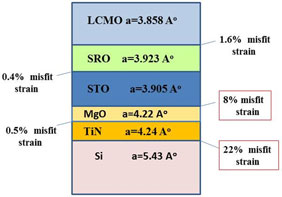
Ferromagnetic oxide heterostructures on silicon
-
- Journal:
- MRS Communications / Volume 6 / Issue 3 / September 2016
- Published online by Cambridge University Press:
- 19 July 2016, pp. 234-240
- Print publication:
- September 2016
-
- Article
-
- You have access
- HTML
- Export citation
Shear and shuffle in $\left{\{{{\bf11}\bar {\bf2}{\bf 2}} \right\}\left\langle {{\bf 11}\bar {\bf 2}\bar {\bf3}} \right\rangle$ twinning in titanium – RETRACTION
-
- Journal:
- Journal of Materials Research / Volume 31 / Issue 15 / 15 August 2016
- Published online by Cambridge University Press:
- 18 July 2016, p. 2361
- Print publication:
- 15 August 2016
-
- Article
-
- You have access
- HTML
- Export citation


An augmented numerical inverse method for determining the composition-dependent interdiffusivities in alloy systems by using a single diffusion couple
-
- Journal:
- MRS Communications / Volume 6 / Issue 3 / September 2016
- Published online by Cambridge University Press:
- 18 July 2016, pp. 295-300
- Print publication:
- September 2016
-
- Article
- Export citation
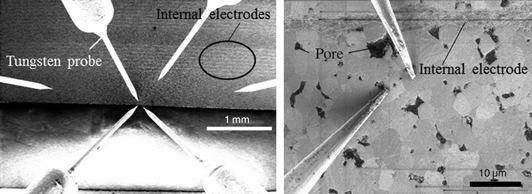
Non-linearity variation of single junctions and its analysis using nano-prober within fine-grained ZnO-based multilayer varistors
-
- Journal:
- MRS Communications / Volume 6 / Issue 3 / September 2016
- Published online by Cambridge University Press:
- 15 July 2016, pp. 210-215
- Print publication:
- September 2016
-
- Article
-
- You have access
- HTML
- Export citation

Encapsulation of modified pigment yellow 110 (PY110) for electrophoretic display
-
- Journal:
- Journal of Materials Research / Volume 31 / Issue 15 / 15 August 2016
- Published online by Cambridge University Press:
- 15 July 2016, pp. 2261-2267
- Print publication:
- 15 August 2016
-
- Article
- Export citation

Direct foaming and seeding of highly porous, lightweight gypsum
-
- Journal:
- Journal of Materials Research / Volume 31 / Issue 15 / 15 August 2016
- Published online by Cambridge University Press:
- 15 July 2016, pp. 2244-2251
- Print publication:
- 15 August 2016
-
- Article
- Export citation

Metalized carbon nanotubes as a conductive material for energy storage devices
-
- Journal:
- Journal of Materials Research / Volume 31 / Issue 15 / 15 August 2016
- Published online by Cambridge University Press:
- 15 July 2016, pp. 2284-2290
- Print publication:
- 15 August 2016
-
- Article
- Export citation
