To save content items to your account,
please confirm that you agree to abide by our usage policies.
If this is the first time you use this feature, you will be asked to authorise Cambridge Core to connect with your account.
Find out more about saving content to .
To save content items to your Kindle, first ensure no-reply@cambridge.org
is added to your Approved Personal Document E-mail List under your Personal Document Settings
on the Manage Your Content and Devices page of your Amazon account. Then enter the ‘name’ part
of your Kindle email address below.
Find out more about saving to your Kindle.
Note you can select to save to either the @free.kindle.com or @kindle.com variations.
‘@free.kindle.com’ emails are free but can only be saved to your device when it is connected to wi-fi.
‘@kindle.com’ emails can be delivered even when you are not connected to wi-fi, but note that service fees apply.
In this study, a method using dual triangular pyramidal indenters is suggested for material property evaluation. First, we demonstrate that the load–depth curves and the projected contact areas from conical and triangular pyramidal indentations are generally different. Nonequal projected contact areas of two indenters and nonplanar contact line of Berkovich indenter are the main sources of different indentation characteristics of two indenters. For this reason, an independent approach to the triangular pyramidal indentation is needed. With finite element (FE) indentation analyses for various materials, we investigate the relationships between material properties, indentation parameters, and load–depth curves. Based on the FE solutions, we suggest mapping functions for evaluating material properties from indentations by two triangular pyramidal WC indenters, which differ in their centerline-to-face angles. Elastic modulus, yield strength, and strain hardening exponent are obtained with an average error of <3%.
This investigation reports mechanical properties of the exoskeleton of deep sea shrimp, Rimicaris exoculata, at temperatures ranging from 25 to 80 °C measured using nanoindentation experiments. The measured properties are compared with the corresponding shallow water shrimp (Pandalus platyceros) exoskeleton properties. Scanning electron microscopy suggests that both types of shrimp exoskeletons have the twisted plywood, Bouligand structure. However, they differ in the volume fraction and distribution of mineral content. The variations in the nanoindentation measured hardness values of the examined shrimp exoskeletons are found to be strongly correlated with the corresponding compositional difference between the two exoskeleton types. Nanoindentation creep strain rate measurements are performed to provide an assessment of the two types of exoskeleton for the role of proteins and minerals to cause difference in behavior and properties between the two shrimp species. The measured creep load–depth data are fitted with a viscoelastic creep function to find the creep compliance as a function of experimentally varying temperature and in the context of natural variations in mineral content.
The mechanisms of densification and creep were examined during spark plasma sintering (SPS) of alumina doped with a low and high level of zirconia or yttria, over a temperature range of 1173–1573 K and stresses between 25 and 100 MPa. Large additions of yttria led clearly to in situ reactions during SPS and the formation of a yttrium-aluminum garnet phase. Dopants generally lead to a reduction in the densification rate, with substantial reductions noted in samples with ∼5.5 vol% second phase. In contrast to a stress exponent of n ∼ 1 for pure alumina, the doped aluminas displayed n ∼ 2 corresponding to an interface-controlled diffusion process. The higher activation energies in the composites are consistent with previous data on creep and changes in the interfacial energies. The results reveal a compensation effect, such that an increase in the activation energy is accompanied by a corresponding increase in the pre-exponential term for diffusion.
Deformation mechanics in equal channel angular pressing (ECAP) was studied in situ using digital image correlation (DIC) and infra-red (IR) thermography. In a prototypical experiment in an optical and IR transparent die, the deformation of commercially pure lead (Pb) is observed using high-speed optical and IR cameras. From the resulting time-sequence images of metal-flow in the deformation zone, DIC is used to characterize the zone of severe plastic deformation (SPD) as a function of the scale of deformation (sample dimensions), deformation speed, and die geometry. The temperature rise in the deformation zone was characterized using IR thermography and the results were compared against theoretical estimates. These observations provide direct insights into the mechanics of SPD in ECAP, which can offer strategies for microstructure control, process optimization, and miniaturization of ECAP.
0.7(0.1BiYbO3-0.9PbTiO3)-0.3 Pb(Mg1/3Nb2/3)O3 (0.7BYPT-0.3PMN) ternary piezoelectric ceramics were prepared by a columbite precursor method. The effects of sintering temperature on the crystalline phase, microstructure, and electrical properties of the ceramics were systematically investigated. There were two phases coexisting in the 0.7BYPT-0.3PMN ceramics sintered at 1100–1250 °C, one is the perovskite host phase with tetragonal symmetry and the other is Yb2Ti2O7 impurity phase. It was observed that, with increasing sintering temperature, the piezoelectric constant d33, dielectric constant εr, planar electromechanical coupling coefficient kp, and Curie temperature TC increased initially and then decreased. An apparent structure distortion could also be observed in samples synthesized at high sintering temperature due to the severe volatilization of Pb and Bi. The optimum performances of the material were obtained for samples sintered at 1150 °C with d33 = 100 pC/N, εr = 494, kp = 25.4%, and TC = 380 °C, respectively. It can be ascribed to the combined effect of a higher density, structural homogeneity with decreased tetragonality as well as a small amount of pyrochlore phase.
Poly(acrylic acid) (PAA) and poly(vinylpyrrolidone) (PVP) are both highly safe synthetic polymers approved as pharmaceutical excipients. When their aqueous solutions are mixed, insoluble rigid complex is precipitated. On the other hand, if the dried PAA film was immersed in aqueous PVP solution, swollen PAA/PVP soft hydrogel was obtained. Heated drying of the gel afforded a transparent water-swellable film. The swellable PAA/PVP complex film exhibited favorable properties in medical use. If the film was put on a bleeding site, it swelled, and stuck to a hemorrhaging spot, and efficiently arrested bleeding. It could also prevent the adhesion formation by injured intestines.
Many self-healing polymers require elevated temperatures for healing. Curie temperature (TC) controlled magnetic nanoparticles can generate heat through the application of an external alternating magnetic field (AMF). Thus, heating can be localized and regulated, preventing damage to the polymer due to high temperatures. In this work, novel TC controlled magnetic nanoparticle filler–polymer matrix composites (Magpol) were investigated as wire insulation materials. Mn–Zn ferrites were introduced as the filler in a thermoplastic polyethylene vinyl acetate (EVA) matrix. The composite was subjected to different damage modes, such as chaffing and tear. Greater healing efficiency was obtained at lower filler loading compared to other relevant systems. Efficient healing was obtained without any thermal degradation. Good agreement was observed between experimental results and theoretical models of polymer healing. Thus, a Curie temperature controlled magnetic nanocomposite system was developed with improved self-healing capabilities.
This study investigated influences of vacancy defects on buckling behaviors of open-tip carbon nanocones (CNCs) by molecular dynamics simulations. Effects of vacancy location and temperature on the buckling behaviors were examined in the study. Some interesting findings were attained from the investigations. It was noticed that the CNC with an upper vacancy has comparable degradation in the critical strain and in the critical load with the CNC with a middle vacancy, whereas the CNC with a lower vacancy has lower degradation in the antibuckling ability than the above two CNCs. The antibuckling ability of the CNCs reduces with the growth of the temperature. This temperature effect is more apparent in the perfect CNC than in the vacancy-defect CNCs. It was also observed that the degradation in the antibuckling ability is obvious at a lower temperature, but it decreases as the temperature grows. Besides, all the CNCs (including the perfect and the vacancy-defect CNCs) exhibited a shrinking/swelling buckling mode shape at the studied temperatures. Existence of the vacancies did not alter the buckling mode shape of the CNCs.
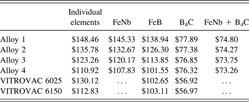
Amorphous and nanocrystalline soft magnets have been investigated extensively in the past two decades. Many materials with attractive soft magnetic properties contain boron, which improves the glass formability, thermal stability and prevents undesirable grain growth. The high price of boron, however, makes the development of new soft magnetic materials and alternative synthesis routes important. We report here a synthesis of cobalt-rich alloys by substituting boron carbide for elemental boron to achieve significantly lower cost. Ribbons produced with and without boron carbide substitution were observed to exhibit comparable soft magnetic properties while the former results in 31–48% cost reduction. Extrapolating this idea to commercial VITROVAC 6025 and 6150, the cost reductions were calculated to be 56 and 50%, respectively, while both synthesis routes produced ribbons of similar soft magnetic properties. Our work here provides an attractive route to reduce the cost and increase the market competitiveness of soft magnets.
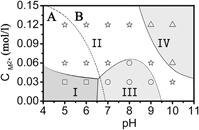
LiFe1/3Mn1/3Co1/3PO4 (LFMC) has been synthesized by a microwave-assisted hydrothermal technique. During the crystal growth, two evolutionary routes coexist and compete with each other after the nuclei have been stably formed. One of them is the continuous growth of single particles and the other one is agglomeration. The size and morphology of the products are determined by the interplay of the two competing routes. The growth morphology is quantitatively analyzed from first principle calculations. A phase diagram is constructed, which guides to control the morphology by adjusting CM and pH. Static magnetic properties imply long range antiferromagnetic order below TN = 39 K and a paramagnetic Curie–Weiss-like behavior with θ = 75 K and peff = 5.51 μB at high temperatures. Cyclic voltammetry shows two distinct peaks corresponding to the Fe2+/Fe3+ and Co2+/Co3+ redox couples, respectively, whereas the Mn2+/Mn3+ redox couple is not observed due to its sluggish kinetics induced by the Jahn–Teller effect of Mn3+.
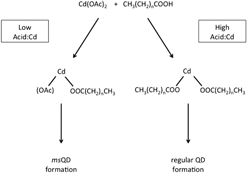
Cadmium sulfide (CdS) quantum dot (QD) nanoparticles have been synthesized using a one-pot noninjection reaction procedure in solvent medium 1-octadecene. This approach used a cadmium salt and 1-dodecanethiol, an organic sulfur, as the cadmium and sulfur sources, respectively, along with a long-chain organic acid (myristic acid, lauric acid, or stearic acid). The acid has dual effects as a surface capping ligand and a solubility controlling agent as well. UV–Vis and photoluminescence (PL) spectrometry techniques were used to characterize the optical properties, along with transmission electron microscopy (TEM) to identify the structure and size. Our newly developed synthesis procedure allowed for investigation of both regular and “magic-sized” CdS QDs by systematically controlling reaction parameters such as reactant type, reactant concentration, and reaction temperature. The organic sulfur (1-dodecanethiol) proved to be a useful sulfur source for synthesizing magic-sized CdS QDs, previously unreported. Several distinctive size regimes of magic-sized quantum dots (MSQDs), including Families 378 and 407, were successfully produced by controlling a small number of factors. The understanding of controlled Cd release in a MSQD formation mechanism is developed.
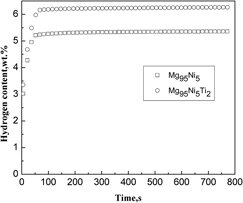
Ti was added to Mg–Ni alloy (Mg95Ni5) by a novel hydriding combustion synthesis (HCS) process. The effect of Ti on hydrogen absorption/desorption kinetics of Mg95Ni5 was investigated. The results showed that Ti had superior catalytic effects on hydrogen storage properties of Mg95Ni5, which required only 80 s to reach its saturated hydrogen absorption capacity of 6.29 wt% at 473 K and released 5.49 wt% hydrogen within 900 s at 553 K. Based on an Arrhenius analysis, the activation energy of the hydrogen desorption process was 80.8 kJ mol−1 for the main phase of MgH2 in the Ti-doped Mg95Ni5. The excellent hydriding/dehydriding properties were related to the existence of TiH1.924, which improved the efficiency of mechanical milling and was helpful in the refinement of the crystallite size of MgH2, resulting in more fresh surface area and grain boundary area. Besides, it was thought to restrain the Mg particles from growth during the hydrogenation/dehydrogenation cycles.
With the increasing usage of Al alloys in vehicle manufacture, it is necessary to join dissimilar Al alloys with lap joint. However, hot cracking is a challenging issue due to the chemical composition and thermal tension, which greatly determines the reliability of automobile operation. Among different Al alloys, the series 5000 (Al–Mg) and 6000 (Al–Mg–Si) are widely used. To better understand the hot cracking behavior, various stack ups of AA5754 and AA6013 were laser welded to investigate the effects of process parameters on hot cracking formation. The chemical composition, microstructure, fusion ratio, and fracture morphology of the weld joint were also examined. The results showed that the order of material stacking affected weld's susceptibility to hot cracking significantly, and the critical process parameters were obtained for tested conditions which could effectively reduce hot cracking. The findings from this work provide guidance for hot cracking prevention in laser welding of dissimilar Al alloys.
The mechanical properties of ultrafine-grained aluminum produced by equal-channel angular pressing (ECAP) are strongly influenced by strain rate. In this work, an experimental investigation of local strain rate sensitivity as it relates to microstructure was performed using a combination of scanning electron microscopy and digital image correlation. Uniaxial tension tests were carried out at 200 °C and strain rates alternating between 2.5 × 10⁻⁵ s−1 and 3.0 × 10⁻³ s−1. The results demonstrate that the heterogeneous microstructure generated by ECAP has a strong effect on the microstructure scale strain rate sensitivity. Deformation centered at grain boundaries separating regions of banded microstructure exhibits the greatest strain rate sensitivity. Strain rate sensitivity is limited in deformation occurring in regions of microstructure composed of ultrafine grains separated by low-angle grain boundaries. The tensile specimens all failed by shear bands at 200 °C and at room temperature they failed by necking with little plastic deformation apparent outside of the neck.
High performance materials that can withstand radiation, heat, multiaxial stresses, and corrosive environment are necessary for the deployment of advanced nuclear energy systems. Nondestructive in situ experimental techniques utilizing high energy x-rays from synchrotron sources can be an attractive set of tools for engineers and scientists to investigate the structure–processing–property relationship systematically at smaller length scales and help build better material models. In this study, two unique and interconnected experimental techniques, namely, simultaneous small-angle/wide-angle x-ray scattering (SAXS/WAXS) and far-field high-energy diffraction microscopy (FF-HEDM) are presented. The changes in material state as Fe-based alloys are heated to high temperatures or subject to irradiation are examined using these techniques.
The carburizing behaviors and mechanisms for Cr35Ni45Nb alloy subjected to different service conditions were studied in a high-temperature vacuum environment. Generally, the carburizing process of an alloy is always accompanied by diffusional heterogeneous reactions regardless of the service condition of the alloy. For a carburized original tube, there is a layered structure at the inner wall of the tube, which is comprised of a M7C3 zone, a M7C3–M23C6 mixed zone, and a M23C6 zone with different morphologies. However, for a 6-year tube (short for a tube serviced for 6 years), the composite oxide layers formed previously act as effective barriers to carbon infiltration. Moreover, the Cr2O3 scale tended to be carbonized to form carbide scale to spall from the surface in a reducing environment, while the SiO2 kept stable all along. Once the oxide layers were removed or carbonized enough, inconceivable internal carburization occurred widely.
The role of substrate orientation on interface registry and nanocrystal shape has been investigated for epitaxial manganese oxide (Mn3O4) nanocrystals. Mn3O4 (101) nanoplatelets and (112)-orientated nanowires have been successfully deposited on (111) and (110) SrTiO3 (STO) substrates, respectively. Under higher magnifications, the (101) platelets were found to exhibit step-like growth, spiraling outward from a local dislocation site at the Mn3O4–STO interface. Selected area electron diffraction analysis from transmission electron microscope (TEM) was carried out to determine the in-plane edge directionalities of (101) and (112) Mn3O4. We found the (101) Mn3O4 orientation to exhibit a complex in-plane epitaxial relation of $[2\overline {31} ]$Mn3O4//[100]STO and an out-of-plane relation of $[\overline 1 01]$Mn3O4//$[\overline 1 11]$STO. Furthermore, lattice misorientations of 58° in-plane and 35° out-of-plane have been calculated, attributed to the shear caused by the spiral growth. For the (112) Mn3O4 nanowires, the TEM diffraction pattern indicates pyramidal cross-sections based along $[0\overline {11} ]$ STO. Subsequent calculations reveal that the (112) nanowires have their long axis (c-axis) such that [001]Mn3O4//[110]STO. Thus the nanowires grow preferentially along its longest axis giving rise to the observed shape and anisotropic nature.