To save content items to your account,
please confirm that you agree to abide by our usage policies.
If this is the first time you use this feature, you will be asked to authorise Cambridge Core to connect with your account.
Find out more about saving content to .
To save content items to your Kindle, first ensure no-reply@cambridge.org
is added to your Approved Personal Document E-mail List under your Personal Document Settings
on the Manage Your Content and Devices page of your Amazon account. Then enter the ‘name’ part
of your Kindle email address below.
Find out more about saving to your Kindle.
Note you can select to save to either the @free.kindle.com or @kindle.com variations.
‘@free.kindle.com’ emails are free but can only be saved to your device when it is connected to wi-fi.
‘@kindle.com’ emails can be delivered even when you are not connected to wi-fi, but note that service fees apply.
The present work demonstrates an isothermal reversible variation of magnetization in nanoporous Pd67Ni33 alloy during continuous charging and discharging of the alloy electrode in 1-M KOH solution. A custom-built electrochemical cell, containing the sample as working electrode performed the in situ charging experiments inside an extraction magnetometer at a constant applied magnetic field. The metal–electrolyte response was examined by varying the electrode potential, which apart from polarizing nanoporous structure, may also lead to electrodissociation of the electrolyte medium, being aqueous in nature. The result therefore analyzed hydrogenation as the key parameter for the observed reversible magnetization in the transition metal alloy at room temperature. In addition, electrochemical reactivity due to surface oxidation at the positive potential has been discussed, considering that a change in the band structure is also possible at the negative potential regime due to hydrogenation through cyclic voltammetry study.
Suction casting (SC) and centrifugal casting (CC) are two common special casting processes. The influences of SC and CC on the microstructural development of Cu–10Al–4Fe–4Ni aluminum bronzes were investigated with continuous cooling method. The results indicate that α, β′, KII, and KIII phases are observed in the quasicast microstructure via the SC process with the precipitation sequence of KII → α → KIII. Additionally, KI and KIV are observed in the quasicast microstructure via the CC process with the precipitation sequence of α + KⅠ → KII → KIV → KIII. Phase initial precipitation temperatures of the CC process are higher than that of the SC process, especially for α phase. As the quenching temperature decreases, the hardness of both alloys shows a rapid decline trend and finally reaches a steady state. It is found that the eutectoid decomposition (β → α + KIII) barely affects the hardness of the alloys.
Decoupled growth often occurs in the nonfacetted–facetted eutectic systems. And it is generally considered that the nonfacetted solid solution acts as the leading phase in the decoupled growth. In this work, Fe40Ni40P14B6 eutectic alloys were systematically studied via solidification of undercooled melts and crystallization of amorphous alloys. Upon solidification of melts subjected to different undercoolings, as the undercooling increases, the growth mechanism develops from cooperative growth to decoupled growth. Upon crystallization of amorphous alloys, the partially crystallized sample consists only of strongly faulted intermetallic (Fe,Ni)3(P,B) with chemical composition deviating from stoichiometry. Formation of supersaturated solid solution γ(Fe, Ni) in the solidification and supersaturated intermetallic (Fe,Ni)3(P,B) in the amorphous crystallization indicates that decoupled growth results from solute trapping and disorder trapping in rapid growth of solid solution and intermetallic, respectively. Further application of rapidly quenched experiments and theoretical analysis declare that the decoupled growth results from a competition between the growth of γ(Fe, Ni) and (Fe,Ni)3(P,B), which are controlled by solute trapping and disorder trapping, respectively.
Pure platinum was probed with a nanoindenter fitted with a Berkovich tip to various depths. The indent pattern was made on the as-polished specimen prior to heat treating, after heat treating at 500 °C for 30 min, and again after further heat treating at 1000 °C for 30 min. The variability in the measured hardness decreased as the indentation depth increased from 50 to 300 nm. When the sampled was annealed, the hardness variation was also greater. Increasing hardness variation with decreasing dislocation density and sampling volume indicates that dislocation density plays a critical role in the observed variation, beyond solely instrumentation uncertainty, and supports a defect-based explanation for the stochastic behavior. It appears that the stochastic behavior occurs when multiple dislocations are present in the sampled volume rather than sampling only a single dislocation.
The objective of this work is to reveal the relationship between the molecular structure and shape-memory property of a hydro-epoxy resin system. The system is prepared using hydro-epoxy, menthane diamine (MDA), and poly(propylene glycol) diglycidyl ether (PPGDGE) with different molecular weights. By keeping the PPGDGE content constant, the crosslink density of the shape-memory hydro-epoxy resin system can be changed by varying the molecular weight of PPGDGE. The results indicate that the glass transition temperature (Tg) and rubber modulus (Er) decrease as the crosslink density decreases. The crosslink density has little influence on shape recovery ratio (Rr). Full recovery can be observed after only several minutes when the temperature is equal to or above Tg. However, the crosslink density has a profound effect on the shape fixity ratio (Rf). If the crosslink density is too low, the shape fixity ratio of shape-memory hydro-epoxy resin would not reach 100%.
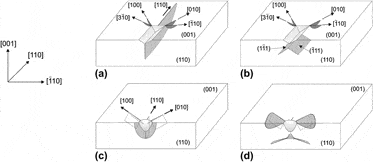
The nanoindentation fracture behavior of gallium arsenide (GaAs) is examined from two perspectives in two parent papers. The first paper (part I) focuses on in situ nanoindentation within a scanning electron microscope (SEM) and on fractographic observations of cleaved cross-sections of indented regions to investigate the crack field under various indenter geometries. In the second parent paper (part II), cathodoluminescence and transmission electron microscopy are used to investigate the relationship between dislocation and crack fields. The combination of instrumented in situ scanning electron microscopy nanoindentations and cleavage cross-sectioning allows us to establish a detailed map of cracking in the indented region and cracking kinetics for conical and wedge indenter shapes. For wedge nanoindentations, the evolution of the half-penny crack size with the indentation load is interpreted using a simple linear elastic fracture model based on weight functions. Fracture toughness estimates obtained by this technique fall within the range of usual values quoted for GaAs.
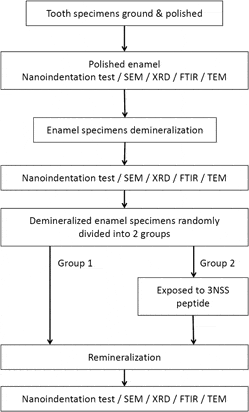
A highly biocompatible peptide, triplet repeats of asparagine–serine–serine (3NSS) regulates mineral deposition for the reconstruction of erosive enamel. Healthy human enamel was demineralized to create lesions, then exposed to the 3NSS peptide solution, and finally immersed in artificial saliva. The degrees of nanohardness recovery were 5.02% and 16.27% for the control group and enamel treated with the 3NSS peptide, respectively. Peptides assembling at enamel interrod attracted greater quantities of ions from the solution to form nanocrystalline hydroxyapatite minerals during the reconstruction of vacant gap. This resulted in a decrease in the surface roughness, and the acidic eroded pores were filled completely. Additionally, the newly deposited hydroxyapatites remineralized with the aid of the 3NSS peptide exhibited a smaller average crystalline size, which effectively inhibited plastic deformations. Treatment with the 3NSS peptide provided great improvements in nanohardness and elastic modulus.
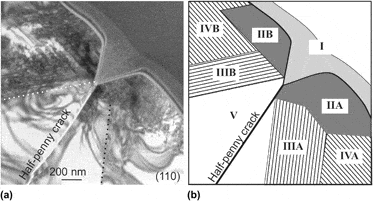
The nanoindentation fracture behavior of gallium arsenide (GaAs) is examined from two perspectives in two parent papers. In the first paper (part I), we address the morphology of the crack field induced by different types of indenters by means of in situ nanoindentation inside a scanning electron microscope (SEM) and of cleavage cross-sectioning techniques. In the present paper (part II), we investigate the early stage of crack nucleation under wedge nanoindentation through cathodoluminescence and transmission electron microscopy. We find that the apex angle of the wedge indenter influences the dislocation microstructure and, as a consequence, the mechanism of crack nucleation under nanoindentation. The formation of microtwins depends on both the orientation of the indenter with respect to the orientation of the GaAs crystal and on the apex angle of the indenter. For dicing applications of GaAs wafers, it is desirable to have an opening angle of the indenter smaller than 70° to facilitate the formation of precursor cracks.
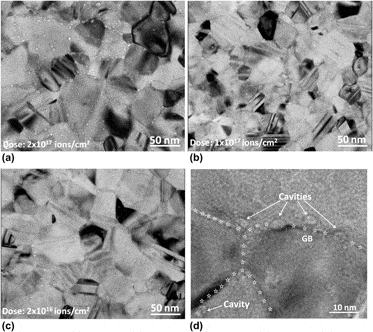
The irradiation damage behaviors of single crystal (SC), coarse-grained (CG), and nanograined (NG) copper (Cu) films were investigated under Helium (He) ion implantation at 450 °C with different ion fluences. In irradiated SC films, plenty of cavities are nucleated, and some of them preferentially formed on growth defects or dislocation lines. In the irradiated CG Cu, cavities formed both in grain interior and along grain boundaries; obvious void-denuded zones can be identified near grain boundaries. In contrast, irradiation-induced cavities in NG Cu were observed mainly gathering along grain boundaries with much less cavities in the grain interiors. The grains in irradiated NG Cu are significantly coarsened. The number density and average radius of cavities in NG Cu was smaller than that in irradiated SC Cu and CG Cu. These experiments indicate that grain boundaries are efficient sinks for irradiation-induced vacancies and highlight the important role of reducing grain size in suppressing radiation-induced void swelling.
Under the mixed-mode loading condition, mechanical responses of the Al-terminated O-site Ni(111)/α-Al2O3(0001) interface are investigated using first-principle calculations. The displacement-controlled loadings along 22.5, 45, and 67.5° orientations with respect to the interface are applied. The tension and shear responses of the interface are elaborated according to the computational results, including the mechanical strengths, the effect of tension softening, and the failure characteristic. In addition, the stress versus displacement relationships are derived out based on the general approach suggested by [Sun et al., Mater. Sci. Eng., A170, 67 (1993)], and the deviations between the analytical and computational results are examined in particular. Furthermore, the potential function and its development of this interface are discussed in detail.
We report a facile way to fabricate three-dimensional (3D) Ni–TiO2 core–shell nanowire arrays through anodic aluminum oxide template-assisted sol–gel TiO2 nanotube shell growth followed by Ni core using room temperature constant current electrodeposition. The 3D Ni–TiO2 nanowire-based dye-sensitized solar cell (DSSC) endows a 67% increase in conversion efficiency as compared with the TiO2 nanotube DSSC and maximum conversion efficiency of 5.07% was obtained by surface treating the photoanode with TiCl4, which provides enhanced light scattering and surface passivation. Indeed, this work paves the way to build reliable 3D Ni–TiO2 nanostructured photoanodes for highly efficient DSSCs.
Most important advances of the last years in research and development of oxygen ion transport membrane (ITM) materials based on solid or liquid Bi2O3 are briefly given. Special attention is paid to the transport properties of novel NiO/δ-Bi2O3 and In2O3/δ-Bi2O3 ceramic and ZnO/Bi2O3 solid/liquid composites. These composites show promise for use as ITM with the oxygen permeation rate comparable with that of the state-of-the-art membrane materials. The in situ Bi2O3 melt crystallization and grain boundary wetting methods of formation of the gas-tight composites are considered.
A novel kind of solid amine-containing fibrous adsorbent (PP-GMA-TETA) was prepared through irradiation grafting copolymerization with glycidyl methacrylate (GMA) onto polypropylene (PP) fiber, followed by reacting with triethylenetetramine (TETA) to introduce primary and secondary amine groups on its surface. The effects of the reaction conditions, such as the TETA concentration, temperature, and reaction time on amination degree of PP-GMA-TETA, were investigated. Adsorption capacity of PP-GMA-TETA with 77.7% amination degree could reach 4.72 mmol/g. After adsorption, the spent fiber could be completely regenerated at 100 °C by steam for 20 min and its adsorption behavior kept almost constant within six recycles. The comparison of adsorption capacities of amine fibers aminated with various aminating agents also demonstrated that fibers with higher content of primary amine would obtain faster adsorption rates and higher adsorption capacities.
Besides graphene and hexagonal boron nitride, transition metal dichalcogenides (TMDs) also exhibit a layered structure in which the layers weakly interact via van der Waals forces. Semiconducting TMDs in bulk are indirect band gap materials. However, an isolated sheet exhibits a direct gap. This particular behavior makes them very attractive in terms of optical properties. Moreover, NbS2 and NbSe2 in bulk and their monolayers are metallic. Density functional theory calculations were carried out to study different TMD bilayer systems. First, different bilayer geometries with different stackings were considered. It was found that the indirect and direct band gaps compete; however, the indirect band gap always dominates. Surprisingly, bilayer heterostructures of different TMDs have been found to possess direct band gaps. Finally, heterobilayers composed of one metallic monolayer and a semiconducting layer are predicted as novel metallic van der Waals solids that might find applications in new two-dimensional nanodevices.
A new ternary compound Ho2AlGe3 was synthesized and studied by means of X-ray powder diffraction technique. The powder pattern of Ho2AlGe3 was indexed and refined, giving an orthorhombic structure, space group Pnma (No. 62) with the Y2AlGe3 structure type: a = 6.743 98(8) Å, b = 4.163 73(5) Å, c = 17.5834(2) Å, V = 493.74 Å3, Z = 4, ρx = 7.73 g cm−3, F30 = 202.7 (0.004, 37), and RIR = 1.21.
Veatchite polytypes were properly identified from several localities relying solely on micro powder diffraction data. Diagnostic differences in their respective calculated patterns gave reliable identification results when compared with measured data. This permitted the confirmation of co-existing veatchite-1A and -2M on the same specimen from the Billie Mine, Inyo County, California as flat elongated crystals (-1A) and flat rhombic plates (-2M), respectively. On the specimen from the Sterling Borax Mine (Lang), type-locality for veatchite-2M, the polytype veatchite-1A was confirmed from radiating rhombic plates. From the type specimen for veatchite-1A (rhombic plates), collected from the borate deposit in Emet, Turkey, an additional unknown polytype of this mineral was discovered, but lacks suitable material for a complete characterization. At the Penobsquis deposit near Sussex in New Brunswick, Canada, only veatchite-2M was encountered. The area between 20 and 25°2θ holds the following diffraction signatures: -1A (two sets of double peaks at approximately 21.5 and 24.5°2θ), -1M (single peaks at 20 and 23°2θ) and -2M (double peaks at 20 and 23°2θ). The unknown polytype from Emet, Turkey differs from polytype-1A in that same range by having single peaks at the 21.5 and 24.5° instead of double peaks.
The continuation of Moore's law requires new materials at both extremes of the dielectric permittivity spectrum and an increased understanding of the fundamental mechanisms limiting their electrical reliability. To address the latter, reflection electron energy loss spectroscopy has been utilized to measure the band gap of various oxide-based low and high dielectric constant (k) materials of interest to the semiconductor industry. In situ Ar+ sputtering has been additionally utilized to simulate process-induced defect states that are believed to contribute to electrical leakage, time-dependent dielectric breakdown, charge trapping, and other fixed-charge reliability issues in nano-electronic devices. It is observed that Ar+ sputtering predominantly generates surface oxygen vacancy defects in the upper portion of the band gap for both low and high-k dielectric materials. These results are in agreement with numerous theoretical investigations of defects in low and high-k dielectric materials and models for mechanisms that limit their reliability.
Electron microscopes are proving themselves indispensible tools in the world of nanotechnology. In this brief overview, we explore the potential of electrons within in situ transmission electron microscopy (TEM) with the electrons provided either from the imaging electron beam or from electrical currents across contacted specimens to nanoengineered graphene based on work at our labs. The use of electrons is demonstrated to be enormously versatile to pattern, heal, and even fabricate graphene. In essence, electrons provide a useful engineering tool box that with further development will enable device fabrication and modification inside a TEM, thus allowing one to study structure–property relationships of graphene as well as other low dimensional materials in near real time with atomic precision.