To save content items to your account,
please confirm that you agree to abide by our usage policies.
If this is the first time you use this feature, you will be asked to authorise Cambridge Core to connect with your account.
Find out more about saving content to .
To save content items to your Kindle, first ensure no-reply@cambridge.org
is added to your Approved Personal Document E-mail List under your Personal Document Settings
on the Manage Your Content and Devices page of your Amazon account. Then enter the ‘name’ part
of your Kindle email address below.
Find out more about saving to your Kindle.
Note you can select to save to either the @free.kindle.com or @kindle.com variations.
‘@free.kindle.com’ emails are free but can only be saved to your device when it is connected to wi-fi.
‘@kindle.com’ emails can be delivered even when you are not connected to wi-fi, but note that service fees apply.
Bismuth silicate with two morphologies (nanoflowers/nanoplates) was successfully fabricated with silica aerogels via a hydrothermal method in polyvinylpyrrolidone (PVP)-mediated processes for the first time. The obtained nanomaterials were characterized using x-ray powder diffraction, scanning electron microscopy, the Brunauer–Emmett–Teller (BET) surface area analysis, and UV-vis diffuse reflectance spectroscopy. It was found that the concentration of PVP plays an important role in the formation of the hierarchical nanoflowers. The formation mechanism for this novel morphology was proposed on the basis of experimental results. Moreover, the photocatalytic performances of Bi2SiO5 nanoflowers/nanoplates were also investigated. The results revealed that Bi2SiO5 nanoflowers exhibited higher activity than Bi2SiO5 nanoplates due to its suitable morphology, higher BET surface area.
We have investigated the formation of the rutile and the anatase polymorphs of TiO2, with emphasis on epitaxial growth characteristics, and defect content as a function of laser and substrate variables. X-ray diffraction (XRD) studies revealed that the rutile phase is more stable at higher substrate temperatures and lower oxygen pressures; in contrast, decreasing the temperature and increasing the oxygen pressure gave rise to formation of anatase. Epitaxial rutile films with a <100] orientation were obtained at 450 °C using the pressure of 5 × 10⁻⁴ Torr, and laser energy of 3.5–4.0 J/cm2. The epitaxial relationship, determined by 2θ−θ and φ scan of XRD and confirmed by transmission electron microscopy (TEM) diffraction patterns, was shown to be rutile(100)||sapphire(0001), rutile[001]||sapphire[10$\bar 1$0] and rutile[010]||sapphire[1$\bar 2$10]. An atomically sharp interface between the rutile epitaxial film and the sapphire substrate was observed in the scanning transmission electron microscopy (STEM) images. The films exhibited a transmittance of 75–90% over the visible region. The absorption edge was observed to shift toward longer wave lengths at higher deposition temperatures or lower pressures. X-ray photoelectron spectroscopy and photoluminescence results showed that concentration of lattice point defects, namely oxygen vacancies and titanium interstitials, increased at lower oxygen pressures. Formation of nanostructured films with a surface roughness of -1.5–13.1 nm was confirmed by atomic force microscopy investigations.
Crystal structures of Li(Ta0.89Ti0.11)O2.945 and (Li0.977Eu0.023)(Ta0.89Ti0.11)O2.968 were investigated by laboratory X-ray powder diffraction. Both title compounds were trigonal with space group R3c and Z = 6. The hexagonal unit-cell dimensions were a = 0.514 82 9(2) nm, c = 1.377 61 2(4) nm, and V = 0.316 21 6(2) nm3 for the former compound and a = 0.517 71 2(2) nm, c = 1.373 50 0(6) nm, and V = 0.318 81 2(3) nm3 for the latter. The initial structural models, being isostructural with LiTaO3, were refined by the Rietveld method. The maximum-entropy method-based pattern fitting (MPF) method was subsequently used to confirm the validity of the structural models, in which conventional structure bias caused by assuming intensity partitioning was minimized. Atomic arrangements of the final structural models were in excellent agreement with the three-dimensional electron-density distributions determined by MPF.
High-quality epitaxial silicon thin films have been deposited by plasma-enhanced chemical vapor deposition (PECVD) at 200 °C in a standard radiofrequency (RF) PECVD reactor. We optimized a silicon tetrafluoride (SiF4) plasma to clean the surface of <100> crystalline silicon wafers and without breaking vacuum, an epitaxial silicon film was grown from SiF4, hydrogen (H2), and argon (Ar) gas mixtures. We demonstrate that the H2/SiF4 flow rate ratio is a key parameter to grow high-quality epitaxial silicon films. Moreover, by changing this ratio, we can fine-tune the composition of the interface between the crystalline silicon (c-Si) wafer and the epitaxial film. In this way, at low values of the H2/SiF4 flow rate ratio, an abrupt interface is achieved. On the contrary, by increasing this ratio we can obtain a porous and fragile interface layer, composed of hydrogen-rich microcavities, which allows the transfer of the epitaxial film to foreign substrates.
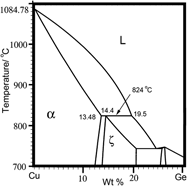
During directional solidification of Cu–Ge peritectic alloys, a two-phase separated structure has been observed. With proper growth conditions, the peritectic ζ-Cu5Ge and primary α-Cu phases completely separate and form cylindrical layered structures. It is found that the formation of the separated structure is closely related to double diffusive convection and growth conditions. In the two-phase separated structure, a large trijunction region of peritectic reaction forms around the cylindrical α-Cu phase. During peritectic reaction, the morphological instabilities of ζ-Cu5Ge occur under high pulling velocities and are explained by the constitutional undercooling criterion. A new coupling growth between the ζ-Cu5Ge-phase and the groove of α-Cu phase near the trijunction is observed. Different from peritectic coupling growth, the diffusion coupling is established below the peritectic temperature. This two-phase separated growth process creates new opportunities for the fabrication of functionally layered materials.
Structures of [Cd(C2H8N2)Cl2]n(1) and [Cd(C2H8N2)Br2]n(2) were solved from powder diffraction data. Compound (1) crystallizes in the space group Pbam (No. 55), a = 9.9021(7) Å, b = 7.8186(6) Å, c = 4.0705(3) Å, V = 315.13(3) Å3, Z = 2. (2) is isostructural: space group Pbam (No. 55), a = 10.405(2) Å, b = 7.8634(8) Å, c = 4.2079(5) Å, V = 344.28(6) Å3, Z = 2. The investigated compounds are examples of two-dimensional hybrid coordination polymers, in which neighboring metal centers are bridged via both organic and inorganic moieties: ethylenediamine molecules and halide anions. Both crystal structures were solved ab initio from powder data using direct methods.
A special type of epitaxial growth appears during solid-phase thin film reactions, where the reaction product grows epitaxially on the substrate. Some metal silicide layers and nanostructures are known to develop such epitaxial structures. In this study, iron silicide was used to study the effect of the growth mode on the epitaxial growth. Strain-induced, self-assembled iron silicide nanostructures were grown on Si(001) substrates by electron gun evaporation of 1.0 nm iron and subsequent annealing at 500–850 °C for 60 min. The growth processes were checked by reflection high-energy electron diffraction, and the formed structures were characterized by scanning electron microscopy and optical microscopy. The iron silicide nanostructures were oriented in square directions epitaxially fitting to the surface of Si(001). The shape and size of the nanostructures depended on the annealing temperature. In some cases, the nanoparticles were arranged in circles. This might be the direct consequence of a nucleation-controlled type transition of iron monosilicide to iron disilicide phase at nanoscale.
Martensitic transformation and magnetic entropy change in Co substituted Ni50Mn35−xCoxSn15 (x = 0, 1.0, 1.5, 2.0, and 3.0) Heusler alloys have been investigated by X-ray powder diffraction analysis, differential scanning calorimetry, and magnetic measurements. X-ray diffraction analysis reveals that the Ni50Mn35−xCoxSn15 alloys have L21 Heusler structure at room temperature. The phase decomposition of the sample with x = 3.0, after annealing 48 h at 1173 K, is confirmed by both X-ray powder diffraction analysis and energy-dispersive x-ray spectroscopy in scanning electron microscopy. With the increase of the Co content from 0 to 2.0, the martensitic transformation temperature TM increases from 185 to 245 K, which is in good agreement with the rule of valence electron concentration e/a-dependence of TM. The magnetic entropy change ∆SM is investigated in the vicinity of the martensitic transformation.
A sample of cellulose II, prepared by deacetylation of cellulose acetate, has permitted more precise determination of the unit-cell parameters by the Rietveld method. Cellulose II is monoclinic, with space group P21c-axis unique (or P1121) (No. 4) and refined unit-cell parameters a = 8.076(13), b = 9.144(10), c = 10.386(20) Å, γ = 117.00(8)°, and V = 683.5(18) Å3. A density functional geometry optimization using these fixed unit-cell parameters has resulted in an improved structural model for cellulose II. A powder pattern calculated from this new model has been submitted to the ICDD for inclusion in future releases of the Powder Diffraction File.
In this work, we succeeded in synthesis of spinel LiMn2O4 via a facile self-template method. The product displays a micro-/nanohybrid structure. Nanoparticles/plates act as the primary nanoblocks to build the secondary microarchitecture. There is the open space between the nanoblocks and the void space between the secondary structures. Electrochemical tests demonstrate that the as-synthesized sample exhibits superior rate capability and high-rate cycleability when contrasted with its solid counterpart. The initial discharge capacity is 126 mAh/g at 0.1 C, 110 mAh/g at 10 C, and 84 mAh/g at 20 C. The discharge capacity retention of about 80% is obtained after 800 cycles at 10 C. The high capacity and excellent cycling life of the material shows its potential for application as high-power batteries. The improved rate capability and cycleability can be attributed to its secondary structure that can facilitate fast Li-insertion/extraction and buffer the volume expansion/contraction upon cycling.
Deformation mechanism maps are well established in the field of high temperature creep for materials having conventional coarse grain sizes but they are almost unknown within the field of nanostructured materials. This paper summarizes the background to deformation mechanism mapping, presents simplified examples that may be used to easily construct appropriate maps for any selected condition, demonstrates the potential extension of this approach to other areas such as creep fracture, and then considers the potential limitations associated with using the same approach to predict the deformation mechanisms in true nanostructured materials. Two representative deformation mechanism maps are shown for an ultrafine-grained alloy processed either by equal-channel angular pressing or by high-pressure torsion.
The monomer dimethylaminoethyl methacrylate (DMAEMA) was cross-linked by clay Laponite XLG and Laponite XLS, respectively, in situ free-radical polymerization to prepare nanocomposite gels (named as G-NC gels and S-NC gels). From the analysis of yield, transparency, Fourier transform infrared spectroscopy, x-ray, and scanning electron microscopy, it was proved that the clay Laponite XLS is an appropriate cross-linker for preparing PDMAEMA NC gels with better homogeneous and higher yield due to the uniform dispersion of clay in gels. The resulting S-NC gels show obvious temperature and pH double sensitiveness, and the lowest critical solution temperatures of gels with a low clay content are close to the temperature of the human body, which makes this gel a potential candidate for application in drug release. Comparing with the gels cross-linked by a chemical cross-link agent, the S-NC gels exhibit a considerable improvement in the mechanical properties, swelling ratio, and deswelling rate. The properties of S-NC gels could be adjusted by controlling the content of clay.
X-ray powder diffraction data, unit-cell parameters, and space group for a new Ru Cl diamide complex, C36H48N2SO3RuCl, are reported [a = 12.487(4) Å, b = 16.624(5) Å, c = 17.230(3) Å, unit-cell volume V = 3576,79 Å3, Z = 4, and space group P212121]. All measured lines were indexed and are consistent with the P212121 space group. No detectable impurity was observed.
A CO2-pulsed laser plasma deposition (CO2-PLD) system is installed and used for the quick synthesis of various hexagonal boron nitride (h-BN) and zinc oxide (ZnO) nanostructures. Each part of the CO2-PLD system, such as focusing of laser beam on the target surface, sample holder, shutter, heater, type of the gas, and gas flow rate, can be easily controlled independently to fit different experimental conditions. After installation of the system, a series of experiments were conducted using hBN and ZnO targets. Scanning electron microscopy images showed that the entire surface (2 × 2 cm2) of the substrate is covered with the conical- and disk-shaped BN nanostructures and web-like highly dense ZnO nanowires, indicating a significantly short-time approach to grow mass product nanostructures. Raman spectroscopy identified the hexagonal structure of the synthesized samples.
A kinetic model of crystallization based on two-dimensional nucleation and growth of plate-like crystals with constant thickness is analyzed. It is shown that plate thickness required for nucleation is limited. The lower limit is determined by zero Gibbs’ free energy of transition, the upper one corresponds to the conditions when the critical cluster volume of nucleation is equal to two elementary kinetic units. Effects of plate thickness on crystallization kinetics are discussed. In the lower temperature range, creation of thicker plates is preferred. For a given plate thickness, frequency of the phase transition decreases with increasing temperature. Numerical calculations for α-polypropylene concern kinetics of primary nucleation and global phase transition in a system of one or several fractions of plate-like kinetic elements.
The apparatus for X-ray diffraction imaging (XRDI) of 450-mm wafers, is now placed at the ANKA synchrotron radiation source in Karlsruhe, is described in the context of the drive to inspect wafers for plastic deformation or mechanical damage. It is shown that full wafer maps at high resolution can be expected to take a few hours to record. However, we show from experiments on 200-, 300-, and 450-mm wafers that a perimeter-scan on a 450-mm wafer, to pick up edge damage and edge-originated slip sources, can be achieved in just over 10 min. Experiments at the Diamond Light Source, on wafers still in their cassettes, suggest that clean-room conditions may not be necessary for such characterization. We conclude that scaling up of the 300-mm format Jordan Valley tools, together with the existing facility at ANKA, provides satisfactory capability for future XRDI analysis of 450-mm wafers.
Grain size influences the mechanical strength of materials. In polycrystalline materials, strength increases with decreasing average grain size (for grains larger than 100 nm). This well-known Hall–Petch relationship typifies a strengthening mechanism, in which dislocation motion is impeded by grain boundaries. As grains become smaller, higher stresses are required to deform them. However, this formalism only considers the role of the “average” size of grains. Heterogeneous materials, however, have a broad “distribution” of grain sizes. Here we show that materials with narrowed grain size distributions have mechanical properties that differ from Hall–Petch predictions. Narrower distributions show increased strength, as their homogeneously sized grains yield at higher loads than the large grains in materials with broader grain size distributions. Plastic deformation depends on the coarsest grains, which yield first. These results suggest new routes for tailoring material properties.
The ternary Cu–Co–Fe alloy was rapidly solidified by using the high pressure gas atomization technique. Powders with a well-dispersed microstructure resulting from the liquid–liquid phase transformation were obtained. A model describing the microstructure evolution in an atomized drop during the liquid–liquid phase transformation was developed. The kinetic details of the liquid–liquid phase transformation were discussed. The numerical results show a favorable agreement with the experimental ones. They demonstrate that under the rapid cooling conditions of gas atomization, the spatial phase separation due to the Marangoni migration of the minority phase droplets is very weak. Also, the effect of Ostwald coarsening of the minority phase droplets on the microstructure is negligible. For Cu-10 wt% Co-10 wt% Fe alloy, the average radius and number density of the Fe–Co-rich particles depend exponentially on the cooling rate of the melt during the nucleation period of the Fe–Co-rich droplets.
Publicly available mass absorption coefficients (MAC) tables do not comprise accuracy data and are typically created from relatively old sources. The idea of comparing tables is not new (De Boer), but current software tools make it possible to quickly develop interactive software to analyze the discrepancies in finer detail and get hints to the reason for the difference. Such a tool has been created and used to compare six public domain databases. Several reasons for sizeable discrepancies have been identified, ranging from probable typos to misplaced or missing absorption edges. In addition to the discrepancies that can reasonably be pigeonholed huge differences exist for all elements below 1000 eV. Since there are many cases where reliable standards are scarce or inexistent the development of a better, consistent MAC table especially in the low energy and low Z regions, and with reliable error bars is a requirement for further development of XRF methods in many advanced fields such as waste management, user safety (RoHS), renewable energy sources, and many more. The international initiative for improved FP which involves several industrial and academic organizations aims to address the issue as a whole, i.e. not only for MAC. Creating such a complete database requires considerable resources; the comparison tool may alleviate the effort in the MAC field by readily showing which energy regions and elements deserve more attention.
The martensitic transformation behavior of the meta-stable austenite phase in low alloyed TRIP steels has been studied in situ using high-energy X-ray diffraction during deformation. The stability of austenite has been studied at different length scales during tensile tests and at variable temperatures down to 153 K. A powder diffraction analysis has been performed to correlate the macroscopic behavior of the material to the observed changes in the volume fraction of the phases. Our results show that at lower temperatures the deformation induced austenite transformation is significantly enhanced and extends over a wider deformation range, resulting in a higher elongation at fracture. To monitor the austenite behavior at the level of an individual grain a high-resolution far-field detector was used. Sub-grains have been observed in austenite prior to transformation.