To save content items to your account,
please confirm that you agree to abide by our usage policies.
If this is the first time you use this feature, you will be asked to authorise Cambridge Core to connect with your account.
Find out more about saving content to .
To save content items to your Kindle, first ensure no-reply@cambridge.org
is added to your Approved Personal Document E-mail List under your Personal Document Settings
on the Manage Your Content and Devices page of your Amazon account. Then enter the ‘name’ part
of your Kindle email address below.
Find out more about saving to your Kindle.
Note you can select to save to either the @free.kindle.com or @kindle.com variations.
‘@free.kindle.com’ emails are free but can only be saved to your device when it is connected to wi-fi.
‘@kindle.com’ emails can be delivered even when you are not connected to wi-fi, but note that service fees apply.
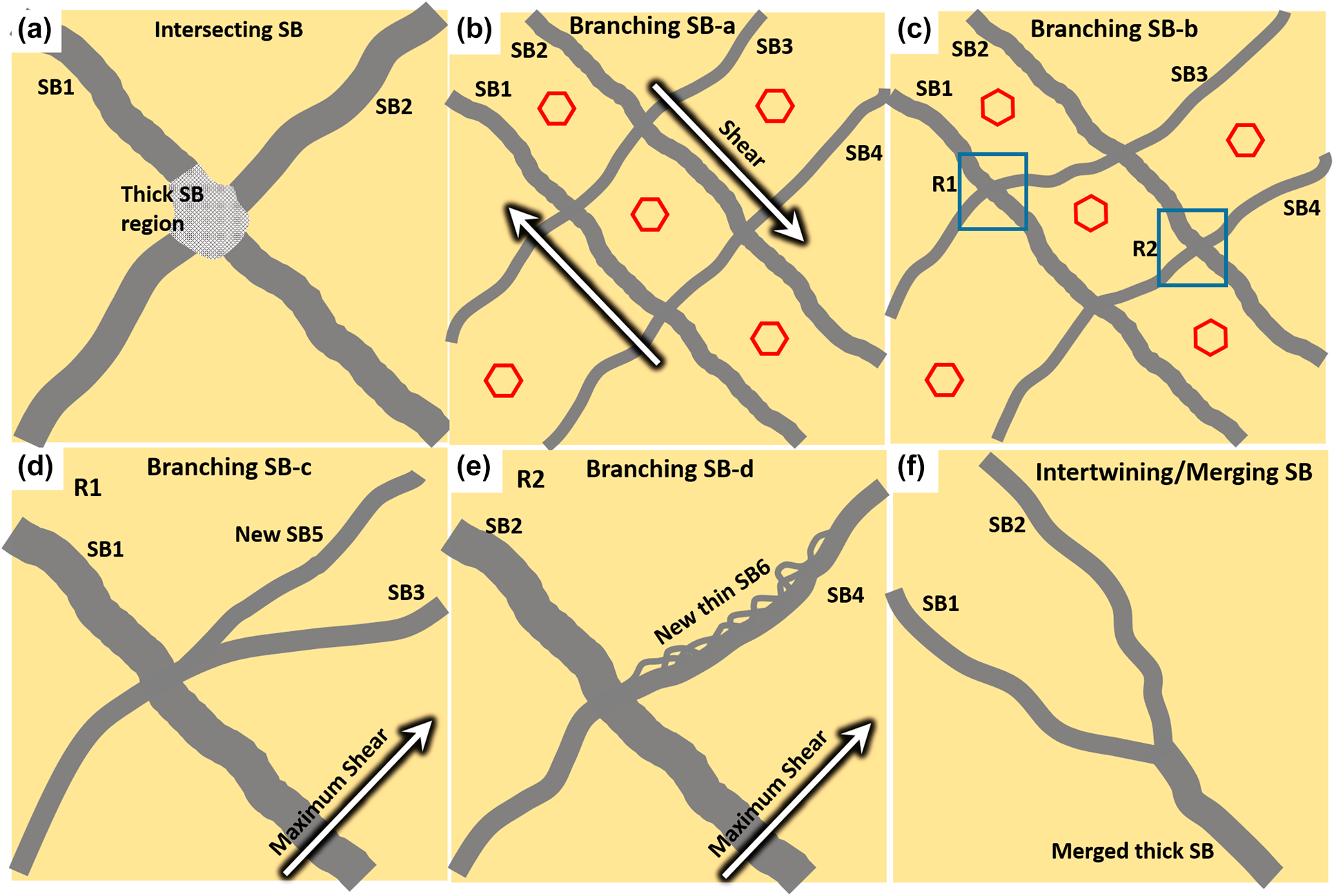
In this study, mechanical properties and microstructural investigation of Ti64 at high strain rate are studied using a split-Hopkinson pressure bar method under compression for temperatures up to 800 °C. Flow softening in the mechanical response of material to such loading conditions hints at instability in compression, which increases with an increase in temperature. Microstructural characterization of the deformed material is characterized using the electron-backscattered diffraction technique. It reveals the presence of instabilities in Ti64 in the form of a fine network of shear bands. The shear band width grows with an increase in temperature along with the area fraction of shear band in the material, displaying its improved capacity to contain microstructural instabilities at higher temperature. After a detailed microstructural investigation, a mechanism for shear band widening is proposed. Based on this mechanism, a path generating nuclei within shear bands is discussed.
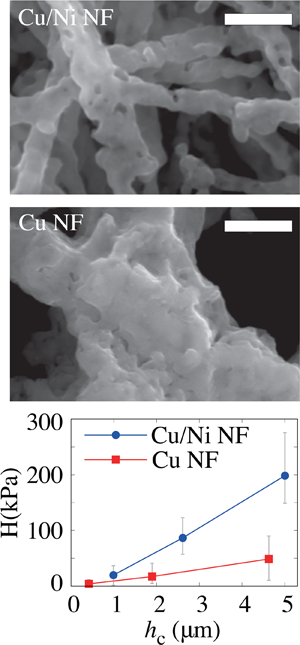
The authors demonstrate that multicomponent metallic alloy nanofoams can be synthesized by the polymeric templating method. The present approach enabled alloy compositions not accessible via commonly used dealloying or co-deposition methods. The authors report the synthesis of a Cu50Ni50 alloy nanofoam using electrospinning polymeric templating, which exhibits distinct polycrystallinity, process-driven segregation, and enhanced mechanical strength over pure Cu nanofoams. Transmission electron microscopy revealed microscopic grain formation and their variable compositions. The processing method is applicable to the synthesis of a wide range of multicomponent metal porous materials, creating new research opportunities for noble alloy foams not available through wet electrochemical routes.
Traditional dip-assisted layer-by-layer (LbL) assembly produces robust and conformal coatings, but it is time-consuming. Alternatively, spray-assisted layer-by-layer (SA-LbL) assembly has gained interest due to rapid processing resulting from the short adsorption time. However, it is challenging to assemble anisotropic nanomaterials using this spray-based approach. This is because the standard approach for fabricating “all-polyelectrolyte” LbL films does not necessarily give rise to satisfactory film growth when one of the adsorbing components is anisotropic. Here, polymers are combined with a model anisotropic nanomaterial via SA-LbL assembly. Specifically, graphene oxide (GO) is investigated, and the effect of anchor layer, colloidal stability, charge distribution along the carbon framework, and concentration of polymer on the growth and the film quality is examined to gain insight into how to achieve pinhole-free, smooth polymer/GO SA-LbL coatings. This approach might be applicable to other anisotropic nanomaterials such as clays or 2D nanomaterials for future development of uniform coatings by spraying.
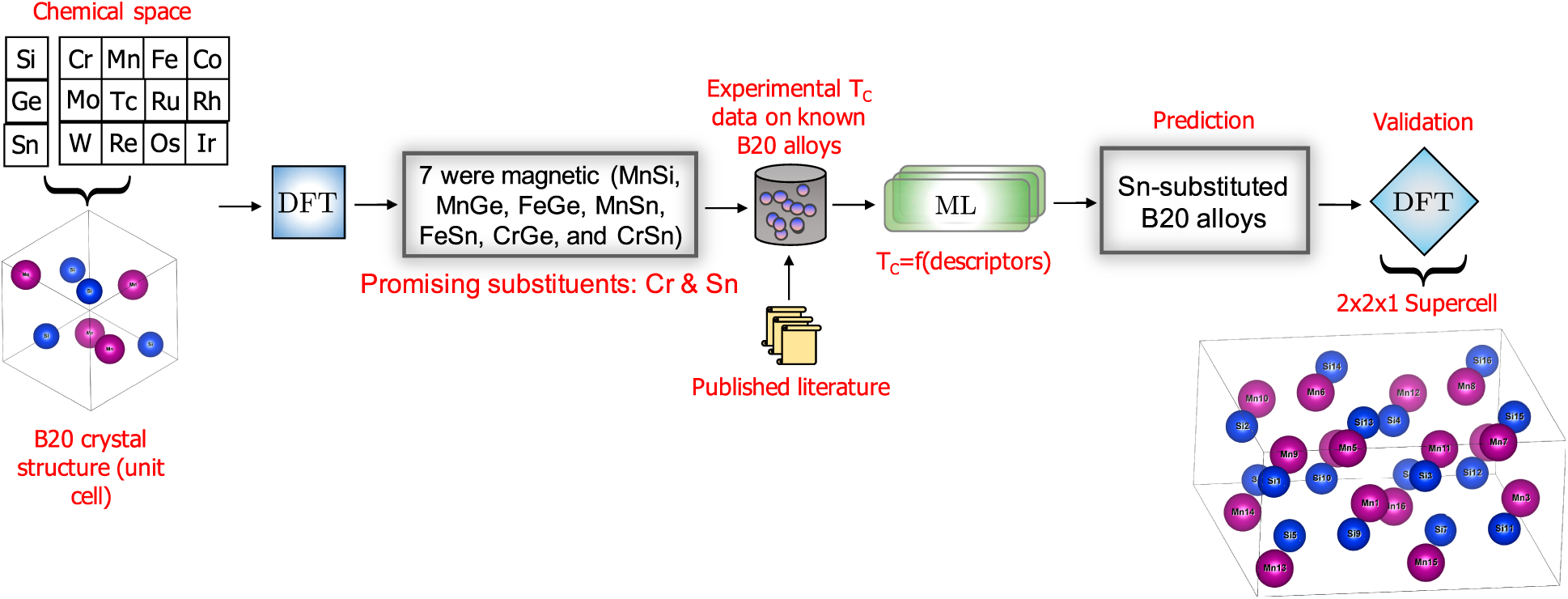
Chiral magnets in the B20 crystal structure host a peculiar spin texture in the form of a topologically stable skyrmion lattice. However, the helical transition temperature (TC) of these compounds is below room temperature, which limits their potential in spintronics applications. Here, a data-driven approach is demonstrated, which integrates density functional theory (DFT) calculations with machine learning (ML) in search of alloying elements that will enhance the TC of known B20 compounds. Initial DFT screening led to the identification of chromium (Cr) and tin (Sn) as potential substituents for alloy design. Then, trained ML models predict Sn substitution to be more promising than Cr-substitution for tuning the TC of FeGe. The magnetic exchange energy calculated from DFT validates the promise of Sn as an effective alloying element for enhancing the TC in Fe(Ge,Sn) compounds. New B20 chiral magnets are recommended for experimental investigation.
Acquired MDM2 inhibitor resistance is commonly caused by loss-of-function TP53 mutations. In addition to the selection of TP53-mutant cells by MDM2 inhibitors, MDM2 inhibitor-induced DNA damage may promote the formation of TP53 mutations. Here, we cultivated 12 sublines of the intrinsically MDM2 inhibitor-resistant TP53 wild-type acute myeloid leukaemia cell line PL21 for 52 passages in the presence of ineffective concentrations of the MDM2 inhibitor nutlin-3 but did not observe loss-of-function TP53 mutations. This suggests that MDM2 inhibitors select TP53-mutant cells after mutations have occurred, but do not directly promote TP53 mutations. Unexpectedly, many sublines displayed increased sensitivity to the anti-cancer drugs cytarabine, doxorubicin, or gemcitabine. Consequently, therapies can affect the outcome of next-line treatments, even in the absence of a therapy response. This finding is conceptually novel. A better understanding of such processes will inform the design of improved therapy protocols in the future.
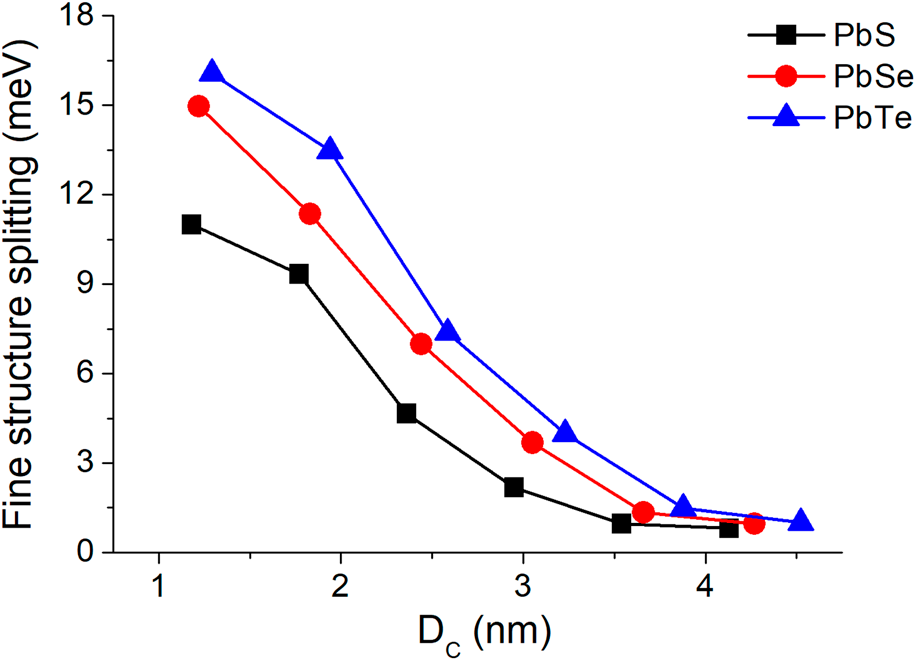
The computational tool integrating empirical tight binding and full configuration interaction method is utilized to study the structural and optical properties of spherical PbX (X = S, Se, and Te) nanocrystals under various diameters. The nanocrystal architecture plays an essential role in the control of the structural and optical properties. The appearance of the quantum confinement is caused by the reduction of the optical band gaps with the increasing diameters. By changing the chalcogenide types and diameters, the band gaps are modified, with their wavelengths from 380 to 2500 nm, technologically applying for the visible and near-infrared optical devices. The tight-binding band gaps agree well with previously published theoretical and experimental values. The atomistic electron–hole interactions are mainly influenced by the diameters and chalcogenide types. Using the Stokes shift and fine structure splitting, PbS nanocrystal with the immense size may be implemented as a source of entangled photon pairs and optical filter. Finally, the theoretical study reveals the distinctive properties of PbX (X = S, Se, and Te) nanocrystals by changing their architecture for applications in optoelectronic devices and microscopy.
Scedosporium and Lomentospora species are ubiquitous saprophytic filamentous fungi that emerged as human pathogens with impressive multidrug-resistance profile. The ability to form biofilm over several biotic and abiotic surfaces is one of the characteristics that contributes to their resistance patterns against almost all currently available antifungals. Herein, we have demonstrated that Scedosporium apiospermum, Scedosporium minutisporum, Scedosporium aurantiacum and Lomentospora prolificans were able to form biofilm, in similar amounts, when conidial cells were incubated in a polystyrene substrate containing Sabouraud medium supplemented or not with different concentrations (2%, 5% and 10%) of glucose, fructose, sucrose and lactose. Likewise, the glucose supplementation of culture media primarily composed of amino acids (SCFM, synthetic cystic fibrosis medium) and salts (YNB, yeast nitrogen base) did not modulate the biofilm formation of Scedosporium/Lomentospora species. Collectively, the present data reinforce the ability of these opportunistic fungi to colonize and to build biofilm structures under different environmental conditions.
The glial fibrillary acidic protein (GFAP) is an intermediate filament widely used to identify and label astroglial cells, a very abundant and relevant glial cell type in the central nervous system. A major hurdle in studying its behavior and function arises from the fact that GFAP does not tolerate well the addition of protein tags to its termini. Here, we tagged human GFAP (hGFAP) with an enhanced green fluorescent protein (EGFP) for the first time, and substituted a previously reported EGFP tag on mouse GFAP (mGFAP) by a more versatile Halo Tag. Both versions of tagged GFAP were able to incorporate into the normal GFAP filamentous network in glioma cells, and Alexander disease-related mutations or pharmacological disruption of microtubules and actin filaments interfered with GFAP dynamics. These new tools could provide new fruitful venues for the study of GFAP oligomerization, aggregation and dynamics in living cells.
Quantifying and comparing stocks of oysters (Crassostrea virginica) within and among estuaries across the Gulf of Mexico is difficult because the sampling equipment used is either inconsistent among studies, or inefficient. In Texas, USA, stock assessments of oyster populations are made using an oyster dredge, which is an inefficient sampling tool. We compared sampling densities estimated by oyster dredges with more accurate estimates taken by diver-quadrat samples to determine a dredge efficiency rate. Our calculated efficiency rate (0.125) was negatively affected by the number of dead oysters, and the number and volume of total oysters in an area, but not affected by sediment grain size, water quality, and other oyster metrics. The dredge efficiency rate calculated in this study can be applied to past and future dredge-collected oyster quantity data to provide more realistic estimates of oyster densities and allow more accurate stock assessments and comparisons among studies and regions.
The 10-item Autism-Spectrum Quotient (AQ10) is a self-report questionnaire used in clinical and research settings as a diagnostic screening tool for autism in adults. The AQ10 is also increasingly being used to quantify trait autism along a unitary dimension and correlated against performance on other psychological/medical tasks. However, its psychometric properties have yet to be examined when used in this way. By analysing AQ10 data from a large non-clinical sample of adults (n = 6,595), we found that the AQ10 does not have a unifactorial factor structure, and instead appears to have several factors. The AQ10 also had poor internal reliability. Taken together, whilst the AQ10 has important clinical utility in screening for diagnosable autism, it may not be a psychometrically robust measure when administered in non-clinical samples from the general population. Therefore, we caution against its use as a measure of trait autism in future research.
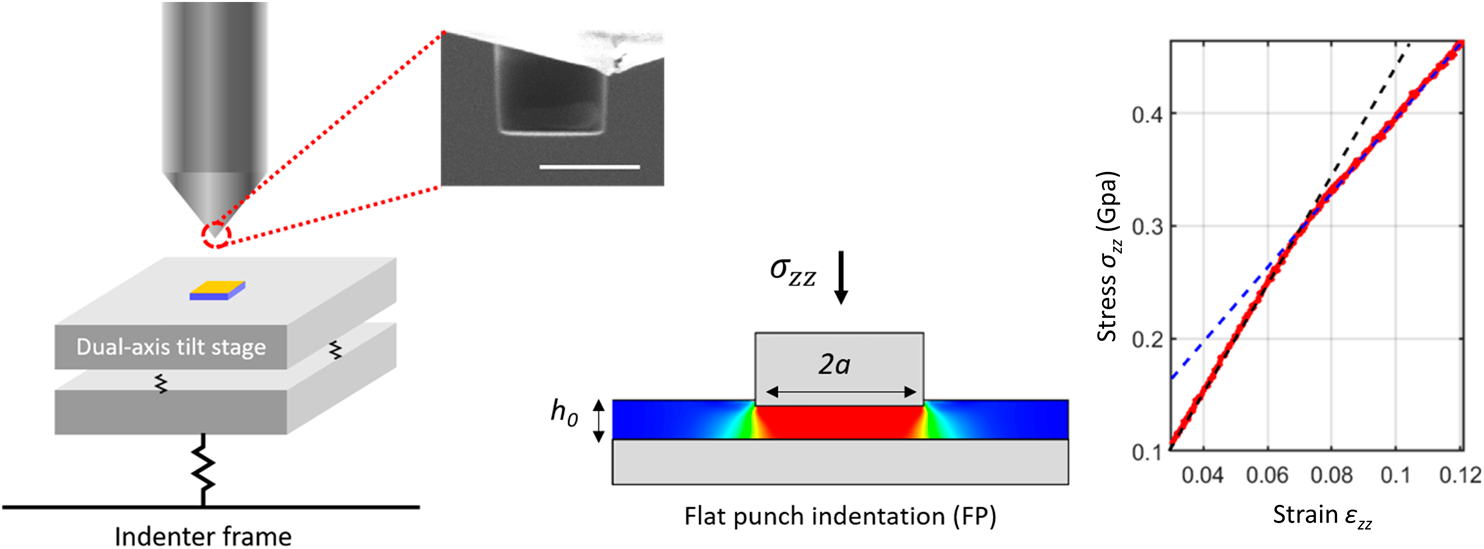
The measurement of thin film mechanical properties free from substrate influence remains one of the outstanding challenges in nanomechanics. Here, a technique based on indentation of a supported film with a flat punch whose diameter is many times the initial film thickness is introduced. This geometry generates a state of confined uniaxial strain for material beneath the punch, allowing direct access to intrinsic stress versus strain response. For simple elastic–plastic materials, this enables material parameters such as elastic modulus, bulk modulus, Poisson's ratio, and yield stress to be simultaneously determined from a single loading curve. The phenomenon of confined plastic yield has not been previously observed in thin films or homogeneous materials, which we demonstrate here for 170 -470 nm thick polystyrene (PS), polymethyl-methacrylate (PMMA) and amorphous Selenium films on silicon. As well as performing full elastic -plastic parameter extraction for these materials at room temperature, we used the technique to study the variation of yield stress in PS to temperatures above the nominal glass transition of 100 °C.
This work demonstrates a double-step method, a simple chemical bath deposition and an in situ polymerization process, to synthesize the stable structure of a composite of Polyaniline/BiVO4/cellulose aerogel (PBC) in wastewater treatment. The poor stability of the carrier catalyst was improved significantly by forming a dense film of polyaniline (PANI) through polymerization on BiVO4/cellulose aerogel (BC). The developed three-dimensional porous structure enhanced photocatalytic stability. For instance, photocatalytic degradation of a dye, methylene blue, reached to 91.67% under the eight times successive irradiation of the visible light. The resulted fine performance could be owed to the strong adsorption of cellulose aerogel, uniform spreading of BiVO4, and the speedy electron separation efficiency of PBC. Moreover, the photocatalytic mechanisms including the role of the free radicals (•OH and •O2−) of the developed PBC were also discussed. The novel structure may present a new insight into the development of the carrier catalyst.
The field of nonlinear optics is a well-established discipline that relies on macroscopic media and employs propagation distances longer than a wavelength of light. Recent progress with electromagnetic metamaterials has allowed for the expansion of this field into new directions of new phenomena and novel functionalities. In particular, nonlinear effects in thin, artificially structured materials such as metasurfaces do not rely on phase-matching conditions and symmetry-related selection rules of natural materials; they may be substantially enhanced by strong local and collective resonances of fields inside the metasurface nanostructures. Consequently, nonlinear processes may extend beyond simple harmonic generation and spectral broadening due to electronic nonlinearities. This article provides a brief review of basic concepts and recent results in the field of nonlinear optical metasurfaces.