To save content items to your account,
please confirm that you agree to abide by our usage policies.
If this is the first time you use this feature, you will be asked to authorise Cambridge Core to connect with your account.
Find out more about saving content to .
To save content items to your Kindle, first ensure no-reply@cambridge.org
is added to your Approved Personal Document E-mail List under your Personal Document Settings
on the Manage Your Content and Devices page of your Amazon account. Then enter the ‘name’ part
of your Kindle email address below.
Find out more about saving to your Kindle.
Note you can select to save to either the @free.kindle.com or @kindle.com variations.
‘@free.kindle.com’ emails are free but can only be saved to your device when it is connected to wi-fi.
‘@kindle.com’ emails can be delivered even when you are not connected to wi-fi, but note that service fees apply.
The chapter explains a physics of minimal conductivity in graphene. It is shown that a new type of electronic transport arises in graphene, namely, electron tunneling via zero modes of Dirac operator. The relation to Zitterbewegung concept of relativistic quantum mechanics is demonstrated. We calculate the value of minuimal conductivity and shot noise in the neutrality point, and consider Aharonov–Bohm effect in undoped graphene rings.
Optical properties of massless Dirac electrons are considered. In particular, it is shown that they provide a universal, frequency-independent adsorption coefficient determined by fine structure constant. The possible effect of interelectron interaction on this property is discussed. Using a perturbation theory for density matrix, we derive Kubo formula for various response functions and use it to consider optics, magnetooptics, charge screening and diamagnetism of massless Dirac electrons. Graphene plasmonics is briefly reviewed.
The chapter starts with the derivation of effective Hamiltonian for band electrons in magnetic field and continues with discussion of energy levels in magnetic field for massless Dirac fermions. The case of bilayer graphene is also considered. Special attention is paid to a formation of topologically protected zero-energy modes. Using band electrons in magnetic field as an example, a general concept of Berry phase is introduced. Magneto-oscillation effects for two-dimensional Dirac fermions are considered. Quantum Hall effect is discussed, via topological approach by Thouless and coworkers. At the end, we discuss electronic structure in the presence of crossed electric and magnetic fields and the effects of a smooth disorder on Landau levels for massless Dirac electrons.
We discuss scattering theory for massless Dirac fermions and for a new type of wave equation describing low-energy electrons in bilayer graphene. After that, we present a general theory of defects in solids via Green's function formalism. We apply it to consider mid-gap states due to vacancies or adatoms in graphene and calculate interaction energy between these adatoms. The basic physics of scanning tunneling spectroscopy as an experimental tool to study defect states in solids is presented.
After general discussion of itinerant-electron magetism, Hubbard model and Lieb theorem, we discuss magnetic moments at different types of defects in graphene and supposed ferromagnetism at zigzag edges. We consider various mechanisms for determining spin-orbit coupling, with especial emphasis on the importance of full band structure, and the effect of spin-orbit interaction on electronic structure. In this respect, we briefly discuss the difference between graphene, silicene, and germanene, and Kane–Mele model, which initiated development of the field of topological insulators. At the end, we consider the effect of magnetic edges on spin relaxation in graphene nanoribbons.
In this chapter, we discuss how to build effective many-body models starting from first principles electronic structure calculations and apply this general approach to graphene. We present quantitative results for the Fermi velocity renormalization, which were preliminary announced in Chapter 8. After that, we discuss many-body effects in graphene electron spectrum, static screening, and optical conductivity based on the results of lattice quantum Monte Carlo simulations. At the end, we consider many-body renormalization of minimal conductivity in graphene within the concept of environment-induced suppression of quantum tunneling.
Boundary conditions for electron wave functions in graphene are discussed, both in Dirac approximation and for the honeycomb lattice. We start with the model of "neutrino billiard." Then, we discuss typicality of zigzag boundary conditions for the terminated honeycomb lattice, existence of zero-energy edge mode for these conditions, electronic states and conductance quantization in graphene nanoribbons, level statistics for graphene quantum dots, explanation of quantum Hall effects in terms of topologically protected edge modes, and Aharonov–Bohm effect in multiconnected graphene flakes. The latter case is used as an example of the general topological concept of spectral flow.
After discussion of basic concepts of the covalent chemical bond with applications to carbon, the chapter presents tight-binding description of electronic structure of single-layer and multilayer graphene, with a special emphasis on emergence of massless Dirac fermions in honeycomb lattice, effects of trigonal warping, and symmetry protection of conical points in band structure.
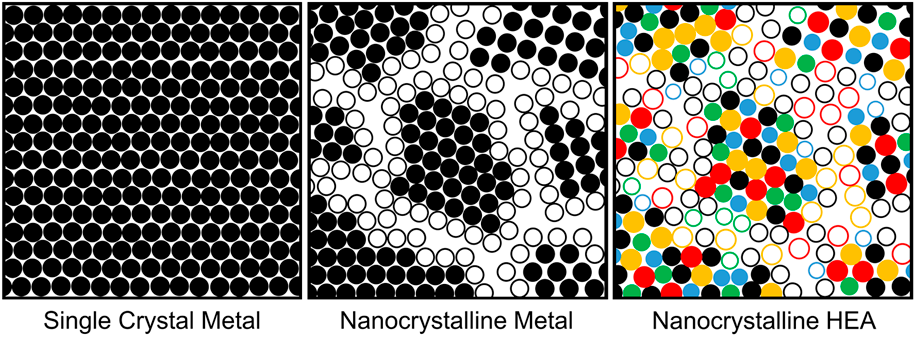
In the past decade, the emergence of high-entropy alloys (HEAs) and other high-entropy materials (HEMs) has brought about new opportunities in the development of novel materials for high-performance applications. In combining solid-solution (SS) strengthening with grain-boundary strengthening, new material systems—nanostructured or nanocrystalline (NC) HEAs or HEMs—have been developed, showing superior combined mechanical and functional properties compared with conventional alloys, HEAs, and NC metals. This article reviews the processing methods, materials, mechanical properties, thermal stability, and functional properties of various nanostructured HEMs, particularly NC HEAs. With such new nanostructures and alloy compositions, many interesting phenomena and properties of such NC HEAs have been unveiled, for example, extraordinary microstructural and mechanical thermal stability. As more HEAs or HEMs are being developed, a new avenue of research is to be exploited. The article concludes with perspectives about future directions in this field.
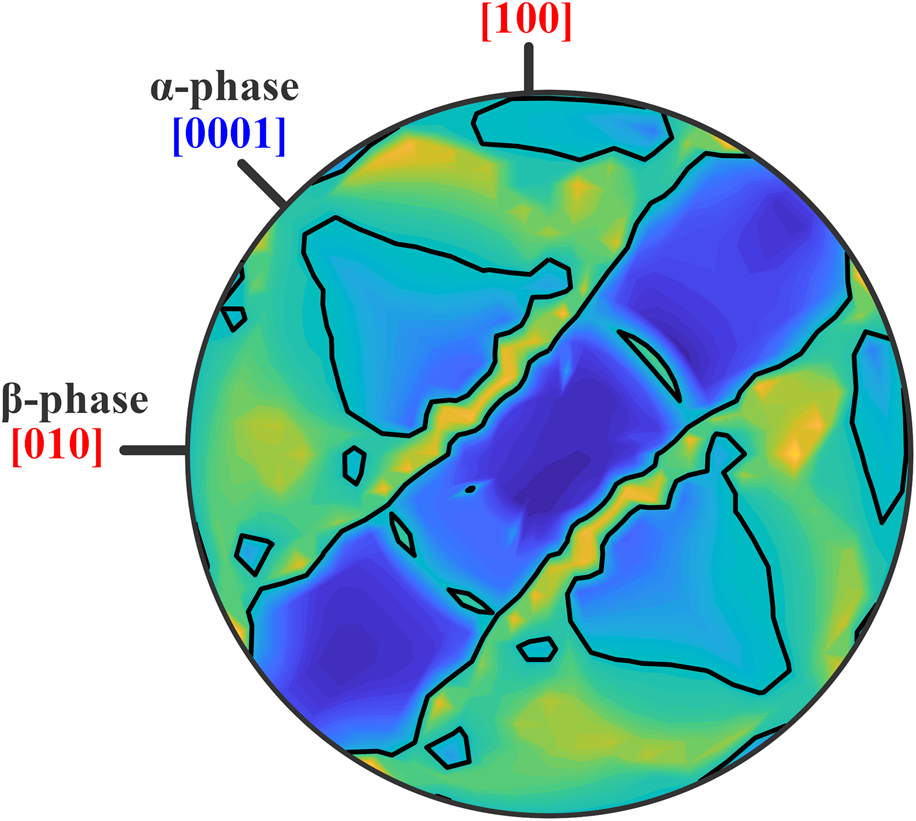
The breakdown of the columnar grains and lamellar α + β colony microstructure in two-phase Ti alloys during conversion of ingot to billet is critical to the development of desired combination of mechanical properties. Colony breakdown occurs during a series of thermomechanical processing steps in the α + β phase field. However, fundamental knowledge of the microstructural dependence of this transformation is limited, particularly its dependence on the initial orientation of the α + β colony relative to the imposed strain-path. In this study, the viscoplastic self-consistent polycrystal plasticity model is used to examine deformation behavior as a function of crystal loading direction. Criteria were developed to predict relative globularization rates; it was found that both slip system activities in the α phase and relative crystal rotations of each phase must be considered. Predictions are demonstrated to be consistent with literature and suggest that further experimental investigation of relative globularization rates is necessary.
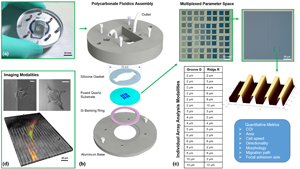
Contact guidance is vital to many physiological processes, yet is still poorly understood. This is partly due to the variability of experimental platforms, making comparisons difficult. To combat this, a multiplexed approach was used to fabricate topographical cues on single quartz coverslips for high-throughput screening. Furthermore, this method offers control of surface roughness and protein adsorption characterization, two critical aspects to the in vitro environment often overlooked in contact guidance platforms. The quartz surface can be regenerated, is compatible with versatile microscopy modes, and can scale up for manufacturing offering a novel platform that could serve as a potential standard assay.
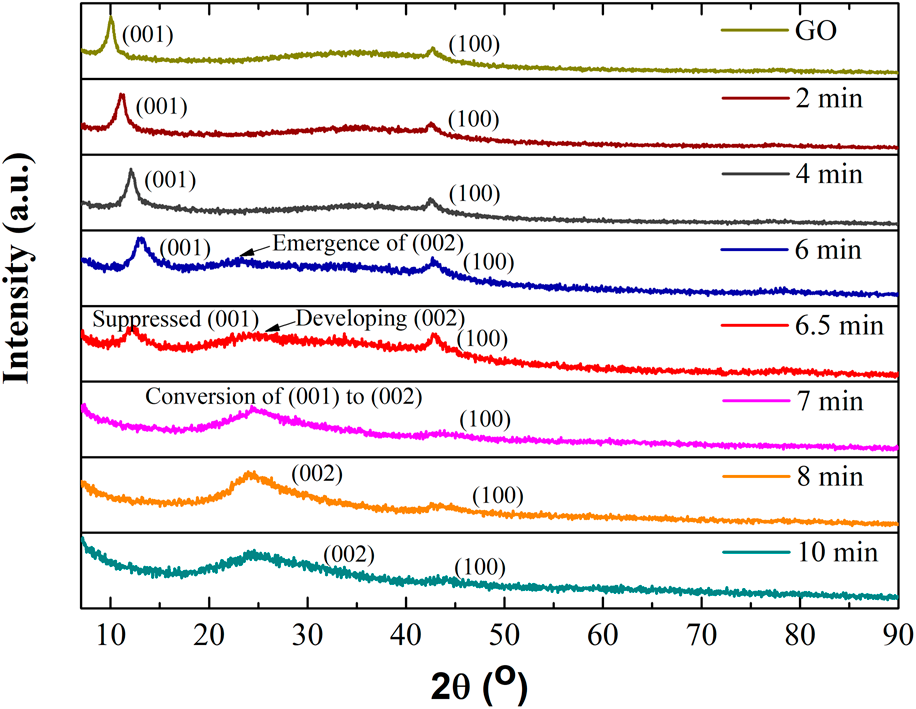
Graphene enticed the scientific community for its interesting properties since its discovery. Among different synthesis routes of graphene, reduction of graphene oxide (GO) is mostly preferred because of scalability and advantage of modulation of properties of the end product. Thermal reduction of GO is considered to be the simplest and economic among different reduction techniques. The current work reports an experimental analysis of the structural evolution of GO to reduced graphene oxide (rGO) during thermal treatment. GO has been thermally annealed at an optimized temperature of 350 °C in ambient. Thermal reduction is observed after 7 min of annealing and confirmed by shifting of the first major peak from 12° to 23° in X-ray diffraction pattern. Significant carbon content enrichment and exfoliation are two aspects of the thermal reduction of GO. Carbon content suddenly enriches from 38 wt% in GO to 77 wt%. Exfoliation is confirmed by morphological alterations and decrease in carbon layers from eleven to three.
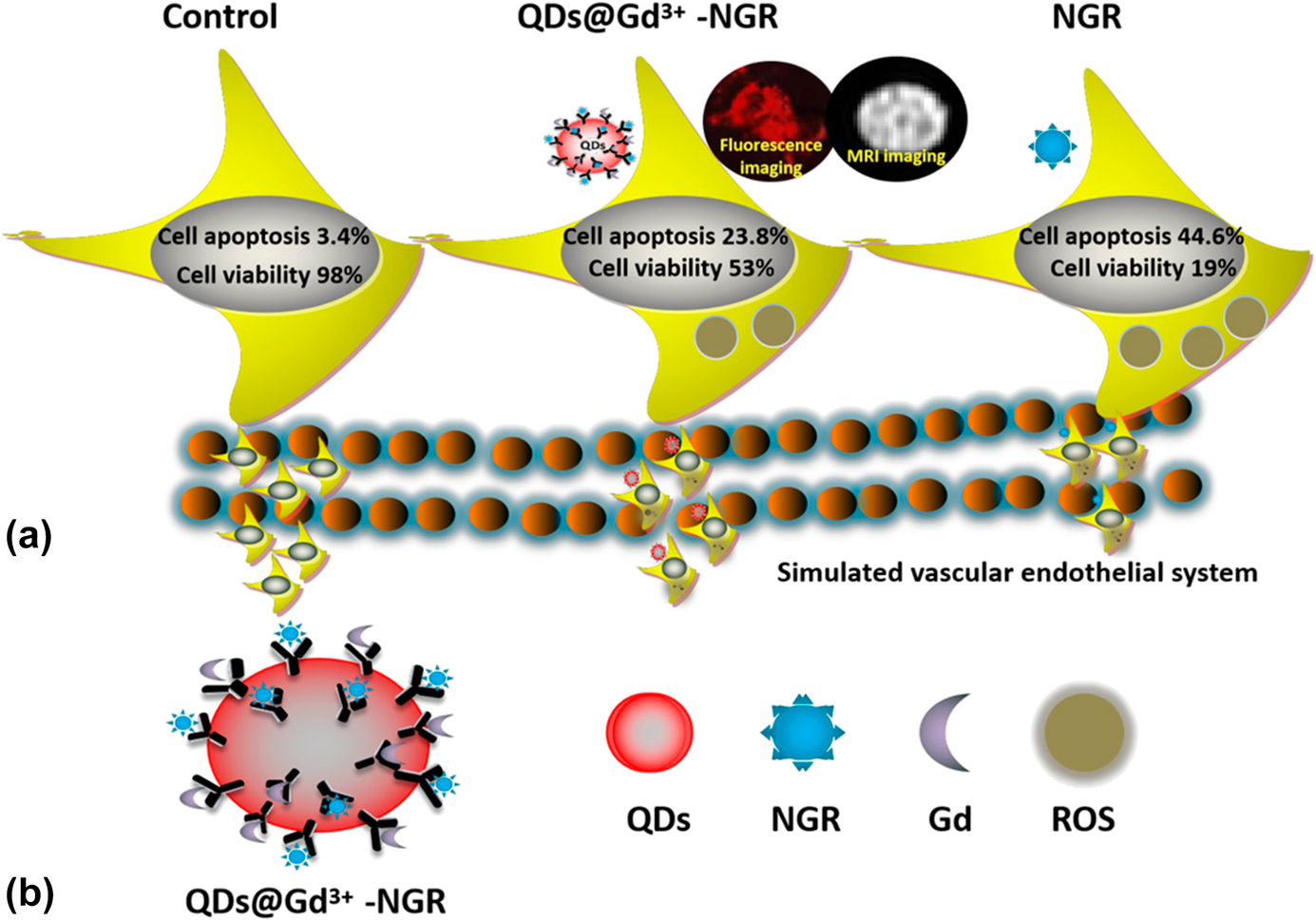
Pancreatic cancer is currently one of the most lethal tumors because of delayed diagnosis and treatment. Aminopeptidase N (CD13/APN), expressed in pancreatic cancer cells, is closely related to the malignant biological behavior, for instance, angiogenesis formation, tumor proliferation, and metastasis. In this study, asparagine–glycine–arginine (Asn–Gly–Arg, NGR), selectively binding to CD13 receptor, was modified to construct a novel contrast agent of QDs@Gd3+-NGR for targeted diagnosis and treatment of pancreatic cancer. It consists of QDs-unit for fluorescence imaging, Gd3+-unit for magnetic resonance imaging (MRI), and NGR for binding to CD13 receptor. PANC-1 cells labeled by QDs@Gd3+-NGR showed significant red fluorescence and high intensity on fluorescence and MR imaging, respectively. Besides, it was confirmed that QDs@Gd3+-NGR could inhibit theproliferation, metastasis, and invasion of PANC-1 cells, and increase reactive oxygen species production and death rate in vitro. Reasonably, we believe the targeted contrast agent of QDs@Gd3+-NGR can sensitively detect pancreatic cancer via MR-fluorescence dual-modality imaging, and plays an active role in inhibition of tumor progression. The promising results in this study provide integration of diagnostic and therapeutic strategy for the management of pancreatic cancer in future.