Refine search
Actions for selected content:
25994 results in Abstract analysis
PEM volume 16 issue 2 Cover and Back matter
-
- Journal:
- Proceedings of the Edinburgh Mathematical Society / Volume 16 / Issue 2 / December 1968
- Published online by Cambridge University Press:
- 20 January 2009, pp. b1-b2
-
- Article
-
- You have access
- Export citation
R. Freese and R. McKenzie, Commutator theory for congruence modular varieties (London Mathematical Society Lecture Note Series 125, Cambridge University Press1987) 227 pp. 0 521 34832 3, £15.
-
- Journal:
- Proceedings of the Edinburgh Mathematical Society / Volume 32 / Issue 2 / June 1989
- Published online by Cambridge University Press:
- 20 January 2009, p. 331
-
- Article
-
- You have access
- Export citation
List of Publications
-
- Journal:
- Proceedings of the Edinburgh Mathematical Society / Volume 15 / Issue 3 / June 1967
- Published online by Cambridge University Press:
- 20 January 2009, pp. 243-244
-
- Article
-
- You have access
- Export citation
Orthogonal Trajectories in Vectorial Coordinates
-
- Journal:
- Proceedings of the Edinburgh Mathematical Society / Volume 28 / February 1909
- Published online by Cambridge University Press:
- 20 January 2009, pp. 42-47
-
- Article
-
- You have access
- Export citation
Finite dimensionality, nilpotents and quasinilpotents in Banach algebras
-
- Journal:
- Proceedings of the Edinburgh Mathematical Society / Volume 19 / Issue 1 / March 1974
- Published online by Cambridge University Press:
- 20 January 2009, pp. 45-49
-
- Article
-
- You have access
- Export citation
On reflection principles for parabolic equations in one space variable*
-
- Journal:
- Proceedings of the Edinburgh Mathematical Society / Volume 21 / Issue 2 / September 1978
- Published online by Cambridge University Press:
- 20 January 2009, pp. 143-147
-
- Article
-
- You have access
- Export citation
-
In this note we shall consider the problem of uniquely continuing solutions of the parabolic equation

across an analytic arc σ: x=s1(t) satisfies the boundary data

We assume that u(x,t) is a classical solution of (1) in the domain D ={(x,t): s1(t)< x < s 2(t), 0 < t < t0}, continuously differentiate in D ∪ σ and define the “reflection” of D across σ by

Note on a Function of two Integral Arguments
-
- Journal:
- Proceedings of the Edinburgh Mathematical Society / Volume 3 / February 1884
- Published online by Cambridge University Press:
- 20 January 2009, pp. 19-21
-
- Article
-
- You have access
- Export citation
-
In the part just issued of the American Journal of Mathematics (vii, pp. 3, 4) Proffessor Cayley has occasion to deal with the function

where
 stands for i (i – 1)…(i – j + 1). He Points out that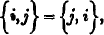
expresses {i, 1}, {i, 2},…{i, 5} each in descending powers of i, and tabulates the function from {1, 1} to {5, 5}.
 stands for
The Baker–Pym theorem and multipliers*
-
- Journal:
- Proceedings of the Edinburgh Mathematical Society / Volume 33 / Issue 2 / June 1990
- Published online by Cambridge University Press:
- 20 January 2009, pp. 303-308
-
- Article
-
- You have access
- Export citation
B. Noble, Numerical Methods, 2: Differences, Integration and Differential Equations (Edinburgh, Oliver and Boyd, 1964) 215 pp., 12s. 6d.
-
- Journal:
- Proceedings of the Edinburgh Mathematical Society / Volume 15 / Issue 1 / June 1966
- Published online by Cambridge University Press:
- 20 January 2009, p. 75
-
- Article
-
- You have access
- Export citation
Ramanujan's remarkable product of theta-functions
-
- Journal:
- Proceedings of the Edinburgh Mathematical Society / Volume 40 / Issue 3 / October 1997
- Published online by Cambridge University Press:
- 20 January 2009, pp. 583-612
-
- Article
-
- You have access
- Export citation
K. Kuratowski, Introduction to Calculus (Pergamon Press, 1961), 315 pp., 35s.
-
- Journal:
- Proceedings of the Edinburgh Mathematical Society / Volume 13 / Issue 2 / December 1962
- Published online by Cambridge University Press:
- 20 January 2009, pp. 195-196
-
- Article
-
- You have access
- Export citation
On the divisibility of the class number of
 by 16
by 16
-
- Journal:
- Proceedings of the Edinburgh Mathematical Society / Volume 26 / Issue 2 / June 1983
- Published online by Cambridge University Press:
- 20 January 2009, pp. 221-231
-
- Article
-
- You have access
- Export citation
-
Let d(<0) denote a squarefree integer. The ideal class group of the imaginary quadratic field
 has a cyclic 2-Sylow subgroup of order ≦8 in precisely the following cases (see for example [5] and [6]):
where p and q denote primes and g, h, u and v are positive integers. The class number of
is denoted by h(d) and in the above cases h(d) = 0(mod 8). For cases (i), (ii) and (iii) the authors [6] have given necessary and sufficient conditions for h(d) to be divisible by 16. In this paper we do the same for case (iv) extending the results of Brown [4].
 by 16
by 16
 has a cyclic 2-Sylow subgroup of order ≦8 in precisely the following cases (see for example [
A Method of Evaluating Certain Determinants
-
- Journal:
- Proceedings of the Edinburgh Mathematical Society / Volume 9 / Issue 2 / November 1954
- Published online by Cambridge University Press:
- 20 January 2009, pp. 100-104
-
- Article
-
- You have access
- Export citation
-
1. Let [ast] (s, t=0, 1, … n) be a square matrix of order n+1 and determinant |ast| and suppose that by repeated “isolation” of the variables the corresponding bilinear form has been expressed as

where, for all r,

Then

Now (1) implies, and is implied by, the identities

Thus, from any known identity of the form (4), subject to the condition (2), we may at once infer, using (3). the value of the corresponding determinant |ars|.
Books Received
-
- Journal:
- Proceedings of the Edinburgh Mathematical Society / Volume 26 / Issue 2 / June 1983
- Published online by Cambridge University Press:
- 20 January 2009, p. 288
-
- Article
-
- You have access
- Export citation
Approximation methods and the generalised Fuller index for semi-flows in Banach spaces
-
- Journal:
- Proceedings of the Edinburgh Mathematical Society / Volume 29 / Issue 3 / October 1986
- Published online by Cambridge University Press:
- 20 January 2009, pp. 299-308
-
- Article
-
- You have access
- Export citation
A. D. D. Craik, Wave interactions and fluid flows (Cambridge Monographs on Mechanics and Applied Mathematics, Cambridge University Press, 1986), 322 pp., £35.
-
- Journal:
- Proceedings of the Edinburgh Mathematical Society / Volume 30 / Issue 2 / June 1987
- Published online by Cambridge University Press:
- 20 January 2009, pp. 334-335
-
- Article
-
- You have access
- Export citation
Some Proofs of Newton's Theorem on Sums of Powers of Roots
-
- Journal:
- Proceedings of the Edinburgh Mathematical Society / Volume 23 / February 1904
- Published online by Cambridge University Press:
- 20 January 2009, pp. 66-70
-
- Article
-
- You have access
- Export citation
-
This well-known theorem, published in Newton's Arithmetica Universalis, may be formulized thus:—

where sm ≡ the sum of the mth powers of the roots of the equation

Of course, when m>n, certain coefficients pn+1, pn+2, … pm will be zero, and the last term that does not vanish will be
 .
.
 .
.The isomorphism problem for a class of para-free groups
-
- Journal:
- Proceedings of the Edinburgh Mathematical Society / Volume 40 / Issue 3 / October 1997
- Published online by Cambridge University Press:
- 20 January 2009, pp. 541-549
-
- Article
-
- You have access
- Export citation
Mathematical Correspondence
-
- Journal:
- Proceedings of the Edinburgh Mathematical Society / Volume 21 / February 1902
- Published online by Cambridge University Press:
- 20 January 2009, pp. 2-39
-
- Article
-
- You have access
- Export citation
Group rings whose torsion units form a subgroup*
-
- Journal:
- Proceedings of the Edinburgh Mathematical Society / Volume 37 / Issue 2 / June 1994
- Published online by Cambridge University Press:
- 20 January 2009, pp. 201-205
-
- Article
-
- You have access
- Export citation
