Refine search
Actions for selected content:
238502 results in Physics and Astronomy
Stratified braid groups: monodromy
- Part of
-
- Journal:
- Mathematical Proceedings of the Cambridge Philosophical Society / Volume 178 / Issue 2 / March 2025
- Published online by Cambridge University Press:
- 11 April 2025, pp. 259-292
- Print publication:
- March 2025
-
- Article
-
- You have access
- Open access
- HTML
- Export citation
-
The space of monic squarefree complex polynomials has a stratification according to the multiplicities of the critical points. We introduce a method to study these strata by way of the infinite-area translation surface associated to the logarithmic derivative $df/f$ of the polynomial. We determine the monodromy of these strata in the braid group, thus describing which braidings of the roots are possible if the orders of the critical points are required to stay fixed. Mirroring the story for holomorphic differentials on higher-genus surfaces, we find the answer is governed by the framing of the punctured disk induced by the horizontal foliation on the translation surface.

PSP volume 178 issue 2 Cover and Back matter
-
- Journal:
- Mathematical Proceedings of the Cambridge Philosophical Society / Volume 178 / Issue 2 / March 2025
- Published online by Cambridge University Press:
- 24 April 2025, pp. b1-b2
- Print publication:
- March 2025
-
- Article
-
- You have access
- Export citation
A scintillating fiber imaging spectrometer for active characterization of laser-driven proton beams – ERRATUM
-
- Journal:
- High Power Laser Science and Engineering / Volume 13 / 2025
- Published online by Cambridge University Press:
- 28 February 2025, e6
-
- Article
-
- You have access
- Open access
- HTML
- Export citation
Gigahertz harmonic mode-locking with multi-watt sub-60-fs pulses in a Mamyshev oscillator
- Part of
-
- Journal:
- High Power Laser Science and Engineering / Volume 13 / 2025
- Published online by Cambridge University Press:
- 28 February 2025, e33
-
- Article
-
- You have access
- Open access
- HTML
- Export citation
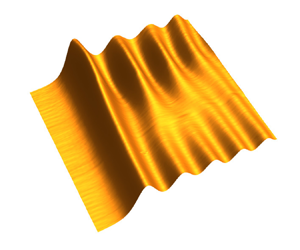
Transition of solitary waves and undular bore from basin to channel with opposing current
- Part of
-
- Journal:
- Journal of Fluid Mechanics / Volume 1006 / 10 March 2025
- Published online by Cambridge University Press:
- 27 February 2025, A1
-
- Article
-
- You have access
- Open access
- HTML
- Export citation
Passive spherical aberration compensation in laser diode side-pumped master oscillator power amplifier laser systems
-
- Journal:
- High Power Laser Science and Engineering / Volume 13 / 2025
- Published online by Cambridge University Press:
- 27 February 2025, e5
-
- Article
-
- You have access
- Open access
- HTML
- Export citation
Coherent combining of large-aperture high-energy Nd:glass laser amplifiers
-
- Journal:
- High Power Laser Science and Engineering / Volume 13 / 2025
- Published online by Cambridge University Press:
- 27 February 2025, e4
-
- Article
-
- You have access
- Open access
- HTML
- Export citation
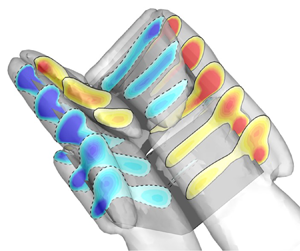
Streamwise ram effect and tip vortex enhance the lift of a butterfly-inspired flapping wing
-
- Journal:
- Journal of Fluid Mechanics / Volume 1005 / 25 February 2025
- Published online by Cambridge University Press:
- 26 February 2025, A13
-
- Article
- Export citation

Liouville-type theorems for steady solutions to the Navier–Stokes system in a slab
-
- Journal:
- Journal of Fluid Mechanics / Volume 1005 / 25 February 2025
- Published online by Cambridge University Press:
- 26 February 2025, A6
-
- Article
- Export citation
-
Liouville-type theorems for the steady incompressible Navier–Stokes system are investigated for solutions in a three-dimensional (3-D) slab with either no-slip boundary conditions or periodic boundary conditions. When the no-slip boundary conditions are prescribed, we prove that any bounded solution is trivial if it is axisymmetric or $ru^r$ is bounded, and that general 3-D solutions must be Poiseuille flows when the velocity is not big in $L^\infty$ space. When the periodic boundary conditions are imposed on the slab boundaries, we prove that the bounded solutions must be constant vectors if either the swirl or radial velocity is independent of the angular variable, or $ru^r$ decays to zero as $r$ tends to infinity. The proofs are based on the fundamental structure of the equations and energy estimates. The key technique is to establish a Saint-Venant type estimate that characterizes the growth of the Dirichlet integral of non-trivial solutions.


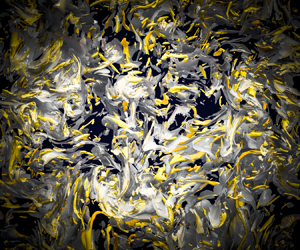
Small-scale shear layers in isotropic turbulence of viscoelastic fluids
-
- Journal:
- Journal of Fluid Mechanics / Volume 1005 / 25 February 2025
- Published online by Cambridge University Press:
- 26 February 2025, A14
-
- Article
- Export citation
-
Small-scale shear layers arising from the turbulent motion of viscoelastic fluids are investigated through direct numerical simulations of statistically steady, homogeneous isotropic turbulence in a fluid described by the FENE-P model. These shear layers are identified via a triple decomposition of the velocity gradient tensor. The viscoelastic effects are examined through the Weissenberg number ( $\textit{Wi}$), representing the ratio of the longest polymer relaxation time scale to the Kolmogorov time scale. The mean flow around these shear layers is analysed within a local reference frame that characterises shear orientation. In both Newtonian and viscoelastic turbulence, shear layers appear in a straining flow, featuring stretching in the shear vorticity direction and compression in the layer normal direction. Polymer stresses are markedly influenced by the shear and strain, which enhance kinetic energy dissipation due to the polymers. The shear layers in viscoelastic turbulence exhibit a high aspect ratio, undergoing significant characteristic changes once $\textit{Wi}$ exceeds approximately 2. As $\textit{Wi}$ increases, the extensive strain weakens, diminishing vortex stretching. This change coincides with an imbalance between extension and compression in the straining flow. In the shear layer, the interaction between vorticity and polymer stress causes the destruction and production of enstrophy at low and high $\textit{Wi}$ values, respectively. Enstrophy production at high $\textit{Wi}$ is induced by normal polymer stress oriented along the shear flow, associated with the diminished extensive strain. The $\textit{Wi}$-dependent behaviour of these shear layers aligns with the overall flow characteristics, underscoring their pivotal roles in vorticity dynamics and kinetic energy dissipation in viscoelastic turbulence.


Plasma-based prism compressor design for high-intensity laser pulses
-
- Journal:
- High Power Laser Science and Engineering / Volume 13 / 2025
- Published online by Cambridge University Press:
- 26 February 2025, e32
-
- Article
-
- You have access
- Open access
- HTML
- Export citation
-
A concept for a femtosecond pulse compressor based on underdense plasma prisms is presented. An analytical model is developed to calculate the spectral phase incurred and the expected pulse compression. A 2D particle-in-cell simulation verifies the analytical model. Simulated intensities ( ${\sim} {10}^{16}$ W/cm2) were orders of magnitude higher than the damage threshold for conventional gratings used in chirped pulse amplification. Theoretical geometries for compact (tens of cm scale) compressors for 1, 10 and 100 PW power levels are proposed.

Second-generation planet formation after tidal disruption from common envelope evolution
-
- Journal:
- Publications of the Astronomical Society of Australia / Volume 42 / 2025
- Published online by Cambridge University Press:
- 25 February 2025, e027
-
- Article
-
- You have access
- Open access
- HTML
- Export citation
-
We propose that certain white dwarf (WD) planets, such as WD 1856+534 b, may form out of material from a stellar companion that tidally disrupts from common envelope evolution with the WD progenitor star. The disrupted companion shreds into an accretion disc, out of which a gas giant protoplanet forms due to gravitational instability. To explore this scenario, we make use of detailed stellar evolution models consistent with WD 1856+534. The minimum mass companion that produces a gravitationally unstable disc after tidal disruption is $\sim$ $0.15\,\mathrm{M_\odot}$. In this scenario, WD 1856+534 b might have formed at or close to its present separation, in contrast to other proposed scenarios where it would have migrated in from a much larger separation. Planet formation from tidal disruption is a new channel for producing second-generation planets around WDs.


Manipulating energy mergence of ultraintense femtosecond laser beamlets in underdense plasmas
-
- Journal:
- High Power Laser Science and Engineering / Volume 13 / 2025
- Published online by Cambridge University Press:
- 24 February 2025, e1
-
- Article
-
- You have access
- Open access
- HTML
- Export citation
-
The propagation of multiple ultraintense femtosecond lasers in underdense plasmas is investigated theoretically and numerically. We find that the energy merging effect between two in-phase seed lasers can be improved by using two obliquely incident guiding lasers whose initial phase is $\pi$ and $\pi /2$ ahead of the seed laser. Particle-in-cell simulations show that due to the repulsion and energy transfer of the guiding laser, the peak intensity of the merged light is amplified by more than five times compared to the seed laser. The energy conversion efficiency from all incident lasers to the merged light is up to approximately 60 $\%$. The results are useful for many applications, including plasma-based optical amplification, charged particle acceleration and extremely intense magnetic field generation.


Advanced plasma target from pre-ionized low-density foam for effective and robust direct laser acceleration of electrons
- Part of
-
- Journal:
- High Power Laser Science and Engineering / Volume 13 / 2025
- Published online by Cambridge University Press:
- 24 February 2025, e3
-
- Article
-
- You have access
- Open access
- HTML
- Export citation
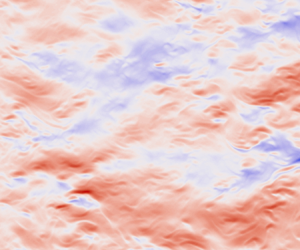
Scattering of surface waves by ocean currents: the U2H map
- Part of
-
- Journal:
- Journal of Fluid Mechanics / Volume 1005 / 25 February 2025
- Published online by Cambridge University Press:
- 24 February 2025, A12
-
- Article
-
- You have access
- Open access
- HTML
- Export citation
The connectedness of Sierpiński sponges with rotational and reflectional components and associated graph-directed systems
- Part of
-
- Journal:
- Mathematical Proceedings of the Cambridge Philosophical Society / Volume 178 / Issue 2 / March 2025
- Published online by Cambridge University Press:
- 21 February 2025, pp. 133-156
- Print publication:
- March 2025
-
- Article
- Export citation
-
We provide two methods to characterise the connectedness of all d-dimensional generalised Sierpiński sponges whose corresponding iterated function systems (IFSs) are allowed to have rotational and reflectional components. Our approach is to reduce it to an intersection problem between the coordinates of graph-directed attractors. More precisely, let $(K_1,\ldots,K_n)$ be a Cantor-type graph-directed attractor in ${\mathbb {R}}^d$. By creating an auxiliary graph, we provide an effective criterion for whether $K_i\cap K_j$ is empty for every pair of $1\leq i,j\leq n$. Moreover, the emptiness can be checked by examining only a finite number of geometric approximations of the attractor. The approach is also applicable to more general graph-directed systems.


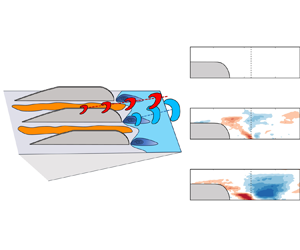
Manipulation of mid- and high-frequency wall-pressure sources by streamwise finlets
-
- Journal:
- Journal of Fluid Mechanics / Volume 1005 / 25 February 2025
- Published online by Cambridge University Press:
- 21 February 2025, A8
-
- Article
- Export citation
A negative charge at position D+5 of Motif A is critical for function of the major facilitator superfamily multidrug/H+ antiporter MdtM’ – RETRACTION
-
- Journal:
- Experimental Results / Volume 4 / 2023
- Published online by Cambridge University Press:
- 21 February 2025, e21
-
- Article
-
- You have access
- Open access
- HTML
- Export citation
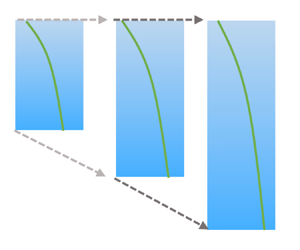
Thermodynamic growth of sea ice: assessing the role of salinity using a quasi-static modelling framework
-
- Journal:
- Journal of Fluid Mechanics / Volume 1005 / 25 February 2025
- Published online by Cambridge University Press:
- 21 February 2025, A7
-
- Article
-
- You have access
- Open access
- HTML
- Export citation

Analysis and removal of spurious pressure oscillations in Boltzmann-equation-based mesoscopic simulation of incompressible turbulence
-
- Journal:
- Journal of Fluid Mechanics / Volume 1005 / 25 February 2025
- Published online by Cambridge University Press:
- 21 February 2025, A9
-
- Article
- Export citation
