Refine search
Actions for selected content:
238152 results in Physics and Astronomy

Wavelet-based resolvent analysis of non-stationary flows
-
- Journal:
- Journal of Fluid Mechanics / Volume 999 / 25 November 2024
- Published online by Cambridge University Press:
- 14 November 2024, A53
-
- Article
- Export citation
Stochastic modal velocity field in rough-wall turbulence
-
- Journal:
- Journal of Fluid Mechanics / Volume 999 / 25 November 2024
- Published online by Cambridge University Press:
- 14 November 2024, A56
-
- Article
-
- You have access
- Open access
- HTML
- Export citation
-
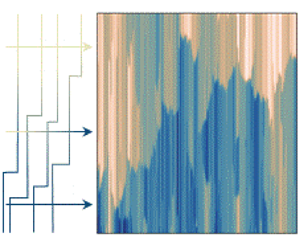
Stochastically generated instantaneous velocity profiles are used to reproduce the outer region of rough-wall turbulent boundary layers in a range of Reynolds numbers extending from the wind tunnel to field conditions. Each profile consists in a sequence of steps, defined by the modal velocities and representing uniform momentum zones (UMZs), separated by velocity jumps representing the internal shear layers. Height-dependent UMZ is described by a minimal set of attributes: thickness, mid-height elevation, and streamwise (modal) and vertical velocities. These are informed by experimental observations and reproducing the statistical behaviour of rough-wall turbulence and attached eddy scaling, consistent with the corresponding experimental datasets. Sets of independently generated profiles are reorganized in the streamwise direction to form a spatially consistent modal velocity field, starting from any randomly selected profile. The operation allows one to stretch or compress the velocity field in space, increases the size of the domain and adjusts the size of the largest emerging structures to the Reynolds number of the simulated flow. By imposing the autocorrelation function of the modal velocity field to be anchored on the experimental measurements, we obtain a physically based spatial resolution, which is employed in the computation of the velocity spectrum, and second-order structure functions. The results reproduce the Kolmogorov inertial range extending from the UMZ and their attached-eddy vertical organization to the very-large-scale motions (VLSMs) introduced with the reordering process. The dynamic role of VLSM is confirmed in the $-u^{\prime }w^{\prime }$ co-spectra and in their vertical derivative, representing a scale-dependent pressure gradient contribution.


New understanding of the regimes and controlling mechanisms in a falling curtain of particles
-
- Journal:
- Journal of Fluid Mechanics / Volume 999 / 25 November 2024
- Published online by Cambridge University Press:
- 14 November 2024, A50
-
- Article
-
- You have access
- Open access
- HTML
- Export citation
-
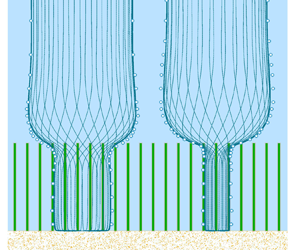
A stream of free-falling particles from a rectangular hopper, hereafter called a ‘curtain’, was characterised systematically using a well-resolved, non-intrusive optical shadowgraphic method, to reveal both an additional axial region and an additional dilute region distributed laterally on either side of the curtain, relative to those identified previously. The effects of particle size and hopper outlet thickness on the evolution of the particle curtain were separately isolated, whilst measuring particle mass flow rate. The curtains were characterised into four distinct axial regions, namely a near-field expansion region near to the hopper exit, a neck zone where the curtain contracts, a region of intermediate-field expansion and a far field with particles reaching terminal velocity. The initial expansion half-angle, $2.3^{\circ } \le \alpha \le 4.8^{\circ }$, was found to be insensitive to particle size, but to increase with hopper outlet thickness. The ‘trough’ in the neck zone was deduced to be caused by a pressure gradient driven by particle acceleration. The curtain expansion rate at the intermediate field was found to increase with a decrease in particle size and hopper outlet thickness. The outermost dilute-particle region was deduced to be caused by collisions, induced by gradients in the velocity profile near to the hopper exit. New dimensionless analysis reveals that the dynamics of curtains can be characterised broadly into two regimes, one in which the aerodynamics is dominant and the other where it is weak. Curtain transmittance was found to scale with the Froude number, highlighting the importance of particle momentum.

At the same age, metallicity, and alpha-enhancement, sodium is a more effective tracer of the young and old sequences of the Milky Way disc
-
- Journal:
- Publications of the Astronomical Society of Australia / Volume 41 / 2024
- Published online by Cambridge University Press:
- 14 November 2024, e092
-
- Article
-
- You have access
- Open access
- HTML
- Export citation
-
Trends in elemental enrichment with stellar age can give us a powerful avenue to identify thus far unexplained origin sites of the elements. We investigate stellar abundance trends using the GALAH DR3 high-resolution spectroscopic dataset of 6 234 solar-type stars. Our study explores the elemental abundance [X/Fe] of sodium (Na) with stellar age. We find a pronounced enrichment in [Na/Fe] at super solar metallicity (i.e. [Fe/H] $ \gt \,0$) in the old sequence of Milky Way disc stars, a trend demanding a deeper understanding of the underlying source(s) responsible for the nucleosynthesis. This progressive [Na/Fe] enrichment at the young end of the old sequence has essential implications for Galactic archaeology. In this work, we propose a novel selection technique for separating the Milky Way’s thick and thin disc stellar populations (i.e. old and young sequences) based on the observed [Na/Fe] rise of $\sim$0.1 dex for stars around 5–8 Gyr old. We also compare our selection method to the conventional [Mg/Fe] vs. [Fe/H] selection approach, and we find that our new Na-based selection method better disentangles the overlap between young- and old-sequence disc stars at these intermediate ages. This is especially true at super solar [Fe/H], where the [Mg/Fe] vs. [Fe/H] or [ $\alpha$/Fe] vs. [Fe/H] separation approaches exhibit significant overlap. This new selection method should help us better understand the history of the formation of the Milky Way disc.


Correlations between wall heat flux and Reynolds shear stress/turbulent heat flux in compressible turbulent boundary layers
-
- Journal:
- Journal of Fluid Mechanics / Volume 999 / 25 November 2024
- Published online by Cambridge University Press:
- 14 November 2024, A52
-
- Article
- Export citation
On dewetting and concentration evolution of thin binary fluid films
-
- Journal:
- Journal of Fluid Mechanics / Volume 999 / 25 November 2024
- Published online by Cambridge University Press:
- 14 November 2024, A55
-
- Article
- Export citation
Transition to turbulence on a rotating wind turbine blade at $Re_c=3 \times 10^5$
-
- Journal:
- Journal of Fluid Mechanics / Volume 999 / 25 November 2024
- Published online by Cambridge University Press:
- 14 November 2024, A54
-
- Article
-
- You have access
- Open access
- HTML
- Export citation
-
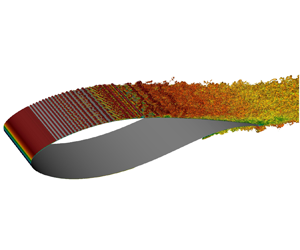
The boundary-layer stability on a section of a rotating wind turbine blade with an FFA-W3 series aerofoil at a chord Reynolds number of $3 \times 10^5$, with varying rotation and radii, is studied with direct numerical simulations and linear stability analyses. Low rotation does not significantly affect transition in the outboard blade region. The relative insensitivity to rotation is due to a laminar separation bubble near the leading edge, spanwise-deformed by a primary self-excited instability, promoting the secondary absolute instability of the Kelvin–Helmholtz (KH) vortices and rapid transition. Moderate increases in rotation, or moving inboard, stabilise the flow by accelerating the attached boundary layer and possibly inducing competition between cross-flow and KH modes. This delays separation and transition. Initially, for high rotation rates or radial locations close to the hub, transition is delayed. Nevertheless, strong stationary and travelling cross-flow modes are eventually triggered, spanwise modulating the KH rolls and shifting the transition line close to the leading edge. Cross-flow velocities as high as $56\,\%$ of the free stream velocity directed towards the blade tip are reached at the transition location. For radial locations farther from the hub, the effective angle of attack is decreased, and cross-flow transition occurs at lower rotation rates. The advance or delay of the transition line compared with a non-rotating configuration depends on the competing rotation effects of stabilising the attached boundary layer and triggering cross-flow modes in the separation flow region.


Effect of rotation on wake vortices in stratified flow
-
- Journal:
- Journal of Fluid Mechanics / Volume 999 / 25 November 2024
- Published online by Cambridge University Press:
- 14 November 2024, A44
-
- Article
-
- You have access
- Open access
- HTML
- Export citation
-
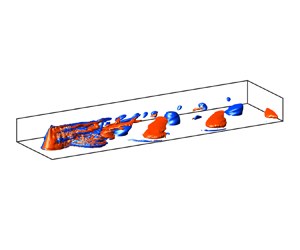
Stratified wakes past an isolated conical seamount are simulated at a Froude number of $Fr = 0.15$ and Rossby numbers of $Ro = 0.15$, 0.75 and $\infty$. The wakes exhibit a Kármán vortex street, unlike their unstratified, non-rotating counterpart. Vortex structures are studied in terms of large-scale global modes, as well as spatially localised vortex evolution, with a focus on rotation effects. The global modes are extracted by spectral proper orthogonal decomposition (SPOD). For all three studied $Ro$ ranging from mesoscale, submesoscale and non-rotating cases, the frequency of the SPOD modes at different heights remains coupled as a global constant. However, the shape of the SPOD modes changes from slanted ‘tongues’ at zero rotation ( $Ro=\infty$) to tall hill-height columns at strong rotation ( $Ro=0.15$). A novel method for vortex centre tracking shows that, in all three cases, the vortices at different heights advect uniformly at approximately $0.9U_{\infty }$ beyond the near wake, consistent with the lack of variability of the global modes. Under system rotation, cyclonic vortices and anticyclonic vortices (AVs) present considerable asymmetry, especially at $Ro = 0.75$. The vorticity distribution as well as the stability of AVs are tracked downstream using statistics conditioned to the identified vortex centres. At $Ro=0.75$, intense AVs with relative vorticity up to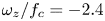 $\omega _z/f_{c}=-2.4$ (where $\omega_z$ is the vertical vorticity and $f_c$ is the Coriolis frequency) are seen with small regions of instability and they maintain large $\omega _z/f_{c}$ magnitude in the far wake. Recent stability analysis that accounts for stratification and viscosity is found to improve on earlier criteria and show that these intense AVs are stable.


A theoretical model for compressible bubble dynamics considering phase transition and migration
-
- Journal:
- Journal of Fluid Mechanics / Volume 999 / 25 November 2024
- Published online by Cambridge University Press:
- 14 November 2024, A58
-
- Article
-
- You have access
- Open access
- HTML
- Export citation
Basic solutions to Taylor–Maccoll equations
-
- Journal:
- Journal of Fluid Mechanics / Volume 999 / 25 November 2024
- Published online by Cambridge University Press:
- 14 November 2024, A48
-
- Article
- Export citation
Multiscale understanding of structural effect on explosive dispersal of granular media
-
- Journal:
- Journal of Fluid Mechanics / Volume 999 / 25 November 2024
- Published online by Cambridge University Press:
- 14 November 2024, A46
-
- Article
- Export citation
On the formation of cores in accreting filaments and the impact of ambient environment on it
-
- Journal:
- Publications of the Astronomical Society of Australia / Volume 41 / 2024
- Published online by Cambridge University Press:
- 14 November 2024, e091
-
- Article
- Export citation
-
Results from some recent numerical works, including ours, lend credence to the thesis that the ambient environment, that is, the magnitude of external pressure, affects the star-forming ability of clouds and filaments. In continuation with our series of papers on this subject, we explore this thesis further by developing new hydrodynamic simulations of accreting filaments confined by external pressures in the range $10^{4 -7}$ K cm $^{-3}$. Our principal findings are – (i) irrespective of linemass, filament-fragmentation generally yields spheroidal cores. The initially sub-critical filaments in low to intermediate external pressure environments form broad cores suggesting that weakly self-gravitating filaments must fragment via the collect – and- collapse mode to form broad cores. Transcritical filaments, by contrast, become susceptible to the Jeans-type instability and form pinched cores; (ii) the ambient environment bears upon the physical properties of filaments including their FWHM $_{fil}$. Only the filaments initially suffused with subsonic turbulence in Solar-Neighbourhood-like environments, however, have FWHM $_{fil}$ $\sim$ 0.1 pc. In high pressure environs such filaments not only have much smaller widths, but also become severely eviscerated. On the contrary, filaments suffused with initially supersonic turbulence are typically broader; (iii) the quasi-oscillatory nature of velocity gradients must be ubiquitous along filament lengths and its magnitude generally increases with increasing pressure. The periodicity of the velocity gradients approximately matches the fragmentation lengthscale of filaments; (iv) oscillatory features of the radial component of the velocity gradient are a unreliable proxy for detecting signatures of accretion onto filaments; and (v) filaments at either extreme of external pressure are inefficient at cycling gas into the dense phase which could reconcile the corresponding inefficiency of star-formation in such environments.


Side-heated Rayleigh–Bénard convection
-
- Journal:
- Journal of Fluid Mechanics / Volume 999 / 25 November 2024
- Published online by Cambridge University Press:
- 13 November 2024, A35
-
- Article
-
- You have access
- Open access
- HTML
- Export citation

A theoretical derivation of slip boundary conditions based on the Cercignani–Lampis–Lord scattering model
-
- Journal:
- Journal of Fluid Mechanics / Volume 999 / 25 November 2024
- Published online by Cambridge University Press:
- 13 November 2024, A36
-
- Article
- Export citation

Interface evolution induced by two successive shocks under diverse reshock conditions
-
- Journal:
- Journal of Fluid Mechanics / Volume 999 / 25 November 2024
- Published online by Cambridge University Press:
- 13 November 2024, A31
-
- Article
- Export citation
Transition to turbulence in hypersonic flow over a compression ramp due to upstream forcing
-
- Journal:
- Journal of Fluid Mechanics / Volume 999 / 25 November 2024
- Published online by Cambridge University Press:
- 13 November 2024, A37
-
- Article
- Export citation
-
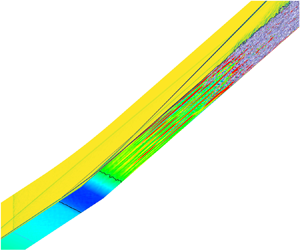
Several transition scenarios are present in a hypersonic compression-ramp flow. In our previous work (Cao et al., J. Fluid Mech., vol. 941, 2022, p. A8), a complete transition process induced by the global instability of a compression-ramp flow was revealed. In a globally stable flow, however, the transition to turbulence can be promoted by convective instabilities, which is the focus of this work. The same flow conditions as in our previous work (Mach number 7.7, Reynolds number $8.6\times 10^5$ based on the flat-plate length) are considered here. Owing to a smaller ramp angle, a weakly separated flow forms on the compression ramp, which supports no global instability. Resolvent analysis identifies low-frequency streamwise streaks as the optimal response of base flow to upstream forcing. Local stability analysis reveals Mack's second mode in the boundary layer downstream of reattachment. By introducing random disturbances upstream of separation in direct numerical simulations, we observe breakdown to turbulence downstream of reattachment. Two transition scenarios are revealed, and they are highly dependent on the amplitude of upstream disturbances. For a large amplitude, strong streamwise streaks develop near the reattachment region, which break down to turbulence quickly. However, when the disturbance amplitude is reduced, the second-mode instability dominates the transition to turbulence.

Wave turbulence in a rotating channel: numerical implementation and results
-
- Journal:
- Journal of Fluid Mechanics / Volume 999 / 25 November 2024
- Published online by Cambridge University Press:
- 13 November 2024, A29
-
- Article
-
- You have access
- Open access
- HTML
- Export citation
-
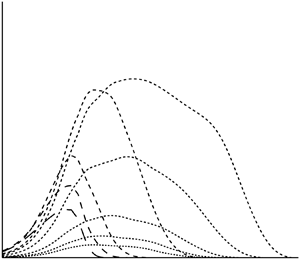
The analysis of Scott (J. Fluid Mech., vol. 741, 2014, pp. 316–349) is implemented numerically. Decaying turbulence is confined to a channel between two infinite, parallel, rotating walls. The Rossby and Ekman numbers are supposed small, the former condition making nonlinearity small, while the latter allows the turbulence to persist for the many rotational periods needed for the small nonlinearity to be effective. The flow is expressed as a combination of inertial waveguide modes, indexed by a two-dimensional wave vector $\boldsymbol{k}$ and an integer n. The $n = 0$ modes form a two-dimensional component of the flow, whereas the remainder is the wave component, on which attention is focused in this article. Assuming statistical axisymmetry and homogeneity in directions parallel to the walls, the second-order moments of the mode amplitudes yield a spectral matrix ${A_{nm}}(k,t)$ (where $k = |\boldsymbol{k} |$), of which the diagonal elements describe the distribution of energy over different modes. Wave-turbulence analysis provides an equation governing the time evolution of ${A_{nn}}$, $n \ne 0$, the wave spectra, which forms the basis for the present work. The initial distribution of energy is Gaussian and depends on a parameter $\varXi$, the initial spectral width. The problem has two other parameters, ${\beta _w}$ and ${\beta _v}$, which correspond to two distinct viscous dissipative mechanisms: wall damping due to boundary layers and volumetric damping by viscous effects throughout the flow. Results obtained by numerical solution include the time evolution of the total wave energy, E, and the detailed description of its distribution over k and n provided by ${A_{nn}}(k)$.


The reflection of a planar impulsive shock wave at a liquid–gas interface
-
- Journal:
- Journal of Fluid Mechanics / Volume 999 / 25 November 2024
- Published online by Cambridge University Press:
- 13 November 2024, A34
-
- Article
-
- You have access
- Open access
- HTML
- Export citation

Turbulent convection in rotating slender cells
-
- Journal:
- Journal of Fluid Mechanics / Volume 999 / 25 November 2024
- Published online by Cambridge University Press:
- 13 November 2024, A28
-
- Article
-
- You have access
- Open access
- HTML
- Export citation
-
Turbulent convection in the interiors of the Sun and the Earth occurs at high Rayleigh numbers $Ra$, low Prandtl numbers $Pr$, and different levels of rotation rates. To understand the combined effects better, we study rotating turbulent convection for $Pr = 0.021$ (for which some laboratory data corresponding to liquid metals are available), and varying Rossby numbers $Ro$, using direct numerical simulations in a slender cylinder of aspect ratio 0.1; this confinement allows us to attain high enough Rayleigh numbers. We are motivated by the earlier finding in the absence of rotation that heat transport at high enough $Ra$ is similar between confined and extended domains. We make comparisons with higher aspect ratio data where possible. We study the effects of rotation on the global transport of heat and momentum as well as flow structures (a) for increasing rotation at a few fixed values of $Ra$, and (b) for increasing $Ra$ (up to $10^{10}$) at the fixed, low Ekman number $1.45 \times 10^{-6}$. We compare the results with those from unity $Pr$ simulations for the same range of $Ra$ and $Ro$, and with the non-rotating case over the same range of $Ra$ and low $Pr$. We find that the effects of rotation diminish with increasing $Ra$. These results and comparison studies suggest that for high enough $Ra$, rotation alters convective flows in a similar manner for small and large aspect ratios, so useful insights on the effects of high thermal forcing on convection can be obtained by considering slender domains.


Spatially averaged, vegetated, oscillatory boundary and shear layers
-
- Journal:
- Journal of Fluid Mechanics / Volume 999 / 25 November 2024
- Published online by Cambridge University Press:
- 13 November 2024, A33
-
- Article
- Export citation
