To save content items to your account,
please confirm that you agree to abide by our usage policies.
If this is the first time you use this feature, you will be asked to authorise Cambridge Core to connect with your account.
Find out more about saving content to .
To save content items to your Kindle, first ensure no-reply@cambridge.org
is added to your Approved Personal Document E-mail List under your Personal Document Settings
on the Manage Your Content and Devices page of your Amazon account. Then enter the ‘name’ part
of your Kindle email address below.
Find out more about saving to your Kindle.
Note you can select to save to either the @free.kindle.com or @kindle.com variations.
‘@free.kindle.com’ emails are free but can only be saved to your device when it is connected to wi-fi.
‘@kindle.com’ emails can be delivered even when you are not connected to wi-fi, but note that service fees apply.
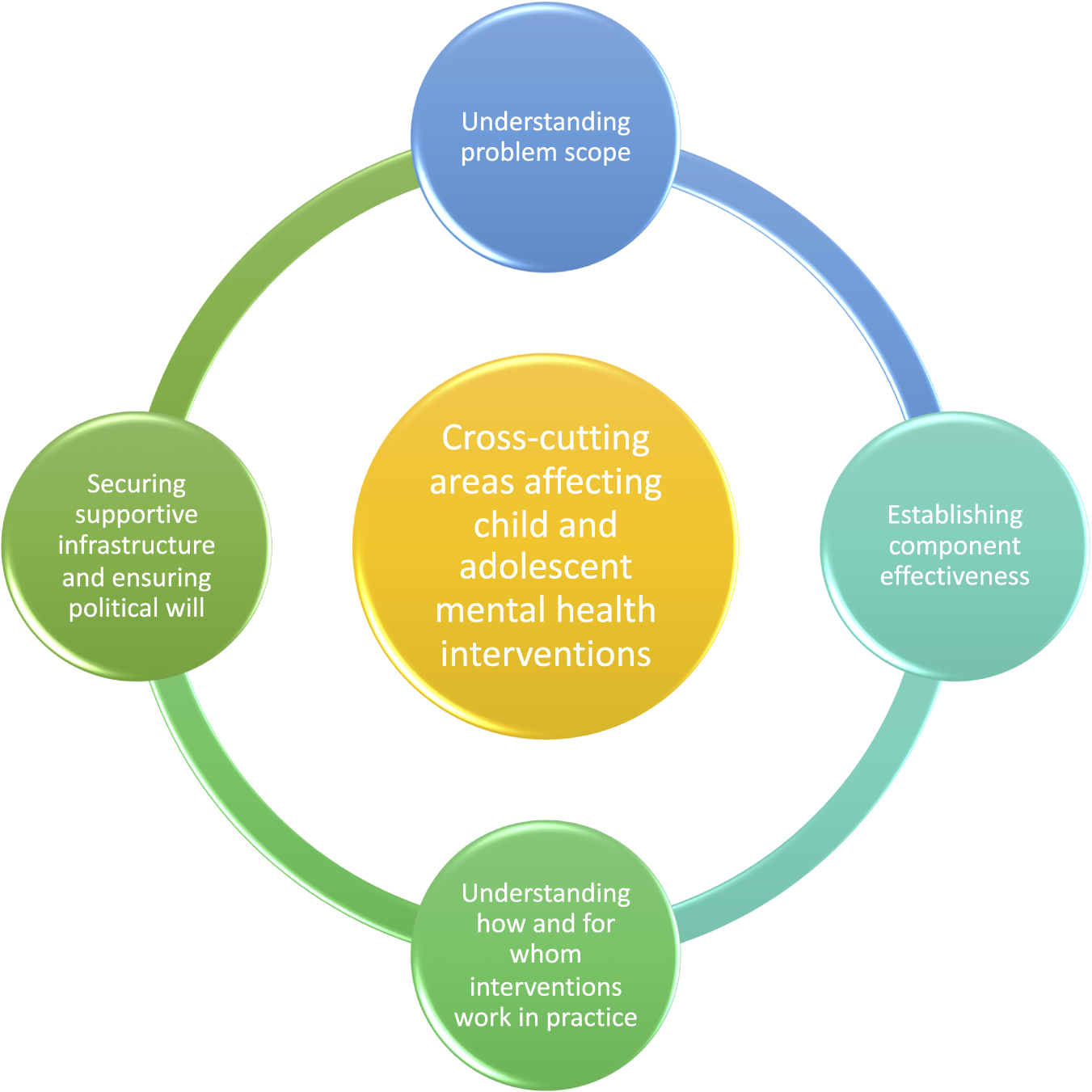
Childhood and adolescence are key developmental periods in the life course for addressing mental health, and there is ample evidence to support significant, increased investment in mental health promotion for this group. However, there are gaps in evidence to inform how best to implement mental health promotion interventions at scale. In this review, we examined psychosocial interventions implemented with children (aged 5–10 years) and adolescents (aged 10–19 years), drawing on evidence from WHO guidelines. Most psychosocial interventions promoting mental health have been implemented in school settings, with some in family and community settings, by a range of delivery personnel. Mental health promotion interventions for younger ages have prioritised key social and emotional skills development, including self-regulation and coping; for older ages, additional skills include problem-solving and interpersonal skills. Overall, fewer interventions have been implemented in low- and middle-income countries. We identify cross-cutting areas affecting child and adolescent mental health promotion: understanding the problem scope; understanding which components work; understanding how and for whom interventions work in practice; and ensuring supportive infrastructure and political will. Additional evidence, including from participatory approaches, is required to tailor mental health promotive interventions to diverse groups’ needs and support healthy life course trajectories for children and adolescents everywhere.
Comprehenders predict what a speaker is likely to say when listening to non-native (L2) and native (L1) utterances. But what are the characteristics of L2 prediction, and how does it relate to L1 prediction? We addressed this question in a visual-world eye-tracking experiment, which tested when L2 English comprehenders integrated perspective into their predictions. Male and female participants listened to male and female speakers producing sentences (e.g., I would like to wear the nice…) about stereotypically masculine (target: tie; distractor: drill) and feminine (target: dress; distractor: hairdryer) objects. Participants predicted associatively, fixating objects semantically associated with critical verbs (here, the tie and the dress). They also predicted stereotypically consistent objects (e.g., the tie rather than the dress, given the male speaker). Consistent predictions were made later than associative predictions, and were delayed for L2 speakers relative to L1 speakers. These findings suggest prediction involves both automatic and non-automatic stages.
Emotions are critical for humans, not only feeling and expressing them, but also reading the emotional expressions of others. For a long time, this ability was thought to be exclusive to people; however, there is now evidence that other animals also rely on emotion perception to guide their behaviour and to adjust their actions in such way as to guarantee success in their social groups. This is the case for domestic dogs, who have tremendously complex abilities to perceive the emotional expressions not only of their conspecifics but also of human beings. In this paper we discuss dogs’ capacities to read human emotions. More than perception, though, are dogs able to use this emotional information in a functional way? Does reading emotional expressions allow them to live functional social lives? Dogs can respond functionally to emotional expressions and can use the emotional information they obtain from others during problem-solving, that is, acquiring information from faces and body postures allows them to make decisions. Here, we tackle questions related to the abilities of responding to and using emotional information from human expressions in a functional way and discuss how far dogs can go when reading our emotions.
Mental representations remain the central posits of psychology after many decades of scrutiny. However, there is no consensus about the representational format(s) of biological cognition. This paper provides a survey of evidence from computational cognitive psychology, perceptual psychology, developmental psychology, comparative psychology, and social psychology, and concludes that one type of format that routinely crops up is the language-of-thought (LoT). We outline six core properties of LoTs: (i) discrete constituents; (ii) role-filler independence; (iii) predicate–argument structure; (iv) logical operators; (v) inferential promiscuity; and (vi) abstract content. These properties cluster together throughout cognitive science. Bayesian computational modeling, compositional features of object perception, complex infant and animal reasoning, and automatic, intuitive cognition in adults all implicate LoT-like structures. Instead of regarding LoT as a relic of the previous century, researchers in cognitive science and philosophy-of-mind must take seriously the explanatory breadth of LoT-based architectures. We grant that the mind may harbor many formats and architectures, including iconic and associative structures as well as deep-neural-network-like architectures. However, as computational/representational approaches to the mind continue to advance, classical compositional symbolic structures – that is, LoTs – only prove more flexible and well-supported over time.
This study examines receptive-expressive language, gross-fine motor skills, and IQ abilities in 78 children, 43 children with an older sibling with autism spectrum disorder (Sibs-ASD) and 35 children with an older sibling with typical development, ranging from 4 to 11 years of age. Depending on age, both groups were divided in preschool and school groups. The results show that more than 76% of Sibs-ASD performed at least one language and/or motor skill under 25th percentile. Significant differences were described at preschool stage in three aspects: grammatical comprehension, ball skills, and global motor skills. At school age, significant differences were found in two aspects: expressive language, and ball skills. Some differences seem to decrease over time; meanwhile others seem to increase; and others remain stable. Thus, it seems that vulnerability continues in unaffected Sibs-ASD and suggest that this population may benefit from continued screening and monitoring into the preschool and school-age stages.
Words have meanings vastly undetermined by the contexts in which they occur. Their acquisition therefore presents formidable problems of induction. Lila Gleitman and colleagues have advocated for one part of a solution: indirect evidence for a word’s meaning may come from its syntactic distribution, via syntactic bootstrapping. But while formal theories argue for principled links between meaning and syntax, actual syntactic evidence about meaning is noisy and highly abstract. This paper examines the role that syntactic bootstrapping can play in learning modal and attitude verb meanings, for which the physical context is especially uninformative. I argue that abstract syntactic classifications are useful to the child, but that something further is both necessary and available. I examine how pragmatic and syntactic cues can combine in mutually constraining ways to help learners infer attitude meanings, but need to be supplemented by semantic information from the lexical context in the case of modals.
This study examined the role of first language (L1) transparency in intra-orthographic effects on second language (L2) pronunciation by studying L2 learners with a non-alphabetic and orthographically opaque L1 and an alphabetic L2. Relations between orthographic effects, phonological awareness, and L2 proficiency were examined. Fifty-four Cantonese-speaking English as a second language (ESL) learners participated in Experiment 1 with orthographic effect tasks (homophone and silent-letter read-aloud) and phonological awareness tasks. Thirty Cantonese-speaking and 30 Mandarin-speaking ESL learners participated in Experiment 2 with orthographic effect tasks and an L2 proficiency task. The L2 pronunciation of Cantonese and Mandarin participants was subjected to intra-orthographic effects. Phonological awareness and L2 proficiency were associated with less orthographic effects on L2 pronunciation in Cantonese participants. Mandarin participants did not subject to more orthographic effects than Cantonese participants when controlling L2 proficiency, implying that shared alphabetic scripts between Pinyin and English did not interfere with L2 production. Overall, transferring the L1 reading strategy that relies on orthography to decode phonology to L2 reading seemed not to be the key mechanism behind intra-orthographic effects. L2 graphemes were likely to be decoded with incorrect L2 grapheme-to-phoneme correspondences, resulting in intra-orthographic effects.
The neurocognition of multimodal interaction – the embedded, embodied, predictive processing of vocal and non-vocal communicative behaviour – has developed into an important subfield of cognitive science. It leaves a glaring lacuna, however, namely the dearth of a precise investigation of the meanings of the verbal and non-verbal communication signals that constitute multimodal interaction. Cognitively construable dialogue semantics provides a detailed and context-aware notion of meaning, and thereby contributes content-based identity conditions needed for distinguishing syntactically or form-based defined multimodal constituents. We exemplify this by means of two novel empirical examples: dissociated uses of negative polarity utterances and head shaking, and attentional clarification requests addressing speaker/hearer roles. On this view, interlocutors are described as co-active agents, thereby motivating a replacement of sequential turn organisation as a basic organising principle with notions of leading and accompanying voices. The Multimodal Serialisation Hypothesis is formulated: multimodal natural language processing is driven in part by a notion of vertical relevance – relevance of utterances occurring simultaneously – which we suggest supervenes on sequential (‘horizontal’) relevance – relevance of utterances succeeding each other temporally.
This paper investigates the cognitive mechanisms underlying eating and drinking metaphors in Mongolian and discusses complex linguistic features of some culturally unique idioms relating to id- ‘eat’ and uu- ‘drink’, which are interpreted from a sociocultural perspective, along with the help of world knowledge. Metaphorical extensions of id- and uu- fall into three subcategories: (1) agent-oriented extensions, highlighting the consumer’s role in the source domain of eating and drinking; (2) patient-oriented extensions, focusing on destructive effects on the patient in the source domain; (3) extensions involving both agent and patient orientations, describing the agent’s sensation and “destruction” of the patient at the same time. Based on the Mongolian Web Corpus (mnWac16) and an extensive online dictionary (mongoltoli.mn), it is found that patient-oriented extensions tend to be more connected with EAT verbs in Mongolian, denoting a range of extensions like overcoming of the patient, spending material wealth, psychological torment or destruction, corrosion caused by external factors, etc., while agent-oriented extensions are more likely to involve DRINK verbs, denoting ‘smoking’, receiving material wealth (e.g., earning money) and absorption of such liquids as ink or oil. Overall, id- has a broader extension than uu-, and there are some overlaps involving both agent and patient orientations in terms of living on material wealth and physical exploitation. Some common usages pertaining to metaphorical extensions of consumption verbs are found cross-linguistically.
Despite a meteoric rise, results in the cognitive science of bilingualism present with significant inconsistency. In parallel, there is a striking absence of an ecologically valid theory within bilingualism research. How should one interpret the totality of available data that can pull in opposing directions? To proceed, we need to identify which practices impede progression. Hitherto, we bring to the fore an undiscussed practice, contextualizing how it impacts the ability to embed the available results into an overarching theory. We suggest that a stacking the deck fallacy – the tendency to engage differently with available evidence, directing focus to specific sub-samples – hampers theory formation. We put forth a proposal for making progress, building on the premise that what is lacking in the field is a unifying perspective that reconciles seemingly contradictory results. We suggest that the necessary shift of perspective towards progress crucially entails linking the notions of spectrum and trade-off.
The performance of cognitive tests is highly dependent on the proficiency of the language in which the tests are administered. Not all Indonesians speak Indonesian daily and many are bilingual. We investigate whether language(s) spoken affects the performance on three language tests in 840 participants ranging in age (16–80) and education (6–22 years). Analysis of covariance followed by Helmert contrasts showed a disadvantage on the Boston Naming Test (BNT) and on the most difficult items of the Token Test for those who do not speak Bahasa daily. Bilinguals did worse on the BNT. Education had a large positive effect on the language tests, age a smaller negative effect. This suggests that besides age and education, the factor of language spoken, either in public or at home, needs to be taken into account when a participant's test scores on the BNT and TT are interpreted and compared with normative data.
Anxiety problems have a particularly early age of onset and are common among children. As we celebrate the anniversary of the BABCP, it is important to recognise the huge contribution that cognitive behavioural therapy (CBT) has made to the treatment of anxiety problems in children. CBT remains the only psychological intervention for child anxiety problems with a robust evidence base, but despite this, very few children with anxiety problems access CBT. Creative solutions are urgently needed to ensure that effective treatments can be delivered at scale. Here we focus on parent-led CBT as this offers a potential solution that is brief and can be delivered by clinicians without highly specialised training. Over the last decade there has been a substantial increase in randomised controlled trials evaluating this approach with consistent evidence of effectiveness. Nonetheless clinicians, and parents, often have concerns about trying the approach and can face challenges in its delivery.
Method:
We draw on empirical evidence and our clinical experience to address some of these common concerns and challenges, with particular emphasis on the key principles of empowering parents and working with them to provide opportunities for new learning for their children.
Conclusions:
We conclude by highlighting some important directions for future research and practice, including further evaluation of who does and does not currently benefit from the approach, determining how it should be adapted to optimise outcomes among groups that may not currently get maximum benefits and across cultures, and capitalising on recent technological developments to increase engagement and widen access.
Assessment of cognitive behaviour therapy (CBT) competence is a critical component in ensuring optimal clinical care, supporting therapists’ skill acquisition, and facilitating continuing professional development. This article provides a framework to support trainers, assessors, supervisors and therapists when making decisions about selecting and implementing effective strategies for assessing CBT competence. The framework draws on the existing evidence base to address five central questions: Why assess CBT competence?; What is CBT competence?; When should CBT competence be assessed?; Who is best placed to assess CBT competence?; and How should CBT competence be assessed? Various methods of assessing CBT competence are explored and the potential benefits and challenges are outlined. Recommendations are made about which approach to use across different contexts and how to use these effectively to facilitate the acquisition, enhancement and evaluation of CBT knowledge and skills.
Key learning aims
After reading this article you will be able to:
(1) Identify key issues about why, what, when, who and how to assess CBT competence and use this framework to guide decisions about the best strategy to use.
(2) Be aware of the range of methods for assessing CBT competence and consider the main benefits and potential challenges of these.
(3) Consider the most effective ways to implement CBT competence assessment strategies as a tool for evaluation and learning.
Dyadic coping-based gratitude (DC-G) refers to the reaction of appreciation and thankfulness in response to received problem-focused and emotion-focused positive dyadic coping (DC) behaviors by the partner. The actor-partner interdependent mediation model was used to test the mediating role of DC-G between DC and relationship satisfaction in a purposive sample of 300 Pakistani married couples, which were treated as indistinguishable following the use of a test for distinguishability. Mediation analysis demonstrated that DC-G partially mediated the couples’ DC and relationship satisfaction implying that the association between DC and relationship satisfaction strengthened as the DC-G intervenes in the path model. Additionally, the actor-actor or partner-partner indirect effects were stronger compared to the cross-partner effect suggesting that husbands or wives’ DC more strongly predicted corresponding relationship satisfaction via DC-G compared to husbands-wives’ DC. Implications are discussed within collectivistic cultural orientation and Islamic religious obligations regarding marital relationships in Pakistani couples.
Languages employ different means to manifest the unaccusative-unergative distinction. In Mandarin Chinese, unaccusative verbs are allowed in the inversion construction “V-le NP”, while unergative verbs are not. This grammaticality contrast brings a presence/absence contrast between the two verb classes in the inversion construction in the input. Using an eye fixation task, we investigated whether Mandarin-learning 19-month-olds were sensitive to this specific input frequency contrast. We found that infants distinguished the grammatical versus ungrammatical uses of the two verb classes in the inversion construction “V-le NP” (Experiment 1). When the verb classes were in the “NP V-le” order (Experiment 2) (i.e., the same level of grammaticality), infants showed no evidence of a looking difference. These responses indicate toddlers’ sensitivity to the distribution of the two verb classes in the inversion construction. This distributional information is likely to be one of the potential cues that facilitate their acquisition of the unaccusative-unergative distinction.