To save this undefined to your undefined account, please select one or more formats and confirm that you agree to abide by our usage policies. If this is the first time you used this feature, you will be asked to authorise Cambridge Core to connect with your undefined account.
Find out more about saving content to .
To send this article to your Kindle, first ensure no-reply@cambridge.org is added to your Approved Personal Document E-mail List under your Personal Document Settings on the Manage Your Content and Devices page of your Amazon account. Then enter the ‘name’ part of your Kindle email address below. Find out more about sending to your Kindle.
Find out more about saving to your Kindle.
Note you can select to save to either the @free.kindle.com or @kindle.com variations. ‘@free.kindle.com’ emails are free but can only be saved to your device when it is connected to wi-fi. ‘@kindle.com’ emails can be delivered even when you are not connected to wi-fi, but note that service fees apply.
The Covid-19 pandemic widened public awareness of the close links between socioeconomic status and resilience in the face of infection, yet this interplay was already well established in archaeological discourse. Here, the authors combine osteoarchaeological, stable isotope and pathogenomic analyses with archival research to explore the formation of multiple, or ‘plural’, burials at an early hospital in Basel, Switzerland. Identification of a stamped clay pipe, Yersinia pestis DNA and a high proportion of subadults link the burials to an outbreak of plague in 1665–1670, while physiological stress, dietary and pathological insights contribute to our understanding of prior experiences affecting differential mortality.
Preliminary results from the first archaeological excavations of Early Modern mercury-production sites at Idrija, Slovenia, confirm the use of ceramic vessels for mercury roasting following the techniques described in Agricola’s De re metallica, which was published in 1556.
Since 2015, four non-invasive campaigns have surveyed the San José Galleon shipwreck in the Colombian Caribbean, providing valuable insights into the age and provenance of artefacts found on the seabed. Numismatic, archaeological and historical approaches have been employed to analyse a collection of gold coins recorded within this underwater context.
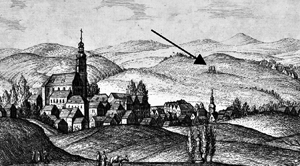
Historic sites of lawful execution are now largely consigned to archival records, including hand-drawn maps. Using these records to identify potential locations, this project deploys non-invasive geophysical surveys and targeted excavation to uncover execution sites and historic gallows in Silesia.
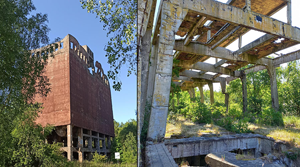
The Hydrierwerke Pölitz AG was a synthetic-fuel plant of strategic importance to the Nazi war machine. The surrounding area contained labour camps, factories and other military infrastructure. The area was a target for sustained Allied bombardment causing extensive damage to the plant and nearby towns and villages. After the war, the plant's troubled past faded before interest was revived in the 1990s. Here, with the aid of historical aerial photographs and modern remote-sensing methods, the authors document the physical remains of the site, reconstruct its ‘dark history’ and reflect on the significance of the Hydrierwerke for the discourse on neglected and appropriated Second World War heritage.
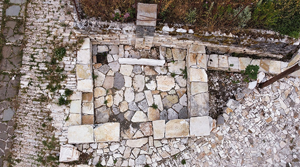
Reconstruction of a nineteenth-century cobbled pathway in the village of Aristi provides valuable insights into the material culture and settlement archaeology of Ottoman-era Greece. The authors argue that such small-scale pairing of restoration and archaeological practices in ‘traditional’ settlements could enhance our understanding of Ottoman archaeology without undermining the lived experience of such places.
The authors report on ancient DNA data from two human skeletons buried within the chancel of the 1608–1616 church at the North American colonial settlement of Jamestown, Virginia. Available archaeological, osteological and documentary evidence suggest that these individuals are Sir Ferdinando Wenman and Captain William West, kinsmen of the colony's first Governor, Thomas West, Third Baron De La Warr. Genomic analyses of the skeletons identify unexpected maternal relatedness as both carried the mitochondrial haplogroup H10e. In this unusual case, aDNA prompted further historical research that led to the discovery of illegitimacy in the West family, an aspect of identity omitted, likely intentionally, from genealogical records.
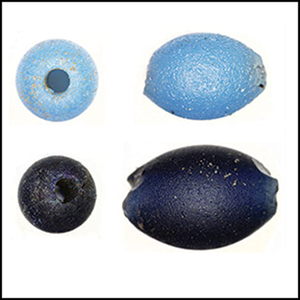
Minimally invasive compositional analyses of glass trade beads have revolutionised the study of these highly portable and socially significant items. Here, the authors interrogate new and legacy compositional data to investigate how Indigenous communities in eastern North America, particularly Wendat confederacy members, obtained beads from European traders and connected to broader interregional exchange systems c. AD 1600–1670. Diagnostic chemical elements in glass compositions reveal down-the-line exchange and population movement into the Western Great Lakes region prior to the arrival of European settlers, which highlights active Indigenous participation in transatlantic economic networks during a historical period of dynamic reorganisation and interaction.
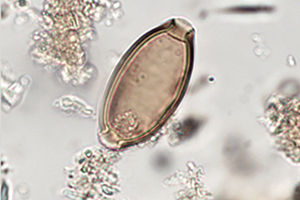
In the absence of written records, disease and parasite loads are often used as indicators of sanitation in past populations. Here, the authors adopt the novel approach of integrating the bioarchaeological analysis of cesspits in an area of medieval Leiden (the Netherlands) with historical property records to explore living conditions. Using light microscopy and enzyme-linked immunosorbent assays (ELISA) they identify evidence of parasites associated with ineffective sanitation (whipworm, roundworm and the protozoan Giardia duodenalis)—at residences of all social levels—and the consumption of infected livestock and freshwater fish (Diphyllobothriidae, cf. Echinostoma sp., cf. Fasciola hepatica and Dicrocoelium sp.).
Modern and contemporary archaeology, the French equivalent of historical archaeology, emerged in the 1970s. Subsequent attempts at theorising this sub-discipline have been hindered by a lack of broad professional recognition and funding. While the archaeology of the sixteenth to eighteenth centuries is now more widely recognised in France, studies of the post-nineteenth-century period remain limited to a few specific contexts. Here, the author offers an overview for the Anglophone readers of modern and contemporary archaeology in France and argues that greater theorisation, cross-fertilisation with other archaeological traditions and a diversification of the range of themes considered might enhance recognition of this sub-discipline within and beyond France.
This article illustrates preliminary results of the interdisciplinary research project ‘Science for society, society for science at the Site of National Remembrance in Łambinowice’. It presents the material traces of prisoner-of-war, resettlement and forced labour camps that functioned between 1870 and 1946 in Lamsdorf (now Łambinowice, Poland) and explains their modern social significance.
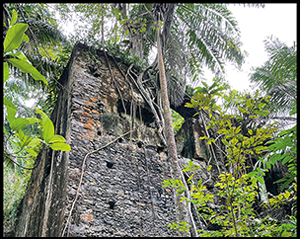
Praia Melão, the largest sugar mill and estate in São Tomé, active from the sixteenth to the nineteenth centuries, is the first archaeological site ever investigated on the island. It embodies the inception of the plantation economic system predicated on the labour of enslaved people and of local resistance.
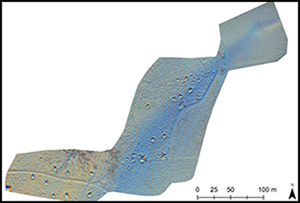
Although conflict archaeology is now well established, the archaeological remains of many specific military confrontations are still to be explored. This article reports the results of fieldwork to document the site of the Battle of the Bulge (16 December 1944–25 January 1945). The authors use drone-mounted 1m-resolution LiDAR and very high-resolution simultaneous localisation and mapping (SLAM) methods to reveal more than 940 features within the forested Ardennes landscape, many of which were subsequently visited and confirmed. As well as highlighting the potential of the LiDAR-SLAM method, deployed here (both in this geographic region and in conflict archaeology) for the first time, the survey results emphasise the need for a debate on managing the heritage of a key modern conflict landscape in Europe.
Colonised societies often continue traditional practices in private contexts whilst adopting new forms of ritual in public. Excavations at the Mam centre of Chiantla Viejo in highland Guatemala, however, reveal a more complex picture. Combining archaeological evidence with early colonial documents, the author identifies a revival of Indigenous Maya religion following the Spanish conquest (AD 1525–1550). Despite appearing in colonial records as Christian converts, the Maya directed a sequence of destruction, reconstruction and remodelling of the monumental core of Chiantla Viejo to evoke the landscape of their ancestral settlement of Zaculeu. The results emphasise the importance of public spaces for the persistence of Indigenous religion in early colonial settings.
During the mid-first millennium AD, new kingdoms and states emerged across South Asia. At this time, land grants made to Hindu temples are thought to have led to wide-ranging societal transformations. To date, however, neither the land-grant charters nor the changes they are said to have driven have been studied archaeologically. Here, the authors present the results of the first archaeological investigation of the charters and their landscape context. Bringing together the textual record with a survey of 268 religious and residential sites, the results establish historical baselines against which the longue durée developments of South Asian social, political and economic formation can be profitably re-posed.
Recommend this
Email your librarian or administrator to recommend adding this to your organisation's collection.