A collection of out-of-copyright and rare books from the Cambridge University Library and other world-class institutions that have been digitally scanned, made available online, and reprinted in paperback.
To save content items to your account,
please confirm that you agree to abide by our usage policies.
If this is the first time you use this feature, you will be asked to authorise Cambridge Core to connect with your account.
Find out more about saving content to .
To save content items to your Kindle, first ensure no-reply@cambridge.org
is added to your Approved Personal Document E-mail List under your Personal Document Settings
on the Manage Your Content and Devices page of your Amazon account. Then enter the ‘name’ part
of your Kindle email address below.
Find out more about saving to your Kindle.
Note you can select to save to either the @free.kindle.com or @kindle.com variations.
‘@free.kindle.com’ emails are free but can only be saved to your device when it is connected to wi-fi.
‘@kindle.com’ emails can be delivered even when you are not connected to wi-fi, but note that service fees apply.
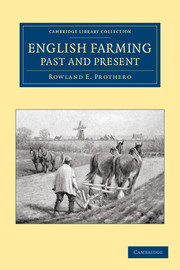
The author and politician Rowland Edmund Prothero (1851–1937), an expert on British agricultural history, held the post of President of the Board of Agriculture in David Lloyd George's cabinet between 1916 and 1919. In 1885 he had written an article for the Quarterly Review in which he traced the progress of English agriculture since the middle ages. This was expanded into a book, published in 1888 as The Pioneers and Progress of English Farming. Then, in 1912, Prothero revised and greatly expanded it under its current title, bringing the story up to date. This classic work charts the development of farming from the medieval manorial system up to the Corn Laws in the nineteenth century and the agricultural crises that confronted administrators at the beginning of the twentieth. The appendices include a chronological list of agricultural writers as well as data on the Corn Laws, tithes, acreage and wages.
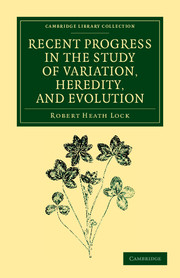
In the nineteenth century and beyond, scientists at Cambridge produced some of the most significant developments in the study of biological variation and inheritance. The work of William Bateson (several of whose books are also reissued in this series) was especially important in this regard. This book, first published in 1906 by the botanist Robert Heath Lock (1879–1915), lucidly traces these and other milestones in modern biological understanding. A readable account is given of the evolution of the discipline since the publication of Darwin's On the Origins of Species in 1859, taking in the biometrical contributions of Francis Galton and the research into mutation conducted by Hugo de Vries. The pioneering experiments of Gregor Mendel, and the more recent rediscovery of his laws of inheritance, are clearly contextualised so that non-specialist readers can appreciate the scientific progress that had been made in the half-century prior to the book's first publication.
A Grammar of Vocal Music, with a Course of Lessons and Exercises Founded on the Tonic Solfa Method, and a Full Introduction to the Art of Singing at Sight from the Old Notation ...
John Curwen (1816–80), minister and music educationist, is remembered for his promotion in Britain of the tonic sol-fa system of teaching singing. He had an innate understanding of the social value of music in education, and it was in response to being asked in 1841 to recommend the best way of teaching music in Sunday schools that he developed Norwich schoolteacher Sarah Glover's system from her Scheme for Rendering Psalmody Congregational (1835). He would spend the rest of his life refining it. Not to be confused with John Hullah's 'fixed doh' system, Curwen's method spread rapidly and by the 1860s over 180,000 people in Britain were learning tonic sol-fa. First published in 1843 and reissued here in its revised and expanded edition of 1848, this thorough textbook sets out Curwen's method, complete with a wide range of exercises for class practice.
Published between 1880 and 1897 as part of Max Müller's Sacred Books of the East series, this five-volume translation of Pahlavi texts was the work of Edward William West (1824–1905). Largely self-taught, West developed his knowledge of ancient oriental languages in India, where he worked as a civil engineer. After returning to Europe, West focused on the study of sacred Zoroastrian texts and prepared these translations of Pahlavi manuscripts. His writings and editions are still referenced today in Indo-Iranian studies. Volume 2 contains the ninth-century Dâdistân-î Dînîk and Epistles of Mânûskîhar. The former are religious judgments or decisions given by Mânûskîhar, a high priest of Iran, in answer to ninety-two queries put to him by fellow Zoroastrians. Along with the Epistles, relating to complaints made to Mânûskîhar about his brother Zâd-sparam, these texts give the reader an insight into the Zoroastrianism of the period, its tenets, and its relationship with the developing Islamic faith.
A wealthy planter in the West Indies, Bryan Edwards (1743–1800) lived in Jamaica during the peak of its sugar wealth. Upon his return to England in 1792, he wrote several books on the West Indies, including a multi-volume history of the British colonies. The present work, first published in 1796, relates to the recent conflict between the British and Jamaicans descended from runaway slaves, known as Maroons. Living mostly in isolated mountain communities, the Maroons had been granted certain rights under a 1739 treaty. However, by 1795, with a new governor ruling the island, tensions re-emerged and resulted in another war. Prefaced by Edwards' extended discussion of the Maroons and the origins of the conflict, this collection of documents and letters represents a valuable source in the study of Jamaican history and that of British colonialism in the Caribbean.
Founded as the Astronomical Society of London in 1820, this illustrious organisation received its royal charter in 1831. It has counted some of the world's greatest astronomers among its members, most notably its first president, Sir William Herschel, whose family archive forms part of its extensive library. Now based in Burlington House in Piccadilly, it continues to publish journals, award medals and prizes, and support education and outreach work. Following the society's centenary, this survey of its history appeared in 1923 and comprises contributions from leading astronomers of the early twentieth century. The extracts from primary sources include the diary entry of Sir John Herschel, son of William, recording the dinner at which the society's formation was discussed. The work also provides insights into how the society was able to take advantage of imperial expansion to collect observations and data from around the world, fuelling the Victorian pursuit of scientific knowledge.
A pioneer of British Egyptology, Sir John Gardner Wilkinson (1797–1875) first travelled to Egypt in 1821, the year before Champollion published his breakthrough work on the Rosetta Stone. As public interest in Egypt grew, Wilkinson studied and sketched the country's major archaeological sites, most notably the tombs of Thebes. His Topography of Thebes and General View of Egypt (1835) and Modern Egypt and Thebes (1843) are also reissued in this series. This well-illustrated three-volume work, first published in 1837, remained for over a century a key text on the lives of ancient Egyptians. Writing in a popular genre that was normally focused on contemporary societies, Wilkinson covers areas ranging from daily life to funerary beliefs. His imaginative approach underpinned the book's considerable success. Volume 1 addresses the physical and human geography of ancient Egypt, with a historical narrative up to the point of its conquest by Alexander the Great.
Born in Franconia, the son of a rabbi, Joseph Wolff (1795–1862) was baptised in 1812, moved to England in 1819, and became a Christian missionary. He travelled widely in the Near East, Middle East and Central Asia, enduring shipwreck, robbery and disease. His Researches and Missionary Labours among the Jews, Mohammedans, and Other Sects (1835) and the miscellaneous Travels and Adventures (1861) are also reissued in this series. First published in 1845 and reissued here in the revised second edition of that year, this work records Wolff's journey to the Emirate of Bukhara (in present-day Uzbekistan) to investigate the disappearance of two British officers. In Volume 2, Wolff offers further observations on the region's culture, religion and military history. He discovers that the missing men had been executed by one of the Emir's subordinates, Abdul Samut Khan, who also attempted to kill Wolff, though he narrowly escaped.
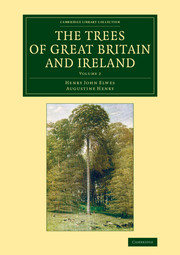
Although without formal scientific training, Henry John Elwes (1846–1922) devoted his life to natural history. He had studied birds, butterflies and moths, but later turned his attention to collecting and growing plants. Embarking on his most ambitious project in 1903, he recruited the Irish dendrologist Augustine Henry (1857–1930) to collaborate with him on this well-illustrated work. Privately printed in seven volumes between 1906 and 1913, it covers the varieties, distribution, history and cultivation of tree species in the British Isles. The strictly botanical parts were written by Henry, while Elwes drew on his extensive knowledge of native and non-native species to give details of where remarkable examples could be found. Each volume contains photographic plates as well as drawings of leaves and buds to aid identification. The species covered in Volume 2 (1907) include horse chestnut, buckeye, hemlock, walnut and larch.
Arthur Edward Waite (1857–1942), mystic and historian, was an influential figure in the occult revival of the nineteenth century. Brought up a devout Catholic, he became increasingly involved in spiritualism in his late teens following the death of his sister. Choosing not to enter the priesthood, he pursued instead his interests in occult philosophy. A translator and editor of several alchemical texts in the 1890s, Waite also wrote several histories of magic in his later years. First published in 1902, the present work establishes Kabbalah's significant influence on nineteenth-century occultism. The book chronicles the history of Kabbalist practice from its ancient Hebrew origins to its effect on other branches of the occult, including Rosicrucianism, freemasonry, hermeticism and tarot. Waite also connects noted occultists to Kabbalah, including Heinrich Cornelius Agrippa, Paracelsus and Eliphas Lévi.
Already a widely travelled man, Jacques-Henri Bernardin de Saint-Pierre (1737–1814) set sail again from his native France in 1768 on a voyage which took him via the Indian Ocean islands now known as Mauritius and Réunion. This collection of his letters covers many aspects of the journey, from the conditions aboard ship to the plants, animals and peoples he encountered. The account is interspersed with harsh criticism of European colonialism and the cruelties of the island slave trade. A friend and follower of Jean-Jacques Rousseau, Bernardin celebrated nature and simple living in his later work. His novel Paul et Virginie (1788), a tale of youthful innocence unspoilt by Western society, takes place on Mauritius. First published in 1773, the present work is known to have accompanied Darwin on his famous voyage aboard the Beagle. It is reissued here in the English translation that appeared in 1800.
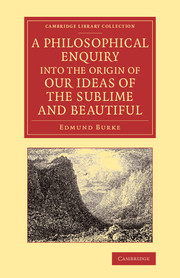
By the eighteenth century, the term 'sublime' was used to communicate a sense of unfathomable and awe-inspiring greatness, whether in nature or thought. The relationship of sublimity to classical definitions of beauty was much debated, but the first philosopher to portray them as opposing forces was Edmund Burke (1729–97). Originally published in 1757 and reissued here in the revised second edition of 1759, this influential treatise explores the psychological origins of both ideas. Presented as distinct consequences of very separate emotional lineages, beauty and sublimity are traced back through a web of human feelings, from self-preservation instincts to lust. Burke's doctrine of the sublime was to have far-reaching effects. In Britain, it informed perceptions of landscape in art and literature for years to come. Meanwhile, on the continent, Kant regarded Burke as 'the foremost author' in 'the empirical exposition of aesthetic judgments'.
On 22 May 1826, HMS Beagle left Plymouth Sound on her maiden voyage, accompanying HMS Adventure to Patagonia and Tierra del Fuego to survey the Strait of Magellan. Years later, Royal Naval officer John Macdouall (fl.1820–30) proclaimed himself 'one whose visit to Port Famine, and sometime residence on that inhospitable coast, have left no wish of re-visiting it, really or metaphorically'. Nevertheless, his first-hand account of the first nineteen months of the Beagle's voyage, originally published in 1833, is a highly entertaining read. With an amusing combination of self-deprecation and caustic observation, and in preference to 'the trouble of detailing the monotonous course of a long sea voyage', Macdouall relates anecdotes about life aboard ship and the peoples and places encountered. While unforgiving of 'absurd' Spanish customs and 'national indolence', and Rio de Janeiro's 'bowing hypocritical Portuguese', he offers a generally kinder portrait of Fuegian and Patagonian 'savages'.
Born in Dublin and classically educated at Trinity College, James Henry (1798–1876) practised as a doctor for more than twenty years before an inheritance allowed him to focus on the close study of Virgil's Aeneid. Travelling extensively across Europe, Henry conferred with eminent scholars and consulted numerous manuscripts. After the death of his wife in 1849, he was accompanied and ably assisted in his quest by his sole surviving daughter, Katherine Olivia (1830–72). In 1853 he published in Dresden his textual analysis of the poem's first six books. Reissued here is the version that appeared in Britain in 1859. This painstaking research was in turn incorporated into Henry's monumental multi-volume commentary, Aeneidea, published between 1873 and 1892 and now also reissued in the Cambridge Library Collection. The present work throws much light on both the ancient text and the approach of an idiosyncratic and indefatigable Virgilian scholar.
The German mathematician Karl Weierstrass (1815–97) is generally considered to be the father of modern analysis. His clear eye for what was important is demonstrated by the publication, late in life, of his polynomial approximation theorem; suitably generalised as the Stone–Weierstrass theorem, it became a central tool for twentieth-century analysis. Furthermore, the Weierstrass nowhere-differentiable function is the seed from which springs the entire modern theory of mathematical finance. The best students in Europe came to Berlin to attend his lectures, and his rigorous style still dominates the first analysis course at any university. His seven-volume collected works in the original German contain not only published treatises but also records of many of his famous lecture courses. Edited by Johannes Knoblauch (1855–1915), Volume 5 was published in 1915.
Ending centuries of isolation, the Meiji era opened Japan to the world in the late nineteenth century, revealing a rich and sophisticated culture. Largely unknown until then, it proved an object of fascination to the West, and the delicacy of its art inspired such figures as Van Gogh, Manet, Whistler and the architect Frank Lloyd Wright. French painter Félix Elie Régamey (1844–1907) was one of the few Europeans who had travelled to Japan, and his deep respect and understanding of the country's art and customs soon established him as an expert. Appearing first in French in 1891, his observations were published in this English translation in 1893. Offering an artist's perspective on Japan and its mores, it also contains 100 illustrations drawn by the author using Japanese techniques. Readers will find much of interest in this valuable contribution to the study of Japanese culture.
Between 1787 and 1798, the agricultural writer and land agent William Marshall (1745–1818) published a number of works on the rural economies of England, covering Norfolk, his native Yorkshire, Gloucestershire, the Midlands and the South. This two-volume study appeared in 1796 and investigated the farming, geography, public works and produce of districts in Devon, Somerset, Dorset and Cornwall. Volume 1 looks in detail at West Devon, the eastern parts of Cornwall, and the South Hams. The coverage includes aspects of the laws surrounding land ownership, farming implements peculiar to the areas, woodland management, orchards and the production of fruit-based liquors. The result is a richly detailed survey of the area in the Georgian period and an important record of rural and agricultural life, so often overlooked by other contemporary chroniclers.
This reissue contains two works by the botanist Maria Elizabetha Jacson (1755–1829), a Cheshire clergyman's daughter. Her interest in science, and especially botany, may have been encouraged by a family connection with Erasmus Darwin, but it was not until she was in her forties that domestic circumstances drove her to professional writing. In 1797 she published Botanical Dialogues, between Hortensia and her Four Children, an introduction to the Linnaean system for use in schools. This technically rather demanding work was recast for adults in 1804 as Botanical Lectures: 'a complete elementary system, which may enable the student of whatever age to surmount those difficulties, which hitherto have too frequently impeded the perfect acquirement of this interesting science'. The more practical Florist's Manual (1816) was aimed at female gardeners, offering advice on garden design and the war against pests as well as notes on plants and cultivation.
One of the most celebrated and prolific authors of the Victorian era, Anthony Trollope (1815–82) was also an enthusiastic traveller. This two-volume work recounts his two-year journey across Britain's colonies in the Antipodes. First published in 1873, it celebrates the success of British colonisation, but also considers with pragmatic foresight the inevitable unification of the Australian territories and their desire for greater independence. In Volume 2, Trollope describes his travels through Tasmania, Western Australia, South Australia and New Zealand. He supplements his travelogue with maps and a section on Australian institutions. He also tells of his unsuccessful foray into kangaroo hunting, showcasing his wit and appetite for adventure. North America (1862), Trollope's account of the continent during the American Civil War, and his An Autobiography (1883) are also reissued in this series.
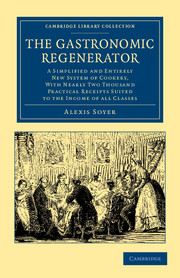
Perhaps the first celebrity chef, Alexis Soyer (1810–58) was a flamboyant, larger-than-life character who nonetheless took his profession very seriously. As the chef of London's Reform Club, he modernised its kitchens, installing refrigerators and gas cookers. They became something of a showpiece, even opening for tours. In contrast, Soyer also organised soup kitchens during the Great Famine in Ireland and volunteered his services in the Crimea in 1855 to improve military catering. He was also a prolific inventor of kitchen gadgets, notably promoting the Magic Stove, used for cooking food at the table. This work, first published in 1846, is an illustrated culinary textbook - complete with plans for different types of kitchen and nearly 2,000 recipes - written primarily for grander households with a large kitchen staff, but not neglecting those with more modest budgets. Also reissued in this series are Soyer's Modern Housewife or Ménagère (1849) and his Culinary Campaign (1857).