To save content items to your account,
please confirm that you agree to abide by our usage policies.
If this is the first time you use this feature, you will be asked to authorise Cambridge Core to connect with your account.
Find out more about saving content to .
To save content items to your Kindle, first ensure no-reply@cambridge.org
is added to your Approved Personal Document E-mail List under your Personal Document Settings
on the Manage Your Content and Devices page of your Amazon account. Then enter the ‘name’ part
of your Kindle email address below.
Find out more about saving to your Kindle.
Note you can select to save to either the @free.kindle.com or @kindle.com variations.
‘@free.kindle.com’ emails are free but can only be saved to your device when it is connected to wi-fi.
‘@kindle.com’ emails can be delivered even when you are not connected to wi-fi, but note that service fees apply.
Associational life in Cape Town is a mechanism for migrants from the eastern Democratic Republic of Congo (DRC) to find belonging in South Africa. We trace the internal politics of associational membership from 2000 to 2019 to illustrate how membership in eastern Congolese associations has minimized community ties to other foreign Africans and South Africans. An increase in election violence in the DRC, divided into pro- and anti-combattant camps, and the threat of xenophobic violence in South Africa have led to a closing of ranks that presumes only other eastern Congolese can be trusted. In tracing gender, class and language cleavages, we find that eastern DRC associational life reproduces the xenophobia associational membership is intended to ameliorate.
Microbiomes are communities of microorganisms that form close associations with metazoan hosts and have important roles in host biological processes. With the advent of Next Generation Sequencing, the microbiomes of myriad animals and plants have been described. However, the microbiomes of parasites have received little attention, which is surprising considering their ecological and medical importance. This study characterizes, for the first time, the microbiome of Dujardinascaris helicina, a gastrointestinal nematode parasite of the American crocodile. Dujardinascaris helicina were isolated from crocodiles residing in two geographically separated habitats across Belize. Using 16S sequencing, we compare β-diversity between sampling locations using generalized linear mixed modeling. Our results show that D. helicina microbiomes differ in composition depending on location. We also show that D. helicina microbiomes show strong shifts toward consolidation of specific taxa when proximity to human modified environments increases.
Medieval elite culture is often difficult to grasp among archaeological records from settlement sites. A silver-gilt amethyst setting, probably part of a brooch, from the moat of Castle Kolno in Poland represents an unusual high-status find from a context related to everyday activity.
Building upon an institutional perspective and the resource-based view, we theorize and address questions on what drives foreign subsidiaries of multinational enterprises (MNEs) to engage corporate social performance (CSP) strategies and how CSP contributes to the competitiveness of MNE subsidiaries in the host market. Subsequently, we theorize and explore the roles governments in home and host countries play in motivating MNE subsidiaries to adopt and implement CSP strategies and activities, and how institutional effects may be moderated by the specific resources and capabilities of MNE subsidiaries. The conceptual framework presented in this work was empirically tested using survey data collected from foreign subsidiaries of Chinese MNEs. The results, which provide broad support for most of the research hypotheses, can contribute to the stream of research on the CSP of MNE subsidiaries. More importantly, this study sheds new light on the particular importance of government pressure from both home and host countries. In particular, firm-specific resources or capabilities moderate the institutional effects (i.e., government pressure) on CSP strategies of MNE subsidiaries, ultimately enhancing the competitive advantages of these subsidiaries in the host market.
Fasciolosis, a parasitic disease of ruminants, poses significant economic and animal-health challenges in Algeria. This study aimed to assess spatial, temporal, and species-specific patterns of fasciolosis prevalence across diverse agro-climatic zones and to estimate associated economic losses. Between 2013 and 2023, eight wilayas El-Tarf, Skikda, Jijel (Region I), Blida, Mila (Region II), and M’Sila, Medea, Laghouat (Region III) were surveyed. Systematic postmortem inspections of 1,569,392 animals (349,176 cattle; 982,669 sheep; 235,639 goats; 1,882 camels; 26 horses) were performed by qualified veterinarians, with liver and bile-duct examination for Fasciola. Data on region, species, year, and season were analyzed in R 4.4.0 using ANOVA, Kruskal–Wallis, Tukey’s post hoc tests, and principal component analysis (PCA). Economic losses were calculated from condemned liver weights in Blida, Laghouat, and Jijel, converted to USD. PCA distinguished three regional prevalence profiles, with PC1 (77.7% variance) separating overall prevalence levels. Region I exhibited the highest mean prevalence (2.47%), peaking at 3.54% in 2018 – significantly greater than Region II (1.39%) and Region III (1.96%) (p < 0.01). Cattle showed the greatest infection rate (mean 4.14%), significantly higher than sheep (1.32%; p < 0.001) and goats (0.25%; p < 0.001), while horses and camels remained uninfected. Seasonal analysis revealed highest prevalence in autumn and winter (≈2.1%) versus spring (≈1.5%). Economic losses totaled USD 10.6 million in Blida, USD 1.0 million in Laghouat, and USD 142.2 million in Jijel over the study period. Targeted control strategies, adapted to regional and seasonal risk patterns, are essential. Future work should investigate environmental and management factors driving regional differences and evaluate cost-effective interventions to mitigate fasciolosis impact in Algerian livestock.
A growing demand for wheat as a staple crop leads to an expansion of its production. The consequence is land use change and short rotations for wheat. But wheat grown in short rotations causes yield decline. To secure future food supplies, a deeper understanding of the physiological processes contributing to this yield reduction is needed. Therefore, a three-year data set from a long-term field trial in Northern Germany was analysed to investigate the impact of crop rotational position (CRP) (wheat grown in the first [W1] and in the third [W3] year in self sequence after break crop) in combination with three genotypes and four rates of nitrogen (N) fertilizer on intercepted radiation by the canopy (Q), radiation use efficiency (RUE), grain yield and yield components. All genotypes showed a reduction of Q, RUE and yields in W3. The focus was further set on differences in yield formation pre- and post-anthesis. This revealed a significant interaction between CRP and genotype. An overall reduction in intercepted radiation pre-anthesis as well as in kernels/m2 in W3 suggested, that yield formation under adverse pre-crop conditions was rather ‘source limited’. A possibility to compensate this limitation might be a prolonged phase of radiation interception post-anthesis.
The International Commission on Radiological Protection (ICRP) Task Group 120 (TG120) is developing ICRP recommendations for radiological protection for a wide range of radiation accidents and malicious events, complementing those given in ICRP Publication 146 (2020) for large nuclear accidents. The scope includes accidents involving criticalities, operating faults, and fires and explosions in nuclear facilities, inadvertent damage to sealed radiation sources, as well as malicious events, such as sabotage of nuclear facilities or materials, use of radiological dispersal devices, the contamination of food and drinking water supplies, and the deployment of nuclear weapons. A template has been designed to collate relevant information on a wide range of case studies and hypothetical malicious scenarios to ensure that the recommendations developed are broadly applicable and comprehensive. For all scenarios, a graded approach to protection is being taken, accepting that specific guidance may be required for some distinctive aspects, for example, protection during times of armed conflict. This paper provides an overview of the scenarios and scope of the work of TG120, including some of the radiological and non-radiological impacts of radiation emergencies, along the response and recovery timeline.
We consider the two-dimensional nonlinear Schrödinger equation with point interaction and we establish a local well-posedness theory, including blow-up alternative and continuous dependence on the initial data in the energy space. We provide proof by employing Kato’s method along with Hardy inequalities with logarithmic correction. Moreover, we establish finite time blow-up for solutions with positive energy and infinite variance.
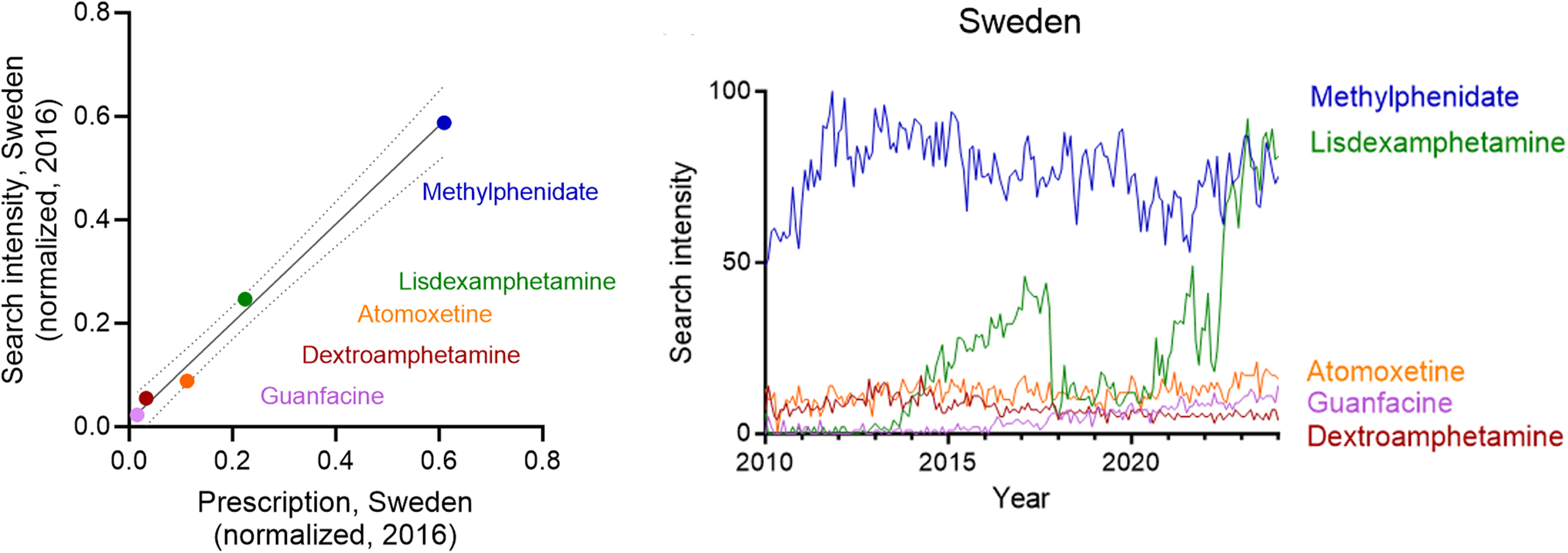
Pharmacological treatment of attention-deficit hyperactivity disorder (ADHD) involves central stimulants and non-stimulant drugs. Because treatment preferences may vary geographically, we hypothesize that prescription data can be estimated from publicly available sources. First, we explore the relevance of internet search trends as proxies for real-life drug prescription patterns. Second, we identify geographical variations in ADHD drug trends over time. Publicly available Google Trends data for five ADHD drugs were analysed for the years 2010–2023. Temporal and spatial patterns were compared within Scandinavia, and the preference for central stimulants over non-stimulant drugs was compared across 17 countries. We find that internet search trends correlate with ADHD drug prescriptions. In the Scandinavian countries, a dominance of methylphenidate is observed, with rising internet search trends over time in Norway and Denmark. Furthermore, interest in lisdexamphetamine, relative to dextroamphetamine and atomoxetine, has increased sharply in recent years in the Scandinavian countries. The search proportion of central stimulants to non-stimulant drugs in Scandinavia ranges from 81% (Denmark) to 93% (Norway). Overall, internet search trends for ADHD drugs mirror reported prescription patterns and identify a dominance of methylphenidate, with an increasing interest in lisdexamphetamine. As such, search trends may serve as a feasible source for identifying geographical drug preferences.
Some individuals experience abnormally persistent and intense symptoms of grief that significantly interfere with daily functioning. This condition has been described using terms such as complicated or prolonged grief and prolonged grief disorder (PGD).
Aims
To identify the availability of evidence addressing a range of policy relevant issues related to grief, bereavement and PGD. In this paper we focus on the availability of evidence from systematic reviews.
Method
We searched 12 databases and the websites of 18 grief- or bereavement-related organisations. Using key characteristics extracted from included reviews, we produced a high-level overview of the available evidence that enabled potential research gaps to be identified.
Results
We identified 212 reviews – 103 focused on people’s experiences of grief/bereavement including service use; 22 reported on PGD prevalence, 42 on PGD risk factors, 37 on factors that influence grief more broadly and 80 on the effectiveness of grief-related interventions. Fifty-five reviews focused on multiple issues of interest. Half of reviews focused on a specific cause/type of death (n = 108). Of these reviews, most focused on three main causes/types of death: a specific health condition or terminal illness (n = 36), perinatal loss (n = 34) and suicide (n = 20).
Conclusions
We identified a large number of reviews, but key evidence gaps exist, particularly in relation to intervention cost-effectiveness and social, organisational or structural-level interventions that are needed for addressing inequities and other modifiable factors that can impair grieving and potentially increase the risk of PGD.
Pyrochlores, general formula A2–mB2X6–wY1–n and cubic Fd$\bar 3$m (Z = 8) symmetry, are oxide and fluoride minerals with a peculiar structure consisting of a framework of corner-linked BX6 octahedra. The framework is arranged such that it forms tunnels parallel to the [110] direction, which are occupied by the A and Y sites at the centre (or in slightly displaced neighbouring positions). Atoms hosted at the tunnel sites are particularly susceptible to ion-exchange processes, especially when these sites are occupied by highly mobile species (e.g. water) or are partially vacant; this is the case for hydropyrochlore and hydrokenopyrochlore from the Lueshe carbonatite, both extensively altered and hydrated due to intense weathering. Their ion-exchange properties are remarkable, making them suitable candidates for Tl+ sequestration from aqueous matrices. This study focuses on the kinetics of the ion-exchange reaction involving monovalent thallium, incorporated by single crystals through progressively longer imbibition experiments in Tl-rich solutions. Structural (single-crystal X-ray diffraction) and chemical (electron microprobe analysis) investigations carried out before and after each imbibition experiment showed that Tl+ is incorporated in the structure at both tunnel sites and tends to order preferentially at A with increasing A:B occupancy ratios. The entry of Tl+ seems to be accompanied by a progressive shift in colour of the crystals (from colourless to dark brown). The incorporation process is relatively quick, as it approaches a saturation limit (~70–75% of the A site occupancy) in, cumulatively, 450 minutes of treatment; longer imbibition experiments (930 minutes) only led to a slight redistribution of electrons among the tunnel sites.
Teaching volumetric modulated arc therapy (VMAT) treatment planning to therapeutic radiography students faces challenges, including time constraints and resource limitations. Gamification, an active learning strategy incorporating game-based elements, may enhance engagement and understanding of VMAT treatment planning.
Methods:
A VMAT treatment planning session was implemented for 15 second-year undergraduate and postgraduate therapeutic radiography students using gamification. Participants were tasked with optimising a VMAT plan for a palliative prostate cancer patient using Eclipse treatment planning software. Students completed pre- and post-session questionnaires assessing perceived understanding and enjoyment. Plans were evaluated against clinical goals, and a leaderboard was used to rank top performers. Thematic analysis was applied to qualitative feedback.
Results:
About 86·7% of participants initially reported a limited understanding of VMAT planning structures. Post-session, all participants reported improved perceived understanding, with 93·3% finding the session beneficial and recommending its inclusion in the programme. While 66·6% enjoyed the gamified approach, technical issues limited individual optimisation time. Qualitative feedback highlighted increased confidence and engagement despite challenges.
Conclusions:
Gamification enhanced student-reported understanding, enjoyment and engagement in VMAT planning. While technical issues affected session efficiency, feedback supports the integration of gamification in treatment planning sessions but should not be overused as its usefulness can wear off.
Assessment of new genotypes in on-farm trials and under different tillage options is a current strategy for in-station experiments to enhance the breeding process and its final output in farmers’ fields, which can help increase productivity and sustainability in variable rainfed conditions. The objectives were to evaluate the agronomic performance of barley genotypes under different tillage systems in farmers’ fields and to provide suggestions to help farmers use resources more efficiently and sustainably for their proper field management. Five barley genotypes including four cultivars (Abider, Sararood1, Nader, Efes-3) and a promising breeding line (Yea168) were tested in three tillage methods, that is, conventional tillage (CT), reduced tillage (RT) and no tillage (NT) in on-farm trials in two locations (Sarabnilofar and Dalahoo) and three cropping seasons (2018–2021). The results revealed high variability in productivity and other studied traits in farmers’ conditions that were significantly affected by genotypes, tillage managements, locations, and years. Barley genotypes, except Efes-3, positively interacted with CT. The highest grain yield was observed in CT conditions (2613 kg/ha), followed by NT (2520 kg/ha) and RT (2470 kg/ha), showing about 5.8% and 3.6% better performance in CT than in RT and NT, respectively. Across locations and years, breeding line Yea168 outperformed all four cultivars in all three tillage systems and should be recommended for cultivation under rainfed conditions. The results of genotype by trait (GT) biplot analysis indicated that the traits relations and traits profiles of genotypes are different among tillage systems and locations. High-yielding genotypes had their own specific traits that resulted in their better performance. Breeding line Yea168, followed by Nader cultivar performed well in Sarabnilofar location, where 1000-kernel weight (TKW), plant height (PLH), number of grains per spike (NGPS), normalised difference vegetation index (NDVI) and spike per square metre (spike/m2) were the most important traits in deciding grain yield in this location, whereas in Dalahoo location, Sararood1 performed well and TKW, SPAD (chlorophyll content), NGPS, and spike/m2 had considerable contributions to grain yield. The findings demonstrated the breeding line Yea168 as the best-performing genotype across tillage systems, making it highly recommended for cultivation in rainfed areas of western Iran.
Contraceptive use among women of reproductive age has increased significantly worldwide. However, little is known about contraceptive use and mental health among women in sub-Saharan African countries.
Aims
This study sought to investigate contraceptive use and self-reported measures of depression and anxiety symptoms among reproductive-age women in Mozambique using the most recent national data.
Method
The study used secondary data from the 2022–2023 Demographic and Health Survey of Mozambique. A total of 6910 (weighted) sexually active women aged 15–49 years were included in this analysis. Anxiety and depression scores were measured using self-report questionnaires. Linear regression analysis was conducted to assess the associations between depression and anxiety and contraceptive use.
Results
The prevalence of contraceptive use was 36.41%. About half of the hormonal contraceptive users (49.38%) were using injectables and 25.99% were using implants. In total, 9.14 and 2.83% of the women had moderate or high scores of self-reported anxiety respectively. Additionally, 5.24 and 5.42% reported moderate or high scores of depressive symptoms respectively. The use of hormonal contraceptives decreased anxiety symptoms by 0.47 units (β = −0.47; 95% CI −0.75 to −0.18; P < 0.001) compared with no contraceptive use. The use of hormonal contraceptives decreased depressive symptoms by 0.75 units (β = −0.75; 95% CI −1.11 to −0.39; P < 0.001) compared with no contraceptive use.
Conclusions
This study has demonstrated a naturalistic association between contraceptive use, particularly hormonal contraceptives, and decreased anxiety and depression among Mozambican women of reproductive age. This likely reflects a complex, bi-directional relationship, the nature and mechanism of which should be investigated in further experimental research.
Modern market economies use competitions to distribute a range of social goods. Some theorists maintain that such competitions ought not to generate winner-takes-all outcomes. But the arguments that have been given against competitions with winner-takes-all outcomes fail to find fault with winner-takes-all outcomes per se (or so I argue). Is there, then, anything wrong with winner-takes-all outcomes? I argue that there is: winner-takes-all outcomes are wrong, in at least most distributive competitions, because they do not give people what they deserve.