To save content items to your account,
please confirm that you agree to abide by our usage policies.
If this is the first time you use this feature, you will be asked to authorise Cambridge Core to connect with your account.
Find out more about saving content to .
To save content items to your Kindle, first ensure no-reply@cambridge.org
is added to your Approved Personal Document E-mail List under your Personal Document Settings
on the Manage Your Content and Devices page of your Amazon account. Then enter the ‘name’ part
of your Kindle email address below.
Find out more about saving to your Kindle.
Note you can select to save to either the @free.kindle.com or @kindle.com variations.
‘@free.kindle.com’ emails are free but can only be saved to your device when it is connected to wi-fi.
‘@kindle.com’ emails can be delivered even when you are not connected to wi-fi, but note that service fees apply.
Many documents are produced over the years of managing assets, particularly those with long lifespans. However, during this time, the assets may deviate from their original as-designed or as-built state. This presents a significant challenge for tasks that occur in later life phases but require precise knowledge of the asset, such as retrofit, where the assets are equipped with new components. For a third party who is neither the original manufacturer nor the operator, obtaining a comprehensive understanding of the asset can be a tedious process, as this requires going through all available but often fragmented information and documents. While common knowledge regarding the domain or general type of asset can be helpful, it is often based on the experiences of engineers and is, therefore, only implicitly available. This article presents a graph-based information management system that complements traditional PLM systems and helps connect fragments by utilizing generic information about assets. To achieve this, techniques from systems engineering and data science are used. The overarching management platform also includes geometric analyses and operations that can be performed with geometric and product information extracted from STEP files. While the management itself is first described generically, it is also later applied to cabin retrofit in aviation. A mock-up of an Airbus A320 is utilized as the case study to demonstrate further how the platform can provide benefits for retrofitting such long-living assets.
This article explores the history of Japan’s municipal electricity regulation. We find that in the early phase of Japanese electrification, rights-of-way and municipal franchises remained undefined compared with these concepts in Western societies. Consequently, Japanese cities started electrification without municipal regulations. Although municipal franchises were introduced to Japan as a regulatory framework in the 1900s, they were tailored to Japan’s political and ideological context. Moreover, the Road Law of 1919 weakened the legal basis for municipal regulation. With the revision of the Electric Utility Law in 1932 and World War II, the decline of municipal regulation became inevitable.
The COVID-19 pandemic has presented multifaceted challenges globally, impacting adolescent health. Among these, food security and nutrition are intertwined closely with mental health outcomes. In Indonesia, with its diverse socio-economic landscape, these interconnections may have been exacerbated by the pandemic. This study investigated the relationship between food security, nutrition and adolescent mental health in Indonesia during COVID-19. Longitudinal data were collected from 511 adolescent boys and girls in 2021–2022 in Gunungkidul district, Yogyakarta. Food security was measured using the Household Food Insecurity Access Scale (HFIAS), and the validated Kessler-10 Psychological Distress Scale (K10) was used to measure adolescent depression. Multivariate linear regression and linear mixed-effects regression were employed to explore associations between these variables, while adjusting for sex, age, pubertal status and household income. Overall, food insecurity score was positively associated with depressive symptoms (β: 0·72, 95 % CI 0·52, 0·92), while BMI z-score was inversely associated (β: −0·31, 95 % CI 0·68, −0·03). We found an increase in strength of association between food insecurity and depressive symptoms over time (moderately food-insecure: β: 1·36 (95 % CI −0·10, 2·83) to 4·63 (95 % CI 2·17, 7·09); severely food-insecure: β: 1·89 (95 % CI 0·36, 3·41) to 3·30 (95 % CI 1·50, 5·10). Enhancing food access, improving nutritional status and providing mental health support are crucial components of adolescent health.
This introduction to the ‘Survey and Speculation’ special issue ‘Empire and Cities’ outlines how this collection came about, summarizes the six contributions and draws general conclusions.
In 2022, the largest ever virgin soil outbreak of Japanese encephalitis (JE) occurred in Australia resulting in 45 reported human cases of JE, with seven fatalities. Japanese encephalitis virus (JEV) was detected in 84 piggeries across Australia. In response, states implemented targeted vaccination programs for those individuals at the highest risk of JEV exposure. A mixed methods approach, including geospatial mapping of JEV vaccine distribution in Queensland, a case series of Queensland human cases and interviews with Queensland Health staff, assessed the JEV vaccination response program. Five notified human cases were reviewed, with three having occupational outdoor risk and local travel-related exposure. Vaccine coverage ranged from 0 to 7.4 doses per 100 people after 12 months of the program. The highest uptake was in southern Queensland, where 95% of the state’s commercial pig population is located. The vaccination program was limited by a heavy reliance on general practitioners, vast geographical distribution of eligible populations, difficulties mobilising and engaging eligible cohorts, and suboptimal One Health collaboration. Population and climate factors make it possible for the virus to become endemic. Targeted vaccination programs remain an important strategy to protect people at the highest risk of exposure, however, program improvements are required to optimize vaccine accessibility.
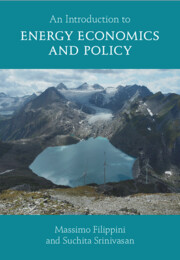
Energy economics and policy are at the heart of current debates regarding climate change and the switch from fossil fuels to renewable forms of energy. They are also crucial in dealing with energy supply and security issues caused by global shocks such as the war in Ukraine. An Introduction to Energy Economics and Policy outlines pressing issues concerning current global energy systems, particularly energy production and use. It presents economic frameworks for valuating policy goals and for understanding the major energy and climate challenges faced by industrialized and developing countries. Integrating insights from behavioural economics into the standard neoclassical approach, particularly the role of behavioural anomalies, this book offers a novel introduction to energy economics and policy and provides a fresh perspective on real-world issues in energy and climate. This title is also available as open access on Cambridge Core.
We are living in an era where global university schemes only offer narrow conceptions of quality, relying too heavily on international ranking systems. This timely book present an alternative perspective on evaluating 'world-class universities', showcasing how eight very different higher education institutions have defined and are pursuing excellence in their own way. Each case study highlights how institutions can align their work with shared values and goals, and strive to uphold these principles in all they do and say. The portraits offer insights into the ways institutions can create cultures of excellence tied to a vision of how to make a difference for their students and society. Their success suggest that policy makers should reward institutions that adopt and strive to fulfil particular educational purposes rather than continuing to perpetuate the status quo. It is essential reading for researchers and students of education research, education policy, and international education reform. This title is also available as Open Access on Cambridge Core.
Combining feminist, materialist, and comparatist approaches, this study examines how French and British women writers working at a transformative time for European literature connected vibrantly to objects as diverse as statues, monuments, diamonds, and hats. In such connections, they manifested their own (often forbidden) embodiment and asserted their élan vital. Interweaving texts by Edgeworth, Staël, Bernardin, Wordsworth, Smith, and Burney, Jillian Heydt-Stevenson posits the concept of belonging with, a generative, embodied experience of the nonhuman that foregrounds the interdependence among things, women, social systems, and justice. Exploring the benefits such embodied experiences offer, this book uncovers an ethical materialism in literature and illuminates how women characters who draw on things can secure rights that laws neither stipulate nor safeguard. In doing so, they-and their texts-transcend dualistic thinking to create positive ecological, personal, and political outcomes. This title is also available as Open Access on Cambridge Core.
This chapter centers on the 1967–1968 “Swedish initiative” in the United Nations that led to the 1972 UN Conference on the Human Environment in Stockholm. The diplomatic initiative, underpinned by Swedish scientific expertise, and the Stockholm Conference’s four-year preparatory period marked the emergence of environmental diplomacy and global environmental governance, as well as the rise of North–South tensions over environment and development. The chapter also explains how the autumn 1967 environmental awakening in Sweden, prompted in part by a best-selling environmental polemic by biochemist Hans Palmstierna and an exposé on acid rain by soil scientist Svante Odén, set the stage for the UN intervention orchestrated by Swedish diplomats Inga Thorsson and Sverker Åström. Also that year, as examined in this chapter, the Global Atmospheric Research Program (GARP) conference, hosted by the Meteorological Institute at Stockholm University, demonstrated Stockholm’s central place and Bert Bolin’s leading role in the growing international coordination of climate science.
In this chapter, we present the major market failures and behavioural anomalies that are relevant to analyse energy and climate issues from an economic point of view. We start with a discussion on positive and negative externalities; next we discuss the public goods and common resource problem, followed by a presentation of the principal–agent and information problems, and then we provide a summary of the role of lack of competition in energy and energy-related markets. An important aspect described in this chapter is the role of behavioural anomalies, such as bounded rationality and bounded willpower. At the end of the chapter, we describe the most important energy and climate policies as well as the concept of sustainable development that should guide policy design. We also discuss issues in developing countries related to the topics discussed in the chapter.
This chapter explores the Member States’ use of EU private international family law in the protection of children with links abroad from abuse or neglect by their family. These measures include rules governing the assumption of jurisdiction over the parental responsibility of a child, including both private and public law measures. The chapter argues that the abused and neglected child was not a central focus when regulating the cross-border family and, as a consequence, legal borders between Member States’ family law systems retain considerable significance for these children. Whilst each Member State has provision in place for public law child protection measures, the methods and approach adopted vary significantly between legal systems, as do the potential substantive outcomes for children. The EU’s private international family law rules are designed to obscure these differences and this has presented difficulties in supporting cross-national cooperation over child protection. The political nature of these decisions has meant that focus on the welfare of the child may consequently be lost.
In this chapter, we first explain what energy economics is and what energy and climate policy mean. We then describe the advantages of energy for society, and the current energy systems and their environmental and economic problems. At the end of the chapter, we discuss the energy transition and the characteristics of the energy systems once the transition has taken place. In the discussions in this chapter, we make note of developing countries.
In this chapter, we first provide a general overview of energy and climate policy goals and their main instruments. We underline the common goals between energy and climate policy, as well as possible conflicts in objectives. In the next part, we illustrate monetary market-based instruments such as pollution taxes, product taxes, and energy taxes, as well as subsidies and pollution permit trading systems. We also discuss, using figures, the implications of behavioural anomalies on the effectiveness of these types of policy instruments. At the end of the chapter, we introduce non-monetary market-based instruments, giving some weight to nudges. At the end of the chapter, we discuss issues in developing countries related to the topics discussed in the chapter.
The novel South London and Maudsley Brain Health Clinic (SLaM BHC) leverages advances in remote consultations and biomarkers to provide a timely, cost-efficient and accurate diagnosis in mild cognitive impairment (MCI).
Aims
To describe the organisation, patient cohort and acceptability of the remote diagnostic and interventional procedures.
Method
We describe the recruitment, consultation set-up, the clinical and biomarker programme, and the two online group interventions for cognitive wellbeing and lifestyle change. We evaluate the acceptability of the remote consultations, lumbar puncture, saliva genotyping, and remote cognitive and functional assessments.
Results
We present the results of the first 68 (mean age 73, 55% female, 43% minoritised ethnicity) of 146 people who enrolled for full remote clinical, cognitive, genetic, cerebrospinal fluid and neuroimaging phenotyping. A total of 86% were very satisfied/satisfied with the remote service. In all, 67% consented to lumbar puncture, and 95% of those were very satisfied, all having no significant complications. A total of 93% found taking saliva genotyping very easy/easy, and 93% found the cognitive assessments instructions clear. In all, 98% were satisfied with the Cognitive Wellbeing Group, and 90% of goals were achieved in the Lifestyle Intervention Group.
Conclusions
The SLaM BHC provides a highly acceptable and safe clinical model for remote assessments and lumbar punctures in a representative, ethnically diverse population. This allows early and accurate diagnosis of Alzheimer's disease, differentiation from other MCI causes and targets modifiable risk factors. This is crucial for future disease modification, ensuring equitable access to research, and provides precise, timely and cost-efficient diagnoses in UK mental health services.
The standards of the Inter-American Court of Human Rights on amnesties and pardons in mass atrocity cases have been influential in Latin America and beyond. In turn, discussions about possible transitional justice mechanisms related to the Russo-Ukrainian war have involved issues of amnesty and pardon. However, the dicta of the Inter-American Court of Human Rights do not formally bind Ukraine and Russia. By connecting the two (semi-)peripheries of international law – namely, Latin America and Eastern Europe – the present article examines whether and to what extent the jurisprudence in question can shed light on legal and policy solutions for addressing the amnesty and pardon challenges posed by the Minsk agreements, domestic developments in Ukraine and Russia, and a potential future peace accord.
This chapter tells the story of how a small Stockholm-based team of researchers developed concepts and ideas from a maturing Earth system science into the policy-relevant Planetary Boundaries (PB) framework, thus contributing seminally to an emerging twenty-first century sustainability-focused worldview. Prepared in gradually widening interdisciplinary discussions, including at the 2007 Tällberg Forum where many of the 29 co-authors convened, the first PB article was published in Nature in 2009. It presented critical boundaries for nine Earth System properties that were either already transgressed or threatening to be transgressed in the near future through anthropogenic impact. The chapter investigates the roots of the arguments and lines of thought behind the framework. It also compares the PB framework and thinking with the line of work pursued by the Club of Rome-commissioned Limits to Growth report in 1972, and argues that while Limits to Growth (LTG) stressed the finite nature of resources, the PB framework focused on the overall planetary effects of the expanding human enterprise. This allows in more dynamic ways for human and societal creativity to deal with challenges while staying inside the boundaries.
In this chapter I consider two controversies over the taxation of urban land at the twilight of Ecuador’s Citizen’s Revolution. The first is the campaign by the Pueblo Kitu Kara, an organisation representing Indigenous peoples in Quito, for recognition of communal property and territory, together with its constitutionally guaranteed freedom from taxation. The second was a highly controversial (and short-lived) tax on capital gains from real estate, promoted by the post-neoliberal president Rafael Correa as a counter to speculation, corruption, and unearned gains from the land market. Taken together, these conflicts illustrate the historically limited reach of hegemonic processes of state formation in Ecuador, and how those limits also open up opportunities for introducing and (sometimes) sustaining institutions distinct from the normative forms of the capitalist state, even as they present marked political challenges for transformative state projects. The trajectory of both controversies also highlights the contradictions and dangers of a top-down and technocratic approach to social and economic transformation in a polity shaped by profound inequalities of class and coloniality.