To save content items to your account,
please confirm that you agree to abide by our usage policies.
If this is the first time you use this feature, you will be asked to authorise Cambridge Core to connect with your account.
Find out more about saving content to .
To save content items to your Kindle, first ensure no-reply@cambridge.org
is added to your Approved Personal Document E-mail List under your Personal Document Settings
on the Manage Your Content and Devices page of your Amazon account. Then enter the ‘name’ part
of your Kindle email address below.
Find out more about saving to your Kindle.
Note you can select to save to either the @free.kindle.com or @kindle.com variations.
‘@free.kindle.com’ emails are free but can only be saved to your device when it is connected to wi-fi.
‘@kindle.com’ emails can be delivered even when you are not connected to wi-fi, but note that service fees apply.
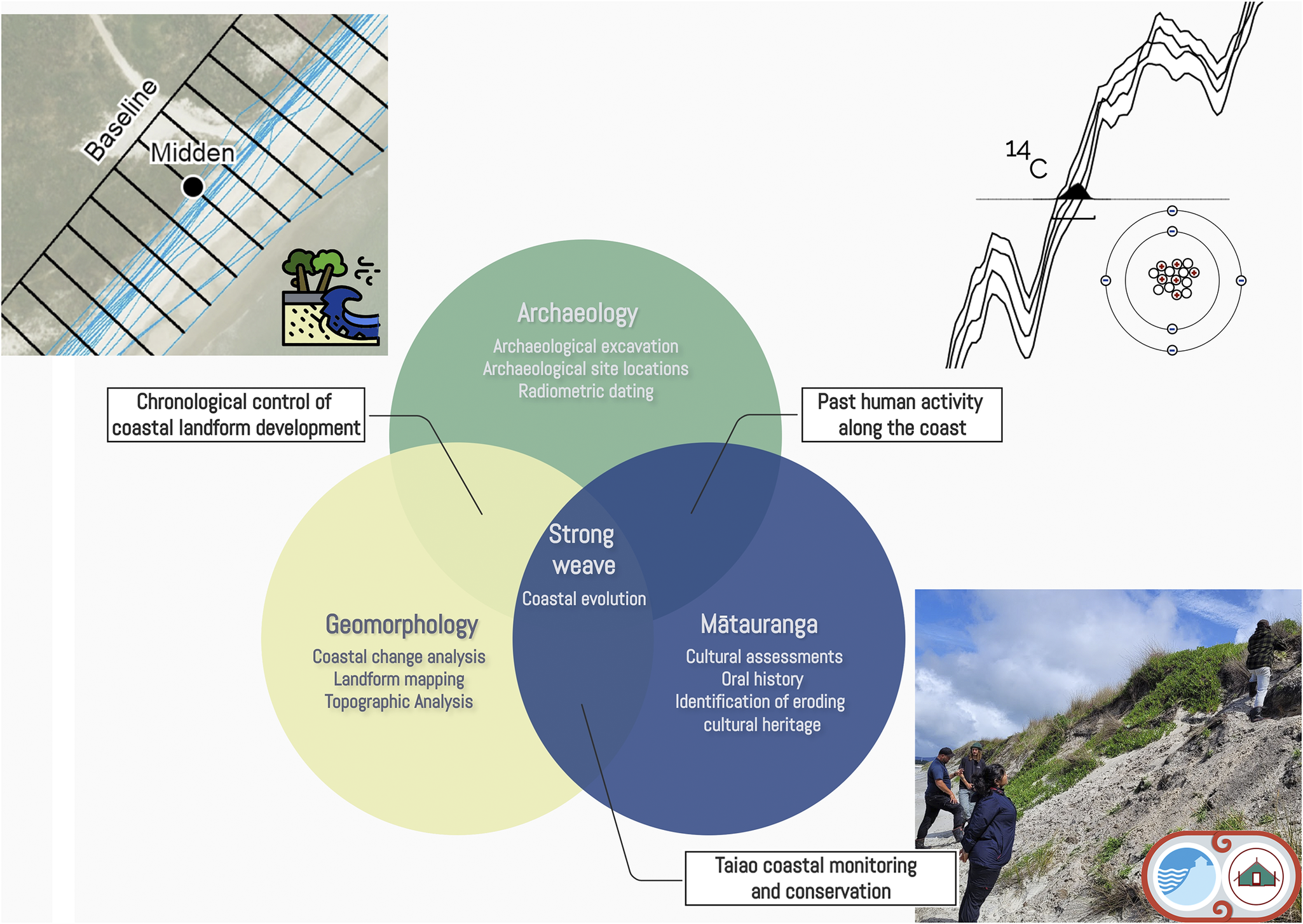
Coastal landforms and associated archaeological records are at risk of erosion from a combination of rising sea levels and increasingly frequent high-intensity storms. Improved understanding of this risk can be gained by braiding archaeological and geomorphological methodologies with Indigenous knowledge.1 In this article, archaeological, geomorphological and mātauranga (a form of Indigenous knowledge) are used to analyse a prograded Holocene foredune barrier in northern Aotearoa/New Zealand. Anthropogenic deposits within dune stratigraphy are radiocarbon-dated and used as chronological markers to constrain coastal evolution, alongside geomorphological analyses of topographic data, historical aerial photographs and satellite imagery. These investigations revealed that the barrier is eroding at a rate of 0.45 m/year. A midden in the foredune, which has been radiocarbon dated to 224–270 B.P. (95% Confidence), has been exposed by coastal erosion, confirming that the barrier is in the most eroded state it has been within the past ~300 years. Vertical stratigraphy reveals the presence of midden and palaeosol deposits capped by dune sand deposits in the foredune, indicating that vertical accretion of the foredune continued over the last ~200 years, despite the barrier now being in an eroding state. Mātauranga played a vital role in this project, as it was the coastal taiao (environmental) monitoring unit of Patuharakeke (a Māori sub-tribe) that discovered the midden. The ecological mātauranga shared also played a vital role in this project, adding experiential evidence to empirical observations. The work of local Indigenous groups, like Patuharakeke, demonstrates the active use of mātauranga, woven with Western science methods to preserve or capture the knowledge contained within archaeological sites at risk of being lost to coastal erosion. In this study, we present a method for weaving mātauranga, geomorphological and archaeological approaches to gain a deeper understanding of coastal landscape development.
To investigate the co-existence of single and multiple anthropometric failures among children using an extended composite index of anthropometric failure (ECIAF). This study aims to elucidate the complex interplay between child-specific and maternal factors, highlighting the multifaceted nature of childhood malnutrition.
Design:
A multicentre cross-sectional study as part of the BESLEN project
Setting:
Mother-Child Education Centre in the Pendik district of Istanbul, Türkiye
Participants:
1283 children (preschool children, n 822, school-aged children, n 462) and 1044 mothers
Results:
Almost 1/3 of the children included in the study had an anthropometric failure as determined by ECIAF. Weight excess was the leading cause of the total anthropometric failures, most of which were observed to be slightly higher in boys, except for stunting only and co-occurrence of stunting and underweight. Among the mother-related factors, including higher BMI and waist circumference, low maternal age at delivery, low number of children in the household and being a single parent may be considered predisposing factors to any phenomenon of childhood malnutrition. Among child-related factors, birth weight being ≥ 3500 g had a higher risk for ECIAF failure, and children aged ≥ 60 months were more likely to experience stunting and underweight, while those < 60 months had a higher prevalence of weight excess.
Conclusions:
The co-existence of stunting and overweight, the occurrence of weight excess in one in three stunted children and the high risk of central obesity are public health concerns. Also, ECIAF can better assess all aspects of childhood malnutrition than conventional measures.
We study the tearing instability of a current sheet in a relativistic pair plasma with a power-law distribution function. We first estimate the growth rate analytically and then confirm the analytical results by solving numerically the dispersion equation, taking into account all exact particle trajectories within the reconnecting layer. We found that the instability is suppressed when the particle spectrum becomes harder.
Public procurement is a fundamental aspect of public administration. Its vast size makes its oversight and control very challenging, especially in countries where resources for these activities are limited. To support decisions and operations at public procurement oversight agencies, we developed and delivered VigIA, a data-based tool with two main components: (i) machine learning models to detect inefficiencies measured as cost overruns and delivery delays, and (ii) risk indices to detect irregularities in the procurement process. These two components cover complementary aspects of the procurement process, considering both active and passive waste, and help the oversight agencies to prioritize investigations and allocate resources. We show how the models developed shed light on specific features of the contracts to be considered and how their values signal red flags. We also highlight how these values change when the analysis focuses on specific contract types or on information available for early detection. Moreover, the models and indices developed only make use of open data and target variables generated by the procurement processes themselves, making them ideal to support continuous decisions at overseeing agencies.
Italian ryegrass [Lolium perenne L. ssp. multiflorum (Lam.) Husnot] has become a major annual weed in wheat (Triticum aestivum L.) production systems in the inland Pacific Northwest. With large genetic variability and abundant seed production, L. perenne ssp. multiflorum has developed globally 74 documented cases of herbicide resistance covering 8 different mechanisms of action. Harvest weed seed control (HWSC) systems were introduced in Australia in response to the widespread evolution of multiple herbicide resistance in rigid ryegrass (Lolium rigidum Gaudin) and wild radish (Raphanus raphanistrum L.). The efficacy of these systems for any given weed species is directly related to the proportion of total seed retained by that species at harvest time. From 2017 to 2020, ten L. perenne ssp. multiflorum plants were collected from three different slope aspects at each location in Washington, USA. Collections were initiated in each field when it was visually apparent that seed fill was nearly complete, and seed shatter had not yet occurred. Collection continued at near-weekly intervals until the fields were harvested. The number of filled florets on a spikelet was used to assess the degree of seed shatter over time. Seed shatter at harvest was 67% of the total number of florets on each spikelet. Seed shatter was closely aligned with wheat kernel development in both spring and winter wheat. The high percentage of L. perenne ssp. multiflorum seeds that are shattered by harvest may make HWSC less effective than for L. rigidum in Australia; however, seeds with the greatest biomass tend to not shatter before harvest, which may increase the efficacy of HWSC for managing the soil seedbank. Strategies like planting earlier-maturing wheat cultivars could help HWSC be more effective by having wheat harvest begin earlier, when more L. perenne ssp. multiflorum seeds are still on the mother plant.
Furrow-irrigated rice (Oryza sativa L.) hectares are increasing in the Midsouth. The lack of sustained flooding creates a favorable environment for weed emergence and persistence, which makes Palmer amaranth (Amaranthus palmeri S. Watson) difficult to control throughout the growing season. The negative yield impacts associated with season-long A. palmeri interference in corn (Zea mays L.), cotton (Gossypium hirsutum L.), and soybean [Glycine max (L.) Merr.] have been evaluated. However, there is limited knowledge of the weed’s ability to influence rice grain yield. Research was initiated in 2022 and 2023 to determine the effect of A. palmeri time of emergence relative to rice on weed seed production and grain yield. Cotyledon-stage A. palmeri plants were marked every 7 d, beginning 1 wk before rice emergence through 4 wk after rice emergence. Amaranthus palmeri seed production decreased exponentially as emergence timing was delayed relative to rice, and seed production increased by 447 seed plant−1 for every 1-g increase in weed biomass. Without rice competition and from the earliest emergence timing, A. palmeri produced 540,000 seeds plant−1. Amaranthus palmeri that emerged 1 wk before the crop had the greatest spatial influence on rice, with grain yield loss of 5% and 50% at a distance of 1.4 m and 0.40 m from the weed, respectively. As A. palmeri emergence was delayed, the area of influence decreased. However, A. palmeri plants emerging 3.5 wk after rice emergence still negatively affected grain yield and produced sufficient seed to replenish the soil seedbank, potentially impacting long-term crop management decisions. These results show that the time of A. palmeri emergence is a crucial factor influencing rice grain yield and weed seed production, which can be used to determine the consequences of escapes in rice.
This article discusses communicative strategies enacted by participants of Faveladoc, a documentary-making workshop that the first author attended in 2021. It examines how the participants, who are residents from Rio de Janeiro's Complexo do Alemão favelas, grappled with a shootout that broke out during a meeting. Based on textual analysis and our ongoing dialogue with participants, we unpack their semiotic and rhetorical work of avoiding despair by reorienting knowledge, building socialites, and pursuing resources. They mobilized generic resources (i.e. discursive and listening genres), pragmatic strategies (e.g. collective singling out of the area of risk), and metapragmatic moves (e.g. contextual recourse to humor) to assess security. Through further enacting a distributed embodiment—collective commitments beyond a bounded body—participants facilitated hope as a modality of action. Finally, their recourse to humor in spite of potential danger reflected an enactment of communal care that we call a poetics of hope. (Sociolinguistics of hope, favelas, distributed embodiment, generic resources, humor).
Tetflupyrolimet (Dodhylex™ Active, FMC Corporation) is a novel herbicide inhibiting de novo pyrimidine biosynthesis that controls grassy weeds preemergence in rice (Oryza sativa L.) production. Field trials were conducted from 2021 to 2024 to evaluate turfgrass tolerance to tetflupyrolimet applications for annual bluegrass (Poa annua L.) and smooth crabgrass [Digitaria ischaemum (Schreb.) Schreb. ex Muhl.] control. Tolerance was evaluated on seven turfgrass species, including creeping bentgrass (Agrostis stolonifera L.), Kentucky bluegrass (Poa pratensis L.), tall fescue [Schedonorus arundinaceus (Schreb.) Dumort.; syn.: Festuca arundinacea Schreb.], hybrid bermudagrass [Cynodon dactylon (L.) Pers. × Cynodon transvaalensis Burtt-Davy], and manilagrass [Zoysia matrella (L.) Merr.] at various mowing heights ranging from 3.8 to 12.5 mm. Separate experiments were conducted on each turfgrass species to evaluate tolerance in both fall and spring. Tetflupyrolimet was applied at rates of 0, 25, 50, 100, 200, 400, 800, 1600, 3200, or 6400 g ai ha−1. No injury was observed on any warm-season turfgrass species in either season, whereas cool-season grass tolerance varied among species each season; however, cool-season turfgrass tolerance for all species was greater in spring than fall. While efficacy of tetflupyrolimet (400 g ha−1) for preemergence D. ischaemum control varied among years, mixtures of tetflupyrolimet (400 g ha−1), pyroxasulfone (128 g ai ha−1), and rimsulfuron (35 g ai ha−1) applied preemergence or early postemergence effectively controlled multiple-resistant P. annua in both seasons. Overall, these findings highlight that warm-season turfgrasses are highly tolerant of tetflupyrolimet applications for P. annua or D. ischaemum control.
We aimed to explore participant perspectives on social prescribing (SP) for mental health and well-being and the acceptability of community pharmacists (CP) as members of SP pathways that support people with mild to moderate depression and anxiety.
Background:
SP aims to support people with poor health related to socio-demographic determinants. Positive effects of SP on self-belief, mood, well-being, and health are well documented, including a return to work for long-term unemployed.
Methods:
The study was set in a city in southwest England with diverse cultural and socio-demographics. We recruited SP stakeholders, including CP, to either one of 17 interviews or a focus group with nine members of the public.
Findings:
An inductive iterative approach to thematic analysis produced four superordinate themes: (1) offering choice a non-pharmacological option, (2) supporting pharmacy communities – ‘it is an extension of what we do’, (3) stakeholder perspectives – pharmacists are very busy and their expertise unknown by some, and (4) potential for pharmacy in primary care.
Stakeholders viewed CP as local to and accessible by their community. Pharmacists perceived referral to SP services as part of their current role. General practitioner participants considered pharmacy involvement could reduce their workload and expand the primary healthcare team. Importantly, general practitioners and CP viewed SP as a non-pharmacological alternative to prescribing unnecessary antidepressants and reduce associated adverse effects. All participants voiced concerns about pharmacy dispensing busyness as a potential barrier to involvement and pharmacists requesting mental health training updates.
Key findings suggest CP offer a potential alternative to the general practitioner for people with mild to moderate depression and anxiety seeking access to support and health information. However, CP need appropriately commissioned and funded involvement in SP, including backfill for ongoing dispensing, medicines optimization, and mental health first aid training.
We propose a physics-constrained convolutional neural network (PC-CNN) to solve two types of inverse problems in partial differential equations (PDEs), which are nonlinear and vary both in space and time. In the first inverse problem, we are given data that is offset by spatially varying systematic error (i.e., the bias, also known as the epistemic uncertainty). The task is to uncover the true state, which is the solution of the PDE, from the biased data. In the second inverse problem, we are given sparse information on the solution of a PDE. The task is to reconstruct the solution in space with high resolution. First, we present the PC-CNN, which constrains the PDE with a time-windowing scheme to handle sequential data. Second, we analyze the performance of the PC-CNN to uncover solutions from biased data. We analyze both linear and nonlinear convection-diffusion equations, and the Navier–Stokes equations, which govern the spatiotemporally chaotic dynamics of turbulent flows. We find that the PC-CNN correctly recovers the true solution for a variety of biases, which are parameterized as non-convex functions. Third, we analyze the performance of the PC-CNN for reconstructing solutions from sparse information for the turbulent flow. We reconstruct the spatiotemporal chaotic solution on a high-resolution grid from only 1% of the information contained in it. For both tasks, we further analyze the Navier–Stokes solutions. We find that the inferred solutions have a physical spectral energy content, whereas traditional methods, such as interpolation, do not. This work opens opportunities for solving inverse problems with partial differential equations.
This study examines the recent proliferation of manslaughter charges and subsequent prosecutions brought against people who have shared, sold, or provided drugs that have led to overdose death in Canada. It presents a documentary analysis of news media coverage, court decisions, and Access-to-Information and Freedom-of-Information requests of materials from criminal legal institutions. The analysis finds that the vast majority of those who face manslaughter charges are engaged in the lowest tiers of the drug trade, are themselves people who use drugs, and are often intimately known to the deceased. Messaging by police, prosecutors and the courts mobilize the overdose crisis as rationale for these charges and prosecutions, positioning them as a form of redress to impacted communities. This phenomenon illustrates how punitive criminal legal responses to the overdose crisis have deepened alongside the retreat of criminal law in other circumstances, contradicting claims of a therapeutic turn in Canadian drug policies.
Extant literature reveals how patients of marginalized social identities, socioeconomic status (SES), and medical experiences – especially patients of color and older adults – are underrepresented in cancer clinical trials (CCTs). Emerging evidence increasingly indicates CCT underrepresentation among patients of lower SES or rural origin, sexual and gender minorities, and patients with comorbid disability. This review applies an intersectional perspective to characterizing CCT representativeness across race and ethnicity, age, sexual and gender identity, SES, and disability. Four databases were systematically queried for articles addressing CCT participation inequities across these marginalizing indicators, using the Preferred Reporting Items for Systematic Reviews and Meta-Analyses (PRISMA) guidelines. One hundred one articles were included in a qualitative evaluation of CCT representativeness within each target population in the context of their intersectional impacts on participation. Findings corroborate strong evidence of CCT underrepresentation among patients of color, older age, lower SES, rural origin, and comorbid disabling conditions while highlighting systemic limitations in data available to characterize representativeness. Results emphasize how observed inequities interactively manifest through the compounding effects of minoritized social identity, inequitable economic conditions, and marginalizing medical experiences. Recommendations are discussed to more accurately quantify CCT participation inequities across underserved cancer populations and understand their underpinning mechanisms.
This systemwide quality improvement project examined whether a bundle of antimicrobial stewardship interventions reduced the proportion of inappropriate antibiotic prescriptions in ambulatory encounters for adults with acute uncomplicated bronchitis. There was an overall reduction in the proportion of inappropriate prescriptions from pre- to postinterventions (44.9%–32.5% [P < 0.001]).
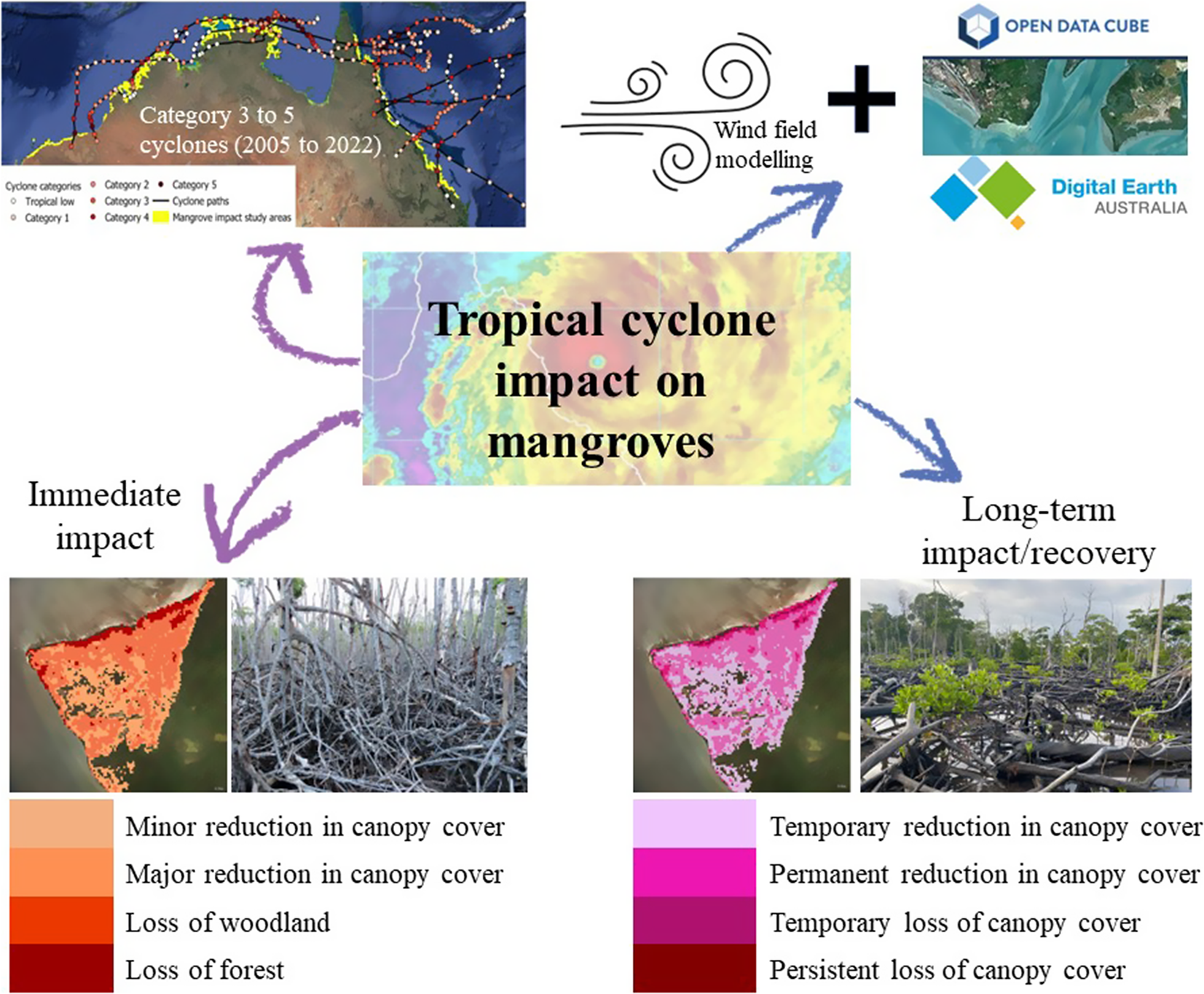
Tropical cyclones can significantly impact mangrove forests, with some recovering rapidly, whilst others may change permanently. Inconsistent approaches to quantifying these impacts limit the capacity to identify patterns of damage and recovery across landscapes and cyclone categories. Understanding these patterns is critical as the changing frequency and intensity of cyclones and compounding effects of climate change, particularly sea-level rise, threaten mangroves and their ecosystem services. Improvements in Earth observation data, particularly satellite-based sensors and datacube environments, have enhanced capacity to classify time-series data and advanced landscape monitoring. Using the Landsat archive within Digital Earth Australia to monitor annual changes in canopy cover and extent, this study aims to quantify and classify immediate and long-term impacts of category 3–5 cyclones for mangroves in Australia. Closed canopy mangrove forests experienced the greatest immediate impact (loss of canopy cover). Most immediate impacts were minor, implying limited immediate mortality. Impacts varied spatially, reflecting proximity to exposed coastlines, cyclone track and forest structure (height, density, condition and species). Recovery was evident across all cyclones, although some areas exhibited permanent damage. Understanding the impacts and characteristics of vulnerable and resilient forests is crucial for managers tasked with protecting mangroves and their services as the climate changes.
We study the question of $\mathcal {L}_{\mathrm {ring}}$-definability of non-trivial henselian valuation rings. Building on previous work of Jahnke and Koenigsmann, we provide a characterization of henselian fields that admit a non-trivial definable henselian valuation. In particular, we treat the cases where the canonical henselian valuation has positive residue characteristic, using techniques from the model theory and algebra of tame fields.
Urban communities rely on built utility infrastructures as critical lifelines that provide essential services such as water, gas, and power, to sustain modern socioeconomic systems. These infrastructures consist of underground and surface-level assets that are operated and geo-distributed over large regions where continuous monitoring for anomalies is required but challenging to implement. This article addresses the problem of deploying heterogeneous Internet of Things sensors in these networks to support future decision-support tasks, for example, anomaly detection, source identification, and mitigation. We use stormwater as a driving use case; these systems are responsible for drainage and flood control, but act as conduits that can carry contaminants to the receiving waters. Challenges toward effective monitoring include the transient and random nature of the pollution incidents, the scarcity of historical data, the complexity of the system, and technological limitations for real-time monitoring. We design a SemanTics-aware sEnsor Placement framework (STEP) to capture pollution incidents using structural, behavioral, and semantic aspects of the infrastructure. We leverage historical data to inform our system with new, credible instances of potential anomalies. Several key topological and empirical network properties are used in proposing candidate deployments that optimize the balance between multiple objectives. We also explore the quality of anomaly representation in the network through new perspectives, and provide techniques to enhance the realism of the anomalies considered in a network. We evaluate STEP on six real-world stormwater networks in Southern California, USA, which shows its efficacy in monitoring areas of interest over other baseline methods.
Many documents are produced over the years of managing assets, particularly those with long lifespans. However, during this time, the assets may deviate from their original as-designed or as-built state. This presents a significant challenge for tasks that occur in later life phases but require precise knowledge of the asset, such as retrofit, where the assets are equipped with new components. For a third party who is neither the original manufacturer nor the operator, obtaining a comprehensive understanding of the asset can be a tedious process, as this requires going through all available but often fragmented information and documents. While common knowledge regarding the domain or general type of asset can be helpful, it is often based on the experiences of engineers and is, therefore, only implicitly available. This article presents a graph-based information management system that complements traditional PLM systems and helps connect fragments by utilizing generic information about assets. To achieve this, techniques from systems engineering and data science are used. The overarching management platform also includes geometric analyses and operations that can be performed with geometric and product information extracted from STEP files. While the management itself is first described generically, it is also later applied to cabin retrofit in aviation. A mock-up of an Airbus A320 is utilized as the case study to demonstrate further how the platform can provide benefits for retrofitting such long-living assets.
This article explores the history of Japan’s municipal electricity regulation. We find that in the early phase of Japanese electrification, rights-of-way and municipal franchises remained undefined compared with these concepts in Western societies. Consequently, Japanese cities started electrification without municipal regulations. Although municipal franchises were introduced to Japan as a regulatory framework in the 1900s, they were tailored to Japan’s political and ideological context. Moreover, the Road Law of 1919 weakened the legal basis for municipal regulation. With the revision of the Electric Utility Law in 1932 and World War II, the decline of municipal regulation became inevitable.
The COVID-19 pandemic has presented multifaceted challenges globally, impacting adolescent health. Among these, food security and nutrition are intertwined closely with mental health outcomes. In Indonesia, with its diverse socio-economic landscape, these interconnections may have been exacerbated by the pandemic. This study investigated the relationship between food security, nutrition and adolescent mental health in Indonesia during COVID-19. Longitudinal data were collected from 511 adolescent boys and girls in 2021–2022 in Gunungkidul district, Yogyakarta. Food security was measured using the Household Food Insecurity Access Scale (HFIAS), and the validated Kessler-10 Psychological Distress Scale (K10) was used to measure adolescent depression. Multivariate linear regression and linear mixed-effects regression were employed to explore associations between these variables, while adjusting for sex, age, pubertal status and household income. Overall, food insecurity score was positively associated with depressive symptoms (β: 0·72, 95 % CI 0·52, 0·92), while BMI z-score was inversely associated (β: −0·31, 95 % CI 0·68, −0·03). We found an increase in strength of association between food insecurity and depressive symptoms over time (moderately food-insecure: β: 1·36 (95 % CI −0·10, 2·83) to 4·63 (95 % CI 2·17, 7·09); severely food-insecure: β: 1·89 (95 % CI 0·36, 3·41) to 3·30 (95 % CI 1·50, 5·10). Enhancing food access, improving nutritional status and providing mental health support are crucial components of adolescent health.
This introduction to the ‘Survey and Speculation’ special issue ‘Empire and Cities’ outlines how this collection came about, summarizes the six contributions and draws general conclusions.