Refine listing
Actions for selected content:
142574 results in Open Access
The boundary layer instability beneath internal solitary waves and its sensitivity to vortex wakes
-
- Journal:
- Journal of Fluid Mechanics / Volume 990 / 10 July 2024
- Published online by Cambridge University Press:
- 14 August 2024, A18
-
- Article
-
- You have access
- Open access
- HTML
- Export citation
-
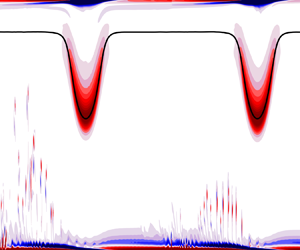
We investigated the stability of the bottom boundary layer (BBL) beneath periodic internal solitary waves (ISWs) of depression over a flat bottom through two-dimensional direct numerical simulations. We explored the convective versus absolute/global nature of the BBL instability in response to changes in Reynolds number, and the sensitivity of the instability to seeding noise in the front of the ISW – spanning laboratory to geophysical scales. The BBL was laminar at $Re_{ISW}=90$ and convectively unstable at $Re_{ISW}=300$. At laboratory-scale $Re_{ISW}=300$, the convective wave packet was periodically amplified by each successive ISW, until vortex shedding occurred. The associated noise-amplification behaviour potentially explains the discrepancies of the critical $Re_{ISW}$ between the lock–release laboratory experiments and our Dubreil–Jacotin–Long-initialized numerical simulations as the result of the difference in background noise. Instability energy decreased under the front shoulder of the ISW, analogous to flow relaminarization under a favourable pressure gradient. At geophysical-scale $Re_{ISW}=900$, the BBL was initially convectively unstable, and then the instability tracked with the ISW, appearing phenomenologically similar to a global instability. The simulated initial convective instability at both $Re_{ISW}=300$ and $Re_{ISW}=900$ is in agreement with local linear stability analysis which predicts that the instability group speed is always lower than the ISW celerity. Increased free stream perturbations in front of the ISW and larger $Re_{ISW}$ shift the location of vortex shedding (and enhanced bed shear stress) beneath the wave, closer to the ISW trough, thereby potentially changing the location of maximum sediment resuspension, in agreement with field observations at higher $Re_{ISW}$.


Spiritual care interventions for palliative care patients: A scoping review
-
- Journal:
- Palliative & Supportive Care / Volume 22 / Issue 5 / October 2024
- Published online by Cambridge University Press:
- 13 August 2024, pp. 1449-1468
-
- Article
-
- You have access
- Open access
- HTML
- Export citation
Palliative and end-of-life care practices for critically ill patients and their families in a peri-intensive care setting: A protocol for an umbrella review – CORRIGENDUM
-
- Journal:
- Palliative & Supportive Care / Volume 22 / Issue 5 / October 2024
- Published online by Cambridge University Press:
- 13 August 2024, p. 1426
-
- Article
-
- You have access
- Open access
- HTML
- Export citation
Nutrition environments in early childhood education: do they align with best practice? – ERRATUM
-
- Journal:
- Public Health Nutrition / Volume 27 / Issue 1 / 2024
- Published online by Cambridge University Press:
- 13 August 2024, e154
-
- Article
-
- You have access
- Open access
- HTML
- Export citation
On a similarity solution for lock-release gravity currents affected by slope, drag and entrainment
-
- Journal:
- Journal of Fluid Mechanics / Volume 990 / 10 July 2024
- Published online by Cambridge University Press:
- 13 August 2024, R3
-
- Article
-
- You have access
- Open access
- HTML
- Export citation
-
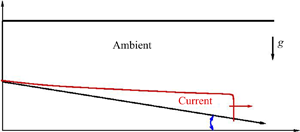
We consider the long-time propagation of a Boussinesq inertia–buoyancy (large-Reynolds- number) gravity current released from a lock over a downslope of angle $\gamma$, affected by entrainment and drag. We show that the shallow-water (depth-averaged) equations with a Benjamin-type front-jump condition admit a similarity solution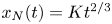 $x_N(t) = K t^{2/3}$ while $h, \phi, u$ change like $t$ to the power of $2/3, -4/3, -1/3$, respectively; here $x_N, h, \phi, u$ and $t$ are the position of the nose (distance from backwall), thickness, concentration of dense fluid, velocity and time, respectively, and K is a constant. Assuming that $\gamma$ and the coefficients of entrainment and drag are constant, we derive an analytical exact solution for the similarity profiles and show that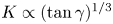 $K \propto (\tan \gamma )^{1/3}$; the driving of the slope is balanced by entrainment and/or drag. The predicted $t^{2/3}$ propagation is in agreement with previously published experimental data but a conclusive quantitative assessment of the present theory cannot be performed due to various uncertainties (discussed in the paper) that must be resolved by future work.


Elaboration and outlook for metal hydride applications in future hydrogen-powered aviation
- Part of
-
- Journal:
- The Aeronautical Journal / Volume 128 / Issue 1325 / July 2024
- Published online by Cambridge University Press:
- 13 August 2024, pp. 1501-1531
-
- Article
-
- You have access
- Open access
- HTML
- Export citation
Investigation on elastomer behaviour when exposed to conventional and sustainable aviation fuels
- Part of
-
- Journal:
- The Aeronautical Journal / Volume 128 / Issue 1325 / July 2024
- Published online by Cambridge University Press:
- 13 August 2024, pp. 1485-1500
-
- Article
-
- You have access
- Open access
- HTML
- Export citation
Legal changes: ecosystem health and the redefinition of sustainability in the Green Deal
-
- Journal:
- European Law Open / Volume 3 / Issue 1 / March 2024
- Published online by Cambridge University Press:
- 12 August 2024, pp. 190-198
-
- Article
-
- You have access
- Open access
- HTML
- Export citation
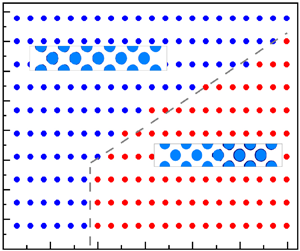
Pore-scale study of CO2 desublimation and sublimation in a packed bed during cryogenic carbon capture
-
- Journal:
- Journal of Fluid Mechanics / Volume 990 / 10 July 2024
- Published online by Cambridge University Press:
- 12 August 2024, A6
-
- Article
-
- You have access
- Open access
- HTML
- Export citation
-
Cryogenic carbon capture (CCC) is an innovative technology to desublimate $\text {CO}_2$ out of industrial flue gases. A comprehensive understanding of $\text {CO}_2$ desublimation and sublimation is essential for widespread application of CCC, which is highly challenging due to the complex physics behind. In this work, a lattice Boltzmann (LB) model is proposed to study $\text {CO}_2$ desublimation and sublimation for different operating conditions, including the bed temperature (subcooling degree $\Delta T_s$), gas feed rate (Péclet number $Pe $) and bed porosity ( $\psi$). The $\text {CO}_2$ desublimation and sublimation properties are reproduced. Interactions between convective $\text {CO}_2$ supply and desublimation/sublimation intensity are analysed. In the single-grain case, $Pe $ is suggested to exceed a critical value $Pe _c$ at each $\Delta T_s$ to avoid the convection-limited regime. Beyond $Pe _c$, the $\text {CO}_2$ capture rate ( $v_c$) grows monotonically with $\Delta T_s$, indicating a desublimation-limited regime. In the packed bed case, multiple grains render the convective $\text {CO}_2$ supply insufficient and make CCC operate under the convection-limited mechanism. Besides, in small- $\Delta T_s$ and high- $Pe $ tests, $\text {CO}_2$ desublimation becomes insufficient compared with convective $\text {CO}_2$ supply, thus introducing the desublimation-limited regime with severe $\text {CO}_2$ capture capacity loss ( $\eta _d$). Moreover, large $\psi$ enhances gas mobility while decreasing cold grain volume. A moderate porosity $\psi _c$ is recommended for improving the $\text {CO}_2$ capture performance. By analysing $v_c$ and $\eta _d$, regime diagrams are proposed in $\Delta T_s$– $Pe $ space to show distributions of convection-limited and desublimation-limited regimes, thus suggesting optimal conditions for efficient $\text {CO}_2$ capture. This work develops a viable LB model to examine CCC under extensive operating conditions, contributing to facilitating its application.


The legal nature of market neutrality in the euro area’s monetary policy
-
- Journal:
- European Law Open / Volume 3 / Issue 1 / March 2024
- Published online by Cambridge University Press:
- 12 August 2024, pp. 7-49
-
- Article
-
- You have access
- Open access
- HTML
- Export citation
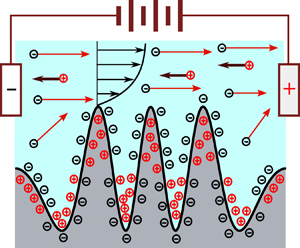
Generalizing electroosmotic-flow predictions over charge-modulated periodic topographies: tuneable far-field effects
-
- Journal:
- Journal of Fluid Mechanics / Volume 990 / 10 July 2024
- Published online by Cambridge University Press:
- 12 August 2024, A1
-
- Article
-
- You have access
- Open access
- HTML
- Export citation
Carbon removals, ecosystems and the European Green Deal
-
- Journal:
- European Law Open / Volume 3 / Issue 1 / March 2024
- Published online by Cambridge University Press:
- 12 August 2024, pp. 199-208
-
- Article
-
- You have access
- Open access
- HTML
- Export citation
Transparency materialised: how registers can regulate access to documents?
-
- Journal:
- European Law Open / Volume 3 / Issue 1 / March 2024
- Published online by Cambridge University Press:
- 12 August 2024, pp. 111-131
-
- Article
-
- You have access
- Open access
- HTML
- Export citation
Thermodynamically consistent diffuse-interface mixture models of incompressible multicomponent fluids
-
- Journal:
- Journal of Fluid Mechanics / Volume 990 / 10 July 2024
- Published online by Cambridge University Press:
- 12 August 2024, A8
-
- Article
-
- You have access
- Open access
- HTML
- Export citation
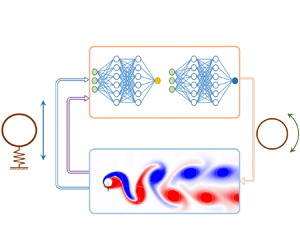
Deep reinforcement learning finds a new strategy for vortex-induced vibration control
-
- Journal:
- Journal of Fluid Mechanics / Volume 990 / 10 July 2024
- Published online by Cambridge University Press:
- 12 August 2024, A7
-
- Article
-
- You have access
- Open access
- HTML
- Export citation
-
As a promising machine learning method for active flow control (AFC), deep reinforcement learning (DRL) has been successfully applied in various scenarios, such as the drag reduction for stationary cylinders under both laminar and weakly turbulent conditions. However, current applications of DRL in AFC still suffer from drawbacks including excessive sensor usage, unclear search paths and insufficient robustness tests. In this study, we aim to tackle these issues by applying DRL-guided self-rotation to suppress the vortex-induced vibration (VIV) of a circular cylinder under the lock-in condition. With a state space consisting only of the acceleration, velocity and displacement of the cylinder, the DRL agent learns an effective control strategy that successfully suppresses the VIV amplitude by $99.6\,\%$. Through systematic comparisons between different combinations of sensory-motor cues as well as sensitivity analysis, we identify three distinct stages of the search path related to the flow physics, in which the DRL agent adjusts the amplitude, frequency and phase lag of the actions. Under the deterministic control, only a little forcing is required to maintain the control performance, and the VIV frequency is only slightly affected, showing that the present control strategy is distinct from those utilizing the lock-on effect. Through dynamic mode decomposition analysis, we observe that the growth rates of the dominant modes in the controlled case all become negative, indicating that DRL remarkably enhances the system stability. Furthermore, tests involving various Reynolds numbers and upstream perturbations confirm that the learned control strategy is robust. Finally, the present study shows that DRL is capable of controlling VIV with a very small number of sensors, making it effective, efficient, interpretable and robust. We anticipate that DRL could provide a general framework for AFC and a deeper understanding of the underlying physics.

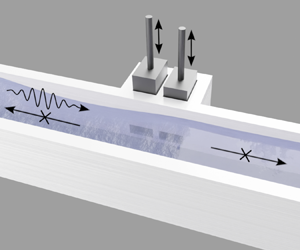
Perfect active absorption of water waves in a channel by a dipole source
-
- Journal:
- Journal of Fluid Mechanics / Volume 990 / 10 July 2024
- Published online by Cambridge University Press:
- 12 August 2024, A9
-
- Article
-
- You have access
- Open access
- HTML
- Export citation
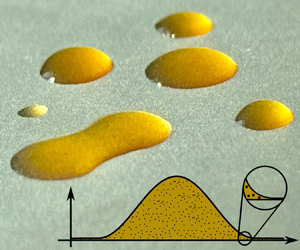
Dynamics of particle aggregation in dewetting films of complex liquids
-
- Journal:
- Journal of Fluid Mechanics / Volume 990 / 10 July 2024
- Published online by Cambridge University Press:
- 12 August 2024, A10
-
- Article
-
- You have access
- Open access
- HTML
- Export citation
Ecosystem restoration and EU Law: an introduction to the symposium
-
- Journal:
- European Law Open / Volume 3 / Issue 1 / March 2024
- Published online by Cambridge University Press:
- 12 August 2024, pp. 175-179
-
- Article
-
- You have access
- Open access
- HTML
- Export citation
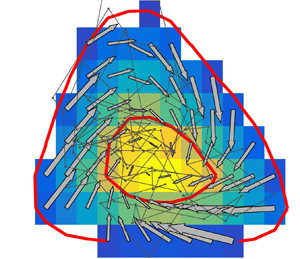
Fake turbulence
-
- Journal:
- Journal of Fluid Mechanics / Volume 990 / 10 July 2024
- Published online by Cambridge University Press:
- 12 August 2024, R2
-
- Article
-
- You have access
- Open access
- HTML
- Export citation
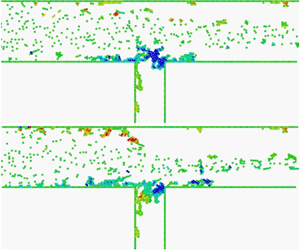
Lagrangian-based simulation method using constrained Stokesian dynamics for particulate flows in microchannel
-
- Journal:
- Journal of Fluid Mechanics / Volume 990 / 10 July 2024
- Published online by Cambridge University Press:
- 12 August 2024, A3
-
- Article
-
- You have access
- Open access
- HTML
- Export citation
