To save content items to your account,
please confirm that you agree to abide by our usage policies.
If this is the first time you use this feature, you will be asked to authorise Cambridge Core to connect with your account.
Find out more about saving content to .
To save content items to your Kindle, first ensure no-reply@cambridge.org
is added to your Approved Personal Document E-mail List under your Personal Document Settings
on the Manage Your Content and Devices page of your Amazon account. Then enter the ‘name’ part
of your Kindle email address below.
Find out more about saving to your Kindle.
Note you can select to save to either the @free.kindle.com or @kindle.com variations.
‘@free.kindle.com’ emails are free but can only be saved to your device when it is connected to wi-fi.
‘@kindle.com’ emails can be delivered even when you are not connected to wi-fi, but note that service fees apply.
Inverse probability weighting is a common remedy for missing data issues, notably in causal inference. Despite its prevalence, practical application is prone to bias from propensity score model misspecification. Recently proposed methods try to rectify this by balancing some moments of covariates between the target and weighted groups. Yet, bias persists without knowledge of the true outcome model. Drawing inspiration from the quasi maximum likelihood estimation with misspecified statistical models, I propose an estimation method minimizing a distance between true and estimated weights with possibly misspecified models. This novel approach mitigates bias and controls mean squared error by minimizing their upper bounds. As an empirical application, it gives new insights into the study of foreign occupation and insurgency in France.
Several disciplines, such as economics, law, and political science, emphasize the importance of legislative quality, namely well-written legislation. Low-quality legislation cannot be easily implemented because the texts create interpretation problems. To measure the quality of legal texts, we use information from the syntactic and lexical features of their language and apply these measures to a dataset of European Union legislation that contains detailed information on its transposition and decision-making process. We find that syntactic complexity and vagueness are negatively related to member states’ compliance with legislation. The finding on vagueness is robust to controlling for member states’ preferences, administrative resources, length of texts, and discretion. However, the results for syntactic complexity are less robust.
What could be called a digital turn has amplified conversations around publics, literary cultures, and African literature’s broadened genres. Drawing on conceptual frameworks and debates from literary, cultural, and media studies, Adeoba examines the literary imaginations and ekphrastic practices that emerge from the digital cultures of African Twitter users. Adeoba argues that crowdsourced verse demonstrates the creative agency of digitally connected everyday people and newer modes of sociality enabled by African poetry in digital contexts. Crowdsourced verse presents opportunities to examine the digital publics of African literature and their contributions to the body of literary works circulating in digital spaces.
This work has the aim of dissecting the legal and policy dress designed for the new “Green” Common Agricultural Policy (CAP 2023–27) across the proposed CAP Strategic plans (CSPs) of the EU member states. The analysis is carried out through the lens of a special inquiry: the consistency and coherence between the CAP and the perspective of the Green Deal and its satellite strategies, among all the Farm to Fork Strategy (F2F) and Biodiversity Strategy for 2030, for transition to a resilient and Sustainable food system. The F2F proposes a roadmap of interventions and sets specific goals to reach such a transition. Within these interventions, a renewed CAP is the first stage through which the direction undertaken by the EU can be measured. Following the new CAP delivery model, this work will investigate the national CSPs and address the consistency of the CAP financial instruments utilised to fulfill the social, economic and environmental objectives of the CAP according to the ambition of the F2F and other key strategies.
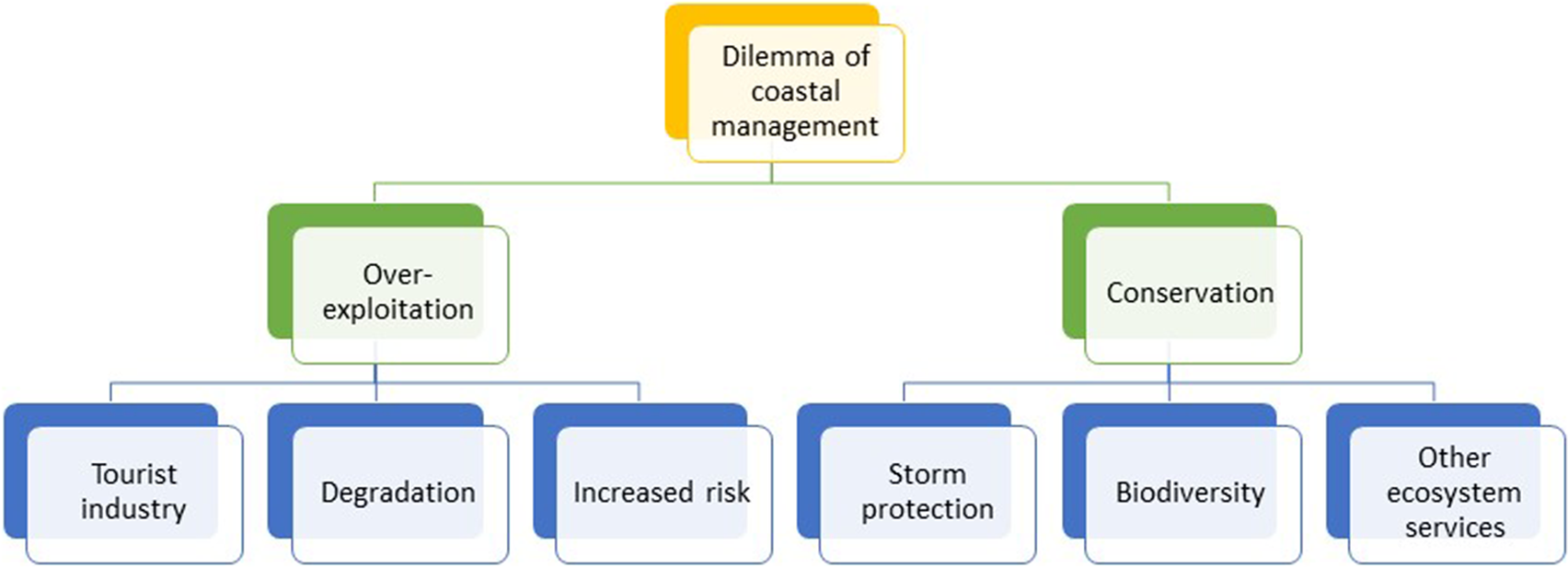
The real estate business on sandy coasts and coastal dunes has increased dramatically over the last decades because of the growing demands for leisure activities which, consequently, have yielded important economic gains. Such ravaging exploitation results in the replacement of sandy ecosystems with tourism-oriented settlements, infrastructure, and facilities. As the sandy beaches and coastal dunes become deteriorated or eliminated, their protective role is lost, and the hydrometeorological risks to which the increasing human coastal populations are exposed grow, especially in a climate change scenario with increasing storminess. Furthermore, when possible, the expansion of the tourism industry continues searching for new, unspoiled locations, and the cycle begins again. This situation leads to the dilemma of coastal management: should we continue with the over-exploitation of sandy coasts for growing economic benefits? Or should we preserve the coasts for protection against the impact of increasing storms and sea level rise and to benefit biodiversity? Although scientific evidence demonstrates the relevance of protecting the coasts, coastal development plans continue to ignore these findings. What are the key drivers for these trends? We first looked for scientific evidence of the appraisal of the esthetic beauty of the beach and coastal dunes, as highly important drivers of urbanization and coastal environmental change. We then looked for evidence that demonstrated how coastal dunes offer storm protection Finally, we examined if the conservation of beaches and coastal dunes can be compatible with non-intrusive tourism. In summary, through the literature review and our own data, we show how different alternatives may help achieve a more sustainable coastal tourism by combining economic necessities with environmental concerns.
This paper presents a pioneering pilot implementation of group dialectical behaviour therapy (DBT) for adolescents with maladaptive coping in Qatar's child and adolescent mental health services. The project highlights the positive effect on patient satisfaction and the potential for early intervention with adolescents displaying emotional dysregulation. This pioneering initiative was consistent with local cultural values, stressing the importance of interconnectedness in mental health interventions. The impact of the initiative stresses its significance in diverse cultural contexts, urging further adoption regionally for improved mental health outcomes, particularly among adolescents displaying features of an emerging emotionally unstable personality disorder.
Understanding settling motion of coral grains is important in terms of protection of coral reef systems and resotoration of the associated ecosystems. In this paper, a series of laboratory experiments was conducted to investigate the settling motion, using optical microscopy to measure shape parameters of coral grains and the particle-filtering-based object tracking to reconstruct the three-dimensional trajectory. Three characteristic descent regimes, namely, tumbling, chaotic and fluttering, are classified based on the three-dimensional trajectory, the spiral radius variation and the velocity spectrum. It is demonstrated that if one randomly picks up one coral grain, then the probabilities of occurrence of the three regimes are approximately $26\,\%$, $42\,\%$ and $32\,\%$, respectively. We have shown that first, the dimensionless settling velocity generally increases with the non-dimensional diameter and Corey shape factor and second, the drag coefficient generally decreases with the Reynolds number and Corey shape factor. Based on this, the applicability of existing models on predicting settling velocity and drag coefficient for coral grains is demonstrated further. Finally, we have proposed extended models for predicting the settling velocity. This study contributes to better understanding of settling motion and improves our predictive capacity of settling velocity for coral grains with complex geometry.
Fake news can affect people in negative ways. A recent line of research has demonstrated that when people are exposed to fake news they can form false memories for the events depicted in the news stories. We conducted a meta-analysis to obtain an estimate of the average rate of false memories elicited by fake news. Thirteen articles were included in the final analysis, revealing that nearly 40% and 60% of the participants reported at least one false memory and belief (respectively) after fake news exposure, while each participant remembered or believed 22% of the total number of fake news presented. Individual differences may affect the rate of false memory formation following exposure to false memories. We therefore examined moderating effects of individual difference variables assessed in the included studies. Participants with better analytical reasoning skills and a high level of interest in the news topic were least likely to report false memories for fake news, with level of interest being also a facilitating factor in remembering true news. No effect was detected for cognitive ability and objective knowledge. Our results provide insightful and practical information in the context of world-wide misinformation dissemination and its impact on people's beliefs and memories.
How has historical scholarship fared in Africa? What is the state of decolonization and deconstruction historiography in the production of historical knowledge on the continent? What role does the state play in aiding or undermining historians’ access to official historical data and the production of historical knowledge in postcolonial Africa? This article engages these questions. It harps on the reconstruction of African intellectual history as a daunting postcolonial challenge, and argues that historians on Africa need to engage with and reexamine the development of the discipline of history in Africa in relation to the debates on decolonization and the enterprise of history-writing in the production of historical knowledge and historical scholarship across the continent. This illuminates the understanding of the history of contemporary Africa. It also throws fresh light on the continent’s remote past as a way of establishing its connections with the present. Complementary to the problems of writing the history of contemporary Africa, this work argues that to appreciate and understand the problems of history-writing on Africa, we need to focus on the development and limitations of the discipline across the institutional sites of the universities in postcolonial Africa.
Saturated flow film boiling on a sphere has been numerically studied in this work for both vertical and horizontal flow configurations. The simulations were performed using a numerical methodology developed by the authors for boiling flows on three-dimensional unstructured meshes. For interface capturing, the coupled level set and volume of fluid method is used. The interface evolution, vapour wake dynamics and heat transfer have been thoroughly investigated by varying the saturated liquid flow velocity, sphere diameter and wall superheat. The relative importance of both the buoyancy and the inertial forces is described in terms of the Froude number $(Fr)$. The vapour bubble evolves periodically at low $Fr$ values, while a stable vapour column develops at high $Fr$ values. The interface evolution pattern obtained in the present work is in good agreement with the results of experimental studies available in the literature. For all the values of $Fr$, a stable vapour column develops for a large-diameter sphere and releases vapour bubbles of varying sizes. Furthermore, for a large-diameter sphere, surface capillary waves are observed at the interface, similar to the observations of some of the experimental studies available in the literature. The flow in the liquid and vapour wakes appears to be strongly coupled. The heat transfer in the present work is estimated using the spatially and temporally averaged Nusselt numbers. Finally, an fast Fourier transform analysis of the space-averaged Nusselt number reveals a strong interaction among the different forces.
The 1922 Rand Rebellion was the only instance of worker protest in the twentieth century in which a modern state used tanks and military airplanes, as well as mounted infantry, to suppress striking workers. These circumstances were unprecedented in their own time and for most of the century. The compressed and intensely violent rebellion of twenty thousand white mineworkers in South Africa’s gold mines had several overlapping features. Within a matter of days—from 6 to 12 March—it went from a general strike to a racial pogrom and insurrection against the government of Prime Minister Jan Smuts. Throughout all these twists and turns, the battle standard remained, “Workers of the world unite and fight for a White South Africa!” Race and violence were integral features of South Africa’s industrial history, but they do not explain the moments when discrete groups of people chose to use them as weapons or bargaining tools. At the close of the First World War, for instance, South Africa’s white mine workers demanded a more comprehensive distribution of the privileges of white supremacy, but in a manner that was both violent and contentious. Consequently, South Africa’s immediate postwar period became one of the most violent moments in its history.
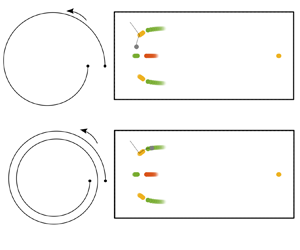
Small finite-size particles suspended in fluid flow through an enclosed curved duct can focus to points or periodic orbits in the two-dimensional duct cross-section. This particle focusing is due to a balance between inertial lift forces arising from axial flow and drag forces arising from cross-sectional vortices. The inertial particle focusing phenomenon has been exploited in various industrial and medical applications to passively separate particles by size using purely hydrodynamic effects. A fixed size particle in a circular duct with a uniform rectangular cross-section can have a variety of particle attractors, such as stable nodes/spirals or limit cycles, depending on the radius of curvature of the duct. Bifurcations occur at different radii of curvature, such as pitchfork, saddle-node and saddle-node infinite period (SNIPER), which result in variations in the location, number and nature of these particle attractors. By using a quasi-steady approximation, we extend the theoretical model of Harding et al. (J. Fluid Mech., vol. 875, 2019, pp. 1–43) developed for the particle dynamics in circular ducts to spiral duct geometries with slowly varying curvature, and numerically explore the particle dynamics within. Bifurcations of particle attractors with respect to radius of curvature can be traversed within spiral ducts and give rise to a rich nonlinear particle dynamics and various types of tipping phenomena, such as bifurcation-induced tipping (B-tipping), rate-induced tipping (R-tipping) and a combination of both, which we explore in detail. We discuss implications of these unsteady dynamical behaviours for particle separation and propose novel mechanisms to separate particles by size in a non-equilibrium manner.
Around the world, armed conflict is increasingly occurring in capital cities and governments are relying on pro-government, rurally recruited, militia to suppress anti-government political violence. Pendle and Maror draw lessons from South Sudan where recruits from rural areas were brought to Juba to help defend the government. Drawing on ethnographic observations and qualitative interviews with combatants, this article uses “rural radicalism” to argue that patterns of violence by these rurally recruited forces were shaped by histories of rural violence over previous decades and can be read to include a political objective that challenges the inequities in safety and security between rural areas and the capital city.
The aim of the contribution is to focus on the conflicts arising between climate-related renewable energy goals vis-a-vis environmental protection interests. To this effect, the analysis will firstly investigate the origin of such types of conflicts, which may also be named intra-environmental conflicts, and define their main characteristics; secondly, the regulatory choices made by the RED II and the RED III Directives to manage these conflicts will be presented and compared, with a particular focus on the three key features of the recently approved RED III Directive; thirdly, an alternative approach to address such types of conflicts will be proposed. This is based on the principle of integration, to be interpreted with an ecological sustainability reading of the principle of sustainable development.
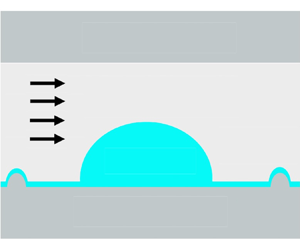
Depinning of liquid droplets on substrates by flow of a surrounding immiscible fluid is central to applications such as cross-flow microemulsification, oil recovery and waste cleanup. Surface roughness, either natural or engineered, can cause droplet pinning, so it is of both fundamental and practical interest to determine the flow strength of the surrounding fluid required for droplet depinning on rough substrates. Here, we develop a lubrication-theory-based model for droplet depinning on a substrate with topographical defects by flow of a surrounding immiscible fluid. The droplet and surrounding fluid are in a rectangular channel, a pressure gradient is imposed to drive flow and the defects are modelled as Gaussian-shaped bumps. Using a precursor-film/disjoining-pressure approach to capture contact-line motion, a nonlinear evolution equation is derived describing the droplet thickness as a function of distance along the channel and time. Numerical solutions of the evolution equation are used to investigate how the critical pressure gradient for droplet depinning depends on the viscosity ratio, surface wettability and droplet volume. Simple analytical models are able to account for many of the features observed in the numerical simulations. The influence of defect height is also investigated, and it is found that, when the maximum defect slope is larger than the receding contact angle of the droplet, smaller residual droplets are left behind at the defect after the original droplet depins and slides away. The model presented here yields considerably more information than commonly used models based on simple force balances, and provides a framework that can readily be extended to study more complicated situations involving chemical heterogeneity and three-dimensional effects.
The introduction of new legislation in 2006 brought about changes to the way citizenship applications were considered in the UK. Over the intervening years, several hundred children born in the UK have been denied British citizenship as a result of changes to the ‘good character’ requirement in the legislation – namely its extension to cover all those aged 10 years or older applying for citizenship, including individuals who were born in the UK. As a result of the formulaic way in which this requirement is assessed, citizenship can be denied on the basis of historical patterns of behaviour or offending from childhood. This article will consider whether the current approach to assessment of character in the context of applications for British citizenship is meaningful or appropriate, given developments in our understanding of normative psychological and neurological development and also the impact of psychosocial adversity, trauma, and broader psychopathological or neurodevelopmental conditions.
Through an ethnographic rendering of the Catholic Church at the Detroit-Windsor borderland, this article foregrounds the ways elemental forces, including water, earth/soil, and air, form an interconnected entity that constitutes part of the theopolitical and religious scaffolding of Holy Infrastructures. We argue that the repetitive inscription of social and affective flows within an urban terrain generates infrastructure projects that contract forces of variable intensity into alliance or disjuncture. The interrelation of these forces as Holy Infrastructure, offers vital information on (dis/en)abling racialized forms of hosting and being hosted by the divine within urban settings, specifically as it pertains to theological labor at multiple scales. Indeed, we understand holiness in Catholic Detroit as a performative sovereignty of partition that mediates a desire for unbrokenness and spatiotemporal rapture. The topologies of Holy Infrastructure thus give rise to overlapping but divergent “wholes” within the racialized urban terrain, offering insight into the Church as a loose network of horizontal alliances that may enforce or subvert hierarchy. Our focus on elemental forces allows us to move beyond abstractions and focus on how theological projects take shape in physical space within an urban ecology. Indeed, Holy Infrastructures come into focus most clearly in relation to the intersection of theology with environmental, climatic, and territorial projects. By approaching Church and State as co-constitutive, we show how Holy Infrastructures offer insight into the racialized and gendered terrain of contemporary Detroit.
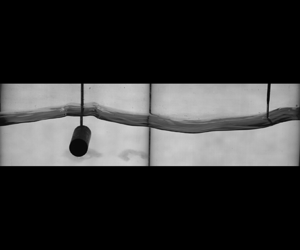
Resonant standing waves excited on the water surface in a deep narrow rectangular cavity by a fully immersed cylinder harmonically oscillating in the vertical direction are studied theoretically and experimentally. The effect of the finite wavemaker size is considered in the framework of the potential two-dimensional flow theory. Nonlinearities and weak dissipation at solid surfaces are accounted for. The spatio-temporal structure of the waves in the presence of detuning between the forcing and the natural frequency of the system is analysed. The variation of the surface shape in space and time studied in experiments supports the assumption of two-dimensional flow. The finite size of the wavemaker causes a downshift of the effective resonant frequency of the cavity; this effect is enhanced by the nonlinearity. For small amplitude waves, the surface elevation evolution in time is decomposed into the sum of the time-periodic function, corresponding to the forcing frequency, and its second harmonic; the shape of the wavenumber spectra of these components depends on the forcing frequency. For larger wave amplitudes, additional peaks in the frequency spectrum appear. The theoretical predictions are compared with the experimental results.
The violent and competitive context in which trade relations between the states of Senegambia and Europeans evolved required moments of calm and stability, which were decisive and important factors in the cohabitation of trade actors. Diplomacy was a fundamental political lever for European trade in Senegambia. It had become a major stake in the daily lives of the actors. Diplomacy was generally reserved for field actors from different political cultures and with different political and economic ambitions. Diplomacy took the form of negotiations, and took the form of simple agreements of principle, notably in the context of palavers, or the conclusion of trade and peace treaties. The aim of diplomacy, for example, was to establish strong, peaceful commercial relations between trade players and to regularize the tax system, which was the fundamental basis of trade and the expression of the sovereignty of local chiefs towards the Europeans.
How did it become possible to think of a racism without racists? This article tackles this question by looking at the contested interpretation of a racist incident in France. In 1969, Jewish shop owners in Orléans were baselessly accused of kidnapping women in fitting rooms and trafficking them into sexual slavery. This antisemitic agitation rapidly attracted the attention of local authorities, national media, and social scientists, led by sociologist Edgar Morin. Morin’s study made these events into a famous case-study in disinformation, the “rumor of Orléans.” But Morin was only one of several actors who attributed different causes to racism in Orléans. All of them agreed that racism was a serious problem, but they could not agree on its causes. Compared to other incidents at the time which grabbed media attention, the uncertainty of events in Orléans allowed people to debate this. Morin’s contribution was to turn to communications and social psychology to deploy the concept of “rumor.” He dissolved the problem of racism into a problem of communication. This suggests that in order to understand the emergence of “racism without racists,” we have to pay close attention to the context in which theories emerged to make it thinkable, and to the relationship between analyses of racism and communication.