Refine search
Actions for selected content:
37 results
Addition–deletion of a smooth conic for free curves
- Part of
-
- Journal:
- Nagoya Mathematical Journal / Volume 261 / 2026
- Published online by Cambridge University Press:
- 02 March 2026, e20
-
- Article
-
- You have access
- Open access
- HTML
- Export citation
Vanishing criteria for Ceresa cycles
- Part of
-
- Journal:
- Compositio Mathematica / Volume 161 / Issue 11 / November 2025
- Published online by Cambridge University Press:
- 29 December 2025, pp. 3017-3043
- Print publication:
- November 2025
-
- Article
-
- You have access
- Open access
- HTML
- Export citation
-
We prove cohomological vanishing criteria for the Ceresa cycle of a curve C embedded in its Jacobian J: (A) if $\mathrm{H}^3(J)^{\mathrm{Aut}(C)} = 0$, then the Ceresa cycle is torsion modulo rational equivalence; (B) if $\mathrm{H}^0(J, \Omega_J^3)^{\mathrm{Aut}(C)} = 0$, then the Ceresa cycle is torsion modulo algebraic equivalence, with criterion (B) conditional on the Hodge conjecture. We then use these criteria to study the simplest family of curves where (B) holds but (A) does not, namely the family of Picard curves $C \colon y^3 = x^4 + ax^2 + bx + c$. Criterion (B) and work of Schoen combine to show that the Ceresa cycle of a Picard curve is torsion in the Griffiths group. We furthermore determine exactly when it is torsion in the Chow group. As a byproduct, we deduce that there exist one-parameter families of plane quartic curves with torsion Ceresa Chow class; that the torsion locus in $\mathcal{M}_3$ of the Ceresa Chow class contains infinitely many components; and that the order of a torsion Ceresa Chow class of a Picard curve over a number field K is bounded, with the bound depending only on $[K\colon \mathbb{Q}]$. Finally, we determine which automorphism group strata are contained in the vanishing locus of the universal Ceresa cycle over $\mathcal{M}_3$.


On (2,2)-decomposable genus 4 Jacobians
- Part of
-
- Journal:
- Canadian Journal of Mathematics , First View
- Published online by Cambridge University Press:
- 12 September 2025, pp. 1-26
-
- Article
-
- You have access
- Open access
- HTML
- Export citation
-
We consider the question of when a Jacobian of a curve of genus $2g$ admits a $(2,2)$-isogeny to a product of two polarized dimension g abelian varieties. We find that one of them must be a Jacobian itself and, if the associated curve is hyperelliptic, so is the other.
For $g=2,$ this allows us to describe $(2,2)$-decomposable genus $4$ Jacobians in terms of Prym varieties. We describe the locus of such genus $4$ curves in terms of the geometry of the Igusa quartic threefold. We also explain how our characterization relates to Prym varieties of unramified double covers of plane quartic curves, and we describe this Prym map in terms of $6$ and $7$ points in $\mathbb {P}^3$.
We also investigate which genus $4$ Jacobians admit a $2$-isogeny to the square of a genus $2$ Jacobian and give a full description of the hyperelliptic ones. While most of the families we find are of the expected dimension $1$, we also find a family of unexpectedly high dimension $2$.
$2$.


The space of solvable Pell–Abel equations
- Part of
-
- Journal:
- Compositio Mathematica / Volume 161 / Issue 7 / July 2025
- Published online by Cambridge University Press:
- 01 September 2025, pp. 1483-1511
- Print publication:
- July 2025
-
- Article
-
- You have access
- Open access
- HTML
- Export citation
-
A Pell–Abel equation is a functional equation of the form $P^{2}-DQ^{2} = 1$, with a given polynomial $D$ free of squares and unknown polynomials $P$ and $Q$. We show that the space of Pell–Abel equations with the degrees of $D$ and of the primitive solution $P$ fixed is a complex manifold. We describe its connected components by an efficiently computable invariant. Moreover, we give various applications of this result, including to torsion pairs on hyperelliptic curves and to Hurwitz spaces, and a description of the connected components of the space of primitive $k$-differentials with a unique zero on genus $2$ Riemann surfaces.


Automorphism groups and signatures of smooth septic curves
- Part of
-
- Journal:
- Glasgow Mathematical Journal / Volume 68 / Issue 1 / January 2026
- Published online by Cambridge University Press:
- 13 May 2025, pp. 64-85
-
- Article
- Export citation
-
We determine the list of automorphism groups for smooth plane septic curves over an algebraically closed field $K$ of characteristic $0$, as well as their signatures. For each group, we also provide a geometrically complete family over $K$, which consists of a generic defining polynomial equation describing each locus up to $K$-projective equivalence. Notably, we present two distinct examples of what we refer to as final strata of smooth plane curves.


Regenerations and applications
- Part of
-
- Journal:
- Forum of Mathematics, Sigma / Volume 13 / 2025
- Published online by Cambridge University Press:
- 03 February 2025, e22
-
- Article
-
- You have access
- Open access
- HTML
- Export citation
-
Chen-Gounelas-Liedtke recently introduced a powerful regeneration technique, a process opposite to specialization, to prove existence results for rational curves on projective $K3$ surfaces. We show that, for projective irreducible holomorphic symplectic manifolds, an analogous regeneration principle holds and provides a very flexible tool to prove existence of uniruled divisors, significantly improving known results.

Models and integral differentials of hyperelliptic curves
- Part of
-
- Journal:
- Glasgow Mathematical Journal / Volume 66 / Issue 2 / May 2024
- Published online by Cambridge University Press:
- 18 March 2024, pp. 382-439
-
- Article
-
- You have access
- Open access
- HTML
- Export citation
-
Let $C\; : \;y^2=f(x)$ be a hyperelliptic curve of genus $g\geq 1$, defined over a complete discretely valued field $K$, with ring of integers $O_K$. Under certain conditions on $C$, mild when residue characteristic is not $2$, we explicitly construct the minimal regular model with normal crossings $\mathcal{C}/O_K$ of $C$. In the same setting we determine a basis of integral differentials of $C$, that is an $O_K$-basis for the global sections of the relative dualising sheaf $\omega _{\mathcal{C}/O_K}$.


Geometric aspects on Humbert-Edge curves of type 5, Kummer surfaces and hyperelliptic curves of genus 2
- Part of
-
- Journal:
- Glasgow Mathematical Journal / Volume 65 / Issue 3 / September 2023
- Published online by Cambridge University Press:
- 25 July 2023, pp. 612-624
-
- Article
-
- You have access
- Open access
- HTML
- Export citation
-
In this work, we study the Humbert-Edge curves of type 5, defined as a complete intersection of four diagonal quadrics in ${\mathbb{P}}^5$. We characterize them using Kummer surfaces, and using the geometry of these surfaces, we construct some vanishing thetanulls on such curves. In addition, we describe an argument to give an isomorphism between the moduli space of Humbert-Edge curves of type 5 and the moduli space of hyperelliptic curves of genus 2, and we show how this argument can be generalized to state an isomorphism between the moduli space of hyperelliptic curves of genus $g=\frac{n-1}{2}$ and the moduli space of Humbert-Edge curves of type $n\geq 5$ where $n$ is an odd number.


Integers that are sums of two rational sixth powers
- Part of
-
- Journal:
- Canadian Mathematical Bulletin / Volume 66 / Issue 1 / March 2023
- Published online by Cambridge University Press:
- 07 March 2022, pp. 166-177
- Print publication:
- March 2023
-
- Article
-
- You have access
- Open access
- HTML
- Export citation
-
We prove that $164\, 634\, 913$ is the smallest positive integer that is a sum of two rational sixth powers, but not a sum of two integer sixth powers. If $C_{k}$ is the curve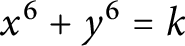 $x^{6} + y^{6} = k$, we use the existence of morphisms from $C_{k}$ to elliptic curves, together with the Mordell–Weil sieve, to rule out the existence of rational points on $C_{k}$ for various k.


Pencils on Surfaces with Normal Crossings and the Kodaira Dimension of $\overline {\mathcal {M}}_{g,n}$
- Part of
-
- Journal:
- Forum of Mathematics, Sigma / Volume 9 / 2021
- Published online by Cambridge University Press:
- 12 April 2021, e31
-
- Article
-
- You have access
- Open access
- Export citation
-
We study smoothing of pencils of curves on surfaces with normal crossings. As a consequence we show that the canonical divisor of $\overline {\mathcal {M}}_{g,n}$ is not pseudoeffective in some range, implying that $\overline {\mathcal {M}}_{12,6}$, $\overline {\mathcal {M}}_{12,7}$,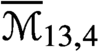 $\overline {\mathcal {M}}_{13,4}$ and $\overline {\mathcal {M}}_{14,3}$ are uniruled. We provide upper bounds for the Kodaira dimension of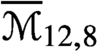 $\overline {\mathcal {M}}_{12,8}$ and $\overline {\mathcal {M}}_{16}$. We also show that the moduli space of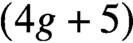 $(4g+5)$-pointed hyperelliptic curves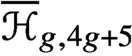 $\overline {\mathcal {H}}_{g,4g+5}$ is uniruled. Together with a recent result of Schwarz, this concludes the classification of moduli of pointed hyperelliptic curves with negative Kodaira dimension.


K3 surfaces with involution, equivariant analytic torsion, and automorphic forms on the moduli space IV: The structure of the invariant
- Part of
-
- Journal:
- Compositio Mathematica / Volume 156 / Issue 10 / October 2020
- Published online by Cambridge University Press:
- 19 November 2020, pp. 1965-2019
- Print publication:
- October 2020
-
- Article
- Export citation
-
Yoshikawa in [Invent. Math. 156 (2004), 53–117] introduces a holomorphic torsion invariant of $K3$ surfaces with involution. In this paper we completely determine its structure as an automorphic function on the moduli space of such $K3$ surfaces. On every component of the moduli space, it is expressed as the product of an explicit Borcherds lift and a classical Siegel modular form. We also introduce its twisted version. We prove its modularity and a certain uniqueness of the modular form corresponding to the twisted holomorphic torsion invariant. This is used to study an equivariant analogue of Borcherds’ conjecture.


Generalized Beilinson Elements and Generalized Soulé Characters
- Part of
-
- Journal:
- Canadian Journal of Mathematics / Volume 73 / Issue 2 / April 2021
- Published online by Cambridge University Press:
- 06 February 2020, pp. 542-571
- Print publication:
- April 2021
-
- Article
-
- You have access
- Export citation
Primes Dividing Invariants of CM Picard Curves
- Part of
-
- Journal:
- Canadian Journal of Mathematics / Volume 72 / Issue 2 / April 2020
- Published online by Cambridge University Press:
- 07 May 2019, pp. 480-504
- Print publication:
- April 2020
-
- Article
-
- You have access
- Export citation
A VANISHING THEOREM FOR THE $\unicode[STIX]{x1D702}$ -INVARIANT AND HURWITZ GROUPS
- Part of
-
- Journal:
- Nagoya Mathematical Journal / Volume 228 / December 2017
- Published online by Cambridge University Press:
- 20 October 2016, pp. 114-123
-
- Article
-
- You have access
- HTML
- Export citation
-
In this paper we discuss a relationship between the spectral asymmetry and the surface symmetry. More precisely, we show that for every automorphism of a Hurwitz surface with the automorphism group $\text{PSL}(2,\mathbb{F}_{q})$ , the $\unicode[STIX]{x1D702}$ -invariant of the corresponding mapping torus vanishes if $q$ is sufficiently large.


A database of genus-2 curves over the rational numbers
- Part of
-
- Journal:
- LMS Journal of Computation and Mathematics / Volume 19 / Issue A / 2016
- Published online by Cambridge University Press:
- 26 August 2016, pp. 235-254
-
- Article
-
- You have access
- Export citation
-
We describe the construction of a database of genus- $2$ curves of small discriminant that includes geometric and arithmetic invariants of each curve, its Jacobian, and the associated $L$ -function. This data has been incorporated into the $L$ -Functions and Modular Forms Database (LMFDB).


Classification of the periodic monodromies of hyperelliptic families
-
- Journal:
- Nagoya Mathematical Journal / Volume 174 / 2004
- Published online by Cambridge University Press:
- 22 January 2016, pp. 187-199
-
- Article
-
- You have access
- Export citation
Local splitting families of hyperelliptic pencils, II
-
- Journal:
- Nagoya Mathematical Journal / Volume 175 / 2004
- Published online by Cambridge University Press:
- 22 January 2016, pp. 103-124
-
- Article
-
- You have access
- Export citation
Every Curve of Genus not Greater Than Eight Lies on a K3 Surface
-
- Journal:
- Nagoya Mathematical Journal / Volume 190 / 2008
- Published online by Cambridge University Press:
- 11 January 2016, pp. 183-197
-
- Article
-
- You have access
- Export citation
CERTAIN GENERALIZED MORDELL CURVES OVER THE RATIONAL NUMBERS ARE POINTLESS
- Part of
-
- Journal:
- Journal of the Australian Mathematical Society / Volume 100 / Issue 1 / February 2016
- Published online by Cambridge University Press:
- 28 October 2015, pp. 42-64
-
- Article
-
- You have access
- Export citation
Numerical calculation of three-point branched covers of the projective line
- Part of
-
- Journal:
- LMS Journal of Computation and Mathematics / Volume 17 / Issue 1 / 2014
- Published online by Cambridge University Press:
- 01 September 2014, pp. 379-430
-
- Article
-
- You have access
- Export citation
