To save content items to your account,
please confirm that you agree to abide by our usage policies.
If this is the first time you use this feature, you will be asked to authorise Cambridge Core to connect with your account.
Find out more about saving content to .
To save content items to your Kindle, first ensure no-reply@cambridge.org
is added to your Approved Personal Document E-mail List under your Personal Document Settings
on the Manage Your Content and Devices page of your Amazon account. Then enter the ‘name’ part
of your Kindle email address below.
Find out more about saving to your Kindle.
Note you can select to save to either the @free.kindle.com or @kindle.com variations.
‘@free.kindle.com’ emails are free but can only be saved to your device when it is connected to wi-fi.
‘@kindle.com’ emails can be delivered even when you are not connected to wi-fi, but note that service fees apply.
This article examines the formation of the first Luanda elites by exploring the trajectories of the members of the family configuration established by the matrimony formed by Juan de Viloria and Isabel de Oliveira in the early 1590s. By analyzing the evolution of the intricate web of interests that structured the Viloria family configuration between the 1590s and 1720s, the article probes how the early Luanda elites generated and mobilized social, economic, political, or symbolic resources that allowed them to establish ongoing partnerships with African, metropolitan, and Luso-Brazilian actors.
The so-called Island Carib Problem remains topical, and discoveries in the last decade have sparked further discussion. This article addresses this issue from the Guianas, where recent excavations have demonstrated the presence of a material counterpart of the Lesser Antilles from the seventeenth century. When compared to the insular Cayo complex, the continental complex of Malmanoury in what is today French Guiana suggests a historical movement of the Galibi toward the Antilles, where they overcame the local population, as told in a Callinago myth. This movement was driven by turmoil throughout the Guianas, Trinidad, and the Antilles during the sixteenth century caused by Indigenous warfare and migration in this area and was possibly an amplification of the late prehistoric Koriabo expansion. The Caribs encountered by Columbus were not the same Caribs met by Europeans in the seventeenth century.
This special issue aims to present empirically grounded reflections on concepts of exile, asylum, and refugee during the long Age of Revolutions, before the emergence of the modern international refugee regime. During this period, hundreds of thousands of people fled their homelands, prompting authorities and exiles themselves to reflect on and negotiate the status of newcomers and their rights and obligations. What it meant to be a refugee mattered, especially at a moment of imperial crisis and reconfiguration. Thus, building on the emerging field of refugee history, we ask: Who was a refugee, for what reasons, and with what concrete implications? How did one claim refugee status? Who was denied refugee status? How translatable were the concepts of refugee, exile, and asylum across societies? And what other terms might overlap with or replace the concept of refugee? To what extent did these concepts create distinctions between legitimate and illegitimate forms of mobility, between desirable and undesirable newcomers to host societies? The contributors to this special issue explore these questions in a variety of historical and geographical contexts across the Atlantic and Mediterranean worlds.
Despite the prevalence of slavery in world history, our understanding of its persistence remains limited. Most previous studies focus primarily on slavery as a labour contract, indistinguishable from other coercive arrangements such as serfdom. More recent literature on slavery in the United States shows that enslaved people also played an important role as financial instruments. In this article, we extend the investigation by comparing slavery in the United States with that in Brazil and the Cape Colony. We show that despite significant geographic, demographic, and economic differences, slavery was not merely a labour arrangement in the three cases but a unique institution that gave enslavers complete rights over mobile property. Slavery provided access to both labour and capital, with the capital investment dimension being key to understanding its persistence. We argue that understanding slavery’s persistence requires recognizing enslaved people as both sources of labour and capital investment.
Using the library of eighteenth-century attorney and legal historian Frances Hargrave as a starting point, this chapter considers the place of law, property, and state formation in the causes and results of the American Revolution. Focusing on three related themes to the place of laws in independence – the influence and break from English legal culture, the pluralism of legal practice within North America, and the place of legal institutions in either maintaining or changing the status quo – this chapter considers how both different forms of property and the different individuals and communities involved with it played a central role in the creation of an independent United States. The governments that emerged from the Revolution each relied heavily on these varied legal threads.
Privateers plied the waters of the Atlantic world during the American Revolution. In privately owned vessels commissioned by the Continental Congress, these seafarers brought the war to the British in the early years of the war as the Continental Navy struggled to get off the docks. The court case of Cabot v. The Nuestra Senora de Merced sheds light on this oft-overlooked aspect of the American Revolution. While sailing the waters of the Atlantic, the privateer vessel Pilgrim captured the Nuestra Senora de Merced. The privateer sent its capture into port, but these mariners would only receive payment if the Admiralty Court judged the seized ship as a lawful prize and that is where the true struggle began. Privateers were effective combatants during the war, but the means by which they achieved their ends and their public struggles for prizes colored their legacy and left them forgotten and dismissed in the Revolution’s legacy.
What was the American Revolution? More importantly, what wasn’t it? In the years following the independence of the United States, Americans thought through these questions alongside contemporary events shaking the foundations of the global imperial order. As revolutions gripped Ireland, France, Saint-Domingue, Poland, and elsewhere in the late eighteenth century, Americans began to wonder whether their own revolution was one among many radical attacks on global tyranny or if it was an unusually orderly event that deviated from other revolutions’ drift toward anarchy and terror. By the end of the 1790s, white Americans largely recognized that the American Revolution was fundamentally unlike the Haitian or French Revolutions. Yet for many decades to come, Black Americans held on to a more radical, expansive vision of the American Revolution that tied it to the legacy of the radical revolutions of the late eighteenth century.
This chapter argues that slave courts, or courts that exclusively tried the crimes of enslaved people in the seventeenth and eighteenth centuries, shaped the rights that white authorities deemed necessary for a fair trial. The very same rights afforded in the 1787 American Constitution were those denied to defendants within slave courts. Slave courts were also fiscal institutions that compensated slaveowners for the execution of any enslaved person in the seventeenth and eighteenth centuries. Focusing on the courts of Maryland, the chapter assesses the legal justifications for compensation payments for executed slaves, the affording of differential criminal rights for enslavers and enslaved people, and the procedural operations of racialized sentencing mechanisms. Despite the oncoming American Revolution, these courts persisted through to the Civil War, across the American South. Slave courts were fundamental to regulating race and rights in the pre- and post-Revolutionary world and beyond.
This study discusses the intersection between Black/African Digital Humanities, and computational methods, including natural language processing (NLP) and generative artificial intelligence (AI). We have structured the narrative around four critical themes: biases in colonial archives; postcolonial digitization; linguistic and representational inequalities in Lusophone digital content; and technical limitations of AI models when applied to the archival records from Portuguese-colonized African territories (1640–1822). Through three case studies relating to the Africana Collection at the Arquivo Histórico Ultramarino, the Dembos Collection, and Sebestyén’s Caculo Cangola Collection, we demonstrate the infrastructural biases inherent in contemporary computational tools. This begins with the systematic underrepresentation of African archives in global digitization efforts and ends with biased AI models that have not been trained on African historical corpora.
This article examines the politics of restitution within the Black Atlantic through the case of the Restitution Study Group’s legal challenge to the Smithsonian Institution’s return of Benin bronzes to Nigeria. While most scholarship frames restitution as a struggle between Western museums and postcolonial states, this article shifts the lens to intra-Black debates that complicate inherited frameworks of return, foregrounding the unresolved legacies of slavery and the claims of Black American and broader diasporic communities. At the same time, it situates these debates within the larger global landscape in which Western institutions and nation-states continue to define the terms and tempo of restitution. By challenging the assumption that restitution is solely a matter between source nations and former colonial powers, the Restitution Study Group brings attention to how African elites’ historical participation in the transatlantic slave trade and the ongoing marginalization of diaspora communities shape contemporary claims. The article also places these interventions alongside disputes within Nigeria over custodianship between the federal government, Edo State, and the Benin royal court. By tracing these overlapping histories, ethical claims, and political stakes, the article argues that returns of looted artifacts are not simply acts of restitution, but processes of decolonial repair that reconfigure authority, belonging, and historical responsibility across diasporic and national contexts.
This article examines the reasons for the widespread use of sea loans in financing Spain’s transatlantic commerce before the 1780s, and for their subsequent decline. Although never in the hands of a company with monopoly rights, Spain’s colonial trade was heavily regulated before 1778. The system reduced market risk and unpredictability by operating through a single Spanish port, keeping the colonies undersupplied, and lowering the frequency of the exchanges to allow for silver accumulation in Spanish America. This afforded significant, though volatile, profit margins. Such conditions fostered the use of the sea loan because the instrument enabled the lender to reap greater returns by charging higher-than-standard interest rates while avoiding usury laws. In contrast, the 1778 free-trade regulations increased competition and unpredictability, narrowing profit margins. Trade expanded, and “marine interest” rates dropped, precipitating the end of the sea loan as the hallmark credit instrument of the Spanish colonial trade.
The Atlantic was, for centuries, crisscrossed by continuous fluxes of people moving either by choice or under pressure. These mobilities forged a complex web of relationships not only between the two shores of the Atlantic but also within the American space. Using a voluminous correspondence between two Saint-Domingue refugees, Jean Boze, a resident of New Orleans from 1809 until his death in 1842, and Henri de Sainte-Gême, who lived in New Orleans between 1809 and his relocation to France in 1818, this chapter examines the role played by the Saint-Domingue refugees in repositioning the city within the Atlantic and Greater Caribbean. It contends that by studying a group of people who migrated under pressure (the refugees from the Haitian Revolution), we can develop conceptual frameworks (in this case, the Greater Caribbean) and spur fertile historical reinterpretations (of, in the present case, New Orleans’s position in the Americas).
From the fifteenth to the twentieth century, the use of convicted labor to supplement overseas garrisons was commonplace across colonial frontiers. While this practice has been the subject of recent study in the French, Portuguese, Russian, and Spanish Empires, the British military deployment of convicts has been comparatively neglected. This matters for two reasons. A focus on civil transportation systems appears to have led to a considerable underestimation of overall transportation numbers. Second, while much has been written about the manner in which Britain redirected transportation from the Atlantic to its new Australian colonial possessions in the late eighteenth century, the military deployment of convict labor remained centered on the Atlantic. In fact, during the revolutionary and Napoleonic Wars, many more convicts served in the African and Caribbean colonial garrisons than were ever shipped to the Antipodes. In this chapter, we use a range of different sources to piece together the military deployment of convicted labor in the British Atlantic World in the period 1780–1820, and to explore its complex relationships with the transatlantic slave trade.
The central role of Gold Coast societies, ports, and cities in the emerging Atlantic circuit is critical to understanding the history of the Atlantic world. The study of the causes and effects of Gold Coast societies’ transition from African polities and economies to transatlantic entrepots and trading emporiums and their subsequent impact on the Americas has been the hallmark of Ray Kea's scholarship. Since the beginning of his career, Kea has been a significant contributor to the study of the African Atlantic, and the field's various debates and disciplinary evolutions. While many scholars of the Gold Coast recognize Kea's work as foundational to scholarship on the Gold Coast, engagement with his work has not been rigorous. Kea is often cited in bibliographies and aspects of his work have served as benchmarks for other forays into Gold Coast histories. However, there is a need to go beyond an appreciation for Kea as a trailblazer, passing reference of his scholarship, and bibliographic citation of his work to a more thorough and consistent discourse with his major ideas and propositions. Kea has been, for example, adept at integrating innovations and ideas in various disciplinary arenas. He dexterously applies Marxist and postmodernist theories, diverse historiographies of the Atlantic world, and conceptual tools to traditional archival and oral historical data in his analyses of Gold Coast and diasporic societies. This review essay argues for Kea's importance and the need for a deeper engagement with his work in the field by putting his work into conversation with both classic Atlantic historiographies and recent scholarship that has built off Kea's.
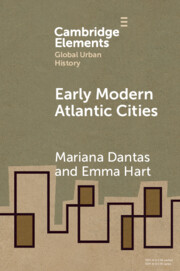
The Atlantic World was an oceanic system circulating goods, people, and ideas that emerged in the late fifteenth and early sixteenth century. European imperialism was its motor, while its character derived from the interactions between peoples indigenous to Europe, the Americas, and Africa. Much of the everyday workings of this oceanic system took place in urban settings. By sustaining the connections between these disparate regions, cities and towns became essential to the transformations that occurred in this early modern era. This Element, traces the emergence of the Atlantic city as a site of contact, an agent of colonization, a central node in networks of exchange, and an arena of political contestation. Cities of the Atlantic World operated at the juncture of many of the core processes in a global history of capitalism and of rising social and racial inequality. A source of analogous experiences of division as well as unity, they helped shape the Atlantic world as a coherent geography of analysis.
The government and people of Great Britain played a significant role in the events of Latin American independence, but the admiration was mutual. British politicians, industrialists and abolitionists looked toward Iberian America as a place of opportunity and fortune, and as a place that was far enough away to carry out experiments with reformist ideas. In return, Latin American patriots looked toward Great Britain for the naval protection it could provide, to its armaments and woollen factories for material goods, and to its banks for development loans. People on both sides of the Atlantic assessed their public and private interests and sought results on their own terms. But it also was more than a military, diplomatic and commercial relationship. There were equally significant cultural exchanges in the form of scientific knowledge, legal structures, pedagogical theories, Masonic practices, incentives to abolish slavery, and the beginning of an active book trade. On an individual, human level, there were also hundreds of long-standing, fond personal friendships and family connections that spanned both language and geographical space. British involvement in Latin American independence was much broader than just the diplomatic and military spheres; it encompassed economic, material, intellectual, cultural and human exchanges as well.
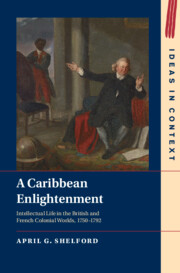
Exploring the intersection of Enlightenment ideas and colonial realities amongst White, male colonists in the eighteenth-century French and British Caribbean, A Caribbean Enlightenment recovers a neglected aspect of the region's history. Physicians to planters, merchants to publishing entrepreneurs were as inspired by ideologies of utility and improvement as their metropolitan counterparts, and they adapted 'enlightened' ideas and social practices to understand their place in the Atlantic World. Colonists collected botanical specimens for visiting naturalists and books for their personal libraries. They founded periodicals that created arenas for the discussion and debate of current problems. They picked up the pen to complain about their relationship with the home country. And they read to make sense of everything from parenting to personal salvation, to their new societies and the enslaved Africans on whom their prosperity depended. Ultimately, becoming 'enlightened' was a colonial identity that rejected metropolitan stereotypes of Caribbean degeneracy while validating the power to enslave on a cultural basis.