To save content items to your account,
please confirm that you agree to abide by our usage policies.
If this is the first time you use this feature, you will be asked to authorise Cambridge Core to connect with your account.
Find out more about saving content to .
To save content items to your Kindle, first ensure no-reply@cambridge.org
is added to your Approved Personal Document E-mail List under your Personal Document Settings
on the Manage Your Content and Devices page of your Amazon account. Then enter the ‘name’ part
of your Kindle email address below.
Find out more about saving to your Kindle.
Note you can select to save to either the @free.kindle.com or @kindle.com variations.
‘@free.kindle.com’ emails are free but can only be saved to your device when it is connected to wi-fi.
‘@kindle.com’ emails can be delivered even when you are not connected to wi-fi, but note that service fees apply.
Calvin and Perception in Early Modern Visual Culture is the first monograph to return John Calvin's Institutes of the Christian Religion (1559) to its original visual culture. AnnMarie Bridges draws on early modern optics, art theory, rhetoric, psychology, and religion to reconstruct the perceptual assumptions of Calvin's earliest readers. Her study reveals the Institutes' unrecognized concern with 'perception'-pre-conscious processing believed to occur in the imagination, capable of distorting sense experience before conscious thought could even occur. Illuminating Calvin's most striking visual metaphors-from the spectacles of scripture to the factory of idols-and through close readings of topics like accommodation, idolatry, faith, and Calvin's Latin prose, Bridges advocates a paradigm shift in how we read Calvin's most cited work, displacing 'knowledge' in favor of 'perception versus delusion.' In so doing, her study invites reflection on perceptual instability in our own cultural moment, where the challenge is not only to know what is true, but even to perceive what is real.
Social cognitive deficits are common across many psychiatric conditions and contribute to broader social dysfunction. One hypothesized mechanism involves altered basic visual processing, which may disrupt the perception of low-level social cues and, in turn, compromise broader social cognitive processes. Here, we examined relations between basic visual processing and different levels of social cognition in a transdiagnostic youth sample.
Methods
A sample of 148 youth, ranging from healthy individuals to individuals with neuropsychiatric diagnoses and significant social dysfunction, completed two measures of basic visual processing (contrast sensitivity and visual integration) and a battery of social cognition tasks spanning lower-level (gaze perception) to mid-level (emotion recognition) to higher-level (theory of mind) social cognition. We used a four-level path model to test whether basic visual processing predicts gaze perception, which in turn predicts emotion recognition, which predicts theory of mind.
Results
Poorer contrast sensitivity and visual integration were associated with less precise gaze perception, which was, in turn, associated with worse emotion recognition, which was associated with worse theory of mind. This four-level path model demonstrated good fit and showed superior fit compared to alternative models.
Conclusions
These findings suggest that basic visual processing influences the perception of basic social cues (e.g. gaze direction), which subsequently impairs more complex social perception and inference. Notably, this study extends prior observations from individuals with chronic schizophrenia to a transdiagnostic youth sample, indicating that altered basic visual processing may be a shared mechanism contributing to social cognitive deficits across psychiatric disorders and illness stages.
Eyes function as organs of both perception and expression: they can see, but they can also show. Challenging a long-running scholarly bias in favour of their visual function, Weeping Eyes foregrounds the organ's major role in affect and emotion, probing the different ways that tears are conceptualised in both sentimental and scientific literature. Centred around the rise of ophthalmology as a discipline in Britain at the turn of the nineteenth century, it considers how historical developments in ocular science shaped literary depictions of seeing and feeling. By rethinking what it can mean to cry, Megan Nash overturns critical paradigms that have long dominated ideas of the eyes and vision, and tackles some of the most pressing conceptual questions of affect studies.
The Introduction maps out the historical and theoretical context of Weeping Eyes, and is organised into three parts that each focus on a different ocular function. The first concentrates on crying eyes, comparing literary and scientific conceptions of tears in the late eighteenth and early nineteenth centuries, and unpacking these through the contemporary theoretical lens of affect studies. The second part focuses on seeing eyes, outlining the key theoretical foundations of vision studies, and problematising long-standing associations that persist between seeing and knowing, and seeing and power. The final section takes up reading eyes, asking what sentimental texts and tears can teach us about the role feeling plays in our engagement with books. Taken together, these sections sketch out the alternative epistemologies and agencies of the eye that are elaborated throughout the rest of the study.
Cerebral visual impairment (CVI) is a common sequela of early life brain injuries and can affect participation in daily life activities such as ambulation, social interactions and school engagement. CVI care requires a multidisciplinary healthcare team to support the child and family, but best practices remain undefined. We sought to explore the perspectives of healthcare providers in the assessment and treatment of CVI in Alberta, Canada.
Methods:
Online surveys were used to inquire about challenges affecting the provision of CVI care. Scores from 5-point Likert scale questions were compared between professions using t-tests. Open-ended questions were coded with themes generated using content analysis.
Results:
Fifty-four healthcare providers completed the survey (87%), including pediatric neurologists, pediatric ophthalmologists and allied health (AH) team members. Half reported low confidence in CVI screening, with AH levels lower than those of physicians (p = 0.003). Over 60% described inadequate communication pathways between teams, and 50% described a lack of clarity in CVI referral processes. Open-ended questions highlighted a need for standardization of CVI assessment and treatment (unclear referral pathways, communication challenges between team members) and resource challenges (access to specialized staff and support personnel, insufficient time for assessment and lack of physical resources).
Conclusion:
Many interdisciplinary team members in a provincial universal health care system describe current assessment and treatment processes for CVI as unclear, lacking in efficient referral pathways and do not feel adequately resourced to meet the needs of affected children and families.
Luke’s prologue presses the question raised in Part I (“What is a Gospel?”) into new territory: what about the many other writings that variously recorded Jesus’s life and/or teachings not included in the New Testament canon? Many of them also accrued the title “Gospel,” generally conformed to the definition outlined in Part I, and populated the literary landscape of early Christianity into Origen’s own day. This chapter considers how, in Origen’s view, one may distinguish the four received Gospels from the many others, and how he understands Luke (in particular) to have participated in this process of discernment in the way he hands on the traditions he receives. Origen cannot accept that Luke’s own language allows one to reduce his intent with these narratives to matters of plain facticity. Something, as Luke says, had “come to pass among us,” something of which he and his tradents had become fully convinced, something that had made of them all servants of its proclamation: “attendants of the word.” In other words, the very writing of these stories becomes, in Origen’s view, a form of “spiritual reading” of Jesus’s early life.
This chapter explores aspects of individual visions and visionaries that increase the traction to create social change. It begins by examining epistemic gaps – knowledge deficits that inspire visionary ideas – and the role of imagination in addressing these gaps. The chapter then focuses on compelling narratives, discussing the importance of storytelling, relatable characters and moral alignment in crafting transformative visions. It continues by discussing the factors that enable a vision to be spread, such as social identity and network positions that bridge social divides. The chapter also considers how visionary ideas interact with group dynamics and system attributes that facilitate or hinder change. Case studies of William Shakespeare, Martin Luther, and Karl Marx are presented: transformative visions arise from unmet needs; are effective when they offer innovative social relationships; are marked by clear, moral narratives; are more likely to emerge in societies with diverse, autonomous subgroups; and spread via networks of higher trust.
There are numerous reports of trilobites that survived macrophagous attacks and whose injuries healed. Significantly, rarely observed, however, are such repaired injuries to the head or especially to the eyes. Here, we report and interpret the healed laceration of a phacopine trilobite eye, revealing details about the genetic program that established the order of lens arrangement in a schizochroal eye. The first and superordinate level is the arrangement of the lenses in vertical and spiral-horizontal rows, which not only seems to be a forced arrangement as a result of eye growth, but which follows a genetically determined program since the order of the lenses is completely restored in one step, even after the visual surface has been destroyed completely. The size of the lenses, and thus their light-gathering capacity, is more flexible and interacts with the context within the pattern of the lenses. The origin of the lesion remains unresolved.
This chapter distinguishes various sorts of rudimentary spatial structure and particularity that are present in our visual experience, in a kind of palimpsest. It develops a modal structuralist understanding of the neurophysiology that roots this type of experience.
The healthcare sector is continually confronted with the issue of how to manage with less. In response, health leaders and managers must explore and use new ways to face such challenges. These issues ultimately affect the quality and safety, and the productivity and efficiency, of the health services delivered. Within each organisation, the effectiveness of the leadership and culture directly affect the quality of patient care delivered. To effectively address such challenges, leaders have begun to adopt new strategies and roles that focus on visioning and creativity.
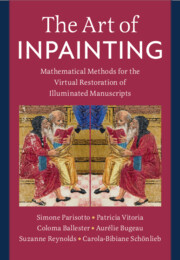
The art of image restoration and completion has entered a new phase thanks to digital technology. Indeed, virtual restoration is sometimes the only feasible option available to us, and it has, under the name 'inpainting', grown, from methods developed in the mathematics and computer vision communities, to the creation of tools used routinely by conservators and historians working in the worlds of fine art and cinema. The aim of this book is to provide, for a broad audience, a thorough description of imaging inpainting techniques. The book has a two-layer structure. In one layer, there is a general and more conceptual description of inpainting; in the other, there are boxed descriptions of the essentials of the mathematical and computational details. The idea is that readers can easily skip those boxes without disrupting the narrative. Examples of how the tools can be used are drawn from the Fitzwilliam Museum, Cambridge collections.
We discuss the functions and evolution of conscious vision. Conscious vision, we argue, operates too slowly to be suited for immediate actions, but instead evolved for offline cognition. We trace the emergence of conscious vision to the water-to-land transition, where larger terrestrial sensory horizons allowed animals to benefit from model-based planning. This shift drove the evolution of “reality monitoring” – the capacity to determine whether internal signals reflect external reality or endogenous activity uncoupled from sensory input. Following higher-order theories of consciousness, we associate consciousness with this reality monitoring function and discuss novel empirical predictions.
This Element reviews the current state of what is known about the visual and vestibular contributions to our perception of self-motion and orientation with an emphasis on the central role that gravity plays in these perceptions. The Element then reviews the effects of impoverished challenging environments that do not provide full information that would normally contribute to these perceptions (such as driving a car or piloting an aircraft) and inconsistent challenging environments where expected information is absent, such as the microgravity experienced on the International Space Station.
The conclusion summarises the main argument of the book: that the mirror-image, as an object and as a metaphor, was critical to the mimetic definition of painting that we recognise as the key pictorial development of Renaissance art. If perspective was painting’s means, the mirror was its exemplum. Tracing the conceptual elaboration of the reflective image, it concludes that the prolific representation of the inset-mirror motif within early modern painting was both the rebus and matrix of its own pictorial representation.
What is the threshold that intervenes between one mind and another, across which the act of looking takes place?
This essay addresses this question, in relation to the work of Samuel Beckett, W. G. Sebald and J. M. Coetzee. All three writers are centrally concerned with what I here call the ‘threshold of vision’ – and for all three writers, to think this threshold requires an act of ethical imagination. This is the case for the exchange of any look between one consciousness and another; but for all three writers this exchange becomes particularly charged when it is shared between human and animal. The essay reads the act of looking through this relation between human and nonhuman, to produce a critical account of the politics of shared life, as this exceeds our given taxonomies for imagining consciousness.
It was a privilege to attend the symposium Defining Health Law for the Future, and join with so many of Georgia State University College of Law Professor Emerita Charity Scott’s colleagues and friends, supporters, former students, mentees, and presenters. It was a symposium that fittingly served as a tribute to Charity and the remarkable impact she had on the many communities she touched. To the Harrell/Scott family — thank you so much for helping us celebrate Charity and her work.
The integration of ‘AI’ technologies into weapon systems introduces a complex dimension to international relations and security, championing technological solutions for enduring warfare challenges, notably enhancing ‘situational awareness’ through advances such as automated ‘vision’. However, the discourse, particularly in Western militaries like that of the United States, often overlooks inherent limitations and issues in AI-based warfare. This paper explores ‘AI’s’ implications for military vision by inter alia scrutinising the US military’s Joint All-Domain Command and Control (JADC2) process. It argues that the US military actively transforms the observation, decision, and action apparatus, progressively substituting human vision and decision-making, leading to a multidimensional de-visualisation. This denotes fundamental changes in human perception, reshaping knowledge, control, and agency dynamics. In conclusion, the paper suggests an imminent era of de-visualisation in the military – a deliberate relinquishment of human control for perceived military efficiency and effectiveness. This marks a transformative shift, urging nuanced consideration of the profound impact of ‘AI’ technologies on warfare dynamics.
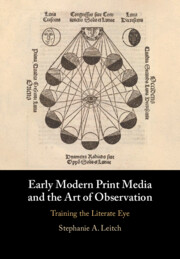
Early modern printmakers trained observers to scan the heavens above as well as faces in their midst. Peter Apian printed the Cosmographicus Liber (1524) to teach lay astronomers their place in the cosmos, while also printing practical manuals that translated principles of spherical astronomy into useful data for weather watchers, farmers, and astrologers. Physiognomy, a genre related to cosmography, taught observers how to scrutinize profiles in order to sum up peoples' characters. Neither Albrecht Dürer nor Leonardo escaped the tenacious grasp of such widely circulating manuals called practica. Few have heard of these genres today, but the kinship of their pictorial programs suggests that printers shaped these texts for readers who privileged knowledge retrieval. Cultivated by images to become visual learners, these readers were then taught to hone their skills as observers. This book unpacks these and other visual strategies that aimed to develop both the literate eye of the reader and the sovereignty of images in the early modern world.
Felix wrote his life of St. Guthlac also during the zenith of Latin writings in Anglo-Saxon England, namely in the early eighth century. In vivid, distinctive Latin Felix tells of the experiences of this solitary who went off into the fens of East Anglia to devote himself to God at Crowland, including his dramatic encounters with the demons of hell and various unusual miracles, including the retrieval of a parchment folio carried off by a thieving magpie.
Optic nerve hypoplasia (ONH) and septo-optic-pituitary dysplasia (SOD) are neurodevelopmental disorders associated with congenital visual impairment. Our aim was to investigate associations between several ophthalmic and neuroimaging features in patients with ONH/SOD.
Methods:
A retrospective chart and neuroimaging review was performed in patients with ONH/SOD. Ophthalmic signs (e.g., monocular best-corrected visual acuity [BCVA], nystagmus, and strabismus) and neuroimaging data were extracted and their associations were investigated.
Results:
There were 128 patients (70 males) with ONH/SOD who had neuroimaging. Their mean age at the end of the study was 13.2 (SD: 7.5) years. Ophthalmic data were available on 102 patients (58 males). BCVA varied from normal to no light perception. There were statistically significant associations between: (A) Reduced optic nerve or chiasm size on neuroimaging and more severely impaired BCVA and (B) laterality of the reduced optic nerve or chiasm size on neuroimaging and laterality of: (1) The eye with reduced BCVA, (2) small optic disc size, and (3) RAPD, if present (p ≤ 0.0002 each). The presence of symmetrically small optic nerves on MRI was significantly more common in patients with nystagmus than when nystagmus was absent (N = 96, 75% vs. 38.6%, p < 0.0001). The presence of neuronal migration disorders, their type and laterality were not associated with BCVA and laterality of the reduced BCVA.
Conclusion:
The functional and structural associations in ONH are consistent with the impaired visual function that results from the hypoplastic anterior visual pathways. However, these associations were not perfectly concordant making prediction of adult BCVA challenging in these patients.