To save content items to your account,
please confirm that you agree to abide by our usage policies.
If this is the first time you use this feature, you will be asked to authorise Cambridge Core to connect with your account.
Find out more about saving content to .
To save content items to your Kindle, first ensure no-reply@cambridge.org
is added to your Approved Personal Document E-mail List under your Personal Document Settings
on the Manage Your Content and Devices page of your Amazon account. Then enter the ‘name’ part
of your Kindle email address below.
Find out more about saving to your Kindle.
Note you can select to save to either the @free.kindle.com or @kindle.com variations.
‘@free.kindle.com’ emails are free but can only be saved to your device when it is connected to wi-fi.
‘@kindle.com’ emails can be delivered even when you are not connected to wi-fi, but note that service fees apply.
This text explores how electronic musical instruments and electronic music ensembles can relate to composition and music notation by discussing the instruments in terms of existing practice in traditional instrumentation and in relation to symbolic electroacoustic music analysis. Starting from orchestration theory, the text considers how electronic musical instruments behave and are used, both with support from the author’s own practice and from a case study with students within the framework of a live-electronic ensemble course. The case study reflected the participants’ practice as creative composers/musicians, and how their exploratory and experimental approaches to their instruments proved important, creating challenges for notation. Traditionally, music notation relies on continuous changes of simple parameters, while performances with complex electronic instruments may have just as important information to document regarding their initial connectivity and parameter settings.
This paper presents the theory of improvisational emergence, an account of how social phenomena emerge from improvisational processes. I build outward from the small-group improvisational encounter to provide an account of the relationship between individuals, groups, and societies. Social entities, including groups and societies, emerge from people engaged in group improvisation. But even though social entities emerge from individuals in interaction, their study cannot be reduced to the study of individuals, because once having emerged, social entities have causal power over individuals. The theory of improvisational emergence addresses the structure-agency relationship and the micro-macro debate in sociological theory. It moves beyond practice and structuration theories in positing an ontological separation between people and society. Improvisational emergence allows us to explain the relationship between the improvisational creativity of each participating individual and the collective improvisationality of the group. A complete understanding of social phenomena, including social structures, norms, and cultures, must be grounded in the theoretical and empirical study of creative improvisation.
Lyrics in folk songs – defined as those ‘most folks are fond of singing’, to quote Phillips Barry (1939 – shape the mysterious processes by which a song can remain widely known as people hear it, re-create it, and keep it singing, sometimes for generations. I identify prevalent strategies in folk-song words – repetition and familiar imagery, rhetorical framings, parodic echoing and interjection, evocation of childhood and youth, voicing catastrophe and grief, formulaic (yet flexible) structural patterning, and call-and-response engagement – that enable people to carry songs onward and also to be carried by them, by creating shared identification, belonging, emotion, humor, participation, and more. Examples include ballads, lyric songs, and hymns from the U.S. Ozark mountains; a French children’s song; commercial 1960s and 1990s pop hits in English; disaster songs about a Pacific Northwest volcanic eruption, a Mississippi flood, an Oregon shipwreck, and a Spanish mine explosion; and Shona responsorial and improvising songs from Zimbabwe.
This article explores the semiotic and embodied dynamics of improvisation by focusing on tactile interaction, risk, and the temporal conditions under which meaning must emerge. Drawing on ethnographic examples from competitive and free solo rock climbing, as well as greeting practices among Swahili women in Lamu (Kenya) and Toronto (Canada), I explore how improvisation operates not as a deviation from routinized behavior, but as a generative force. Through an examination of these disparate tactile encounters, I argue that under high-stakes temporal pressure, improvisation becomes a form of semiotic labor: an interpretive responsiveness to emergent signs that are not only felt in the moment but are also anticipated and evaluated against embodied memory. Rock surfaces and handshakes are treated as communicative environments that elicit the anticipation of qualia and require semiotic attunement when such anticipation fails. In such moments, I argue, improvisation does not simply fill a gap but constitutes a recalibration of meaning through the body.
This chapter explores the folk and traditional music of Scotland, Ireland, and Wales – the so-called Celtic regions of the British Isles – in terms of the concepts and processes through which such music is made, representing both the everyday and the elite, past and present; modalities, in short, that I feel represent a timeless importance to our aesthetic understanding and a foundation for negotiating traditional music’s social and historical value today. Threading loosely through my exploration of these modalities is what ethnomusicologist Constantin Brăiloiu called ‘the problem of creation’, which serves as a useful lens through which I remark on the making of traditional music as a complex interplay of function, acquisition, structure, symmetry, orality, improvisation, variation, literacy, and memory. I present these modalities chiefly through the prism of Scottish music owing to its significance in the historical discourse surrounding our very concept of the folk.
Grime music emerged at the turn of the millennium in the United Kingdom. Performed by MCs and DJs, it is a vital and vibrant form with unrelenting energy. This chapter focuses on live collective performance in grime music. In particular, it explores the spaces where grime is performed, paying attention to the specificity of these contexts, and their impact on group practice. It is split into three sections. Firstly, it positions grime as genre, demonstrating how antecedent forms—principally hip-hop and Jamaican dancehall—inform its collaborative, yet competitive nature. Secondly, it will offer an overview of these key arenas (radio, raves, record shops), unpacking how grime thrived within a “Black Public sphere” outside of heavy censorship and racialised policing of mainstream public fora. Finally, it will focus on a performance that captures grime’s improvisatory framework. Taken from 2007, this acclaimed “Birthday Set” for East London MC Ghetts possesses many hallmarks of grime performance. The analysis addresses competitiveness within MCs, intergeneric allusions (lyrical or otherwise), and the DJ’s technical cachet. This chapter therefore demonstrates dense interconnectivity within grime’s contexts for performance, offering insight into the ways in which the live domain acts as the pivotal ground for new creative work.
This chapter will explore the fundamentals of drama, both as a skill and as a methodology for teaching other curricular requirements. It also offers practical activities and assessment practices, as well as theoretical underpinnings and methods to further develop teaching methodologies beyond this text. You will have the confidence and knowledge to engage learners of all ages and abilities to explore their own ideas through dramatic performance and to evaluate the performance of others. The key to drama is not only the development of skills, but also the ability to apply processes and value these processes as equal to the end product of a drama activity. The application of drama in literacy, numeracy and other areas of learning will be embedded throughout. A great deal of the focus on drama in the classroom in Australia is from a western perspective.
No French composer active in the twentieth century could avoid being affected by Debussy’s music, and Boulez was no exception. The two composers shared a number of poetic interests, with Mallarmé being important to both Debussy and Boulez for different reasons. An interest in music from non-Western traditions was also central to both composers, and Boulez wrote approvingly that for Debussy, this was a ‘corrosive influence.’ Boulez considered Debussy to be a revolutionary composer. He always pushed back against the notion that Debussy was a composer of delicate and floppy music, preferring to focus on the emotional intensity of his work. Boulez understood that the rigour and freedom that Debussy sought in his music were two sides of the same coin, and he sought the same balance in his own compositions. In his writings, Boulez constantly portrays Debussy as a revolutionary modernist – as a harbinger of his own work.
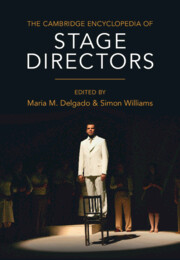
With a broader range of entries than any other reference book on stage directors, this Encyclopedia showcases the extraordinary diversity of theatre as a national and international artistic medium. Since the mid nineteenth century, stage directors have been simultaneously acclaimed as prime artists of the theatre and vilified as impediments to effective performance. Their role may be contentious but they continue to exert powerful influence over how contemporary theatre is made and engaged with. Each of the entries - numbering over 1,000 - summarises a stage director's career and comments on the distinctive characteristics of their work, alluding to broader traditions where relevant. With an introduction discussing the evolution of the director's role across the globe and bibliographic references guiding further reading, this volume will be an invaluable reference work for stage directors, actors, designers, choreographers, researchers, and students of theatre seeking to better understand how directors work across different cultural traditions.
Individuals improvise around authoritarian control and government restrictions in everyday circumstances. By shifting the focus from gaining institutional access to meeting their needs, migrant workers make do and muddle through despite being relatively powerless vis-à-vis the Chinese state. Newcomers have devised strategies of survival to scrape together needs so that they can keep their jobs, save their disposable income, and attain medical treatment when necessary. At the individual level, they frequently rely on visiting illegal private health clinics or try to straddle the rural–urban divide. In community-based innovations, they negotiate with their employers to opt out of paying into social insurance schemes (and thereby run against the common notion that all outsiders want to be included) or craft small-scale, self-run insurance arrangements. These practices suggest that migrants have found ways to curtail some of the effects of social control, but notably it is mostly at the margins. The effects of political atomization are therefore muddled, and the state’s use of public service provision as a tool of social control largely remains intact.
Written from the perspective of two people currently involved in experimental and electronic music in Australia, this chapter provides an overview of some of the key movements and works in the genre, from the twentieth century to the present day. Focusing primarily on music that exploits technology and experimental approaches that progress innovation in art music contexts, it highlights some of the diverse practitioners – performers, composers, improvisers, sound artists, and instrument makers – who have pushed the boundaries of what is possible, often blurring the lines between art forms in the process. While it is unable to provide an exhaustive historical or contemporary account of the innovations that have been achieved here, or those responsible, the selected representative survey should serve to contextualise Australia’s contributions to electronic and experimental music, demonstrating our reputation for presenting ‘mavericks’ to the music world.
This chapter examines the current state of jazz in Australia through the lens of notable practitioners—Andrea Keller, Simon Barker, Gian Slater, Kristin Berardi, Phil Slater and Jamie Oehlers. Presented as a panel discussion, the participants explore the term ‘jazz’ as it is perceived both by audiences and the practitioners themselves, discuss the challenges of presenting original music in a country as isolated as Australia, and question whether there is an audible Australian jazz ‘dialect’.
Schubert acquired the art of improvisation from Salieri, who had trained him in the old school of a kapellmeister, a proficient keyboard improviser able to compose, in a short space of time, a mass, symphony or opera, and furnish publishers with songs, chamber music and piano repertoire. Schubert’s friends dismissed his teacher’s theoretically grounded practice of keyboard improvisation as old-fashioned, unknowingly realising that numerous treatises were lamenting its disappearance from musical pedagogy.The skills Schubert acquired were finely honed in Viennese salons. Whereas pianists of the mid nineteenth century played for a vastly expanded concert audience with a lower level of musical education, Schubert’s improvisations – unlike Liszt’s or Hummel’s – were exclusively in private, elite company, where he was immediately understood. Sonnleithner recalls Schubert’s multilevelled improvisations, where he played light waltzes for friends to dance to while others gathered around listening, as he satisfied simultaneously popular and learned tastes. Louis Schlösser remembers Schubert improvising fantasies on Hungarian tunes, which shows the pleasing, popular side of Schubert’s improvisations. One of the most distinctive elements resulting from Schubert’s ‘improvisatory’ compositional technique is his use of harmony at local and structural levels, and novel use of form whose roots are in his improvisor’s fingers.
Schubert’s twenty-eight ballads provide an unusual perspective on his approach to writing for the piano for several reasons. First, the role of improvisation within balladeering was much more pronounced, traces of which remain within Schubert’s published works. Second, the piano was used to provide more explicit scene-setting, through the use of scenic effects, than is generally the case in Schubert’s other Lieder. Third, the ballads allow for the re-examination of narrative processes within nineteenth-century Lieder – in other words, how songs told stories.This chapter focuses on three ballads that show Schubert adopting different approaches to rendering poetic imagery in musical terms. It begins with his 1815 settings of Friedrich Schiller’s ‘Der Taucher’, D77, and Ludwig Heinrich Christoph Hölty’s ‘Die Nonne’, D212, considering their use of elaborate ‘Schauder’ or ‘shudder’ effects, which now tend to be dismissed as hackneyed but might instead be considered to offer access to often-overlooked aspects of early nineteenth-century performance culture. At the other end of the stylistic spectrum, and of Schubert’s career, comes his simple strophic setting of Gottfried Herder’s ‘Edward’, D923 (1827). Concepts and practices of the ballad shifted over the course of Schubert’s career and would continue to do so for subsequent generations.
This chapter gives a practical guide to the creative process through step-by-step description of the composition of a short piano miniature, from initial idea to final score.
Moving beyond narratives of female suppression, and exploring the critical potential of a diverse, distinguished repertoire, this Companion transforms received understanding of women composers. Organised thematically, and ranging beyond elite, Western genres, it explores the work of diverse female composers from medieval to modern times, besides the familiar headline names. The book's prologue traces the development of scholarship on women composers over the past five decades and the category of 'woman composer' itself. The chapters that follow reveal scenes of flourishing creativity, technical innovation, and (often fleeting) recognition, challenging long-held notions around invisibility and neglect and dismissing clichés about women composers and their work. Leading scholars trace shifting ideas about composers and compositional processes, contributing to a wider understanding of how composers have functioned in history and making this volume essential reading for all students of musical history. In an epilogue, three contemporary composers reflect on their careers and identities.
A tension between freedom and constraint is characteristic of improvisation practice and pedagogy, presenting challenges for teachers/workshop leaders. To create musical focus in ensemble improvisation, some sounds are encouraged, whilst others are edited out, ignored or marginalised. This article investigates improvised sounds as central or subaltern, asking how marginal sounds such as musical ‘heckles’ and off-task sounds can be accepted meaningfully into musical frameworks. I question what can be learned from subaltern sounds. How can power structures within the improvisation workshop be subverted by listening to sounds outside teacher-defined frames, and how can listening become inclusive without sessions descending into chaos?
As a composer/practitioner, Julián Graciano offers insights into tango as a transnational musical form by analyzing the performance element of spontaneity and improvisation in two musical genres typically associated with the United States and Argentina, namely jazz and tango respectively. Graciano shows show how the two genres have impacted each other in sound, style, and technique, illustrated with numerous musical examples of his own tango-jazz hybrid compositions and other tango and jazz composers. As a bonus, Graciano provides a video tutorial on how to realize a tango lead sheet.
This chapter draws on experiences of mixing methods in the interdisciplinary research of dance, choreography, immersive performance/participatory performance, and fandom. Reflecting on the methods employed in the author’s book Tandem Dances: Choreographing Immersive Performance, the chapter treats the research process as improvisational and compositional, emerging in tandem with the work being researched. These methods include audience research, choreographic analysis, participant observation, and analysing media content. The aim of the chapter is to make the research process explicit so other researchers might apply a similarly compositional approach in audience research in other performance contexts.
Touching down in a few of the many geographies of Black sound, this chapter pauses to listen in between the lines and forms of Black literary creation. Inclusive of readings of Toni Morrison, Alice Walker, Paul Beatty, Jesmyn Ward, and others, this chapter examines the penetrating collusions of the sonic and/as the literary in order to briefly mark their interreliance and to consider the conditions and futures of blackness as improvisational practice.