Refine search
Actions for selected content:
95780 results in Archaeology
Rome Awards: Maria Mancini and the development of female equestrian culture in Rome, 1661–72
-
- Journal:
- Papers of the British School at Rome / Volume 91 / October 2023
- Published online by Cambridge University Press:
- 16 November 2023, pp. 359-360
- Print publication:
- October 2023
-
- Article
- Export citation
ROME TRANSFORMED: STRUCTURAL SURVEY AND ENVIRONMENTAL ANALYSIS IN SOUTHEAST ROME
-
- Journal:
- Papers of the British School at Rome / Volume 91 / October 2023
- Published online by Cambridge University Press:
- 16 November 2023, pp. 323-327
- Print publication:
- October 2023
-
- Article
-
- You have access
- Open access
- HTML
- Export citation
The Incised Effigial Slabs of the Pays de la Loire – ‘Bien graver et souffisement’. By Paul Cockerham. Pp xxii + 426, 247 col and 19 b/w ills, 1 map. Shaun Tyas, Donington, 2022. isbn 9781907730955. £47 (hbk).
-
- Journal:
- The Antiquaries Journal / Volume 103 / October 2023
- Published online by Cambridge University Press:
- 23 October 2023, pp. 453-454
- Print publication:
- October 2023
-
- Article
- Export citation
NEW INSIGHTS INTO LATE PLEISTOCENE CAVE HYENA CHRONOLOGY AND POPULATION HISTORY—THE CASE OF PERSPEKTYWICZNA CAVE, POLAND
-
- Journal:
- Radiocarbon / Volume 65 / Issue 5 / October 2023
- Published online by Cambridge University Press:
- 16 October 2023, pp. 1038-1056
- Print publication:
- October 2023
-
- Article
-
- You have access
- Open access
- HTML
- Export citation
AAQ volume 88 issue 4 Cover and Back matter
-
- Journal:
- American Antiquity / Volume 88 / Issue 4 / October 2023
- Published online by Cambridge University Press:
- 03 November 2023, pp. b1-b2
- Print publication:
- October 2023
-
- Article
-
- You have access
- Export citation
RADIOCARBON DATING OF ASIAN LACQUERS: MOLECULAR CHARACTERIZATION AND ASSESSMENT OF A PRETREATMENT METHOD PRIOR TO ACCELERATOR MASS SPECTROMETRY
-
- Journal:
- Radiocarbon / Volume 65 / Issue 5 / October 2023
- Published online by Cambridge University Press:
- 09 November 2023, pp. 1193-1212
- Print publication:
- October 2023
-
- Article
- Export citation
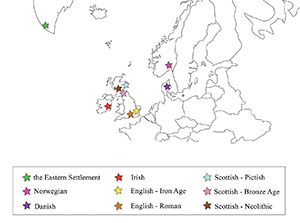
Mixed ancestry of Europeans who settled Iceland and Greenland: 3D geometric-morphometric analyses of cranial base shape
-
- Article
-
- You have access
- Open access
- HTML
- Export citation
Balsdon Fellowships: Stasera in TV: Italian variety television and its stars 1954–74
-
- Journal:
- Papers of the British School at Rome / Volume 91 / October 2023
- Published online by Cambridge University Press:
- 16 November 2023, pp. 346-347
- Print publication:
- October 2023
-
- Article
- Export citation
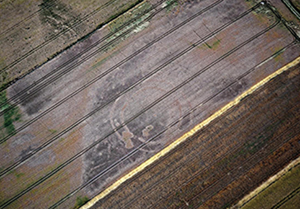
Revealing the extent of Neolithic rondel enclosures in Lower Silesia using non-invasive prospection
-
- Article
-
- You have access
- Open access
- HTML
- Export citation
Shortland-Jones Rome Award: Terrain and antiquities through the lens of the South Etruria Survey, 1955–75
-
- Journal:
- Papers of the British School at Rome / Volume 91 / October 2023
- Published online by Cambridge University Press:
- 16 November 2023, p. 364
- Print publication:
- October 2023
-
- Article
- Export citation

What is a village? Agroscapes, collective action and medieval villages in northern Iberia
- Part of
-
- Article
-
- You have access
- Open access
- HTML
- Export citation
ROM volume 91 Cover and Back matter
-
- Journal:
- Papers of the British School at Rome / Volume 91 / October 2023
- Published online by Cambridge University Press:
- 16 November 2023, pp. b1-b2
- Print publication:
- October 2023
-
- Article
-
- You have access
- Export citation
AQY volume 97 issue 395 Cover and Front matter
-
- Article
-
- You have access
- Export citation
Simon Keay Award in Mediterranean Archaeology: Revisiting the sculptures of Sperlonga: new research and community engagement
-
- Journal:
- Papers of the British School at Rome / Volume 91 / October 2023
- Published online by Cambridge University Press:
- 16 November 2023, pp. 371-372
- Print publication:
- October 2023
-
- Article
- Export citation
ARCHAEOLOGICAL FIELDWORK REPORTS
-
- Journal:
- Papers of the British School at Rome / Volume 91 / October 2023
- Published online by Cambridge University Press:
- 16 November 2023, pp. 321-323
- Print publication:
- October 2023
-
- Article
- Export citation
ARCHAEOLOGICAL EXCAVATIONS OF THE WESTERN SIDE OF THE SANCTUARY OF MONTE RINALDO (COMUNE DI MONTE RINALDO, PROVINCIA DI FERMO, REGIONE MARCHE)
-
- Journal:
- Papers of the British School at Rome / Volume 91 / October 2023
- Published online by Cambridge University Press:
- 16 November 2023, pp. 338-341
- Print publication:
- October 2023
-
- Article
- Export citation
Society for Renaissance Studies — BSR Award: Rubens, van Dyck, and women's dress in Genoese portraiture, 1604–1627
-
- Journal:
- Papers of the British School at Rome / Volume 91 / October 2023
- Published online by Cambridge University Press:
- 16 November 2023, pp. 369-370
- Print publication:
- October 2023
-
- Article
- Export citation
Hugh Last Fellowship: The Roman imperial sententia and the transmission of thought from antiquity to the Renaissance
-
- Journal:
- Papers of the British School at Rome / Volume 91 / October 2023
- Published online by Cambridge University Press:
- 16 November 2023, pp. 349-350
- Print publication:
- October 2023
-
- Article
- Export citation
Coleman-Hilton (University of Sydney) Scholarship: Fruits of empire: grain in the Roman Republic
-
- Journal:
- Papers of the British School at Rome / Volume 91 / October 2023
- Published online by Cambridge University Press:
- 16 November 2023, pp. 368-369
- Print publication:
- October 2023
-
- Article
- Export citation
AQY volume 97 issue 395 Cover and Back matter
-
- Article
-
- You have access
- Export citation
