To save content items to your account,
please confirm that you agree to abide by our usage policies.
If this is the first time you use this feature, you will be asked to authorise Cambridge Core to connect with your account.
Find out more about saving content to .
To save content items to your Kindle, first ensure no-reply@cambridge.org
is added to your Approved Personal Document E-mail List under your Personal Document Settings
on the Manage Your Content and Devices page of your Amazon account. Then enter the ‘name’ part
of your Kindle email address below.
Find out more about saving to your Kindle.
Note you can select to save to either the @free.kindle.com or @kindle.com variations.
‘@free.kindle.com’ emails are free but can only be saved to your device when it is connected to wi-fi.
‘@kindle.com’ emails can be delivered even when you are not connected to wi-fi, but note that service fees apply.
This article revisits the mainstream scholarly view that the Greek Hestia is the least anthropomorphic deity among the Olympians, an idea that owes much to a short reference to her in Plato’s Phaedrus. The analysis is based on textual and visual sources from the Archaic period: I first review two references to Hestia in early hexameter poetry, in Hesiod’s Theogony and in the Homeric Hymn to Aphrodite, before turning to the depiction of her in two early Attic black-figure vases, the Sophilos dinos at the British Museum and the François vase, which have been neglected in discussing Hestia’s anthropomorphic nature in early Greek thought. While the study of individual Greek gods has returned to the fore in the field of Greek religion in the last 20 years, it seems that not enough has changed in the current conceptualization of Hestia.
This article revisits the question of how the epigraphic culture of the fifth-century BC Athenian Empire impacted on the epigraphic cultures of other communities. Through consideration of the late fifth-century epigraphic cultures of Thasos and Rhodes, it argues that allied communities interacted with the epigraphic manifestations of Athenian authority in different ways, producing diverse epigraphic responses. Further, it argues that the first traces of the shift from the heterogeneity of archaic epigraphic cultures to the epigraphic convergence of the late classical world can be found in the tension between local and Athenian influences in late fifth-century public inscription beyond Athens.
This article examines how and why the Ptolemies, soon after they succeeded Alexander in Egypt, orchestrated the return of Egyptian statues supposedly stolen by the Persians, drawing on the cultural memory of different population groups: Egyptians and Graeco-Macedonians. First, it argues that the Ptolemies invested energy in searching for Egyptian objects and gods’ statues in the Levant, which they distributed among the temples, though some may have been newly fabricated statues. Second, the study aims to reconstruct what the Ptolemies knew about earlier Greek and Near Eastern traditions of seizing and returning statues, which mixed elements of truth with topoi. This reconstruction serves to explain how meaningful it was to Egyptians and Graeco-Macedonians to bring back statues after each campaign. Finally, comparing the tale of Bentresh, the account of Sarapis’ origin by Tacitus and the Ptolemaic stelae, the article suggests that these narratives highlighted Egypt as the centre of the world with the most powerful ruler, a claim appealing to all its inhabitants.
In a scene of father-son conflict in Aristophanes’ Clouds, father Strepsiades supports his right to be treated well by his son Pheidippides by reminding the boy of how well he was taken care of as a baby. Even before Pheidippides could talk properly, his father catered to his every wish. If he said ‘brū’, his father would get him something to drink, ‘mammā’ would make him get food, and ‘kakkā’ would lead to his being taken outside to relieve himself. These baby-words have always been taken for what Strepsiades claims they were: meaningful and intentional baby requests.
Starting with brū, we discuss ancient and modern interpretations of the passage and contextualize it within the history of ancient and later Western thought about child language. We then propose a new interpretation of brū as the conventional rendition of a universal baby vocalization, what is known as a ‘raspberry’. In performance, this would lead to a mimetic ‘depiction’ in the middle of Strepsiades’ sentence. Finally, we return to the utterances mammā and kakkā to show that there, too, Strepsiades may be demonstrating parental devotion by interpreting the virtually unintelligible and by acting out baby activities that lend plausibility to his mantic performance.
This paper considers a new corpus of 490,154 Roman coins (site finds) which have been recorded from England and Wales. The corpus provides British and regional means to aid in the preparation of coin reports in line with Historic England guidelines, along with spatial data providing new opportunities for research. The methods of data collection will be detailed and some of the possibilities this dataset can provide presented through a number of case studies. Through the consideration of applied numismatic analyses, the social distribution of the material and, crucially, the spatial distribution of Roman coinage, we can identify new trends and patterns. Case studies evaluating the fourth century will emphasise the changing importance of settlements in Roman Britain and identify those linked with the late Roman state. Furthermore, the retraction of coinage distributions in the second half of the fourth century will be explored. Building on the national and site type means explored within the paper, the full dataset has been made available in a range of forms on the Archaeology Data Service and in an interactive map developed by Maploom.
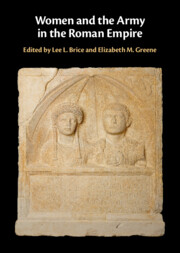
The presence of women in Roman military contexts has been established beyond doubt by scholars in recent decades. Nevertheless, very little sustained attention has been paid to who these women were, how they fit into the fabric of settlements, and what their contributions were to these communities. This volume offers new insights into the associations, activities, and social roles of women in the context of the Roman army, emphasizing the tangible evidence for the lived realities of women and families at different social levels. The various chapters adopt dynamic perspectives and shed new light on archaeological and historical evidence to provide novel conclusions about women's lives in antiquity. Histories of the Roman army can no longer ignore the women who lived and worked in its midst and histories of Roman women must acknowledge their important military role.
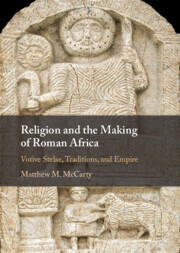
This book fundamentally rewrites the cultural and religious history of North Africa under the Roman Empire, focalized through rituals related to child sacrifice and the carved-stone monuments associated with such offerings. Earlier colonial archaeologies have stressed the failure of the empire to 'Romanize' Indigenous and Punic settler populations, mobilizing inscriptions and sculpture to mirror and explain modern European colonial failures as the result of ethnic African permanence. Instead, this book uses postcolonial theory, pragmatic semiotics, material epistemologies, and relational ontologies to develop a new account of how Roman hegemony transformed and was reproduced through signifying practices in even a seemingly traditional, 'un-Roman' rite such as child sacrifice. In doing so, the book offers a model for understanding the Roman Empire, the peoples who lived across its provinces, and their material worlds.
‘Relaxed’ events are now common across the public Arts and Heritage sectors. Although designed with the needs of autistic children and their families in mind, they suit people with a range of access needs. Our project at The Open University asked: what would a ‘relaxed tutorial’ look like, and who might benefit from it? Across two years (2021–2023), tutors in the Department of Classical Studies at The Open University trialled a set of autism-friendly accessibility adjustments to live online tutorials for distance learners on a Roman History module. We found that relaxed tutorials were welcomed by students with anxiety disorders, caring responsibilities, chronic conditions and low confidence, as well as by autistic students. Since the project was concluded in 2023, relaxed tutorials have been rolled out across further Classical Studies modules at The Open University. Their principles and structure offer a new way of looking at accessibility adjustments which could be adapted to other teaching contexts and levels.
The study concerns the use made by Year 8 pupils of Latin using the ‘Explorer’ digital learning tool (part of the digital learning resources of the Cambridge Latin Course). Through close attention to transcripts of students working in pairs using the tool, which provides vocabulary and language analysis of continuous Latin prose narratives, the author notes its value in promoting inter-pupil discussion and collaborative learning. Recommendations include that teachers should consider the positive value of the tool as a means to promote discussion, but that pupils also need to be taught how to use the language analyser.
The Initial Teacher Training (ITT) Common Core Framework (CCF) requires all teachers to adapt classroom teaching to support all students (Department for Education, 2024). While the Department for Education's previously-encouraged concept of ‘differentiation’ was well-intentioned, in that tasks were meant to be graded to support and develop all students' learning in a class where there were many different levels of prior attainment, it tended to mean that in practice in the classroom different tasks were often set to cater to the supposed different learning attributes of students. Differentiation has now been superseded by the concept of ‘adaptive teaching’. Adaptive teaching is characterised by teaching that takes account of the range in prior attainment of students and anticipates barriers to learning by providing resources or specific support so that they may all achieve the same intended outcomes. Classics teaching is often characterised by the reading of large amounts of text, both in the original languages of Latin or ancient Greek or in translation. Students in the Classics classroom contain a wide range of prior attainment, cultural experiences and may have barriers to learning, such as Special Educational Needs and Disabilities. This article presents findings of how the use of a blended language approach, involving the digital parsing tools in the Cambridge Latin Course and Suburani Latin course books, improved the quantity of translation of Latin achieved by students of mixed prior attainment and encouraged a more effective use of classroom time to develop deeper comprehension and understanding of the translated texts.
This research aims to explore the ways in which creative writing may be used as a pedagogical tool in the Latin language classroom, in particular how creative writing may benefit students in Latin prose composition. The lesson sequence delivered as part of this research was undertaken in an academically-selective, independent coeducational school in an affluent, inner-metropolitan area. The sequence of four 60-minute lessons formed part of the language (as opposed to literature) portion of timetabled Latin lessons for a group of nine Year 12 students (aged 16–17). As part of their language lessons, the students had been following a course of study in prose composition based upon Andrew Leigh's (2019) Latin Prose Composition: A Guide from GCSE to A Level and Beyond1. The lesson sequence was intended to build on this work by making use of, and thus consolidating, grammatical constructions and vocabulary which the students had already encountered in the context of prose composition. The sequence was designed in such a way that students were required to apply their linguistic knowledge in new and creative ways. Students' responses to the various activities were positive and they expressed enjoyment in the methodologies.
Critics have argued that the Active1 approach to Latin is not, in fact, an effective way to learn the language. This misconception appears to stem at least in part from misunderstandings regarding teaching methodology, such as the belief that teachers who use these methods neglect grammar or do not in fact introduce students to ‘real’ original Latin, but simplified versions of the texts created by the teachers themselves. As someone who learned Latin primarily through the Active Method, I can attest that this is an unrealistic representation. These methods are not used at the expense of formal grammar instruction; they are a different way of teaching grammar that also stresses the importance of acquiring a large vocabulary for the purpose of more fluent reading. Nor do such courses never progress to the reading of authentic Classical Latin. I will use online descriptions of Active Method courses to demonstrate this.
This article investigates dictionary usage with Year 7 students of Latin. During my lesson observations I noticed how much students relied on looking up words in the dictionary when working on translation from Latin to English. I wanted to find out if there was the potential for a more interactive and/or memorable way for students to work with their dictionaries. This action research project was carried out in an all-boys, secondary, selective school. I noticed that when students were set to work on translation from Latin to English, they spent a significant amount of time looking up words in the dictionary at the back of the booklet. Often by the time they had looked up the word in question and then turned back to the translation, they had already forgotten the meaning of the word they had looked up. Additionally, the words they were looking for were words that they had already encountered several times but forgotten the meaning of since the last time they had looked it up or seen it. The research confirmed that merely copying the words that students looked up down multiple times helped them recall the vocabulary better than if they simply looked the words up.
I have written this article primarily as an overview for students who are studying Greek at A level and beyond; it may also be useful for their teachers. It covers the period from the Archaic age up to the beginning of Medieval Greek (c. 750 BCE to 500 CE). There is an emphasis on Classical Greek both within and beyond the Classical period, since the Classical form, or approximations to it, has never ceased to be learned, the only form of Greek of which this can be said. It has also left a sizeable imprint on Modern Greek, especially but not exclusively on its more educated forms. I hope though that the article will serve to draw the users’ attention to the many other forms of the language apart from Classical Greek. I know that I could have done with something like this when I was a student: I was hardly aware of the existence of the κοινή, except perhaps as a form of Greek used by Christian writers long after the end of the Classical period.
This is a review of the activities and successes of the 44th residential JACT Latin Summer School, run in July–August 2024. Specifically, it covers our typical teaching arrangement, lectures, trips and events and acknowledges the generosity of our sponsors.
Achieving proficiency in reading Latin is the stated aim of nearly every Latin course the world over. However, very little research has been devoted to how beginner students attempt to process Latin when it is placed in front of them for the first time. This paper aims to fill this gap, based on a study of students still relatively close to the start of their Latin journeys. I found that they tend to read Latin sentences in their original order, breaking them down into individual lexical items, and trying to discern their meaning by looking for similarities with words they already know. They will usually skip over words they do not recognise, returning to them later. This suggests that, as they become more familiar with Latin vocabulary and grammar, and so long as they are not taught to read in a different order, they will continue to read Latin in the order it is written. There is, however, a perception among many of the students that grammar is difficult, and so they tend to overly rely on context and common sense instead. Going forward, I would try to ensure my students become more confident with their grammar, as context can sometimes lead them astray. However, it is clear that, rather than just giving them tables and lists to learn, they need as much exposure to the grammatical forms ‘in the wild’ as possible, to promote ease of recognition.
During the course of my teacher training, I have encountered two distinct classroom contexts for oracy: a term that refers to the ability to express oneself in speech. At my first placement school, very few students were willing to answer questions or present arguments in front of their peers. Conversely, the majority of students at my second placement school are keen to demonstrate their knowledge, yet often speak over one another during discussion tasks. In both schools, dialogue is mainly directed towards the teacher; students rarely offer extended answers during lessons, and oral reasoning and argumentation generally take place as a precursor to written work. I therefore wanted to implement a sequence of lessons where the learning was intentionally carried out and measured through student talk and cooperation. In particular, I wanted to examine how far teaching specific oracy skills and providing informal scaffolded opportunities for presentational and exploratory talk can support the development of historical thinking skills in Year 7 (age 11): in other words, students' ability to consider multiple historical perspectives; to appreciate the difference between modern and ancient values; to critically engage with historical terminology, and to present and justify an argument. Students' responses were generally positive and engagement raised. I conclude with further thoughts about future practice.