Refine search
Actions for selected content:
178647 results in Earth and Environmental Sciences
Novel dissolved organic 14C analyses method applied in a case study at a LILW waste repository
-
- Journal:
- Radiocarbon / Volume 67 / Issue 1 / February 2025
- Published online by Cambridge University Press:
- 18 November 2024, pp. 74-87
- Print publication:
- February 2025
-
- Article
-
- You have access
- Open access
- HTML
- Export citation
Mobility of essential macro- and micro-elements in interaction between artificial sweat and potential peloids of some saline lakes in Mongolia
-
- Journal:
- Clays and Clay Minerals / Volume 72 / 2024
- Published online by Cambridge University Press:
- 18 November 2024, e20
-
- Article
-
- You have access
- Open access
- HTML
- Export citation
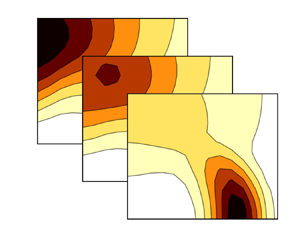
On the laminar solutions and stability of accelerating and decelerating channel flows
-
- Journal:
- Journal of Fluid Mechanics / Volume 999 / 25 November 2024
- Published online by Cambridge University Press:
- 15 November 2024, A43
-
- Article
-
- You have access
- Open access
- HTML
- Export citation
-
We study the effect of acceleration and deceleration on the stability of channel flows. To do so, we derive an exact solution for laminar profiles of channel flows with an arbitrary, time-varying wall motion and pressure gradient. This solution then allows us to investigate the stability of any unsteady channel flow. In particular, we restrict our investigation to the non-normal growth of perturbations about time-varying base flows with exponentially decaying acceleration and deceleration, with comparisons to growth about a constant base flow (i.e. the time-invariant simple shear or parabolic profile). We apply this acceleration and deceleration through the velocity of the walls and through the flow rate. For accelerating base flows, perturbations never grow larger than perturbations about a constant base flow, while decelerating flows show massive amplification of perturbations – at a Reynolds number of $500$, properly timed perturbations about the decelerating base flow grow $ {O}(10^5)$ times larger than perturbations grow about a constant base flow. This amplification increases as we raise the rate of deceleration and the Reynolds number. We find that this amplification arises due to a transition from spanwise perturbations leading to the largest amplification to streamwise perturbations leading to the largest amplification that only occurs in the decelerating base flow. By evolving the optimal perturbations through the linearized equations of motion, we reveal that the decelerating base flow achieves this massive amplification through the Orr mechanism, or the down-gradient Reynolds stress mechanism, which accelerating and constant base flows cannot maintain.


Rethinking extinction “crises”: The case of Asian songbird trade
-
- Journal:
- Cambridge Prisms: Extinction / Volume 2 / 2024
- Published online by Cambridge University Press:
- 15 November 2024, e15
-
- Article
-
- You have access
- Open access
- HTML
- Export citation
JPA volume 98 S94 Cover and Front matter
-
- Journal:
- Journal of Paleontology / Volume 98 / Issue S94 / October 2024
- Published online by Cambridge University Press:
- 15 November 2024, pp. f1-f2
-
- Article
-
- You have access
- Export citation
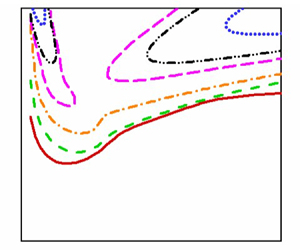
Can isothermal plane Couette flow in fluid overlying porous layer be linearly unstable?
-
- Journal:
- Journal of Fluid Mechanics / Volume 999 / 25 November 2024
- Published online by Cambridge University Press:
- 15 November 2024, A61
-
- Article
-
- You have access
- Open access
- HTML
- Export citation
-
The present study aims to examine the temporal linear stability analysis of isothermal plane Couette flow over a porous layer using the two-domain approach. The flow in the porous layer is described by the unsteady Darcy–Brinkman equations, whereas it is characterised by the Navier–Stokes equations in the fluid layer. In contrast to the Darcy model, it is observed that the isothermal plane Couette flow becomes unstable for such a superposed system on the inclusion of the Brinkman term. From the stability analysis, the two-dimensional mode is found to be least stable, and two modes of instability, namely porous mode and mixed mode are obtained under the consideration of the Darcy–Brinkman model along with advection term (DBA model). For Darcy number $(\delta )=0.01$, depending on the value of the stress-jump coefficient, mixed mode controls the instability of the system at small values of depth ratio $(\hat {d})$, and it disappears for relatively high values of $\hat {d}$, where the porous mode dominates. In addition, it has been observed that when $\hat {d}=0.1$, the critical mode of instability is found to be mixed for $\delta >0.02$ and porous for $\delta \le 0.02$. The stress-jump coefficient destabilises the flow in terms of energy production through perturbed stresses at the interface. As observed in the case of isothermal plane Poiseuille flow studied by Chang, Chen & Straughan (J. Fluid Mech., vol. 564, 2006, pp. 287–303), here also depth ratio (Darcy number) stabilises (destabilises) the flow. However, this characteristic does not remain valid when the advection term is eliminated from the considered momentum equation. For a certain range of $\hat {d} (\delta )$, the destabilising (stabilising) characteristic of the respective parameters are encountered when the fluid mode of instability prevails.


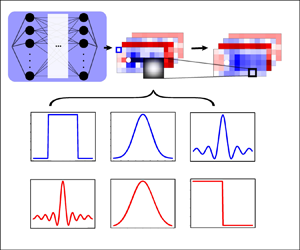
Filtered partial differential equations: a robust surrogate constraint in physics-informed deep learning framework
-
- Journal:
- Journal of Fluid Mechanics / Volume 999 / 25 November 2024
- Published online by Cambridge University Press:
- 15 November 2024, A40
-
- Article
- Export citation

Non-Hermitian Chern number in rotating Rayleigh–Bénard convection
-
- Journal:
- Journal of Fluid Mechanics / Volume 999 / 25 November 2024
- Published online by Cambridge University Press:
- 15 November 2024, A65
-
- Article
- Export citation
Towards adaptive resilience for the future of integrated water systems planning
-
- Journal:
- Cambridge Prisms: Water / Volume 2 / 2024
- Published online by Cambridge University Press:
- 15 November 2024, e11
-
- Article
-
- You have access
- Open access
- HTML
- Export citation
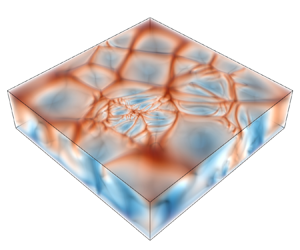
Double-diffusive convection with gravitationally unstable temperature and concentration gradients in homogeneous and heterogeneous porous media
-
- Journal:
- Journal of Fluid Mechanics / Volume 999 / 25 November 2024
- Published online by Cambridge University Press:
- 15 November 2024, A62
-
- Article
- Export citation
-
Geothermal gradients and heterogeneous permeability are commonly observed in natural geological formations for underground CO $_2$ sequestration. In this study, we conduct three-dimensional direct numerical simulations on the double-diffusive convection with both unstable temperature and concentration gradients in homogeneous and heterogeneous porous media. For homogeneous porous media, the root-mean-squared velocity increases linearly with density ratio defined as the buoyancy ratio by temperature and concentration differences. The flow structures show no remarkable changes when temperature Rayleigh number ${Ra}_T$ is less than its critical value, but alter from sheet-like to cellular structures as ${Ra}_T$ surpasses this threshold. The concentration wavenumber scales approximately as $k_{rS}\sim {Ra}_e^{0.47}$ with a defined effective Rayleigh number ${Ra}_e$. By using a scale analysis, the concentration flux exhibits a consistent linear relation with the total driving forces for all simulations. For heterogeneous porous media, where the Dykstra–Parsons coefficient $V_{DP}$ and correlation length $l_{r}$ determine the spatial distribution of the permeability field, the flow is strengthened in places with higher permeability. The velocity and concentration flux are less affected by $l_{r}$ than that by $V_{DP}$. For small correlation length, the flow structures coarsen and their characteristic width generally increases with increasing heterogeneity. For large correlation length, small structures emerge in the regions with large permeability, which can be attributed to the intensified local Rayleigh number triggering more vigorous convection there. The variations of concentration flux with $l_{r}$ and $V_{DP}$ can be explained by the portion of area covered by high concentration with large vertical velocity near the boundaries.


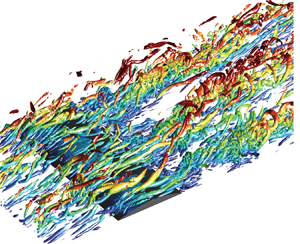
Impact of spanwise rotation on flow separation and recovery behind a bulge in channel flows
-
- Journal:
- Journal of Fluid Mechanics / Volume 999 / 25 November 2024
- Published online by Cambridge University Press:
- 15 November 2024, A51
-
- Article
-
- You have access
- Open access
- HTML
- Export citation
-
Direct numerical simulations of spanwise-rotating turbulent channel flow with a parabolic bump on the bottom wall are employed to investigate the effects of rotation on flow separation. Four rotation rates, $Ro_b := 2\varOmega H/U_b = \pm 0.42$, $\pm$1.0, are compared with the non-rotating scenario. The mild adverse pressure gradient induced by the lee side of the bump allows for a variable pressure-induced separation. The separation region is reduced (increased) when the bump is on the anti-cyclonic (cyclonic) side of the channel, compared with the non-rotating separation. The total drag is reduced in all rotating cases. Through several mechanisms, rotation alters the onset of separation, reattachment and wake recovery. The mean momentum deficit is found to be the key. A physical interpretation of the ratio between the system rotation and mean shear vorticity, $S:=\varOmega /\varOmega _s$, provides the mechanisms regarding stability thresholds $S=-0.5$ and $-$1. The rotation effects are explained accordingly, with reference to the dynamics of several flow structures. For anti-cyclonic separation, particularly, the interaction between the Taylor–Görtler vortices and hairpin vortices of wall-bounded turbulence is proven to be responsible for the breakdown of the separating shear layer. A generalized argument is made regarding the essential role of near-wall deceleration and resultant ejection of enhanced hairpin vortices in destabilizing an anti-cyclonic flow. This mechanism is anticipated to have broad impacts on other applications in analogy to rotating shear flows, such as thermal convection and boundary layers over concave walls.


Methane occurrence and origin in Dutch groundwater: from shallow aquifers to deep reservoirs
-
- Journal:
- Netherlands Journal of Geosciences / Volume 103 / 2024
- Published online by Cambridge University Press:
- 15 November 2024, e24
-
- Article
-
- You have access
- Open access
- HTML
- Export citation
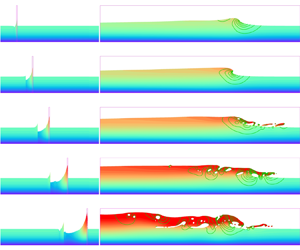
Roll waves on laminar sheet flow of Newtonian fluid with negligible surface tension
-
- Journal:
- Journal of Fluid Mechanics / Volume 999 / 25 November 2024
- Published online by Cambridge University Press:
- 15 November 2024, A49
-
- Article
-
- You have access
- Open access
- HTML
- Export citation
Binkhorstiidae, a new family of crabs (Decapoda, Brachyura, Retroplumoidea) from the Upper Cretaceous of the Netherlands and Belgium
-
- Journal:
- Netherlands Journal of Geosciences / Volume 103 / 2024
- Published online by Cambridge University Press:
- 15 November 2024, e21
-
- Article
-
- You have access
- Open access
- HTML
- Export citation
Structural controls on the Triassic Main Buntsandstein sediment distribution in the Roer Valley Graben, the Netherlands
-
- Journal:
- Netherlands Journal of Geosciences / Volume 103 / 2024
- Published online by Cambridge University Press:
- 15 November 2024, e23
-
- Article
-
- You have access
- Open access
- HTML
- Export citation
Ediacaran paleobiology and biostratigraphy of the Nama Group, Namibia, with emphasis on the erniettomorphs, tubular and trace fossils, and a new sponge, Arimasia germsi n. gen. n. sp.
-
- Journal:
- Journal of Paleontology / Volume 98 / Issue S94 / October 2024
- Published online by Cambridge University Press:
- 15 November 2024, pp. 1-59
-
- Article
-
- You have access
- Open access
- HTML
- Export citation

Urban Nature
- New Directions for City Futures
-
- Published online:
- 14 November 2024
- Print publication:
- 07 November 2024
-
- Textbook
- Export citation
Contents
-
- Book:
- Seismic Wave Propagation Through Random Media
- Published online:
- 31 October 2024
- Print publication:
- 14 November 2024, pp v-viii
-
- Chapter
- Export citation
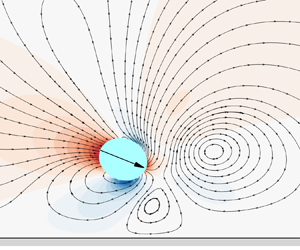
Effect of the shape of microswimmers and slip boundary conditions on the dynamic characteristics of near-wall microswimmers
-
- Journal:
- Journal of Fluid Mechanics / Volume 999 / 25 November 2024
- Published online by Cambridge University Press:
- 14 November 2024, A42
-
- Article
- Export citation
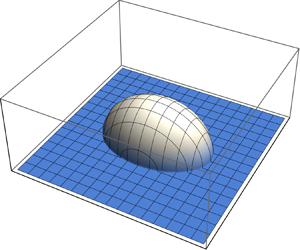
Internal tides and the inviscid dynamics of an oscillating ellipsoid in a stratified fluid
-
- Journal:
- Journal of Fluid Mechanics / Volume 999 / 25 November 2024
- Published online by Cambridge University Press:
- 14 November 2024, A59
-
- Article
- Export citation
