Refine search
Actions for selected content:
212964 results in Engineering
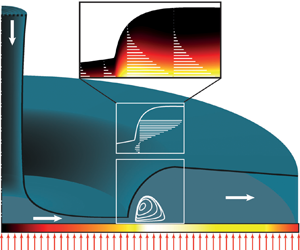
Averaging theory for heat transfer in circular hydraulic jumps with a separation bubble
-
- Journal:
- Journal of Fluid Mechanics / Volume 979 / 25 January 2024
- Published online by Cambridge University Press:
- 18 January 2024, A41
-
- Article
- Export citation
8 - Applications of Magnetic Communications Systems
- from Part III - Applications
-
- Book:
- Magnetic Communications
- Published online:
- 04 January 2024
- Print publication:
- 18 January 2024, pp 165-202
-
- Chapter
- Export citation
Part II - Theoretical Basis
-
- Book:
- Magnetic Communications
- Published online:
- 04 January 2024
- Print publication:
- 18 January 2024, pp 85-86
-
- Chapter
- Export citation
7 - Resilience of Information and Communication Networks
-
- Book:
- Resilience Engineering for Power and Communications Systems
- Published online:
- 04 January 2024
- Print publication:
- 18 January 2024, pp 381-422
-
- Chapter
- Export citation

Particle-size segregation patterns in a partially filled triangular rotating drum
- Part of
-
- Journal:
- Journal of Fluid Mechanics / Volume 979 / 25 January 2024
- Published online by Cambridge University Press:
- 18 January 2024, A40
-
- Article
-
- You have access
- Open access
- HTML
- Export citation
-
In this paper a fully coupled particle-size segregation model for granular flows (Barker et al., J. Fluid Mech., vol. 909, 2021, p. A22) is used to simulate the development of the patterns in a triangular rotating drum. The results are compared with the experimental patterns formed with bidisperse and tridisperse granular mixtures, and with varying compositions and fill heights. In all cases the agreement between the simulations and experiments is remarkably good. The experimental patterns are generated in a narrow gap between transparent front and back sidewalls. These prevent three-dimensional motion, but also impose friction on the flow, making it thinner and faster than it would otherwise be. This promotes segregation, as it simultaneously increases the shear rate and reduces the local pressure. To obtain the correct flow dynamics and segregation, width-averaged sidewall friction is incorporated into the two-dimensional simulations, which are performed in OpenFOAM $^{\circledR}$. The free-surface avalanche forms a boundary layer within which all the segregation occurs. Material in the lower reach of the avalanche is continuously deposited into an underlying solid body of grains, which rotates with the drum, and is eventually re-entrained into the avalanche along its upper reach. The changing geometry of the granular region (as the drum rotates) implies that the avalanche is constantly adjusting its length, position and depth. This generates a complex quasi-periodic flow, which when combined with particle-size segregation generates amazing patterns in the solid rotating granular body after only two drum rotations.

6 - MI Network Performance
- from Part II - Theoretical Basis
-
- Book:
- Magnetic Communications
- Published online:
- 04 January 2024
- Print publication:
- 18 January 2024, pp 106-149
-
- Chapter
- Export citation
2 - Fundamental Supporting Concepts
-
- Book:
- Resilience Engineering for Power and Communications Systems
- Published online:
- 04 January 2024
- Print publication:
- 18 January 2024, pp 22-118
-
- Chapter
- Export citation
References
-
- Book:
- Magnetic Communications
- Published online:
- 04 January 2024
- Print publication:
- 18 January 2024, pp 203-213
-
- Chapter
- Export citation
Preface
-
- Book:
- Resilience Engineering for Power and Communications Systems
- Published online:
- 04 January 2024
- Print publication:
- 18 January 2024, pp vii-xii
-
- Chapter
- Export citation
Part I - Introduction and Properties of MI
-
- Book:
- Magnetic Communications
- Published online:
- 04 January 2024
- Print publication:
- 18 January 2024, pp 1-2
-
- Chapter
- Export citation
Contents
-
- Book:
- Magnetic Communications
- Published online:
- 04 January 2024
- Print publication:
- 18 January 2024, pp v-vi
-
- Chapter
- Export citation
3 - Resilience Models and Metrics
-
- Book:
- Resilience Engineering for Power and Communications Systems
- Published online:
- 04 January 2024
- Print publication:
- 18 January 2024, pp 119-160
-
- Chapter
- Export citation
9 - Infrastructure Systems Planning for Improved Resilience
-
- Book:
- Resilience Engineering for Power and Communications Systems
- Published online:
- 04 January 2024
- Print publication:
- 18 January 2024, pp 452-485
-
- Chapter
- Export citation
Copyright page
-
- Book:
- Resilience Engineering for Power and Communications Systems
- Published online:
- 04 January 2024
- Print publication:
- 18 January 2024, pp iv-iv
-
- Chapter
- Export citation
6 - Electric Power Grid Resilience
-
- Book:
- Resilience Engineering for Power and Communications Systems
- Published online:
- 04 January 2024
- Print publication:
- 18 January 2024, pp 276-380
-
- Chapter
- Export citation
4 - Metamaterial-Enhanced Magnetic Communications
- from Part I - Introduction and Properties of MI
-
- Book:
- Magnetic Communications
- Published online:
- 04 January 2024
- Print publication:
- 18 January 2024, pp 63-84
-
- Chapter
- Export citation
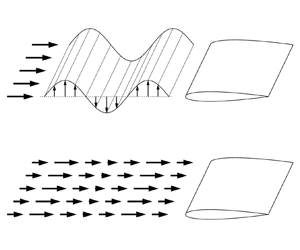
Airfoil response to periodic vertical and longitudinal gusts
-
- Journal:
- Journal of Fluid Mechanics / Volume 979 / 25 January 2024
- Published online by Cambridge University Press:
- 17 January 2024, A35
-
- Article
- Export citation
Shock train response to pulse backpressure forcing
-
- Journal:
- The Aeronautical Journal / Volume 128 / Issue 1324 / June 2024
- Published online by Cambridge University Press:
- 17 January 2024, pp. 1145-1163
-
- Article
- Export citation
-
Transient numerical simulations were conducted to investigate the influence of large amplitude and fast impact backpressure on a shock train. The fundamental problem consists of a shock train within a constant-area channel with a Ma=1.61 inflow and a pulse backpressure applied to the outlet. The pressure disturbance in the isolator has an intense forcing-response lag. From the moment of the backpressure peak appearance, it takes 36 times the backpressure duration for the pressure disturbance to reach the upstream end. It moves upstream with time in the form of a normal shock wave. As time progresses, the normal shock degenerates into a $\lambda $ shock and a compression wave behind due to the action of viscous dissipation in the boundary layer. Eventually, a multi-stage shock train is formed. The maximum backpropagation distance is a quadratic function of both the pulse backpressure peak and duration, and the relationship between these variables was determined by fitting. When the integral value of backpressure to time is fixed, reducing the backpressure peak while increasing the duration will reduce the backpressure pulsation at the isolator outlet, which will be more conducive to shortening the maximum backpropagation distance than reducing the duration and increasing the backpressure peak. The values of backpressure peak and duration are obtained from the detonation combustion case, which ensures the authenticity of backpressure characteristics. The relevant research conclusions can provide a reference for the design of the isolator of pulse detonation ramjet.

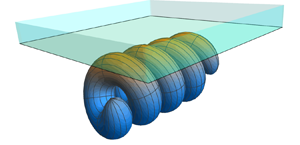
Viscous tubular-body theory for plane interfaces
-
- Journal:
- Journal of Fluid Mechanics / Volume 979 / 25 January 2024
- Published online by Cambridge University Press:
- 17 January 2024, A38
-
- Article
- Export citation
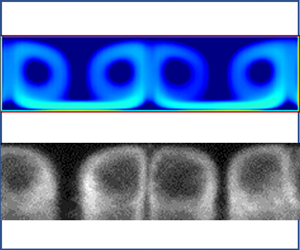
Sedimenting-particle redistribution in a horizontal Couette
-
- Journal:
- Journal of Fluid Mechanics / Volume 979 / 25 January 2024
- Published online by Cambridge University Press:
- 17 January 2024, A37
-
- Article
- Export citation
