Refine search
Actions for selected content:
212965 results in Engineering
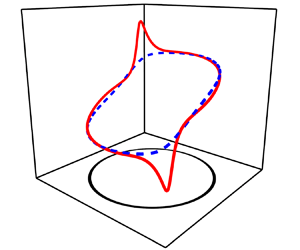
A comparison between the FENE-P and sPTT constitutive models in large-amplitude oscillatory shear
-
- Journal:
- Journal of Fluid Mechanics / Volume 979 / 25 January 2024
- Published online by Cambridge University Press:
- 11 January 2024, A10
-
- Article
-
- You have access
- Open access
- HTML
- Export citation
-
The finitely extensible nonlinear elastic with Peterlin closure (FENE-P) and simplified Phan-Thien–Tanner (sPTT) viscoelastic models are used widely for modelling of complex fluids. Although they are derived from distinct micro-structural theories, these models can become mathematically identical in steady and homogeneous flows with a particular choice of the values of the model parameters. However, even with this choice of parameter values, the model responses are known to differ from each other in transient flows. In this work, we investigate the responses of the FENE-P and sPTT constitutive models in large-amplitude oscillatory shear (LAOS). In steady shear, the shear stress scales with the non-dimensional group $Wi/(aL)$ ( $Wi\,\sqrt {\epsilon }$) for the FENE-P (sPTT) model, where $Wi$ is the Weissenberg number, $L^2$ is the limit of extensibility in the FENE-P model ( $a$ being $L^2/(L^2-3)$), and $\epsilon$ is the extensibility parameter in the sPTT model. Our numerical and analytical results show that in LAOS, the FENE-P model shows this universality only for large values of $L^2$, whereas the sPTT model shows it for all values of $\epsilon$. In the strongly nonlinear region, there is a drastic difference between the responses of the two models, with the FENE-P model exhibiting strong shear stress overshoots that manifest as self-intersecting secondary loops in the viscous Lissajous curves. We quantify the nonlinearity exhibited by each constitutive model using the sequence of physical processes framework. Despite the high degree of nonlinearity exhibited by the FENE-P model, we also show using fully nonlinear one-dimensional simulations that it does not shear band in LAOS within the range of conditions studied.


Numerical investigation of mixed-phase turbulence induced by a plunging jet
-
- Journal:
- Journal of Fluid Mechanics / Volume 979 / 25 January 2024
- Published online by Cambridge University Press:
- 11 January 2024, A27
-
- Article
- Export citation
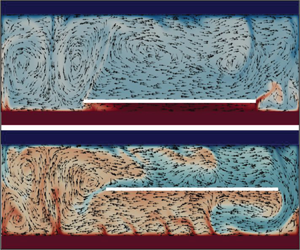
Rayleigh–Bénard convection with an immersed floating body
-
- Journal:
- Journal of Fluid Mechanics / Volume 979 / 25 January 2024
- Published online by Cambridge University Press:
- 11 January 2024, A23
-
- Article
- Export citation
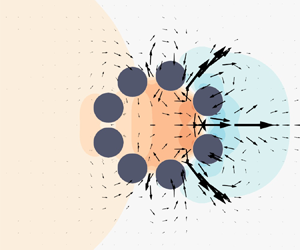
Coordinated suction and blowing of a cylinder array for thrust generation
-
- Journal:
- Journal of Fluid Mechanics / Volume 979 / 25 January 2024
- Published online by Cambridge University Press:
- 11 January 2024, A26
-
- Article
-
- You have access
- Open access
- HTML
- Export citation
-
Various systems of mechanical devices and natural organisms use the repeated expansion and contraction of deformable structures to draw in and blow out fluid. Instead of such deformable continuous structures, a system that consists of multiple discrete bodies can also generate a directional flow through the cooperative movement of the individual bodies. In this study, we numerically investigate the collective effects of a multi-body system composed of eight circular cylinders, each of which oscillates separately in the radial direction to generate thrust. The cylinder array performs cooperative motion regulated by three motion parameters: phase difference, oscillation amplitude and frequency at a low Reynolds number ( $Re = 10$). The phase difference between the cylinders is critical in determining the extent of the directional flow and the time-averaged thrust. The optimal phase difference that yields the maximum time-averaged thrust is consistent, regardless of the oscillation amplitude and frequency. However, the thrust generation performance becomes significantly weaker at a higher Reynolds number ( $Re = 100$). This highlights that the hydrodynamic blockage in gaps between cylinders, which is induced by strong viscous diffusion at the low Reynolds number, is essential for the cooperative force generation of multiple closely spaced bodies. A new dimensionless geometric parameter based on the motion of the array is proposed to characterize the degree of bias in the generated flow and it successfully predicts the trend in the time-averaged thrust at the low Reynolds number with strong hydrodynamic blockage.


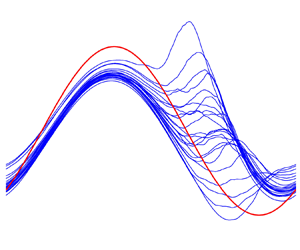
Time-delayed characteristics of turbulence in pulsatile pipe flow
-
- Journal:
- Journal of Fluid Mechanics / Volume 979 / 25 January 2024
- Published online by Cambridge University Press:
- 11 January 2024, A24
-
- Article
- Export citation
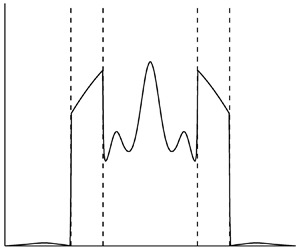
Evolution of weak, homogeneous turbulence with rotation and stratification
-
- Journal:
- Journal of Fluid Mechanics / Volume 979 / 25 January 2024
- Published online by Cambridge University Press:
- 11 January 2024, A17
-
- Article
- Export citation
Stochastic modelling of the instantaneous velocity profile in rough-wall turbulent boundary layers
-
- Journal:
- Journal of Fluid Mechanics / Volume 979 / 25 January 2024
- Published online by Cambridge University Press:
- 11 January 2024, A12
-
- Article
-
- You have access
- Open access
- HTML
- Export citation
-
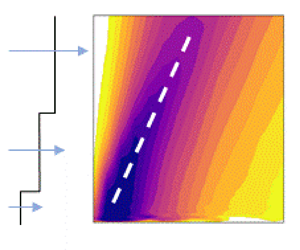
The statistical properties of uniform momentum zones (UMZs) are extracted from laboratory and field measurements in rough wall turbulent boundary layers to formulate a set of stochastic models for the simulation of instantaneous velocity profiles. A spatiotemporally resolved velocity dataset, covering a field of view of $8 \times 9\,{\rm m}^2$, was obtained in the atmospheric surface layer using super-large-scale particle image velocimetry (SLPIV), as part of the Grand-scale Atmospheric Imaging Apparatus (GAIA). Wind tunnel data from a previous study are included for comparison (Heisel et al., J. Fluid Mech., vol. 887, 2020, R1). The probability density function of UMZ attributes such as their thickness, modal velocity and averaged vertical velocity are built at varying elevations and modelled using log-normal and Gaussian distributions. Inverse transform sampling of the distributions is used to generate synthetic step-like velocity profiles that are spatially and temporally uncorrelated. Results show that in the wide range of wall-normal distances and $Re_\tau$ up to $\sim O(10^6)$ investigated here, shear velocity scaling is manifested in the velocity jump across shear interfaces between adjacent UMZs, and attached eddy behaviour is observed in the linear proportionality between UMZ thickness and their wall normal location. These very same characteristics are recovered in the generated instantaneous profiles, using both fully stochastic and data-driven hybrid stochastic (DHS) models, which address, in different ways, the coupling between modal velocities and UMZ thickness. Our method provides a stochastic approach for generating an ensemble of instantaneous velocity profiles, consistent with the structural organisation of UMZs, where the ensemble reproduces the logarithmic mean velocity profile and recovers significant portions of the Reynolds stresses and, thus, of the streamwise and vertical velocity variability.


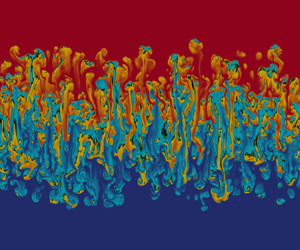
Turbulent mixing in the vertical magnetic Rayleigh–Taylor instability
-
- Journal:
- Journal of Fluid Mechanics / Volume 979 / 25 January 2024
- Published online by Cambridge University Press:
- 11 January 2024, A8
-
- Article
- Export citation
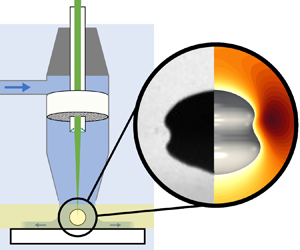
Single cavitation bubble dynamics in a stagnation flow
-
- Journal:
- Journal of Fluid Mechanics / Volume 979 / 25 January 2024
- Published online by Cambridge University Press:
- 11 January 2024, A18
-
- Article
-
- You have access
- Open access
- HTML
- Export citation
Pressure drag reduction via imposition of spanwise wall oscillations on a rough wall
-
- Journal:
- Journal of Fluid Mechanics / Volume 979 / 25 January 2024
- Published online by Cambridge University Press:
- 11 January 2024, A21
-
- Article
-
- You have access
- Open access
- HTML
- Export citation
-
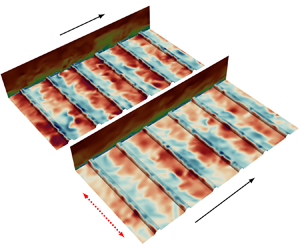
The present study tests the efficacy of the well-known viscous drag reduction strategy of imposing spanwise wall oscillations to reduce pressure drag contributions in transitional and fully rough turbulent wall flow. This is achieved by conducting a series of direct numerical simulations of a turbulent flow over two-dimensional (spanwise-aligned) semi-cylindrical rods, placed periodically along the streamwise direction with varying streamwise spacing. Surface oscillations, imposed at fixed viscous-scaled actuation parameters optimum for smooth wall drag reduction, are found to yield substantial drag reduction ( $\gtrsim$25 %) for all the rough wall cases, maintained at matched roughness Reynolds numbers. While the total drag reduction is due to a drop in both viscous and pressure drag in the case of transitionally rough flow (i.e. with large inter-rod spacing), it is associated solely with pressure drag reduction for the fully rough cases (i.e. with small inter-rod spacing), with the latter being reported for the first time. The study finds that pressure drag reduction in all cases is caused by the attenuation of the vortex shedding activity in the roughness wake, in response to wall oscillation frequencies that are of the same order as the vortex shedding frequencies. Contrary to speculations in the literature, this study confirms that the mechanism behind pressure drag reduction, achieved via imposition of spanwise oscillations, is independent of the viscous drag reduction. This mechanism is responsible for weakening of the Reynolds stresses and increase in base pressure in the roughness wake, explaining the pressure drag reduction observed by past studies, across varying roughness heights and geometries.


Benjamin Rush, Civic Health, and Human Illness in the Early American Republic
-
- Published by:
- Boydell & Brewer
- Published online:
- 10 January 2024
- Print publication:
- 20 June 2023
The drag of a filament moving in a supported spherical bilayer
-
- Journal:
- Journal of Fluid Mechanics / Volume 979 / 25 January 2024
- Published online by Cambridge University Press:
- 10 January 2024, A6
-
- Article
- Export citation
Three-dimensional soft streaming
-
- Journal:
- Journal of Fluid Mechanics / Volume 979 / 25 January 2024
- Published online by Cambridge University Press:
- 10 January 2024, A7
-
- Article
-
- You have access
- Open access
- HTML
- Export citation
Experimental investigation of flow-induced vibration and flow field characteristics of a flexible triangular cylinder
-
- Journal:
- Journal of Fluid Mechanics / Volume 979 / 25 January 2024
- Published online by Cambridge University Press:
- 10 January 2024, A15
-
- Article
- Export citation
-
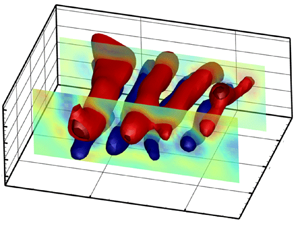
Flow-induced vibration (FIV) of a flexible cylinder with a triangular cross-section, allowed to oscillate in the cross-flow, inline and torsional direction, is studied experimentally through water tunnel tests. The dynamic response of the cylinder was studied for three different angles of attack ( $0^\circ, 30^\circ, 60^\circ$), at reduced velocities of 0.9–16.27, corresponding to Reynolds numbers of 364–3600. At the angle of attack of $0^\circ$, vortex-induced vibration at low reduced velocity was observed, which transitioned to galloping at higher reduced velocities. At the angles of attack of $30^\circ$ and $60^\circ$, galloping-type response was observed over the range of the reduced velocities tested. Our results show that the cylinder's torsional oscillation breaks the system's symmetry and affects the structural response at higher reduced velocities regardless of the angle of attack. The FIV response of the flexible triangular cylinder is distinct from that of a rigid flexibly mounted triangular cylinder due to torsional oscillation, spanwise flexibility and the two fixed boundary conditions limiting the amplitude of oscillation. Flow field analysis in the wake of the cylinder was done qualitatively and quantitatively using hydrogen bubble flow visualisation and time-resolved volumetric particle tracking velocimetry techniques, respectively. Our results show the existence of highly three-dimensional vortex structures in the wake of the cylinder. We studied the coupling between the vortex shedding modes in the wake of the cylinder and the structural vibration modes through the spatiotemporal mode analysis using the proper orthogonal decomposition technique to distinguish between different types of the FIV response observed.


Analytical results for pitching kinematics and propulsion performance of flexible foil
-
- Journal:
- Journal of Fluid Mechanics / Volume 979 / 25 January 2024
- Published online by Cambridge University Press:
- 10 January 2024, A5
-
- Article
- Export citation
-
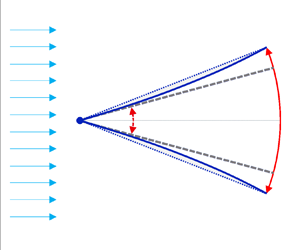
Natural flyers and swimmers employ flexible wings or fins to propel. While the complex interaction between the foil with deformation and the surrounding non-steady fluid environment defines the propulsion performance of the propellers, elucidating the interaction mechanism through theoretical models earns much challenge. Based on elastokinetics and linear potential flow theory, this study proposes a simplified analytical model to clarify the kinematics and the propulsion performance of a flexible thin foil pitching in flow. The dynamical forces, including the inertial force of the foil and the non-steady fluid pressure, are used to determine the averaged deformation angle of the foil. Combining the averaged deformation angle and the prescribed driving pitching motion, the kinematics of the foil is resolved analytically. Based on the analytical expressions for the corresponding pitching motion, analytical relations among the physical parameters of the stiffness and the mass of the foil and the driving frequency are given to these critical conditions, including resonance of the flow–structure system, equal pitching amplitude between the flexible foil and the rigid counterpart, phase angle transition from ${\rm \pi}/2$ to $- {\rm \pi}/2$. Subsequently, the performance of the foil, including the thrust, the power and the propulsive efficiency, as a function of the flexibility of the foil are derived, together with the introduction of a bluff body type offset drag to the thrust. The formulated analytical theory, which matches nicely with previous reports, will help to interpret the effect of the flexibility and regulate the propulsive performance of the flexible foil when pitching in fluid.


Non-isochoric stable granular models taking into account fluidisation by pore gas pressure
-
- Journal:
- Journal of Fluid Mechanics / Volume 979 / 25 January 2024
- Published online by Cambridge University Press:
- 10 January 2024, A14
-
- Article
- Export citation
-
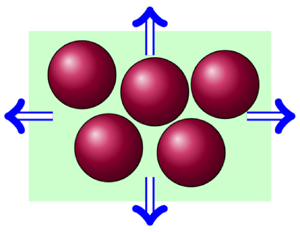
In this paper, we study non-isochoric models for mixtures of solid particles, at high volume concentration, and a gas. One of the motivations for this work concerns geophysics and more particularly the pyroclastic density currents, whose dense basal parts are precisely mixtures of pyroclasts and lithic fragments and air. They are extremely destructive phenomena, capable of devastating urbanised areas, and are known to propagate over long distances, even over almost flat topography. Fluidisation of these dense granular flows by pore gas pressure is one response that could explain this behaviour and must therefore be taken into account in the models. Starting from a solid–gas mixing model and invoking the compressibility of the gas through a law of state, we rewrite the conservation of mass equation of the gas phase into an equation of the pore gas pressure whose net effect is to reduce the friction between the particles. The momentum equation of the solid phase is completed by generic constitutive laws, specified as in Schaeffer et al. (J. Fluid Mech., vol. 874, 2019, pp. 926–951) by a yield function and a dilatancy function. Therefore, the divergence of the velocity field, which reflects the ability of the granular flow to expand or compress, depends on the volume fraction, pressure, strain rate and inertial number. In addition, we require the dilatancy function to describe the rate of volume change of the granular material near an isochoric equilibrium state, i.e. at constant volume. This property ensures that the volume fraction, which is the solution to the conservation of mass equation, is positive and finite at all times. We also require that the non-isochoric fluidised model be linearly stable and dissipate energy (over time). In this theoretical framework, we derive the dilatancy models corresponding to classical rheologies such as Drucker–Prager and $\mu (I)$ (with or without expansion effects). The main result of this work is to show that it is possible to obtain non-isochoric and fluidised granular models satisfying all the properties necessary to correctly account for the physics of granular flows and which are well posed, at least linearly stable.

Physics-informed artificial intelligence models for the seismic response prediction of rocking structures
- Part of
-
- Journal:
- Data-Centric Engineering / Volume 5 / 2024
- Published online by Cambridge University Press:
- 10 January 2024, e1
-
- Article
-
- You have access
- Open access
- HTML
- Export citation
Paper waste grown as a biocalcified foam: perspectives from a bacterial and design viewpoint
-
- Journal:
- Research Directions: Biotechnology Design / Volume 2 / 2024
- Published online by Cambridge University Press:
- 10 January 2024, e1
-
- Article
-
- You have access
- Open access
- HTML
- Export citation
FLM volume 978 Cover and Front matter
-
- Journal:
- Journal of Fluid Mechanics / Volume 978 / 10 January 2024
- Published online by Cambridge University Press:
- 10 January 2024, p. f1
-
- Article
-
- You have access
- Export citation
Parametrization of sea surface skewness and kurtosis with application to crest distributions
-
- Journal:
- Journal of Fluid Mechanics / Volume 979 / 25 January 2024
- Published online by Cambridge University Press:
- 09 January 2024, A4
-
- Article
- Export citation
