Refine search
Actions for selected content:
212965 results in Engineering
Sedimenting-particle redistribution in a horizontal Couette
-
- Journal:
- Journal of Fluid Mechanics / Volume 979 / 25 January 2024
- Published online by Cambridge University Press:
- 17 January 2024, A37
-
- Article
- Export citation
Impact of the numerical domain on turbulent flow statistics: scalings and considerations for canopy flows
-
- Journal:
- Journal of Fluid Mechanics / Volume 979 / 25 January 2024
- Published online by Cambridge University Press:
- 17 January 2024, A36
-
- Article
-
- You have access
- Open access
- HTML
- Export citation
Linear and nonlinear receptivity mechanisms in boundary layers subject to free-stream turbulence
-
- Journal:
- Journal of Fluid Mechanics / Volume 979 / 25 January 2024
- Published online by Cambridge University Press:
- 16 January 2024, A31
-
- Article
- Export citation
Vortices over bathymetry
-
- Journal:
- Journal of Fluid Mechanics / Volume 979 / 25 January 2024
- Published online by Cambridge University Press:
- 15 January 2024, A32
-
- Article
-
- You have access
- Open access
- HTML
- Export citation
-
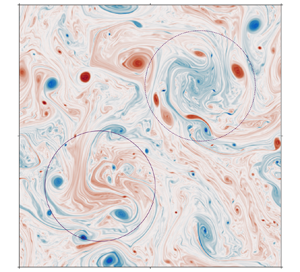
There are numerous examples of long-lived, surface-intensified anticyclones over submarine depressions and troughs in the ocean. These often co-exist with a large-scale cyclonic circulation. The latter is predicted by existing barotropic theory but the anticyclone is not. We extend one such theory, which minimizes enstrophy while conserving energy, to two fluid layers. This yields a bottom-intensified flow with cyclonic circulation over a depression. The solution is steady, an enstrophy minimum and stable. When the Lagrange multiplier, $\lambda$, is near zero, the total potential vorticity (PV) becomes homogenized, in both layers. For positive $\lambda$, the surface PV is anticyclonic and strongest at intermediate energies. In quasi-geostrophic numerical simulations with a random initial perturbation PV, the bottom-intensified cyclonic flow always emerges. Vortices evolve independently in the layers and vortex mergers are asymmetric over the depression; cyclones are preferentially strained out at depth while only anticyclones merge at the surface. Both asymmetries are linked to the topographic flow. The deep cyclones feed the bottom-intensified cyclonic circulation while the asymmetry at the surface is only apparent after that circulation has spun up. The result of the surface merger asymmetry is often a lone anticyclone above the depression. This occurs primarily at intermediate energies, when the surface PV predicted by the theory is strongest. Similar results obtain in a full complexity ocean model but with a more pronounced asymmetry in surface vortex mergers and, with bottom friction, significant bottom flow beneath the central anticyclone.


A single-layer band-stop frequency selective surface with wide angular stability property
-
- Journal:
- International Journal of Microwave and Wireless Technologies / Volume 16 / Issue 2 / March 2024
- Published online by Cambridge University Press:
- 15 January 2024, pp. 260-267
-
- Article
- Export citation

On the time scales of spectral evolution of nonlinear waves
-
- Journal:
- Journal of Fluid Mechanics / Volume 979 / 25 January 2024
- Published online by Cambridge University Press:
- 15 January 2024, A33
-
- Article
-
- You have access
- Open access
- HTML
- Export citation
-
As presented in Annenkov & Shrira (Phys. Rev. Lett., vol. 102, 2009, 024502), when a surface gravity wave field is subjected to an abrupt perturbation of external forcing, its spectrum evolves on a ‘fast’ dynamic time scale of $O(\varepsilon ^{-2})$, with $\varepsilon$ a measure of wave steepness. This observation poses a challenge to wave turbulence theory that predicts an evolution with a kinetic time scale of $O(\varepsilon ^{-4})$. We revisit this unresolved problem by studying the same situation in the context of a one-dimensional Majda–McLaughlin–Tabak equation with gravity wave dispersion relation. Our results show that the kinetic and dynamic time scales can both be realised, with the former and latter occurring for weaker and stronger forcing perturbations, respectively. The transition between the two regimes corresponds to a critical forcing perturbation, with which the spectral evolution time scale drops to the same order as the linear wave period (of some representative mode). Such fast spectral evolution is mainly induced by a far-from-stationary state after a sufficiently strong forcing perturbation is applied. We further develop a set-based interaction analysis to show that the inertial-range modal evolution in the studied cases is dominated by their (mostly non-local) interactions with the low-wavenumber ‘condensate’ induced by the forcing perturbation. The results obtained in this work should be considered to provide significant insight into the original gravity wave problem.


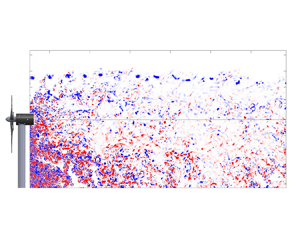
Effect of tip speed ratio on coherent dynamics in the near wake of a model wind turbine
-
- Journal:
- Journal of Fluid Mechanics / Volume 979 / 25 January 2024
- Published online by Cambridge University Press:
- 15 January 2024, A34
-
- Article
-
- You have access
- Open access
- HTML
- Export citation
-
The near wake of a small-scale wind turbine is investigated using particle image velocimetry experiments at different tip speed ratios ( $\lambda$). The wind turbine model had a nacelle and a tower mimicking real-scale wind turbines. The near wake is found to be dominated by multiple coherent structures, including the tip vortices, distinct vortex sheddings from the nacelle and tower, and wake meandering. The merging of the tip vortices is found to be strongly dependent on $\lambda$. A convective length scale ( $L_c$) related to the pitch of the tip vortices is defined that is shown to be a better length scale than turbine diameter ( $D$) to demarcate the near wake from the far wake. The tower induced strong vertical asymmetry in the flow by destabilising the tip vortices and promoting mixing in the lower (below the nacelle) plane. The nacelle's shedding is found to be important in ‘seeding’ wake meandering, which, although not potent, exists close to the nacelle, and it becomes important only after a certain distance downstream ( $x>3L_c$). A link between the ‘effective porosity’ of the turbine and $\lambda$ is established, and the strength and frequency of wake meandering are found to be dependent on $\lambda$. In fact, a decreasing trend of wake meandering frequency with $\lambda$ is observed, similar to vortex shedding from a porous plate at varying porosity. Such similarity upholds the notion of wake meandering being a global instability of the turbine, which can be considered as a ‘porous’ bluff body of diameter $D$.
$D$.



Gas and Steam Turbine Power Plants
- Applications in Sustainable Power
-
- Published online:
- 12 January 2024
- Print publication:
- 19 October 2023
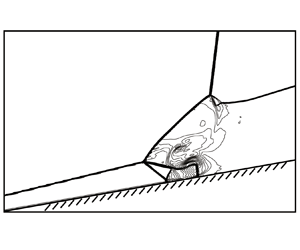
Reflection of a rightward-moving oblique shock of first family over a steady oblique shock wave
-
- Journal:
- Journal of Fluid Mechanics / Volume 979 / 25 January 2024
- Published online by Cambridge University Press:
- 12 January 2024, A28
-
- Article
- Export citation
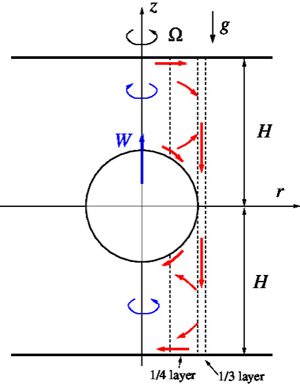
The drag on a rising sphere along the axis in a short rotating cylinder of fluid: revisiting the data and theory
-
- Journal:
- Journal of Fluid Mechanics / Volume 979 / 25 January 2024
- Published online by Cambridge University Press:
- 12 January 2024, A30
-
- Article
-
- You have access
- Open access
- HTML
- Export citation
-
We revisit the problem of a solid sphere rising slowly in a rotating short container filled with a slightly viscous fluid, with emphasis on the drag force. The data of the classical experiments of Maxworthy (J. Fluid Mech., vol. 31, 1968, pp. 643–655) and recent experiments of Kozlov et al. (Fluids, vol. 8 (2), 2023, paper 49), and the available geostrophic and quasi-geostrophic theories, are subjected to a novel scrutiny by combined reprocessing and comparisons. The measured drag is, consistently, about 20 % lower than the geostrophic prediction (assuming that flow is dominated by the Ekman layers, while in the inviscid cores the Coriolis acceleration is supported by the pressure gradient). The major objective is the interpretation and improvement of the gap between data and predictions. We show that the data cover a small range of relevant parameters (in particular the Taylor number $T$ and the height ratio $H$ of cylinder to particle diameter) that precludes a thorough and reliable assessment of the theories. However, some useful insights and improvements can be derived. The hypothesis that the discrepancy between data and the geostrophic prediction is due to inertial effects (not sufficiently small Rossby number $Ro$ in the experiments) is dismissed. We show that the major reason for the discrepancy is the presence of relatively thick Stewartson layers about the cylinder (Taylor column) attached to the sphere. The $1/3$ layer displaces the boundary condition of the angular velocity ( $\omega = 0$) outside the radius of the particle. This observation suggests a semi-empirical correction to the theoretical quasi-geostrophic predictions (which takes into account the Ekman layers and the $1/4$ Stewartson layers); the corrected drag is in fair agreement with the data. We demonstrate that the inertial terms are negligible for $Ro\,T^{1/2} <0.4$. We consider curve-fit approximations, and point out some persistent gaps of knowledge that require further experiments and simulations.


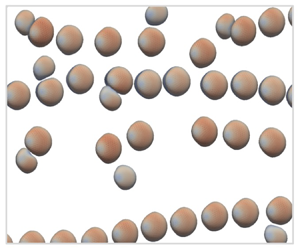
Order–disorder transitions within deformable particle suspensions in planar Poiseuille flow
-
- Journal:
- Journal of Fluid Mechanics / Volume 979 / 25 January 2024
- Published online by Cambridge University Press:
- 12 January 2024, A29
-
- Article
- Export citation

State Estimation for Robotics
- Second Edition
-
- Published online:
- 11 January 2024
- Print publication:
- 01 February 2024
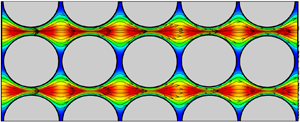
Pore-scale modelling of particle transport in a porous bed
-
- Journal:
- Journal of Fluid Mechanics / Volume 979 / 25 January 2024
- Published online by Cambridge University Press:
- 11 January 2024, A9
-
- Article
- Export citation
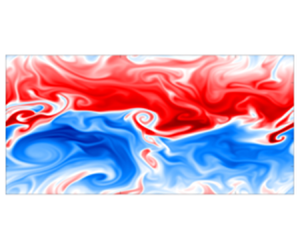
Fixed-flux Rayleigh–Bénard convection in doubly periodic domains: generation of large-scale shear
-
- Journal:
- Journal of Fluid Mechanics / Volume 979 / 25 January 2024
- Published online by Cambridge University Press:
- 11 January 2024, A19
-
- Article
- Export citation
-
This work studies two-dimensional fixed-flux Rayleigh–Bénard convection with periodic boundary conditions in both horizontal and vertical directions and analyses its dynamics using numerical continuation, secondary instability analysis and direct numerical simulation. The fixed-flux constraint leads to time-independent elevator modes with a well-defined amplitude. Secondary instability of these modes leads to tilted elevator modes accompanied by horizontal shear flow. For $Pr=1$, where $Pr$ is the Prandtl number, a subsequent subcritical Hopf bifurcation leads to hysteresis behaviour between this state and a time-dependent direction-reversing state, followed by a global bifurcation leading to modulated travelling waves without flow reversal. Single-mode equations reproduce this moderate Rayleigh number behaviour well. At high Rayleigh numbers, chaotic behaviour dominated by modulated travelling waves appears. These transitions are characteristic of high wavenumber elevator modes since the vertical wavenumber of the secondary instability is linearly proportional to the horizontal wavenumber of the elevator mode. At a low $Pr$, relaxation oscillations between the conduction state and the elevator mode appear, followed by quasi-periodic and chaotic behaviour as the Rayleigh number increases. In the high $Pr$ regime, the large-scale shear weakens, and the flow shows bursting behaviour that can lead to significantly increased heat transport or even intermittent stable stratification.


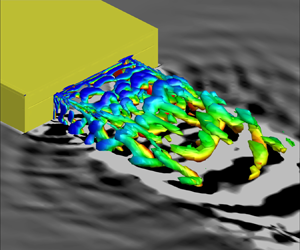
Noise mitigation in rectangular jets through plasma actuator-based shear layer control
-
- Journal:
- Journal of Fluid Mechanics / Volume 979 / 25 January 2024
- Published online by Cambridge University Press:
- 11 January 2024, A16
-
- Article
-
- You have access
- Open access
- HTML
- Export citation
-
A computational analysis is performed to study the three-dimensional response of rectangular shear layers to plasma actuator-based control, in the context of sound mitigation of supersonic non-axisymmetric jets. A Mach $1.5$ rectangular jet with an aspect ratio $2:1$ is controlled using experimentally informed actuation patterns, referred to as M0, M1, M2, M3, M ${\rm \pi}$ and M+/ $-$1. While the first five progressively increase the phase difference between successive actuators thus enhancing three-dimensionality of the shear layer structures, the latter corresponds to the flapping mode of the jet. A preliminary linear analysis identifies that the frequency, $St\sim 1$, has a relatively high overall amplification within the baseline shear layer, and is hence utilized for control in the subsequent nonlinear simulations. Each actuation reveals unique near-field vortical and acoustic responses that have a profound impact on far-field noise levels. The M0 actuation induces circumferentially interconnected strong streamwise vortices, while M1 actuation enhances the circumferential variability in the coherent structures. The M2 actuation encompasses both these effects, and along with a very low tonal impact of forcing, produces the most desirable far-field noise mitigation ( ${\sim }2.6\,{\rm dB}$), contributed by a broadband reduction around the column-mode peak of the baseline jet. Beyond M2 actuation, effectiveness of control saturates, particularly along the direction of peak noise radiation. Through a near-field analysis of the acoustic component, the efficacy of M2 actuation is attributed to the attenuation of the radiative efficiency of the jet, including reduced energy in the supersonic phase speeds, and redistribution of energy into the higher helical modes. Further, it curtails the nonlinear difference interactions in the plume that energize column-mode frequencies, which often appear as strong intermittent sound-producing events. While the shear layer turbulent kinetic energy decreases with actuation, the controlled jets show minimal variations in mean flow properties, particularly under M2 actuation, suggesting this to be a promising small-perturbation-based noise control strategy.


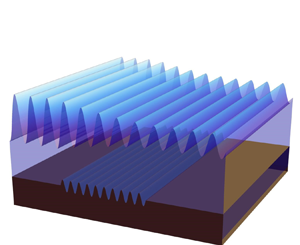
Bragg scattering of nonlinear surface waves by sinusoidal sandbars
-
- Journal:
- Journal of Fluid Mechanics / Volume 979 / 25 January 2024
- Published online by Cambridge University Press:
- 11 January 2024, A13
-
- Article
- Export citation
-
Based on the multiple-scale expansion technique, a new set of extended nonlinear Schrödinger (ENLS) equations up to the third order is derived to account for the additional high-order bottom and dispersion effects as well as the nonlinear wave interaction on wave transformation over periodic sandbars of sinusoidal geometry. By employing the small-amplitude wave assumption, a closed-form analytical solution for Bragg scattering is obtained from the linearised ENLS equations, which demonstrates that a downshift of wave frequency of the maximum reflection is mainly due to the inclusion of the high-order bottom effect. The factors that affect the downshift of the resonant frequency are identified and a theoretical expression in parabolic form is derived to quantify the downshift magnitude. The fully ENLS equations are further analysed to reveal the additional wave nonlinear effects on Bragg scattering characteristics. Under the condition of infinitesimal sandbar amplitude, the ENLS equations render a theoretical expression of the critical value of $kh$ when the nonlinear wave self-modulation effect and the nonlinear wave cross-modulation effect are equal, whereas the former effect is responsible for wavenumber upshifting and the latter downshifting. When $kh$ is larger than the critical value, the increase of wave nonlinearity will enhance the downshift magnitude of the Bragg resonance, and vice versa. For finite amplitude of the bottom sandbar, the ENLS equations are solved numerically to examine the influence of both wave nonlinearity and sandbar amplitude on the characteristics of Bragg resonance. The results reveal that as the increase of sandbar amplitude, the critical $kh$ increases monotonically.


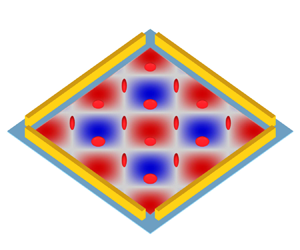
Controlled mean dynamics of red blood cells by two orthogonal ultrasonic standing waves
-
- Journal:
- Journal of Fluid Mechanics / Volume 979 / 25 January 2024
- Published online by Cambridge University Press:
- 11 January 2024, A11
-
- Article
- Export citation
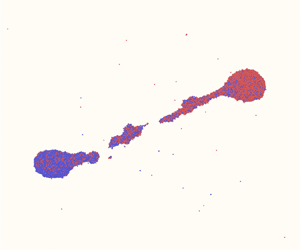
Binary collision dynamics of equal-sized nanodroplets
-
- Journal:
- Journal of Fluid Mechanics / Volume 979 / 25 January 2024
- Published online by Cambridge University Press:
- 11 January 2024, A25
-
- Article
- Export citation

Reynolds number effects on a velocity–vorticity correlation-based skin-friction drag decomposition in incompressible turbulent channel flows
-
- Journal:
- Journal of Fluid Mechanics / Volume 979 / 25 January 2024
- Published online by Cambridge University Press:
- 11 January 2024, A20
-
- Article
- Export citation
-
A form of skin-friction drag decomposition is given based on the velocity–vorticity correlations, $\langle v\omega _z\rangle$ and $\langle -w\omega _y\rangle$, which represent the advective vorticity transport and vortex stretching, respectively. This identity provides a perspective to understand the mechanism of skin-friction drag generation from vortical motions and it has better physical interpretability compared with some previous studies. The skin-friction coefficients in incompressible turbulent channel flows at friction Reynolds numbers from 186 to 2003 are divided with this velocity–vorticity correlation-based identity. We mainly focus on the Reynolds number effects on the contributing terms, their scale-dependence and quadrant characteristics. Results show that the contributing terms and their proportions exhibit similarities and the same peak locations across the wall layer. For the first time, we find that the positive and negative regions in the spanwise pre-multiplied spectra of the turbulent inertia ( $\langle v'\omega _z'\rangle +\langle -w'\omega _y'\rangle$) can be separated with a universal linear relationship of $\lambda _z^+=3.75y^+$. The linear relationship is adopted as the criterion to investigate the scale dependence of the velocity–vorticity coupling structures. It reveals that the negative and positive structures dominate the generation of friction drag associated with the advective vorticity transport and vortex stretching, respectively. Moreover, quadrant analyses of the velocity–vorticity correlations are performed to further examine the friction drag generation related to different quadrant motions.


Modelling the effect of roughness density on turbulent forced convection
-
- Journal:
- Journal of Fluid Mechanics / Volume 979 / 25 January 2024
- Published online by Cambridge University Press:
- 11 January 2024, A22
-
- Article
-
- You have access
- Open access
- HTML
- Export citation
-
By examining a systematic set of direct numerical simulations, we develop a model which captures the effect of roughness density on global and local heat transfer in forced convection. The surfaces considered are zero-skewed three-dimensional sinusoidal rough walls with solidities, $\varLambda$ (defined as the frontal area divided by the total plan area), ranging from low $\varLambda = 0.09$, medium $\varLambda = 0.18$ to high $\varLambda = 0.36$. For each solidity, we vary the roughness height characterised by the roughness Reynolds number, $k^+$, from transitionally rough to fully rough conditions. The findings indicate that, as the fully rough regime is approached, there is a pronounced breakdown in the analogy between heat and momentum transfer, whereby the velocity roughness function $\Delta U^+$ continues to increase and the temperature roughness function $\Delta \varTheta ^+$ attains a peak with increasing $k^+$. This breakdown occurs at higher sand-grain roughness Reynolds numbers ( $k_s^+$) with increasing solidity. Locally, we find that the heat transfer can be meaningfully partitioned into two categories: exposed, high-shear regions experiencing higher heat transfer obeying a local Reynolds analogy and sheltered, reversed-flow regions experiencing lower and spatially uniform heat transfer. The relative contribution of these distinct mechanisms to the global heat transfer depends on the fraction of the total surface area covered by these regions, which ultimately depends on $\varLambda$. These insights enable us to develop a model for the rough-wall heat-transfer coefficient, ${C_{h,k}(k^+, \varLambda, Pr)}$, where $Pr$ is the molecular Prandtl number, that assumes different heat-transfer laws in exposed and sheltered regions. We show that the exposed–sheltered surface-area fractions can be modelled through simple ray tracing that is solely dependent on the surface topography and a prescribed sheltering angle. Model predictions compare well when applied to heat-transfer data of traverse ribs from the literature.


