Refine search
Actions for selected content:
212965 results in Engineering

On the stability of a pair of vortex rings
-
- Journal:
- Journal of Fluid Mechanics / Volume 979 / 25 January 2024
- Published online by Cambridge University Press:
- 09 January 2024, A3
-
- Article
-
- You have access
- Open access
- HTML
- Export citation
RT-SCNNs: real-time spiking convolutional neural networks for a novel hand gesture recognition using time-domain mm-wave radar data
-
- Journal:
- International Journal of Microwave and Wireless Technologies / Volume 16 / Issue 5 / June 2024
- Published online by Cambridge University Press:
- 09 January 2024, pp. 783-795
-
- Article
-
- You have access
- Open access
- HTML
- Export citation
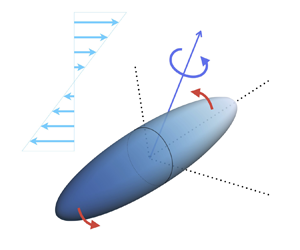
Generalised Jeffery's equations for rapidly spinning particles. Part 1. Spheroids
-
- Journal:
- Journal of Fluid Mechanics / Volume 979 / 25 January 2024
- Published online by Cambridge University Press:
- 09 January 2024, A1
-
- Article
-
- You have access
- Open access
- HTML
- Export citation
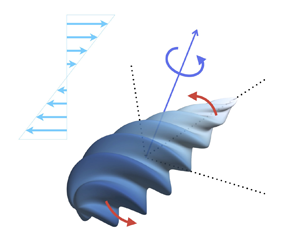
Generalised Jeffery's equations for rapidly spinning particles. Part 2. Helicoidal objects with chirality
-
- Journal:
- Journal of Fluid Mechanics / Volume 979 / 25 January 2024
- Published online by Cambridge University Press:
- 09 January 2024, A2
-
- Article
-
- You have access
- Open access
- HTML
- Export citation
Rapid generation of time-optimal rendezvous trajectory based on convex optimisation and DNN
-
- Journal:
- The Aeronautical Journal / Volume 128 / Issue 1324 / June 2024
- Published online by Cambridge University Press:
- 09 January 2024, pp. 1262-1283
-
- Article
- Export citation
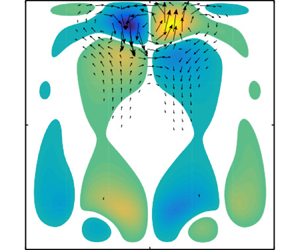
Flow stability and sequence of bifurcations in a cubic cavity driven by a constant shear stress
-
- Journal:
- Journal of Fluid Mechanics / Volume 978 / 10 January 2024
- Published online by Cambridge University Press:
- 08 January 2024, A28
-
- Article
-
- You have access
- Open access
- HTML
- Export citation
Wideband design and modeling of efficient multi-resonance reflective linear-to-circular polarization converter
-
- Journal:
- International Journal of Microwave and Wireless Technologies / Volume 16 / Issue 7 / September 2024
- Published online by Cambridge University Press:
- 08 January 2024, pp. 1096-1105
-
- Article
- Export citation
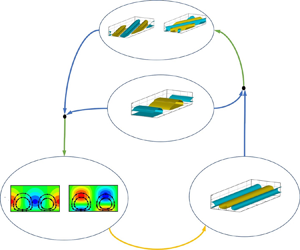
Principle of fundamental resonance in hypersonic boundary layers: an asymptotic viewpoint
-
- Journal:
- Journal of Fluid Mechanics / Volume 978 / 10 January 2024
- Published online by Cambridge University Press:
- 08 January 2024, A30
-
- Article
- Export citation
-
The fundamental resonance (FR) in the nonlinear phase of the boundary-layer transition to turbulence appears when a dominant planar instability mode reaches a finite amplitude and the low-amplitude oblique travelling modes with the same frequency as the dominant mode, together with the stationary streak modes, undergo the strongest amplification among all the Fourier components. This regime may be the most efficient means to trigger the natural transition in hypersonic boundary layers. In this paper, we aim to reveal the intrinsic mechanism of the FR in the weakly nonlinear framework based on the large-Reynolds-number asymptotic technique. It is found that the FR is, in principle, a triad resonance among a dominant planar fundamental mode, a streak mode and an oblique mode. In the major part of the boundary layer, the nonlinear interaction of the fundamental mode and the streak mode seeds the growth of the oblique mode, whereas the interaction of the oblique mode and the fundamental mode drives the roll components (transverse and lateral velocity) of the streak mode, which leads to a stronger amplification of the streamwise component of the streak mode due to the lift-up mechanism. This asymptotic analysis clearly shows that the dimensionless growth rates of the streak and oblique modes are the same order of magnitude as the dimensionless amplitude of the fundamental mode $(\bar {\epsilon }_{10})$, and the amplitude of the streak mode is $O(\bar {\epsilon }_{10}^{-1})$ greater than that of the oblique mode. The main-layer solution of the streamwise velocity, spanwise velocity and temperature of both the streak and the oblique modes become singular as the wall is approached, and so a viscous wall layer appears underneath. The wall layer produces an outflux velocity to the main-layer solution, inclusion of which leads to an improved asymptotic theory whose accuracy is confirmed by comparing with the calculations of the nonlinear parabolised stability equations (NPSEs) at moderate Reynolds numbers and the secondary instability analysis (SIA) at sufficiently high Reynolds numbers.


Disturbance observer-based fixed-time control for hypersonic morphing vehicles with uncertainties
-
- Journal:
- The Aeronautical Journal / Volume 128 / Issue 1326 / August 2024
- Published online by Cambridge University Press:
- 08 January 2024, pp. 1844-1874
-
- Article
- Export citation
Numerical simulation of droplet impingement and film flow for three-dimensional wings
-
- Journal:
- The Aeronautical Journal / Volume 128 / Issue 1324 / June 2024
- Published online by Cambridge University Press:
- 08 January 2024, pp. 1302-1322
-
- Article
- Export citation
High-Prandtl-number thermocapillary liquid bridges with dynamically deformed interface: effect of an axial gas flow on the linear stability
-
- Journal:
- Journal of Fluid Mechanics / Volume 978 / 10 January 2024
- Published online by Cambridge University Press:
- 08 January 2024, A27
-
- Article
-
- You have access
- Open access
- HTML
- Export citation
-
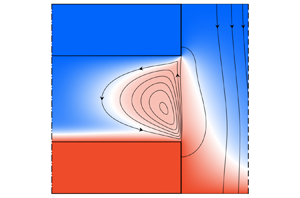
The linear stability of the axisymmetric steady flow in a thermocapillary liquid bridge made from 2-cSt silicone oil $({Pr}=28)$ is investigated numerically. The liquid bridge is heated either from above or below and exposed to an axial air flow which is confined to a concentric tube surrounding the bridge. At the annular inlet, the air flow is fully developed and has the same temperature as the adjacent support rod. Using an extended Oberbeck–Boussinesq approximation in which the density of both fluids depends linearly on the temperature in all equations, critical thermocapillary Reynolds numbers are obtained depending on the strength of the imposed axial air flow. The critical conditions are sensitive with respect to the direction of a weak air flow, because the air flow changes the plateau value of the interfacial temperature midway between the hot and cold ends. For stronger air flow the critical thermocapillary Reynolds number almost saturates at moderate values. Throughout, the instability arises as a hydrothermal wave with the gas phase being passive. The dynamic interface deformations for axisymmetric flow caused by the thermocapillarity flow in the liquid and by the stresses from the air flow are considered separately. Apart from turning points of the critical curve, the impact of dynamic surface deformations on the critical thermocapillary Reynolds number is moderate.

Relaxation dynamics of capillary folding of thin elastic sheets with pinned contact lines
-
- Journal:
- Journal of Fluid Mechanics / Volume 978 / 10 January 2024
- Published online by Cambridge University Press:
- 08 January 2024, A31
-
- Article
-
- You have access
- Open access
- HTML
- Export citation
Provable observation noise robustness for neural network control systems
-
- Journal:
- Research Directions: Cyber-Physical Systems / Volume 2 / 2024
- Published online by Cambridge University Press:
- 08 January 2024, e1
-
- Article
-
- You have access
- Open access
- HTML
- Export citation
-
Neural networks are vulnerable to adversarial perturbations: slight changes to inputs that can result in unexpected outputs. In neural network control systems, these inputs are often noisy sensor readings. In such settings, natural sensor noise – or an adversary who can manipulate them – may cause the system to fail. In this paper, we introduce the first technique to provably compute the minimum magnitude of sensor noise that can cause a neural network control system to violate a safety property from a given initial state. Our algorithm constructs a tree of possible successors with increasing noise until a specification is violated. We build on open-loop neural network verification methods to determine the least amount of noise that could change actions at each step of a closed-loop execution. We prove that this method identifies the unsafe trajectory with the least noise that leads to a safety violation. We evaluate our method on four systems: the Cart Pole and LunarLander environments from OpenAI gym, an aircraft collision avoidance system based on a neural network compression of ACAS Xu, and the SafeRL Aircraft Rejoin scenario. Our analysis produces unsafe trajectories where deviations under $1{\rm{\% }}$ of the sensor noise range make the systems behave erroneously.

An experimental investigation on the aerodynamic characteristics and vortex dynamics of a flying wing
-
- Journal:
- The Aeronautical Journal / Volume 128 / Issue 1326 / August 2024
- Published online by Cambridge University Press:
- 08 January 2024, pp. 1681-1705
-
- Article
-
- You have access
- Open access
- HTML
- Export citation
-
In this paper, we present a detailed experimental investigation mainly on the vortical flow fields and the associated vortex breakdown phenomena over a non-slender flying wing (sweep angle, ${\rm{\Lambda }}$ = 53°). In the process, the aerodynamic coefficients were also determined using a six-component force balance. Surface oil flow visualisation, surface pressure measurements and particle image velocimetry (PIV) measurements, in various crossflow planes and in a longitudinal plane passing through the leading-edge vortex core, were carried out at various Reynolds numbers to understand the flow field over the non-slender flying wing. Aerodynamic characteristics of the flying wing show local peaks and valleys in the pitching moment coefficient. The surface flow visualisation reveals that the nonlinearity of the pitching moment curve is due to the complex nature of vortical flow structures. The flow visualisation also demonstrates the presence of a wave-like surface pattern, and its size is found to reduce with increasing Reynolds numbers. The present PIV measurements confirm that this wave-like surface pattern is associated with vortex breakdown phenomena. These measurements also reveal that the vortex breakdown has not reached the apex of the wing, even at post-stall angle-of-attack. For pre-stall ( $\alpha $ = 20°) flow regimes, it is observed that the location of the vortex breakdown moves downstream as the Reynolds number increases, but this influence is minimised at near-stall ( $\alpha $ = 25°) and post-stall ( $\alpha $ = 30°) flow regimes. Reconstructed velocity field using the first 10 dominant proper orthogonal decomposition (POD) modes reveals that the nature of the vortex breakdown over the flying wing is a spiral-type vortex breakdown.


Design and realization of a compact substrate integrated coaxial line butler matrix for beamforming applications
-
- Journal:
- International Journal of Microwave and Wireless Technologies / Volume 16 / Issue 5 / June 2024
- Published online by Cambridge University Press:
- 08 January 2024, pp. 812-818
-
- Article
- Export citation
-
This article presents the modeling and realization of a compact substrate integrated coaxial line (SICL) based butler matrix operating at 5 GHz for beam-forming applications. The proposed 4 × 4 butler matrix is developed using SICL-based hybrid coupler, crossover, and phase shifter. A compact 90∘ coupler comprising of center tapped unequal stubs is designed to enhance the size reduction as well as to extend the out of band rejection. Wideband SICL-based crossover operating from DC to 10 GHz is conceived for the proposed butler matrix using a plated through hole as transition. The SICL crossover features very high measured isolation of 65 dB owing to the reduction in coupling between the two signal paths within a lateral footprint of only 0.034 $\lambda_g^2$. A meandered SICL-based line is used in order to provide the necessary 45∘ and 0∘ phase shift to realize the butler matrix. The fully shielded and self-packaged compact 4 × 4 SICL-based butler matrix is fabricated and experimentally validated to operate at 5 GHz.

Scaling law of the second-order structure function over the entire sandstorm process
-
- Journal:
- Journal of Fluid Mechanics / Volume 978 / 10 January 2024
- Published online by Cambridge University Press:
- 08 January 2024, A29
-
- Article
- Export citation

Cryptoeconomics
- Economic Mechanisms Behind Blockchains
-
- Published online:
- 06 January 2024
- Print publication:
- 16 November 2023

Liquid inertia versus bubble cloud buoyancy in circular plunging jet experiments
-
- Journal:
- Journal of Fluid Mechanics / Volume 978 / 10 January 2024
- Published online by Cambridge University Press:
- 05 January 2024, A23
-
- Article
-
- You have access
- Open access
- HTML
- Export citation

Analytical models for pressure-driven Stokes flow through superhydrophobic and liquid-infused tubes and annular pipes
-
- Journal:
- Journal of Fluid Mechanics / Volume 978 / 10 January 2024
- Published online by Cambridge University Press:
- 05 January 2024, A20
-
- Article
-
- You have access
- Open access
- HTML
- Export citation
Capillary rise in sharp corners: not quite universal
-
- Journal:
- Journal of Fluid Mechanics / Volume 978 / 10 January 2024
- Published online by Cambridge University Press:
- 05 January 2024, A26
-
- Article
-
- You have access
- Open access
- HTML
- Export citation
-
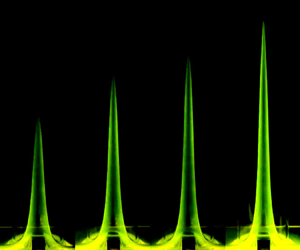
We study the capillary rise of viscous liquids into sharp corners formed by two surfaces whose geometry is described by power laws $h_i(x) = c_i x^n$, $i = 1,2$, where $c_2 > c_1$ for $n \geq 1$. Prior investigations of capillary rise in sharp corners have shown that the meniscus altitude increases with time as $t^{1/3}$, a result that is universal, i.e. applies to all corner geometries. The universality of the phenomenon of capillary rise in sharp corners is revisited in this work through the analysis of a partial differential equation for the evolution of a liquid column rising into power-law-shaped corners, which is derived using lubrication theory. Despite the lack of geometric similarity of the liquid column cross-section for $n>1$, there exist a scaling and a similarity transformation that are independent of $c_i$ and $n$, which gives rise to the universal $t^{1/3}$ power law for capillary rise. However, the prefactor, which corresponds to the tip altitude of the self-similar solution, is a function of $n$, and it is shown to be bounded and monotonically decreasing as $n\to \infty$. Accordingly, the profile of the interface radius as a function of altitude is also independent of $c_i$ and exhibits slight variations with $n$. Theoretical results are compared against experimental measurements of the time evolution of the tip altitude and of profiles of the interface radius as a function of altitude.


