Refine search
Actions for selected content:
212966 results in Engineering
15 - Flow-Evolutionary Law as a Working Hypothesis
- from Part IV - Applications II
-
- Book:
- Field Theory of Multiscale Plasticity
- Published online:
- 14 December 2023
- Print publication:
- 04 January 2024, pp 774-808
-
- Chapter
- Export citation
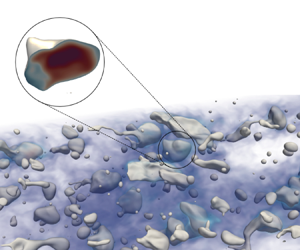
Heat transfer in drop-laden turbulence
- Part of
-
- Journal:
- Journal of Fluid Mechanics / Volume 978 / 10 January 2024
- Published online by Cambridge University Press:
- 03 January 2024, A12
-
- Article
-
- You have access
- Open access
- HTML
- Export citation
-
Heat transfer by large deformable drops in a turbulent flow is a complex and rich-in-physics system, in which drop deformation, breakage and coalescence influence the transport of heat. We study this problem by coupling direct numerical simulation (DNS) of turbulence with a phase-field method for the interface description. Simulations are run at fixed-shear Reynolds and Weber numbers. To evaluate the influence of microscopic flow properties, like momentum/thermal diffusivity, on macroscopic flow properties, like mean temperature or heat transfer rates, we consider four different values of the Prandtl number, which is the momentum to thermal diffusivity ratio: $Pr=1$, $Pr=2$, $Pr=4$ and $Pr=8$. The drop volume fraction is $\varPhi \simeq 5.4\,\%$ for all cases. Drops are initially warmer than the turbulent carrier fluid and release heat at different rates depending on the value of $Pr$, but also on their size and on their own dynamics (topology, breakage, drop–drop interaction). Computing the time behaviour of the drops and carrier fluid average temperatures, we clearly show that an increase of $Pr$ slows down the heat transfer process. We explain our results by a simplified phenomenological model: we show that the time behaviour of the drop average temperature is self-similar, and a universal behaviour can be found upon rescaling by $t/Pr^{2/3}$. Accordingly, the heat transfer coefficient $\mathcal {H}$ (respectively its dimensionless counterpart, the Nusselt number $Nu$) scales as $\mathcal {H}\sim Pr^{-2/3}$ (respectively $Nu\sim Pr^{1/3}$) at the beginning of the simulation, and tends to $\mathcal {H}\sim Pr^{-1/2}$ (respectively $Nu\sim Pr^{1/2}$) at later times. These different scalings can be explained via the boundary layer theory and are consistent with previous theoretical/numerical predictions.


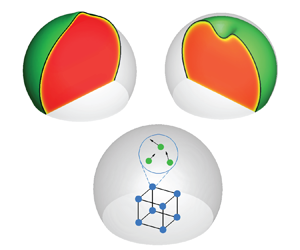
A new lattice Boltzmann model for liquid–solid phase transition and its application in the simulation of sessile droplet solidification – focusing on volume change
-
- Journal:
- Journal of Fluid Mechanics / Volume 978 / 10 January 2024
- Published online by Cambridge University Press:
- 03 January 2024, A10
-
- Article
- Export citation
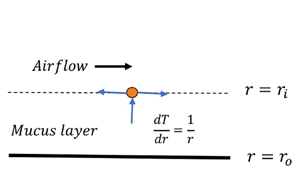
Effect of inhaled air temperature on mucus dynamics in the proximal airways
-
- Journal:
- Journal of Fluid Mechanics / Volume 978 / 10 January 2024
- Published online by Cambridge University Press:
- 03 January 2024, A15
-
- Article
- Export citation
FLM volume 977 Cover and Front matter
-
- Journal:
- Journal of Fluid Mechanics / Volume 977 / 25 December 2023
- Published online by Cambridge University Press:
- 03 January 2024, p. f1
-
- Article
-
- You have access
- Export citation
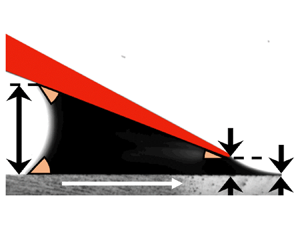
Analysis of low-speed blade coating flows
-
- Journal:
- Journal of Fluid Mechanics / Volume 978 / 10 January 2024
- Published online by Cambridge University Press:
- 03 January 2024, A11
-
- Article
-
- You have access
- Open access
- HTML
- Export citation
Optimal design via polynomial Euler function for UAV applications
-
- Journal:
- The Journal of Navigation / Volume 77 / Issue 1 / January 2024
- Published online by Cambridge University Press:
- 13 September 2024, pp. 82-99
- Print publication:
- January 2024
-
- Article
- Export citation
-
Unmanned aerial vehicles (UAVs) have recently been widely applied in a comprehensive realm. By enhancing computer photography and artificial intelligence, UAVs can automatically discriminate against environmental objectives and detect events that occur in the real scene. The application of collaborative UAVs will offer diverse interpretations which support a multiperspective view of the scene. Due to the diverse interpretations of UAVs usually deviating, UAVs require a consensus interpretation for the scenario. This study presents an original consensus-based method to pilot multi-UAV systems for achieving consensus on their observation as well as constructing a group situation-based depiction of the scenario. Taylor series are used to describe the fuzzy nonlinear plant and derive the stability analysis using polynomial functions, which have the representations $V(x )={m_{\textrm{1} \le l \le N}}({{V_\textrm{l}}(x )} )$
 and ${V_l}(x )={x^T}{P_l}(x )x$
 . Due to the fact that the ${\dot{P}_l}(x )$
 in ${\dot{V}_l}(x )={\dot{x}^T}{P_l}(x )x + {x^T}{\dot{P}_l}(x )x + {x^T}{P_l}(x )\dot{x}$
 will yield intricate terms to ensure a stability criterion, we aim to avoid these kinds of issues by proposing a polynomial homogeneous framework and using Euler's functions for homogeneous systems. First, this method permits each UAV to establish high-level conditions from the probed events via a fuzzy-based aggregation event. The evaluated consensus indicates how suitable is the scenario collective interpretation for every UAV perspective.

Deep temporal semi-supervised one-class classification for GNSS radio frequency interference detection
-
- Journal:
- The Journal of Navigation / Volume 77 / Issue 1 / January 2024
- Published online by Cambridge University Press:
- 31 May 2024, pp. 59-81
- Print publication:
- January 2024
-
- Article
-
- You have access
- Open access
- HTML
- Export citation
-
We present a deep learning approach for near real-time detection of Global Navigation Satellite System (GNSS) radio frequency interference (RFI) based on a large amount of aircraft data collected onboard from the Global Positioning System (GPS) and Attitude and Heading Reference System (AHRS). Our approach enables detection of GNSS RFI in the absence of total GPS failure, i.e. while the receiver is still able to estimate a position, which means RFI sources with low power or at larger distance can be detected. We demonstrate how deep one-class classification can be used to detect GNSS RFI. Furthermore, thanks to a unique dataset from the Swiss Air Force and Swiss Air-Rescue (Rega), preprocessed by Swiss Air Navigation Services Ltd. (Skyguide), we demonstrate application of deep learning for GNSS RFI detection on real-world large scale aircraft data containing flight recordings impacted by real jamming. The approach we present is highly general and can be used as a foundation for solving various automated decision-making problems based on different types of Communications, Navigation and Surveillance (CNS) and Air Traffic Management (ATM) streaming data. The experimental results indicate that our system successfully detects GNSS RFI with 83$\,\cdot\,$
 5% accuracy. Extensive empirical studies demonstrate that the proposed method outperforms strong machine learning and rule-based baselines.

A critical examination of safety culture in the superyacht industry
-
- Journal:
- The Journal of Navigation / Volume 77 / Issue 1 / January 2024
- Published online by Cambridge University Press:
- 13 September 2024, pp. 100-115
- Print publication:
- January 2024
-
- Article
- Export citation
Application of neural network for automatic symbol recognition in production of electronic navigation charts from paper charts
-
- Journal:
- The Journal of Navigation / Volume 77 / Issue 1 / January 2024
- Published online by Cambridge University Press:
- 15 October 2024, pp. 116-123
- Print publication:
- January 2024
-
- Article
-
- You have access
- Open access
- HTML
- Export citation
An online method for ship trajectory compression using AIS data
-
- Journal:
- The Journal of Navigation / Volume 77 / Issue 1 / January 2024
- Published online by Cambridge University Press:
- 30 May 2024, pp. 37-58
- Print publication:
- January 2024
-
- Article
-
- You have access
- Open access
- HTML
- Export citation
San Martín's accurate longitude measurements on Magellan's circumnavigation: luck or mastery?
-
- Journal:
- The Journal of Navigation / Volume 77 / Issue 1 / January 2024
- Published online by Cambridge University Press:
- 22 October 2024, pp. 124-150
- Print publication:
- January 2024
-
- Article
- Export citation
Error analysis of dead reckoning navigation system by considering uncertainties in an underwater vehicle's sensors
-
- Journal:
- The Journal of Navigation / Volume 77 / Issue 1 / January 2024
- Published online by Cambridge University Press:
- 28 May 2024, pp. 18-36
- Print publication:
- January 2024
-
- Article
- Export citation
NAV volume 77 issue 1 Cover and Front matter
-
- Journal:
- The Journal of Navigation / Volume 77 / Issue 1 / January 2024
- Published online by Cambridge University Press:
- 14 April 2025, pp. f1-f2
- Print publication:
- January 2024
-
- Article
-
- You have access
- Export citation
NAV volume 77 issue 1 Cover and Back matter
-
- Journal:
- The Journal of Navigation / Volume 77 / Issue 1 / January 2024
- Published online by Cambridge University Press:
- 14 April 2025, pp. b1-b2
- Print publication:
- January 2024
-
- Article
-
- You have access
- Export citation
An improved wide-lane ambiguity resolution method for kinematic smartphone positioning
-
- Journal:
- The Journal of Navigation / Volume 77 / Issue 1 / January 2024
- Published online by Cambridge University Press:
- 13 May 2024, pp. 1-17
- Print publication:
- January 2024
-
- Article
- Export citation
A simple method for pulse contrast enhancement via self-focusing
-
- Journal:
- High Power Laser Science and Engineering / Volume 12 / 2024
- Published online by Cambridge University Press:
- 29 December 2023, e18
-
- Article
-
- You have access
- Open access
- HTML
- Export citation
-
Here we report on a simple-to-implement and cost-effective approach for laser pulse contrast enhancement, based on the ${\chi}^{(3)}$ nonlinear self-focusing effect. An intentionally induced and gently controlled self-focusing in a thin glass transforms the time-dependent intensity into variation in beam divergence. Followed by a spatial discriminating filter, only the strongly focused fraction traverses the setup, at the expense of efficiency. A numerical model, accounting for the pulse and material parameters via a Gaussian ABCD matrix, provides an estimate for the instantaneous beam waist and transmission efficiency, which enables us to evaluate the resulting contrast enhancement. The estimated contrast enhancement spans between 0.5 and 2.5 orders of magnitude, in conjunction with approximately 25%–90% estimated efficiency, depending on the pulse parameters. In a preliminary experiment we demonstrated the effect with 10s-μJ sub GW regime with approximately 40 $\%$ efficiency and a contrast improvement of more than or equal to 20 dB.


Revealing the mechanism and scaling laws behind equilibrium altitudes of near-ground pitching hydrofoils
-
- Journal:
- Journal of Fluid Mechanics / Volume 978 / 10 January 2024
- Published online by Cambridge University Press:
- 28 December 2023, A5
-
- Article
- Export citation
-
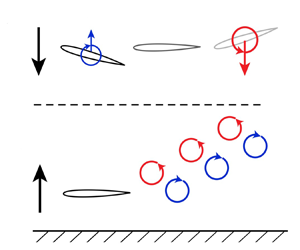
A classic lift decomposition (Von Kármán & Sears, J. Aeronaut. Sci., vol. 5, 1938, pp. 379–390) is conducted on potential flow simulations of a near-ground pitching hydrofoil. It is discovered that previously observed stable and unstable equilibrium altitudes are generated by a balance between positive wake-induced lift and negative quasi-steady lift while the added mass lift does not play a role. Using both simulations and experiments, detailed analyses of each lift component's near-ground behaviour provide further physical insights. When applied to three-dimensional pitching hydrofoils the lift decomposition reveals that the disappearance of equilibrium altitudes for ${A{\kern-4pt}R}\ {\rm (aspect\ ratio)} <1.5$ occurs due to the magnitude of the quasi-steady lift outweighing the magnitude of the wake-induced lift at all ground distances. Scaling laws for the quasi-steady lift, wake-induced lift and the stable equilibrium altitude are discovered. A simple scaling law for the lift of a steady foil in ground effect is derived. This scaling shows that both circulation enhancement and the velocity induced at a foil's leading edge by the bound vortex of its ground image foil are the essential physics to understand steady ground effect. The scaling laws for unsteady pitching foils can predict the equilibrium altitude to within $20\,\%$ of its value when $St\ {\rm (Strouhal\ number)} < 0.45$. For $St \ge 0.45$ there is a wake instability effect, not accounted for in the scaling relations, that significantly alters the wake-induced lift. These results not only provide key physical insights and scaling laws for steady and unsteady ground effects, but also for two schooling hydrofoils in a side-by-side formation with an out-of-phase synchronization.


Heat transport and flow structure in thermal convection with two liquid layers
-
- Journal:
- Journal of Fluid Mechanics / Volume 978 / 10 January 2024
- Published online by Cambridge University Press:
- 27 December 2023, A4
-
- Article
- Export citation
-
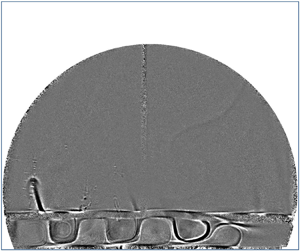
We report an experimental investigation of the heat transport and flow field in a rectangular Rayleigh–Bénard convection (RBC) cell with two immiscible fluids: silicone oil and glycerol. The global heat transport of the system is divided into three ranges corresponding to the different flow structures formed in the glycerol layer. In range I, the glycerol layer is dominated by conduction, and no plume is formed over the interface. In range II, cellular rolls are formed in the glycerol layer and the horizontal motion of rolls causes an oscillation of temperature in the interface. In range III, the cellular pattern is time-independent, and the interface forms a group of wavelets with wave numbers consistent with the mode of the cellular pattern. In lower-thin glycerol, the Nusselt (Nu) grows from conduction to convection through an oscillating subcritical bifurcation at critical Rayleigh number $Ra_c$. The value of $Ra_c$ in the present work is smaller than the theoretical prediction of both-rigid boundaries and greater than the prediction of one-rigid and one-free boundaries. In the upper-thick silicone oil layer, $Nu$ increases with increasing $Ra$, but it is smaller than that of traditional RBC. For the silicone oil layer in two-layer RBC, the hot plumes emitting over the liquid–liquid interface showed different shape and different velocity from cold plumes emitting from the top rigid plate. This implies that the velocity boundary condition strongly influences the flow structure in turbulent convection.


Eukaryotic swimming cells are shaped by hydrodynamic constraints
-
- Journal:
- Journal of Fluid Mechanics / Volume 978 / 10 January 2024
- Published online by Cambridge University Press:
- 27 December 2023, R1
-
- Article
- Export citation
