Refine search
Actions for selected content:
212971 results in Engineering
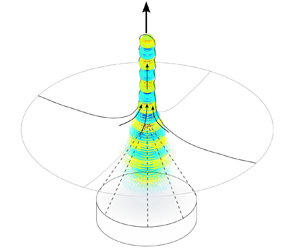
Numerical analysis of dynamic acoustic resonance with deformed liquid surfaces: the acoustic fountain
-
- Journal:
- Journal of Fluid Mechanics / Volume 977 / 25 December 2023
- Published online by Cambridge University Press:
- 22 December 2023, A44
-
- Article
- Export citation
Quasioptical Fresnel-based lens antenna with frequency-steerable focal length for millimeter wave radars
-
- Journal:
- International Journal of Microwave and Wireless Technologies / Volume 16 / Issue 5 / June 2024
- Published online by Cambridge University Press:
- 22 December 2023, pp. 712-719
-
- Article
-
- You have access
- Open access
- HTML
- Export citation
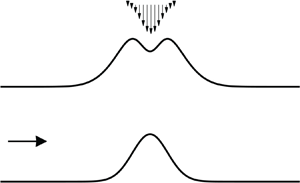
A method to calculate inverse solutions for steady open channel free-surface flow
-
- Journal:
- Journal of Fluid Mechanics / Volume 977 / 25 December 2023
- Published online by Cambridge University Press:
- 22 December 2023, A46
-
- Article
-
- You have access
- Open access
- HTML
- Export citation
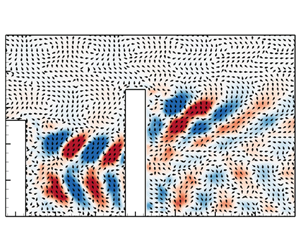
Unsteady wake interference of unequal-height tandem cylinders mounted in a turbulent boundary layer
-
- Journal:
- Journal of Fluid Mechanics / Volume 977 / 25 December 2023
- Published online by Cambridge University Press:
- 22 December 2023, A52
-
- Article
-
- You have access
- Open access
- HTML
- Export citation
-
The unsteady wake interference of unequal-height tandem finite wall-mounted cylinders (FWMCs) fully submerged in a turbulent boundary layer (TBL) was investigated using time-resolved particle image velocimetry. The aspect ratios of the cylinders were fixed at $h/d = 5.3$ for the upstream cylinder (UC) and $H/d = 7.0$ for the downstream cylinder (DC) to achieve a height ratio of $h/H = 0.75$, where d is the diameter of the cylinders. The Reynolds number based on the cylinder diameter was $Re = 5540$ and the submergence ratio was $\delta /H = 1.2$, where $\delta $ is the TBL thickness. Three main flow regimes of tandem FWMCs were examined by varying the centre-to-centre spacing ( $s$) between the cylinders: extended-body ( $s/d = 2$), reattachment ( $s/d = 4$) and co-shedding ( $s/d = 6$) regimes. These test cases denoted as SR2, SR4 and SR6, respectively, were compared with a reference isolated cylinder (SC) with an aspect ratio similar to that of the DC. Spatio-temporal analysis of the flow field showed that the gap region of SR2 is characterized by a strong downwash of alternating low- and high-momentum fluid induced by the approach flow that is deflected from the unsheltered portion of the DC. In contrast, the gap region of SR4 and SR6 exhibited both downwash and upwash flow with a saddle point that moves closer to the mid-height of the UC as the spacing ratio increases. The upwash and downwash shear layers were associated with small-scale vortices with Strouhal numbers larger than that of the Kármán vortex shedding in the spanwise shear layers. The wake structure behind the DC was significantly altered compared with the SC due to sheltering effects, and the spacing ratio had a significant impact on the spatio-temporal evolution of the vortices.


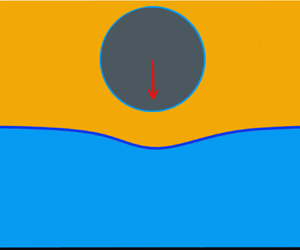
Capillary-lubrication force exerted on a two-dimensional particle moving towards a thin fluid film
-
- Journal:
- Journal of Fluid Mechanics / Volume 977 / 25 December 2023
- Published online by Cambridge University Press:
- 22 December 2023, A50
-
- Article
-
- You have access
- Open access
- HTML
- Export citation
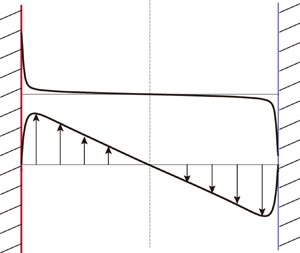
Mean velocity and temperature profiles in turbulent vertical convection
-
- Journal:
- Journal of Fluid Mechanics / Volume 977 / 25 December 2023
- Published online by Cambridge University Press:
- 22 December 2023, A51
-
- Article
- Export citation
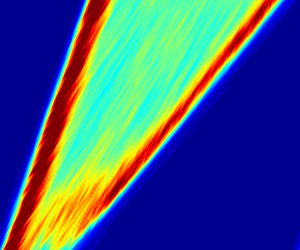
Scaling and mechanism of the propagation speed of the upstream turbulent front in pipe flow
-
- Journal:
- Journal of Fluid Mechanics / Volume 977 / 25 December 2023
- Published online by Cambridge University Press:
- 21 December 2023, R4
-
- Article
- Export citation
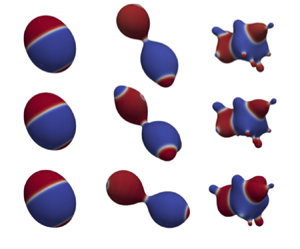
Derivation and simulation of a two-phase fluid deformable surface model
-
- Journal:
- Journal of Fluid Mechanics / Volume 977 / 25 December 2023
- Published online by Cambridge University Press:
- 21 December 2023, A41
-
- Article
-
- You have access
- Open access
- HTML
- Export citation
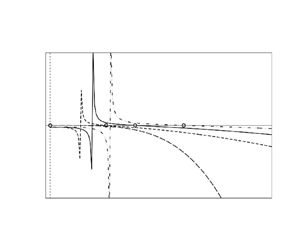
Electromagnetic field effect on a conducting liquid film flowing down an inclined or vertical plane
-
- Journal:
- Journal of Fluid Mechanics / Volume 977 / 25 December 2023
- Published online by Cambridge University Press:
- 21 December 2023, A42
-
- Article
- Export citation
-
The effect of magnetic as well as electromagnetic fields on the stability of an electrically conducting viscous liquid film flowing down an inclined plane has been investigated for the full range of inclination angles $\theta$ ( $0 < \theta \le 90^{\circ }$) in association with a given value of the Reynolds number $Re$ ( $0 < Re \le 100$), and vice versa. A nonlinear evolution equation is derived by using the momentum-integral method, which is valid for both small and large values of $Re$. Use of the normal mode approach on the linearized surface evolution equation gives the stability criterion and the critical value of the wavenumber $k_c$ (for which the imaginary part of the complex frequency $\omega _i^+$ is zero) which conceive the electric parameter $E$, magnetic parameter $M$, Reynolds number $Re$, Weber number $We$ and inclination angle $\theta$. The nonlinear stability analysis based on the second Landau constant $J_2$ helps to demarcate all four possible distinct flow zones (explosive, supercritical, unconditional and subcritical) of this problem. A novel result of this analysis is a simple relationship between the critical values of $k_c$ and $k_j$ (for which $J_2$ is zero) that basically gives the necessary conditions for the existence of the range of $k$ for an explosive unstable zone, which is either one or two accordingly as $k_j >k_c$ or $k_j< k_c$, and the non-existence of an unconditional stable zone is $k_j \le k_c$ depending upon the values of $M$. The analysis confirms the existence of two critical values of $M$, namely, $M_c$ (for which $k_c$ is zero) and $M_j$ (for which $k_j$ is zero). Here, $M_j > M_c$ except for $\theta = 90^{\circ }$; and we have found the existence of all four or two (unconditional and subcritical) or one (subcritical) zone(s) of this flow problem accordingly, as $0 \le M < M_c$ or $M_c \le M < M_j$ and $M > M_j$ or $M = M_j$.


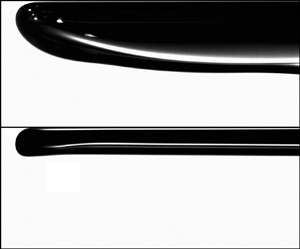
Dynamics of elongated bubbles in slightly inclined pipes with viscous fluids
-
- Journal:
- Journal of Fluid Mechanics / Volume 977 / 25 December 2023
- Published online by Cambridge University Press:
- 21 December 2023, A40
-
- Article
- Export citation
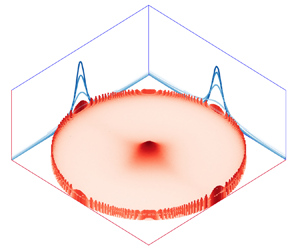
Geometry of stratified turbulent mixing: local alignment of the density gradient with rotation, shear and viscous dissipation
-
- Journal:
- Journal of Fluid Mechanics / Volume 977 / 25 December 2023
- Published online by Cambridge University Press:
- 21 December 2023, R5
-
- Article
-
- You have access
- Open access
- HTML
- Export citation
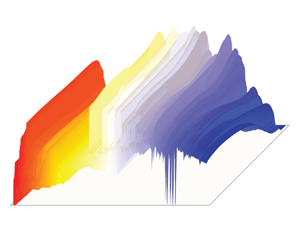
Numerical study on the non-equilibrium characteristics of high-speed atmospheric re-entry flow and radiation of aircraft based on fully coupled model
-
- Journal:
- Journal of Fluid Mechanics / Volume 977 / 25 December 2023
- Published online by Cambridge University Press:
- 21 December 2023, A39
-
- Article
- Export citation
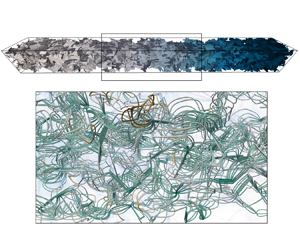
The hidden structure of hydrodynamic transport in random fracture networks
-
- Journal:
- Journal of Fluid Mechanics / Volume 977 / 25 December 2023
- Published online by Cambridge University Press:
- 21 December 2023, A38
-
- Article
-
- You have access
- Open access
- HTML
- Export citation

Advances in Sports Economics
-
- Published by:
- Agenda Publishing
- Published online:
- 20 December 2023
- Print publication:
- 09 December 2021

Intelligent Metasurface Sensors
-
- Published online:
- 20 December 2023
- Print publication:
- 01 February 2024
-
- Element
- Export citation
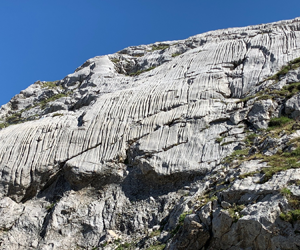
Boundary-layer approach to the linear karren instability
-
- Journal:
- Journal of Fluid Mechanics / Volume 977 / 25 December 2023
- Published online by Cambridge University Press:
- 20 December 2023, R3
-
- Article
-
- You have access
- Open access
- HTML
- Export citation
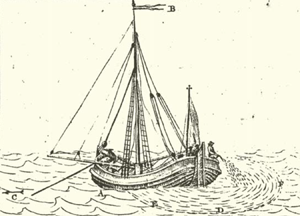
Surfactants on troubled waters
-
- Journal:
- Journal of Fluid Mechanics / Volume 976 / 10 December 2023
- Published online by Cambridge University Press:
- 20 December 2023, F1
-
- Article
-
- You have access
- Open access
- HTML
- Export citation
Concept of operations for the Neptune system mission Arcanum
-
- Journal:
- The Aeronautical Journal / Volume 128 / Issue 1321 / March 2024
- Published online by Cambridge University Press:
- 20 December 2023, pp. 469-488
-
- Article
-
- You have access
- Open access
- HTML
- Export citation
FLM volume 976 Cover and Front matter
-
- Journal:
- Journal of Fluid Mechanics / Volume 976 / 10 December 2023
- Published online by Cambridge University Press:
- 20 December 2023, p. f1
-
- Article
-
- You have access
- Export citation
Evaluating cognitive and physical work performance: A comparative study of an active and passive industrial back-support exoskeleton
-
- Journal:
- Wearable Technologies / Volume 4 / 2023
- Published online by Cambridge University Press:
- 20 December 2023, e27
-
- Article
-
- You have access
- Open access
- HTML
- Export citation
