Refine search
Actions for selected content:
212971 results in Engineering

Field Theory of Multiscale Plasticity
-
- Published online:
- 14 December 2023
- Print publication:
- 04 January 2024
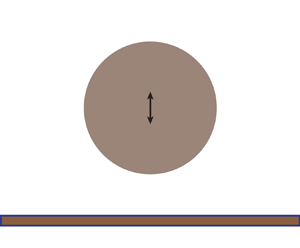
Unsteady drag force on an immersed sphere oscillating near a wall
-
- Journal:
- Journal of Fluid Mechanics / Volume 977 / 25 December 2023
- Published online by Cambridge University Press:
- 14 December 2023, A21
-
- Article
- Export citation
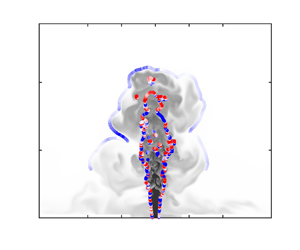
Local entrainment across a TNTI and a TTI in a turbulent forced fountain
-
- Journal:
- Journal of Fluid Mechanics / Volume 977 / 25 December 2023
- Published online by Cambridge University Press:
- 14 December 2023, A13
-
- Article
-
- You have access
- Open access
- HTML
- Export citation
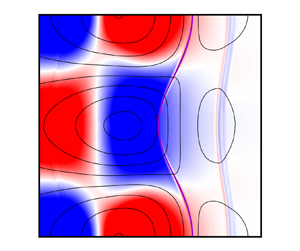
The magnetised plasma Richtmyer–Meshkov instability: elastic collisions in an ion–electron multifluid plasma
-
- Journal:
- Journal of Fluid Mechanics / Volume 977 / 25 December 2023
- Published online by Cambridge University Press:
- 14 December 2023, A19
-
- Article
-
- You have access
- Open access
- HTML
- Export citation
Exploring fs-laser irradiation damage subthreshold behavior of dielectric mirrors via electrical measurements
-
- Journal:
- High Power Laser Science and Engineering / Volume 12 / 2024
- Published online by Cambridge University Press:
- 14 December 2023, e15
-
- Article
-
- You have access
- Open access
- HTML
- Export citation
-
With ultrafast laser systems reaching presently 10 PW peak power or operating at high repetition rates, research towards ensuring the long-term, trouble-free performance of all laser-exposed optical components is critical. Our work is focused on providing insight into the optical material behavior at fluences below the standardized laser-induced damage threshold (LIDT) value by implementing a simultaneous dual analysis of surface emitted particles using a Langmuir probe (LP) and the target current (TC). ${\mathrm{HfO}}_2$ and ${\mathrm{ZrO}}_2$ thin films deposited on fused silica substrates by pulsed laser deposition at various ${\mathrm{O}}_2$ pressures for defect and stoichiometry control were irradiated by Gaussian, ultrashort laser pulses (800 nm, 10 Hz, 70 fs) in a wide range of fluences. Both TC and LP collected signals were in good agreement with the existing theoretical description of laser–matter interaction at an ultrashort time scale. Our approach for an in situ LIDT monitoring system provides measurable signals for below-threshold irradiation conditions that indicate the endurance limit of the optical surfaces in the single-shot energy scanning mode. The LIDT value extracted from the LP-TC system is in line with the multipulse statistical analysis done with ISO 21254-2:2011(E). The implementation of the LP and TC as on-shot diagnostic tools for optical components will have a significant impact on the reliability of next-generation ultrafast and high-power laser systems.


Three-dimensional topology-based analysis segments volumetric and spatiotemporal fluorescence microscopy
-
- Journal:
- Biological Imaging / Volume 4 / 2024
- Published online by Cambridge University Press:
- 14 December 2023, e1
-
- Article
-
- You have access
- Open access
- HTML
- Export citation
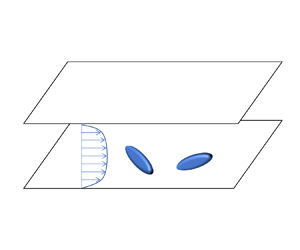
Effect of fluid inertial torque on the rotational and orientational dynamics of tiny spheroidal particles in turbulent channel flow
-
- Journal:
- Journal of Fluid Mechanics / Volume 977 / 25 December 2023
- Published online by Cambridge University Press:
- 14 December 2023, A20
-
- Article
- Export citation
-
Rotation and orientation of non-spherical particles in a fluid flow depend on the hydrodynamic torque they experience. However, little is known about the effect of the fluid inertial torque on the dynamics of tiny inertial spheroids in turbulent channel flows, as only Jeffery torque has been considered in previous studies by point-particle direct numerical simulations. In this study, we investigate the rotation and orientation of tiny spheroids with both fluid inertial torque and Jeffery torque in a turbulent channel flow. By comparing with the case in the absence of fluid inertial torque, we find that the rotational and orientational dynamics of spheroids is significantly affected by the fluid inertial torque when the Stokes number, which is non-dimensionalized by fluid viscous time scale, is larger than the critical value $St_c\approx 2$, indicating that the fluid inertial torque is non-negligible for most particle cases considered in earlier studies. In contrast to the earlier findings considering only Jeffery torque (Challabotla et al., J. Fluid Mech., vol. 776, 2015, p. R2), we find that prolate (oblate) spheroids with a large Stokes number tend to tumble (spin) in the streamwise–wall-normal plane in a thinner region near the wall due to the presence of the fluid inertial torque. Approaching the channel centre, the flow shear gradually vanishes, but the velocity difference between local fluid and particles is still pronounced and increasing as particle inertia grows. As a result, in the core region, fluid inertial torque is dominant and drives the particles to align with its broad side normal to the streamwise direction rather than a random orientation observed in earlier studies without fluid inertial torque. Meanwhile, the presence of fluid inertial torque enhances the tumbling rates of spheroids in the core region. In addition, the effect of fluid inertial force on the dynamics of spheroids is also examined in this study, but the results indicate the effect of fluid inertial force is weak. Our findings imply the importance of fluid inertial torque in modelling the dynamics of inertial non-spherical particles in turbulent channel flows.


A lightweight vortex model for unsteady motion of airfoils
-
- Journal:
- Journal of Fluid Mechanics / Volume 977 / 25 December 2023
- Published online by Cambridge University Press:
- 14 December 2023, A22
-
- Article
-
- You have access
- Open access
- HTML
- Export citation

The production of uncertainty in three-dimensional Navier–Stokes turbulence
- Part of
-
- Journal:
- Journal of Fluid Mechanics / Volume 977 / 25 December 2023
- Published online by Cambridge University Press:
- 13 December 2023, A17
-
- Article
-
- You have access
- HTML
- Export citation
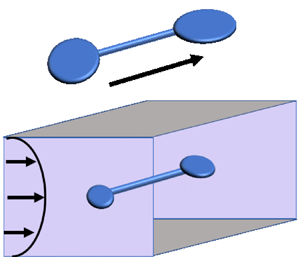
Hydrodynamics of thermally driven chiral suspensions
-
- Journal:
- Journal of Fluid Mechanics / Volume 977 / 25 December 2023
- Published online by Cambridge University Press:
- 13 December 2023, A8
-
- Article
- Export citation
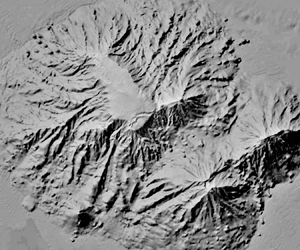
The sandpaper theory of flow–topography interaction for homogeneous shallow-water systems
-
- Journal:
- Journal of Fluid Mechanics / Volume 977 / 25 December 2023
- Published online by Cambridge University Press:
- 13 December 2023, A9
-
- Article
- Export citation
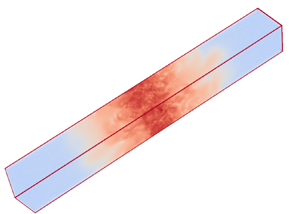
How far does turbulence spread?
-
- Journal:
- Journal of Fluid Mechanics / Volume 977 / 25 December 2023
- Published online by Cambridge University Press:
- 13 December 2023, R1
-
- Article
-
- You have access
- Open access
- HTML
- Export citation
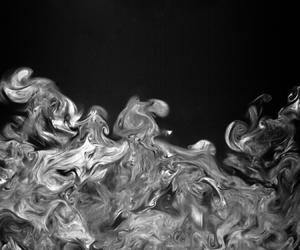
The relative efficiencies of the entrainment of mass, momentum and kinetic energy from a turbulent background
-
- Journal:
- Journal of Fluid Mechanics / Volume 977 / 25 December 2023
- Published online by Cambridge University Press:
- 13 December 2023, R2
-
- Article
-
- You have access
- Open access
- HTML
- Export citation
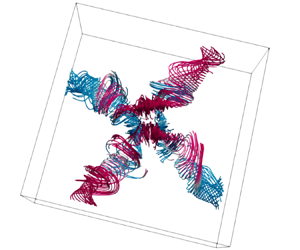
Oscillatory large-scale circulation in liquid-metal thermal convection and its structural unit
-
- Journal:
- Journal of Fluid Mechanics / Volume 977 / 25 December 2023
- Published online by Cambridge University Press:
- 13 December 2023, A16
-
- Article
-
- You have access
- Open access
- HTML
- Export citation
-
In Rayleigh–Bénard convection, the size of a flow domain and its aspect ratio $\varGamma$ (a ratio between the spatial length and height of the domain) affect the shape of the large-scale circulation. For some aspect ratios, the flow dynamics includes a three-dimensional oscillatory mode known as a jump rope vortex (JRV); however, the effects of varying aspect ratios on this mode are not well investigated. In this paper, we study these aspect ratio effects in liquid metals, for a low Prandtl number ${{Pr}}=0.03$. Direct numerical simulations and experiments are carried out for a Rayleigh number range $2.9 \times 10^4 \leq {{Ra}} \leq 1.6 \times 10^6$ and square cuboid domains with $\varGamma =2$, $2.5$, $3$ and $5$. Our study demonstrates that a repeating pattern of a JRV encountered at aspect ratio $\varGamma \approx 2.5$ is the basic structural unit that builds up to a lattice of interlaced JRVs at the largest aspect ratio. The size of the domain determines how many structural units are self-organised within the domain; the number of the realised units is expected to scale as $\varGamma ^2$ with sufficiently large and growing $\varGamma$. We find the oscillatory modes for all investigated $\varGamma$; however, they are more pronounced for $\varGamma =2.5$ and $5$. Future studies for large-aspect-ratio domains of different shapes would enhance our understanding of how the JRVs adjust and reorganise at such scaled-up geometries, and answer the question of whether they are indeed the smallest superstructure units.


dCNN/dCAM: anomaly precursors discovery in multivariate time series with deep convolutional neural networks
-
- Journal:
- Data-Centric Engineering / Volume 4 / 2023
- Published online by Cambridge University Press:
- 13 December 2023, e30
-
- Article
-
- You have access
- Open access
- HTML
- Export citation
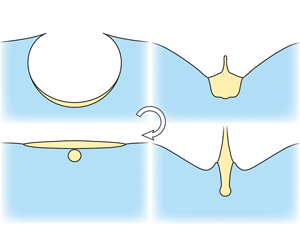
Daughter oil droplet entrainment by oil-coated bubble bursting
-
- Journal:
- Journal of Fluid Mechanics / Volume 977 / 25 December 2023
- Published online by Cambridge University Press:
- 12 December 2023, A10
-
- Article
-
- You have access
- Open access
- HTML
- Export citation
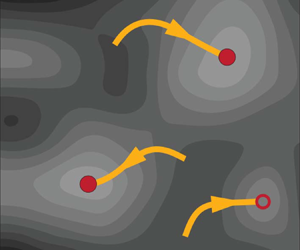
Identifying invariant solutions of wall-bounded three-dimensional shear flows using robust adjoint-based variational techniques
-
- Journal:
- Journal of Fluid Mechanics / Volume 977 / 25 December 2023
- Published online by Cambridge University Press:
- 12 December 2023, A7
-
- Article
-
- You have access
- Open access
- HTML
- Export citation
The effects of crew resource management on flight safety culture: corporate crew resource management (CRM 7.0)
-
- Journal:
- The Aeronautical Journal / Volume 128 / Issue 1326 / August 2024
- Published online by Cambridge University Press:
- 12 December 2023, pp. 1743-1766
-
- Article
- Export citation
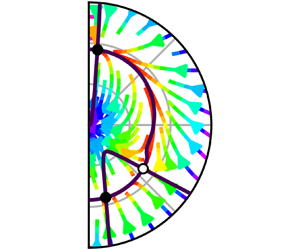
Saturation of flames to multiple inputs at one frequency
-
- Journal:
- Journal of Fluid Mechanics / Volume 977 / 25 December 2023
- Published online by Cambridge University Press:
- 12 December 2023, A6
-
- Article
-
- You have access
- Open access
- HTML
- Export citation
-
Existing experimental results show that swirling flames in annular combustors respond with a different gain to acoustic azimuthal modes rotating in either the clockwise or anti-clockwise direction. The ratio $R$ of these two gains is introduced, with $R=1$ being the conventional case of flames responding the same to the two forcing directions. To allow a difference in response to the different directions ( $R\neq 1$), a multiple-input single-output azimuthal flame describing function is successfully implemented in a quaternion valued low-order model of an annular combustion chamber in the current work. Theoretical studies have explored this kind of symmetry breaking between the two acoustic wave directions in the past, but it has not been backed by experimental data. One of the main features of the new model proposed in this work is the potential difference in mode shapes between the acoustic and the heat release rate modes, which has recently been observed experimentally. This results in a gain-dependent equation for the nature of the mode, which has a significant influence on the fixed points of the system. For example, one of the spinning solutions and the standing solution can disappear through a saddle node bifurcation as the parameters are varied. The presence of only a single direction for the spinning solution matches experimental observations better than the conventional models, and the proposed model is shown to qualitatively describe experimental measurements well.


Asymptotic Nusselt numbers for internal flow in the Cassie state
-
- Journal:
- Journal of Fluid Mechanics / Volume 977 / 25 December 2023
- Published online by Cambridge University Press:
- 12 December 2023, A18
-
- Article
- Export citation
-
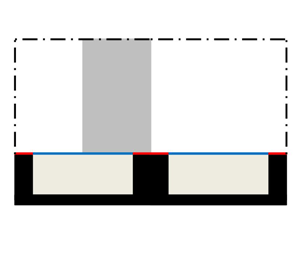
We consider laminar, fully developed, Poiseuille flows of liquid in the Cassie state through diabatic, parallel-plate microchannels symmetrically textured with isoflux ridges. Via matched asymptotic expansions, we develop expressions for (apparent hydrodynamic) slip lengths and Nusselt numbers. Our small parameter ( $\epsilon$) is the pitch of the ridges divided by the height of the microchannel. When the ridges are oriented parallel to the flow, we quantify the error in the Nusselt number expressions in the literature and provide a new closed-form result. It is accurate to $O\left (\epsilon ^2\right )$ and valid for any solid (ridge) fraction, whereas previous ones are accurate to $O\left (\epsilon ^1\right )$ and breakdown in the important limit when the solid fraction approaches zero. When the ridges are oriented transverse to the (periodically fully developed) flow, the error associated with neglecting inertial effects in the slip length is shown to be $O\left (\epsilon ^3{Re}\right )$, where ${Re}$ is the channel-scale Reynolds number based on its hydraulic diameter. The corresponding Nusselt number expressions’ accuracies are shown to depend on the Reynolds number, Péclet number and Prandtl number in addition to $\epsilon$. Manipulating the solution to the inner temperature problem encountered in the vicinity of the ridges shows that classic results for the thermal spreading resistance are better expressed in terms of polylogarithm functions.


