To save content items to your account,
please confirm that you agree to abide by our usage policies.
If this is the first time you use this feature, you will be asked to authorise Cambridge Core to connect with your account.
Find out more about saving content to .
To save content items to your Kindle, first ensure no-reply@cambridge.org
is added to your Approved Personal Document E-mail List under your Personal Document Settings
on the Manage Your Content and Devices page of your Amazon account. Then enter the ‘name’ part
of your Kindle email address below.
Find out more about saving to your Kindle.
Note you can select to save to either the @free.kindle.com or @kindle.com variations.
‘@free.kindle.com’ emails are free but can only be saved to your device when it is connected to wi-fi.
‘@kindle.com’ emails can be delivered even when you are not connected to wi-fi, but note that service fees apply.
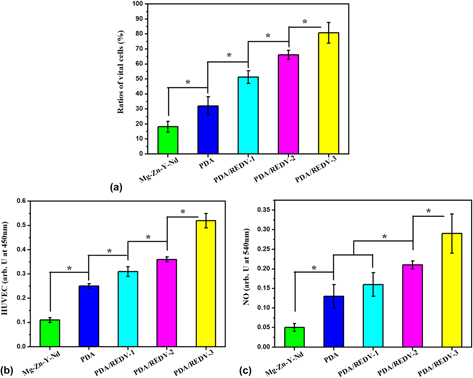
Magnesium is a biodegradable material that has potential application in cardiovascular stent development: its excellent mechanical properties and blood compatibility make it highly useful in interventional therapy. Nevertheless, the following shortcomings restrict its further application: antihyperplasia function and promoting surface endothelialization. In this study, we immobilized a specific link peptide of endothelial cells, Arg-Glu-Asp-Val (REDV), onto polydopamine (PDA)-deposited Mg–Zn–Y–Nd alloy surface via covalent reaction to improve the growth of the endothelial cells. The PDA/REDV coating with optimized parameters maintained the good blood compatibility of the Mg–Zn–Y–Nd alloy at the biomimetic speed of the blood flow and significantly inhibited the growth of the vascular smooth muscle cells and macrophage attachment/activation, which indicated its better functions in antihyperplasia and anti-inflammation. In particular, the PDA/REDV coating not only showed consistent results in promoting the attachment of endothelial cells as reported elsewhere, but also displayed the ability of enhancing the viability of endothelial cells (or inhibiting apoptosis), suggesting its pro-endothelialized function through different pathways. In summary, this PDA/REDV coating addressed the above-mentioned shortcomings of the magnesium alloy, which may promise its wider application.
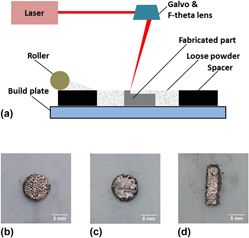
Traditional manufacturing methods restrict the expansion of thermoelectric technology. Here, we demonstrate a new manufacturing approach for thermoelectric materials. Selective laser melting, an additive manufacturing technique, is performed on loose thermoelectric powders for the first time. Layer-by-layer construction is realized with bismuth telluride, Bi2Te3, and an 88% relative density was achieved. Scanning electron microscopy results suggest good fusion between each layer although multiple pores exist within the melted region. X-ray diffraction results confirm that the Bi2Te3 crystal structure is preserved after laser melting. Temperature-dependent absolute Seebeck coefficient, electrical conductivity, specific heat, thermal diffusivity, thermal conductivity, and dimensionless thermoelectric figure of merit ZT are characterized up to 500 °C, and the bulk thermoelectric material produced by this technique has comparable thermoelectric and electrical properties to those fabricated from traditional methods. The method shown here may be applicable to other thermoelectric materials and offers a novel manufacturing approach for thermoelectric devices.
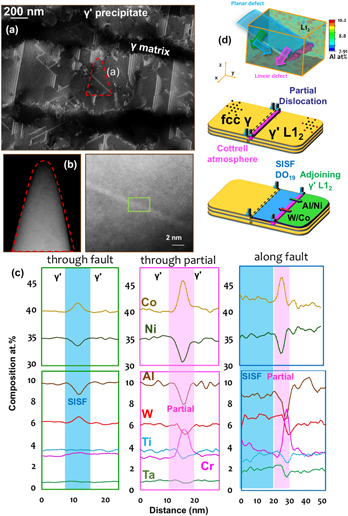
Atom probe tomography (APT) is rising in influence across many parts of materials science and engineering thanks to its unique combination of highly sensitive composition measurement and three-dimensional microstructural characterization. In this invited article, we have selected a few recent applications that showcase the unique capacity of APT to measure the local composition at structural defects. Whether we consider dislocations, stacking faults, or grain boundary, the detailed compositional measurements tend to indicate specific partitioning behaviors for the different solutes in both complex engineering and model alloys we investigated.
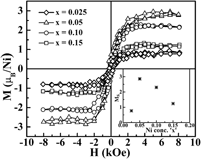
Thin films of insulating Ti1−xNixO2 (x = 0.00, 0.05, 0.10, and 0.15) are synthesized by the spray pyrolysis technique. All the films are seen to crystallize into polycrystalline anatase phase of TiO2. However, weak signature of the NiTiO3 phase is also observed for the films having higher Ni ion concentration. Optical absorption analysis suggests nonmonotonous band gap decrease from 3.67 to 3.59 eV with respect to added concentration of Ni ions unto ‘x’ = 0.10 in the TiO2 matrix. The presence of ferromagnetic ordering at room temperature in Ni incorporated TiO2 films is revealed by M–H measurements. Calculated values of saturation magnetization indicate that the observed ferromagnetism is not due to the presence of Ni clusters or segregation of other ferromagnetic phase. Electrically insulating nature of the films suggests that the observed FM ordering is most probably due to the ferromagnetic interaction between bound magnetic polarons which formed due to the creation of oxygen vacancies or defects.
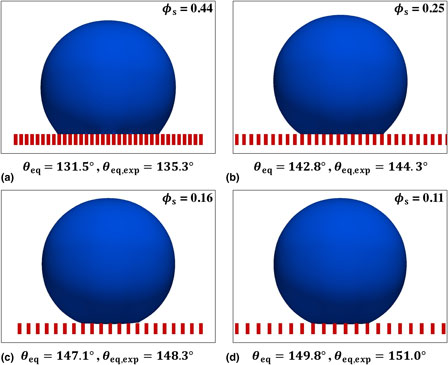
Modeling static and dynamic contact angles is a great challenge in studying wetting and de-wetting. We propose a new slip boundary model based on the Navier–Stokes equations, and establish a realistic continuum approach to simulate the contact line dynamics in 3-D. To validate our model, a water droplet interacting with micrometer-sized patterns of a hybrid hydro-phobic/-philic surface is studied numerically and compared with experimental measurements. Good agreement has been observed with four pillar spacings in the static, receding, and advancing modes. Moreover, details of the droplet–surface interaction are revealed, i.e., penetrations, sagging, local, and global contact angles.
AgBr-modified Bi2WO6 nanosheets were successfully synthesized using a CTAB-assisted hydrothermal method followed by a facile deposition–precipitation procedure. The as-prepared photocatalysts were characterized using X-ray diffraction (XRD), X-ray photoelectron spectroscopy (XPS), transmission electron microscopy (TEM), UV-vis diffuse reflectance spectroscopy (DRS), Brunauer–Emmett–Teller (BET), and photoluminescence emission spectroscopy (PL). AgBr nanoparticles were found evenly distributed on the surface of the Bi2WO6 nanosheets. The AgBr/Bi2WO6 nanocomposite demonstrated enhanced pollutant decolorization efficiency in eliminating Rhodamine B (RhB), methyl orange (MO), and phenol aqueous solutions under simulated solar light irradiation. It has been noticed that the adsorption performance of both Bi2WO6 nanosheets and AgBr-modified Bi2WO6 nanosheets played a more important role in the decolorization of pollutants, such as RhB and MO, than their photocatalytic ability. The high adsorption efficiency of the photocatalysts was mainly attributed to the increased surface area and the exposed reactive facets of the materials.
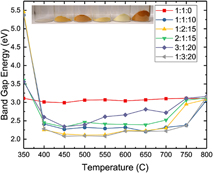
We report a rapid combustion synthesis method for producing band gap tunable gallium zinc oxynitrides, a material of interest for water splitting applications. By varying the ratio of zinc and gallium, we can tune the band gap from 2.22 to 2.8 eV. Furthermore, nitrogen can be incorporated up to nearly 50% via replacement of oxygen without the need for high temperatures or an additional ammonolysis step. X-ray photoelectron spectroscopy (XPS) and EDX analysis suggests a preferential segregation of Zn to the surface of the as-synthesized particles, though the surface Ga/Zn molar ratio in the as-synthesized particles is correlated with the Ga/Zn molar ratio of the precursor materials. Photoelectrochemical measurements show that the oxynitride powders are photoactive under both AM1.5 and visible-only (λ > 435 nm) irradiation. Hydrogen and oxygen were both evolved in half-reaction experiments under simulated AM1.5 irradiation without externally applied bias, although addition of an OER catalyst did not enhance the rate of oxygen formation, suggesting that intra- and interparticle recombination are significant.
Highly ordered wrinkling morphologies of liquid crystalline polymer films are demonstrated based on simple multi-rubbing. The spontaneous pattern formation of periodic wrinkling morphology is achieved through utilizing plasma treatment on a predefined alignment layer. The multi-directional ordering on the alignment layer obtained through selectively covering the alignment layer with a protective layer, which is chemically inert and keeps alignment properties during another rubbing process. The ordering of the wrinkle pattern can be tailored through a molecular orientation of liquid crystal (LC) and a process condition, including film thickness, plasma treatment, and rubbing. The proposed methods enable the spontaneous pattern formation of well-aligned one- or two-dimensionally periodic microstructures over a large area, without an additional template or patterning steps. Since the LC polymer incorporated the optical anisotropic mesogenic groups into polymer chains, it has an optical birefringence in the film and it can be utilized for optical devices requiring a microstructure on a surface.
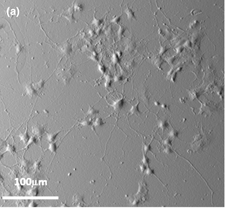
Electrically conducting substrates have shown much promise as neuronal scaffolds and in other biologic and biomedical applications where a smart and electrically interactive material is needed. Most materials that are inherently conducting are not suitable for biomedical applications and lack biocompatibility or biostability. On the other hand, biologically stable and compatible materials must first be manipulated, modified, and treated in order to impart the necessary electrical conductivity to the material. Here, the authors have investigated the response of PC-12 cells to two types of conducting carbon-based aerogels with different surface roughness. Results show that carbon-based aerogels support cell adhesion, proliferation, and neurite extension. The effects of surface roughness have also been investigated.
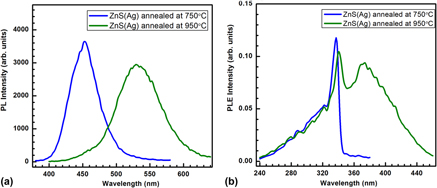
We report the synthesis and optical properties of pure ZnS and Ag doped ZnS nanostructures. ZnS(Ag) was synthesized by using the hydrothermal technique and later annealed at different temperatures under vacuum conditions. It was observed that the photoluminescence (PL) emission from the ZnS(Ag) nanostructures can be easily tuned from the blue (445 nm) to green (530 nm) region of visible light by varying the annealing temperature. This tunability has been attributed to the introduction of excess sulfur vacancy states, which is evident from the PL excitation spectra. This observed change in the PL emission wavelength can be highly beneficial in the imaging screens where ZnS is regularly used and can be easily interfaced with the silicon photodiodes showing maximum sensitivity at 550 nm.
Here we present the synthesis of porous platinum–palladium macrobeams templated from high aspect ratio Magnus’ salt needle derivatives. The combination of [PtCl4]2− and/or [PdCl4]2− with [Pt(NH3)4]2+ ions results in salt needles ranging from 15 to 300 µm in length. Electrochemical reduction of the salt templates results in porous macrobeams with a square cross-section. Porous side wall texture and elemental composition was controlled with initial platinum to palladium salt ratio. Macrobeam free-standing films exhibited a specific capacitance up to 11.73 F/g and a solvent accessible surface area of 26.6 m2/g. These salt-templated porous platinum–palladium macrobeams offer a promising material for fuel cell catalysis.
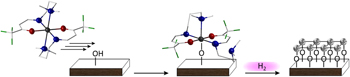
Atomic layer deposition (ALD) of air stable cobalt and nickel complexes based on tridentate enaminones N,N-(4,4,4-trifluorobut-1-en-3-on)-dimethylethyldiamine (Htfb-dmeda) and N,N-(4,4,4-trifluorobut-1-en-3-on)-dimethylpropyldiamine (Htfb-dmpda) successfully produced metallic cobalt and nickel thin films. Detailed X-ray photoelectron spectroscopy (XPS) studies on the binding interaction of the first precursor monolayer with the surface functional groups elucidated the chemisorption behavior of the new precursor systems. A reactive remote hydrogen plasma was used as the co-reactant to activate the precursor decomposition yielding metal hydroxide intermediates. Subsequent hydrogen plasma etching of as-deposited films resulted in phase-pure metallic films through a recrystallization process, verified by surface and sub-surface XPS. Scanning electron microscopy (SEM) and atomic force microscopy (AFM) analyses revealed pinhole-free films, with low surface roughness (0.2 ± 0.06 nm root mean square, RMS) for both, cobalt and nickel thin films. Herein, the competitive role of hydrogen as etchant and reactant was demonstrated as prolonged plasma exposure time periods resulted in the formation of metal hydrides. This is mostly due to the catalytic dissociation of molecular hydrogen on transition metal surfaces, which already occurs upon low energy input.
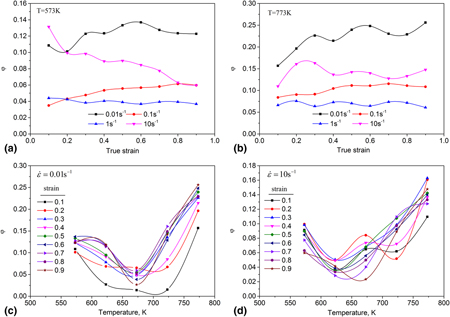
The flow softening behavior caused by deformation heating of the 6063 aluminum alloy was investigated employing uniaxial compression tests. The adiabatic correction factor (η) and mechanical work partitioning factor (φ), commonly considered to be constant, were found to be highly variable at medium strain rates, namely from 0.01 to 10 s−1. η decreased with increasing strain and decreasing strain rate, but it was relatively not sensitive to temperature. φ, traditionally taken to be a constant of 0–10%, was found to vary from 2.8% at a temperature of 623 K and a strain rate of 10 s−1 to 26.8% at a temperature of 773 K with a strain rate of 0.01 s−1. An expression for temperature rise involving these two variable factors was optimized. FEM simulation using the corrected and uncorrected true stress–strain curves and corresponding extrusion experiment were carried out. Comparisons between the simulated and experimental results confirmed the temperature compensation was trustable.
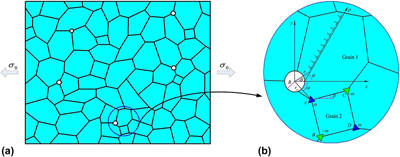
A mechanical model is developed to explain the influence of grain rotation on nanovoid growth in nanocrystalline solids in the current paper. In the framework of the mechanical model, the dislocations released from the nanovoid surface will be affected by four stresses: the driving stress induced by far-field stress, the stress arising from grain rotation, the image stress caused by the free surface of the nanovoid, and the back stress generated by the previously emitted dislocations. Furthermore, under the condition of different rotational strength and surface effects, we analyzed in detail the influence of the important parameters such as nanovoid radius, nucleation radius, dislocation emission angle, relative distance, rotation grain size, rotation coefficient, and direction angle on the critical stress. Finally, we discuss the effect of the coupling of rotational deformation and the grain boundary on the growth of the nanovoid. As a conclusion, the high stress nearby the nanovoid can be released by grain rotation, which inhibits the growth of the nanovoid.
Strain-mediated magnetoelectric coupling provides a powerful method for controlling nanoscale magnetism with an electric voltage. This article reviews the initial use of macroscale composites and subsequent experimental control of magnetic thin films, nanoscale heterostructures, and single domains. The discussion highlights several characteristics enabling small, fast, and energy-efficient technologies. The second section covers applications where strain-mediated magnetoelectricity has been used, with emphasis on the storage, transmission, and processing of information (i.e., memory, antenna, and logic devices). These advances are order-of-magnitude improvements over conventional technologies, and open up exciting new possibilities.