To save content items to your account,
please confirm that you agree to abide by our usage policies.
If this is the first time you use this feature, you will be asked to authorise Cambridge Core to connect with your account.
Find out more about saving content to .
To save content items to your Kindle, first ensure no-reply@cambridge.org
is added to your Approved Personal Document E-mail List under your Personal Document Settings
on the Manage Your Content and Devices page of your Amazon account. Then enter the ‘name’ part
of your Kindle email address below.
Find out more about saving to your Kindle.
Note you can select to save to either the @free.kindle.com or @kindle.com variations.
‘@free.kindle.com’ emails are free but can only be saved to your device when it is connected to wi-fi.
‘@kindle.com’ emails can be delivered even when you are not connected to wi-fi, but note that service fees apply.
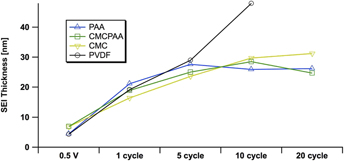
Lithium-ion batteries featuring electrodes of silicon nanoparticles, conductive carbon, and polymer binders were constructed with electrolyte containing 1.2 M LiPF6 in ethylene carbonate and diethyl carbonate (1:1, w/w). Material binders used include polyvinylidene difluoride (PVdF), polyacrylic acid (PAA), sodium carboxymethyl cellulose (CMC), and a mixture of equal masses of CMC and PAA (CMCPAA). Hard X-ray photoelectron spectroscopy (HAXPES) was performed on the electrodes when fresh, cycled at reduced potential, and cycled one full time to study how substrate material binders affect the early formation of the solid electrolyte interphase (SEI) layer. Electrodes cycled 5, 10, and 20 times were also analyzed to discern what changes to the SEI occur after initial formation. We also present estimates of the SEI thickness by cycle count, indicating that PAA develops the thinnest SEI, followed by CMCPAA, CMC, and PVdF in order of increasing layer thickness.
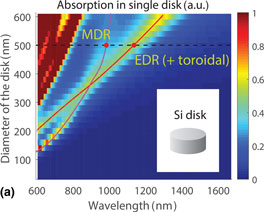
Ultra-thin optical structures, known as metasurfaces, have shown promising light controlling capability at the nanoscale. In this paper, we study their particular case, a periodic array of high-refractive-index nanoparticles with electric and magnetic resonances. The main result of the work is a numerical demonstration that the lattice effect in the periodic arrangement of nanoparticles changes the resonance position even if the resonances are above the diffraction wavelength (Rayleigh anomaly). We show that the disk resonance changes can be achieved not only by varying periods of the array under normal light incidence but also by changing the incident angle.
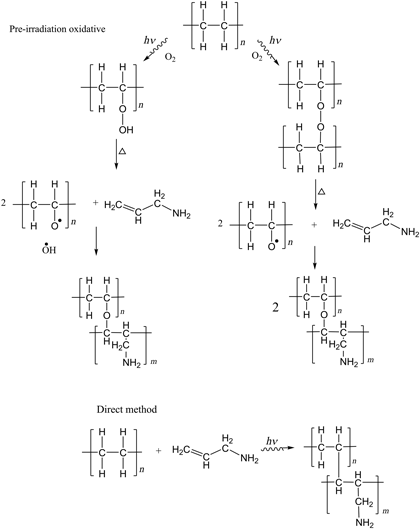
Allylamine (AA)-functionalized surfaces for cell adhesion and tissue engineering generated by plasma reactions present several disadvantages, such as amine degradation after 1 week of storage in air and difficulty in achieving a highly specific surface functionalization. In this work, polypropylene (PP) and polyethylene (PE) films were functionalized with AA by γ irradiation to enhance adhesion and compatibility without changing intrinsic bulk properties, thus avoiding the disadvantages of plasma synthesis. Irradiation grafting was realized by a direct and pre-irradiation oxidation method. The effect of different parameters studied were characterized by Fourier transform infrared spectra, thermogravimetric analysis, differential scanning calorimetry, scanning electron microscopy, and contact angle measurements.
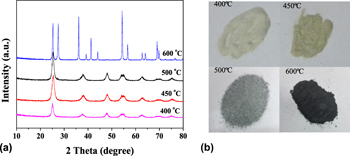
Black nano-TiO2 samples with core–shell nanostructure were successfully prepared by sol–gel method combined with Mg reduction using butyl titanate as titanium source and calcining at 500°C in air atmosphere and at 400–600°C in nitrogen atmosphere. The prepared black TiO2 samples were characterized by X-ray diffraction, high resolution transmission electron microscopy, Raman spectra, photoluminescence emission spectra, N2 adsorption–desorption, and ultraviolet–visible spectroscopy. The results show that the black TiO2 exhibits a crystalline core–disordered shell structure composed of disordered surface and oxygen vacancies, and the thickness of the disordered layer is about 2–3 nm. The optical absorption properties of black nano-TiO2 samples have been remarkably enhanced in visible light region. Compared with the white TiO2, the reduced black TiO2 samples exhibit enhanced photocatalytic hydrogen production under the full solar wavelength range of light, and the sample prepared with the Mg and TiO2 ratio of 9:1 calcined at 500 °C has the maximum hydrogen production rate.
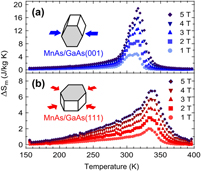
Twenty one years ago, the discovery of the giant magnetocaloric effect (GMCE) at room temperature completely revolutionized the magnetocaloric materials field demonstrating the potential of magnetic refrigeration at room temperature and setting the beginning of a race for the best magnetocaloric material. Since then, hundreds of different bulk magnetic materials were studied in detail; however, only a small set of these exhibit GMCE. In the last ten years, the broad interest on these materials leads to the extension of their study to the micro- and nanoscale. In this review, we highlight the main motivations for exploring the size-reduction both from the technological and the purely scientific point of view and stress the general consequences on the magnetic and magnetocaloric properties. The emergence of different underlying mechanisms driving these effects will be identified with particular emphasis for the set of materials presenting GMCE.
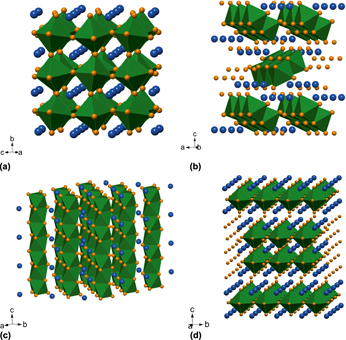
Transition metal perovskite chalcogenides, a class of materials with rich tunability in functionalities, are gaining increased attention as candidate materials for renewable energy applications. Perovskite oxides are considered excellent n-type thermoelectric materials. Compared to oxide counterparts, we expect the chalcogenides to possess more favorable thermoelectric properties such as lower lattice thermal conductivity and smaller band gap, making them promising material candidates for high temperature thermoelectrics. Thus, it is necessary to study the thermal properties of these materials in detail, especially thermal stability, to evaluate their potential. In this work, we report the synthesis and thermal stability study of five compounds, α-SrZrS3, β-SrZrS3, BaZrS3, Ba2ZrS4, and Ba3Zr2S7. These materials cover several structural types including distorted perovskite, needle-like, and Ruddlesden–Popper phases. Differential scanning calorimeter and thermogravimetric analysis measurements were performed up to 1200 °C in air. Structural and chemical characterizations such as X-ray diffraction, Raman spectroscopy, and energy dispersive analytical X-ray spectroscopy were performed on all the samples before and after the heat treatment to understand the oxidation process. Our studies show that perovskite chalcogenides possess excellent thermal stability in air at least up to 550 °C.
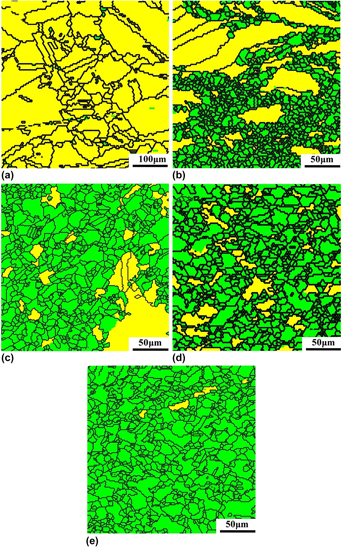
The microstructure evolution of a typical nickel-based superalloy was studied in the strain range of 0.1–0.9 at 1110 °C/0.01 s−1 by using the electron backscattered diffraction technique. It was found that the evolution of recrystallized microstructures, grain boundary characteristics, and textures was closely related to strain level. With the increasing strain level, the fraction of equiaxed dynamic recrystallization (DRX) grains increased significantly at the expense of the large non-recrystallized grains, and there was a decrease in total low angle grain boundaries fraction and a simultaneous increase in the fraction of high angle grain boundaries. In addition, the occurrence of DRX promoted the formation of Σ3 boundaries, and the coherent Σ3 boundaries were much easier to form at the strain above 0.5. On the other hand, 〈100〉 component of the textures became stronger with the increasing strains, and the lack of 〈111〉 orientations can also be observed in the textures at high strains above 0.7.
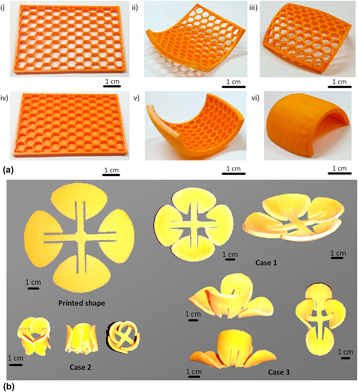
Fused-filament-fabrication (FFF) is a commonly used and commercially successful additive-manufacturing method for thermoplastics. Depending on the FFF process parameters, the internal-strains along print direction, thermal-gradient across layers, and anisotropy introduced during layer-by-layer build-up can significantly affect the macroscopic properties, dimensional stability, and structural performance of the final part. Conversely, these factors can be optimized to result in unique, controllable thermally actuated shape-transformations. This work aims at quantifying and understanding the underlying mechanisms that drive the thermally actuated shape-transformation in three commonly used thermoplastics fabricated by the FFF method namely, poly-lactic-acid (PLA), high-impact-polystyrene (HIPS), and acrylonitrile-butadiene-styrene (ABS). Initially, the release of internal-strains is analyzed for unidirectionally printed samples experimentally and computationally, employing a thermoviscoelastic-viscoplastic constitutive model. Subsequently, two basic initial (as-printed) configurations, namely, a beam and a circular-disc are chosen to study the 1D to 2D and 2D to 3D shape-transformations, respectively. The effect of process parameters such as the printing speed, print path, and infill density on the shape transformation behavior is investigated systematically. Finally, the results are applied to demonstrate shape-transformations for application in morphing-structures and/or as an alternative, simplified process in fabricating curved-components.
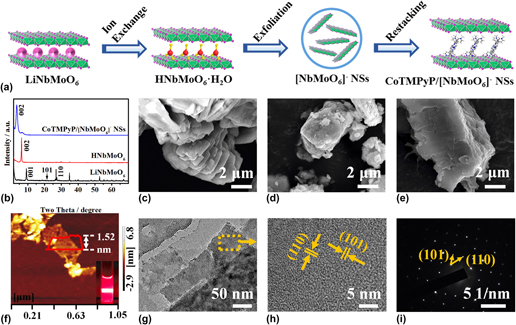
In this work, the negatively charged [NbMoO6]− nanosheets (NSs) were combined with positively charged [5,10,15,20-tetrakis (N-methylpyridinium-4-yl) porphyrinato cobalt] (CoTMPyP) to fabricate a sandwich-like CoTMPyP/[NbMoO6]− NSs intercalated material by a direct self-assembling process. The results confirmed that CoTMPyP cations formed an inclined monolayer between [NbMoO6]− NSs and the inclined angle was about 68°. The electrochemical properties of CoTMPyP/[NbMoO6]− NSs composite were also investigated by cyclic voltammetry and liner sweep voltammetry, which showed the enhanced electron transferred ability. The CoTMPyP/[NbMoO6]− NSs modified electrode displayed excellent electrocatalytic activity towards oxygen reduction with the reduction peak potential shifting from −0.681 to −0.235 V. And oxygen could be reduced to generate hydrogen peroxide with a two-electron process in neutral electrolytes. Moreover, the reduction peak current was linear relationship with the square root of scan rates, implying that the catalytic reaction depended on oxygen diffusion.
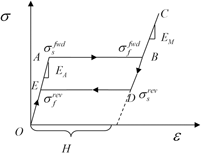
An analytical research is developed using the averaging technique of composites for the macroscopic behaviors of porous shape memory alloy (SMA) beam with different porosity under pure bending. The whole material is regarded as a composite beam of porous SMA and dense SMA, in which the component fractions of the porous SMA show gradient changes over geometric dimension. To get the theoretical solution of such material under pure bending, the Mises yield theory and the ideal elastoplastic model are used to describe the phase transition of the material. The macroscopic behaviors of the porous SMAs beam with different porosity are then simulated using the averaging technique of composites. Examples for a porous SMA beam with gradient porosity from 0 to 50% considering the tension compression asymmetry of the SMAs are then supplied; the results show that after transformation the stress distribution in the whole material is lower than in the case of the pure elastic gradient porous materials, and for different part of the SMA with different porosity shows different strength characters.
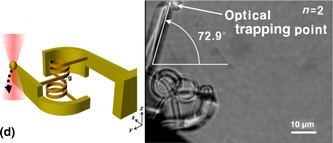
In this topical review of two-photon stereolithography (TPS), we discuss novel materials and demonstrate applications of this technology. Two-photon-initiated chemical processes are used to fabricate arbitrary three-dimensional structures in TPS. In the first part of this article, the development of novel photoactive materials to fabricate pure inorganic or organic–inorganic hybrid microstructures is discussed. The second part discusses the fabrication of functional microstructures for highly specific applications to demonstrate the importance of TPS in different fields of science.
While SrTiO3 exhibits promising electronic transport properties, its high thermal conductivity (κ) is detrimental for its use as a thermoelectric material. Here, we investigate the influence of oxygen non-stoichiometry on κ in bulk SrTiO3 ceramics. A significant reduction in κ was achieved in oxygen deficient SrTiO3−δ, owing to the presence of oxygen vacancies that act as phonon scattering centers. Upon oxidation of SrTiO3−δ, the κ of pristine SrTiO3 was recovered, suggesting that oxygen vacancies were indeed responsible for the reduction in κ. Raman spectroscopy was used as an independent tool to confirm the reduction of oxygen vacancies in SrTiO3−δ upon oxidation.
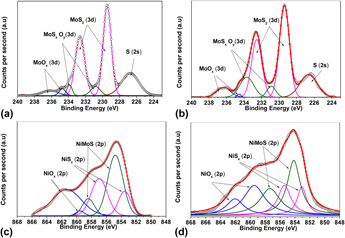
To study the effects of the support morphology on the hydrodesulfurization (HDS) activity of NiMoS catalysts, ordered mesoporous SiO2 (KIT-6) and nonporous nanospheres of SiO2 were used as supports. Metal species (Ni and Mo) were incorporated through a sequential impregnation technique. The aqueous solution of nickel nitrate was introduced first on the supports, followed by the solution of ammonium molybdate. Subsequently, a sulfidation treatment was carried out in gaseous H2S/H2 atmosphere. The NiMo/Al2O3 commercial catalyst was used as reference. The materials obtained were characterized by N2 physisorption, X-ray diffraction (XRD), and high-resolution transmission electron microscopy (HRTEM) and evaluated in the HDS catalytic reaction of dibenzothiophene in a batch reactor. The results indicate that the textural properties of KIT-6 were the key factors to obtain disperse NiMoS stacks, and a better metal sulfidation, which lead to a higher catalytic activity of the NiMo/KIT-6 catalyst (twice as active) compared to the NiMo/Nanosilica catalyst. In addition, the activity of the NiMo/KIT-6 catalyst was also superior to that obtained for the commercial catalyst.
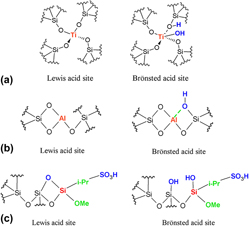
The acidity of SBA-15 was tuned with the incorporation of Al+3, Ti+4, and –PrSO3H groups through sol–gel, employing molar ratios of Si/M = 10 (M = Al, Ti) and Si/S = 10. This results in mesoporous materials with the typical hexagonal structure of SBA-15, large surface areas, and great pore diameter. The incorporation of Al+3 and Ti+4 mainly leads to catalysts with both Brönsted and Lewis acid sites. The addition of sulfonic groups to these samples enhanced their surface acidity, creating preferentially Brönsted acid sites. Among the evaluated catalysts, the SBA-15-SO3H showed the highest catalytic activity, which was related to the high concentration of Lewis acid sites, and a remarkable resistance to deactivation, probably due to its low hydrophilicity. A first order kinetic equation fits well the experimental data and an activation energy of 31.5 kJ/mol similar to other reports for this reaction was calculated for the SBA-15-SO3H catalyst.
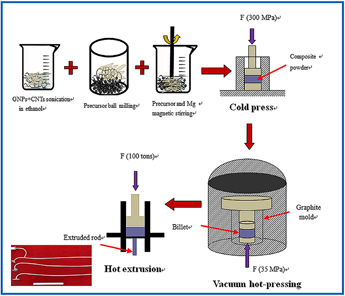
Magnesium alloy (AZ31) reinforced with carbon nanotubes (CNTs) and grapheme nanoplatelets (GNPs) were fabricated with the method of hot-pressing sintering and hot extrusion processes. GNPs and CNTs were predispersed with Al and Zn powders by ball milling used as precursor for sintering, which effectively guaranteed the integrity and dispersion of them. The microstructure and mechanical properties of the composites (denoted as Mg–3 wt% Al–1 wt% Zn–1 wt% (xCNTs + yGNPs)(x:y = 1:1, 1:2, 1:3) were investigated. The results show that the CNTs and GNPs are uniformly distributed in the matrix and closely combined with the matrix in nanoscale. Among the tested composites, Mg–3 wt% Al–1 wt% Zn–1 wt% (xCNTs + yGNPs)(x:y = 1:2) exhibits the most favorable mechanical properties, and the yield strength, tensile and compressed strength, and elongation of composites are substantially improved by the addition of 0.33 wt% CNTs and 0.67 wt% GNPs. Novel strengthening mechanisms such as three-dimensional reinforced structure formed by CNTs and GNPs are found for the remarkable improvement in mechanical properties.
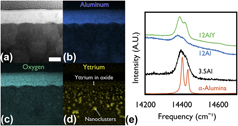
The oxidation behavior of nanograined and coarse-grained alloys may differ significantly. This empirical observation has been justified on the basis of accelerated grain boundary diffusion. However, thermal destabilization of nanograined microstructures studied in model sputter deposited NiCrAl alloys progresses concurrently with the onset of oxidation. This phenomenon makes it challenging to pinpoint the specific contribution of the original grain boundary network. In this study, dilute additions of Y are used to delay the onset of microstructural evolution at elevated temperatures through nanocluster formation and grain boundary pinning. The enhanced microstructural stability resulted in measurably different oxide morphologies during the transient stages of oxidation and slower oxidation rates overall. This coupling between the earliest stages of oxidation and microstructural evolution are directly manipulated to study fundamental oxidation processes in sputtered NiCrAl. Insights gained from this study may ultimately be used to develop novel strategies for improved oxidation resistance in structural alloys.
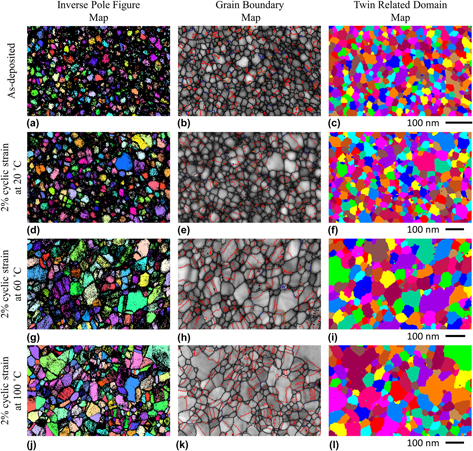
The grain boundary network of nanocrystalline Cu foils was modified by the application of cyclic loadings and elevated temperatures. Broadly, the changes to the boundary network were directly correlated with the applied temperature and accumulated strain, including a 300% increase in the twin length fraction. By independently varying each treatment variable, a matrix of grain boundary statistics was built to check the plausibility of hypothesized mechanisms against their expected temperature and stress/strain dependences. These comparisons allow the field of candidate mechanisms to be significantly narrowed. Most importantly, the effects of temperature and strain on twin length fraction were found to be strongly synergistic, with the combined effect being ∼150% that of the summed individual contributions. Looking beyond scalar metrics, an analysis of the grain boundary network showed that twin related domain formation favored larger sizes and repeated twin variant selection over the creation of many small domains with diverse variants.