To save content items to your account,
please confirm that you agree to abide by our usage policies.
If this is the first time you use this feature, you will be asked to authorise Cambridge Core to connect with your account.
Find out more about saving content to .
To save content items to your Kindle, first ensure no-reply@cambridge.org
is added to your Approved Personal Document E-mail List under your Personal Document Settings
on the Manage Your Content and Devices page of your Amazon account. Then enter the ‘name’ part
of your Kindle email address below.
Find out more about saving to your Kindle.
Note you can select to save to either the @free.kindle.com or @kindle.com variations.
‘@free.kindle.com’ emails are free but can only be saved to your device when it is connected to wi-fi.
‘@kindle.com’ emails can be delivered even when you are not connected to wi-fi, but note that service fees apply.
Sterol regulatory element-binding protein 2 (SREBP2) is considered to be a major regulator to control cholesterol homoeostasis in mammals. However, the role of SREBP2 in teleost remains poorly understand. Here, we explored the molecular characterisation of SREBP2 and identified SREBP2 as a key modulator for 3-hydroxy-3-methylglutaryl-coenzyme A reductase and 7-dehydrocholesterol reductase, which were rate-limiting enzymes of cholesterol biosynthesis. Moreover, dietary palm oil in vivo or palmitic acid (PA) treatment in vitro elevated cholesterol content through triggering SREBP2-mediated cholesterol biosynthesis in large yellow croaker. Furthermore, our results also found that PA-induced activation of SREBP2 was dependent on the stimulating of endoplasmic reticulum stress (ERS) in croaker myocytes and inhibition of ERS by 4-Phenylbutyric acid alleviated PA-induced SREBP2 activation and cholesterol biosynthesis. In summary, our findings reveal a novel insight for understanding the role of SREBP2 in the regulation of cholesterol metabolism in fish and may deepen the link between dietary fatty acid and cholesterol biosynthesis.
Federal law requires calorie information on chain restaurant menus. We sought to assess the prevalence of calorie disclosures on online menus and determine if the menus are controlled by restaurants subject to US labelling requirements.
Design:
Cross-sectional
Setting:
Restaurant websites and mobile apps for restaurant located in New York City, Los Angeles, Chicago, and Houston
Participants:
US chain restaurants (top seventy-five by number of outlets) and third-party platforms (TPP): Grubhub, Uber Eats, DoorDash
Results:
There was at least one calorie disclosure (for at least one food or beverage, in at least one location) on sixty-eight of seventy-two (94 %) menus on restaurant websites or apps, thirty-two of fifty-five (58 %) menus on DoorDash, six of forty-nine (12 %) menus on Grubhub and thirty of fifty-nine (51 %) menus on Uber Eats. There was consistent calorie labelling (all foods and beverages, all locations) on forty-three of seventy-two (60 %) menus on restaurant websites or apps, fifteen of fifty-five (27 %) menus on DoorDash, three of forty-nine (6 %) menus on Grubhub and eleven of fifty-nine (19 %) menus on Uber Eats. Only four restaurant chains consistently labelled calories for all items, in all locations, on all platforms where their menus were found. All three TPP provided restaurants the ability to enter and modify menu items, making the menus subject to US labelling requirements. Only Uber Eats provided guidance to restaurants on entering calorie information.
Conclusions:
As consumers increasingly rely on TPP for restaurant ordering, menus on these platforms should include calories in order to promote transparency and nutrition.
.Globally and nationally, only 64⋅5 and 49⋅2 % of infants received solid or semi-solid foods, respectively. The available evidence indicates that the time to initiate complementary feeding practices is still poor and varies by region. The aim of the present study was to assess the time to initiation of complementary feeding and its predictors among children aged 9–23 months in Meket District, Amhara Region, Ethiopia. A community-based retrospective cohort study was conducted from June to July 2022 among 459 systematically selected mothers/caregivers with their children from 9 to 23 months of age. The result of descriptive statistics was reported by table, frequency, Kaplan-Meier curve and percent. The proportional hazard model assumption was checked, and a Weibull regression model was used to see the predictors of timely initiation of complementary feeding. An adjusted hazard ratio with a 95 % confidence interval and a P-value of 0⋅05 were used to declare the significant predictors. The median time of complementary feeding initiation was 6 months. Attending primary education (adjusted hazard ration (AHR) 1⋅8; 95 % CI 1⋅16, 2⋅78), occupation of the mother (AHR 1⋅43; 95 % CI 1⋅04, 1⋅95), home delivery (AHR 1⋅61; 95 % CI 1⋅09, 2⋅37) and birth preparedness (AHR 1⋅37; 95 % CI 1⋅03, 1⋅81) were the predictors of time to complementary feeding initiation. The median time to complementary feeding initiation was consistent with the WHO recommendation. Maternal education, maternal employment, place of delivery and birth preparedness were the predictors of time to initiation of complementary feeding. Therefore, working with the education sector, increasing the delivery rate in health facilities, strengthening counselling on birth preparation, increasing maternity leave until 6 months of age and initiating corner feeding should be part of the complementary feeding practices promotion agenda.
Previous studies on the relationship between dairy consumption and hip fracture risk have reported inconsistent findings. Therefore, we aimed to conduct an algorithmically driven non-linear dose-response meta-analysis of studies assessing dairy intake and risk of developing incident hip fracture. Meta-analysis from PubMed and Google Scholar searches for articles of prospective studies of dairy intake and risk of hip fracture, supplemented by additional detailed data provided by authors. Meta-regression derived dose-response relative risks, with comprehensive algorithm-driven dose assessment across the entire dairy consumption spectrum for non-linear associations. Review of studies published in English from 1946 through December 2021. A search yielded 13 studies, with 486 950 adults and 15 320 fractures. Non-linear dose models were found to be empirically superior to a linear explanation for the effects of milk. Milk consumption was associated with incrementally higher risk of hip fractures up to an intake of 400 g/d, with a 7 % higher risk of hip fracture per 200 g/d of milk (RR 1⋅07, 95 % CI 1⋅05, 1⋅10; P < 0⋅0001), peaking with 15 % higher risk (RR 1⋅15, 95 % CI 1⋅09, 1⋅21, P < 0⋅0001) at 400 g/d versus 0 g/d. Although there is a dose-risk attenuation above 400 g/d, milk consumption nevertheless continued to exhibit elevated risk of hip fracture, compared to zero intake, up to 750 g/d. Meanwhile, the analysis of five cohort studies of yoghurt intake per 250 g/d found a linear inverse association with fracture risk (RR 0⋅85, 95 % CI 0⋅82, 0⋅89), as did the five studies of cheese intake per 43 g/d (~1 serving/day) (RR 0⋅81, 95 % CI 0⋅72, 0⋅92); these studies did not control for socioeconomic status. However, no apparent association between total dairy intake and hip fracture (RR per 250 g/d of total dairy = 0⋅97, 95 % CI 0⋅93, 1⋅004; P = 0⋅079). There were both non-linear effects and overall elevated risk of hip fracture associated with greater milk intake, while lower risks of hip fracture were reported for higher yoghurt and cheese intakes.
Feeding whole prey to felids has shown to benefit their gastrointestinal health. Whether this effect is caused by the chemical or physical nature of whole prey is unknown. Fifteen domestic cats, as a model for strict carnivores, were either fed minced mice (MM) or whole mice (WM), to determine the effect of food structure on digestibility, mean urinary excretion time (MUET) of 15N, intestinal microbial activity and fermentation products. Faeces samples were collected after feeding all cats a commercially available extruded diet (EXT) for 10 d before feeding for 19 d the MM and WM diets with faeces and urine collected from day 11 to 15. Samples for microbiota composition and determination of MUET were obtained from day 16 to 19. The physical structure of the mice diet (minced or not) did not affect large intestinal fermentation as total SCFA and branched-chain fatty acid (BCFA), and most biogenic amine (BA) concentrations were not different (P > 0·10). When changing from EXT to the mice diets, the microbial community composition shifted from a carbolytic (Prevotellaceae) to proteolytic (Fusobacteriaceae) profile and led to a reduced faecal acetic to propionic acid ratio, SCFA, total BCFA (P < 0·001), NH3 (P = 0·04), total BA (P < 0·001) and para-cresol (P = 0·08). The results of this study indicate that food structure within a whole-prey diet is less important than the overall diet type, with major shifts in microbiome and decrease in potentially harmful fermentation products when diet changes from extruded to mice. This urges for careful consideration of the consequences of prey-based diets for gut health in cats.
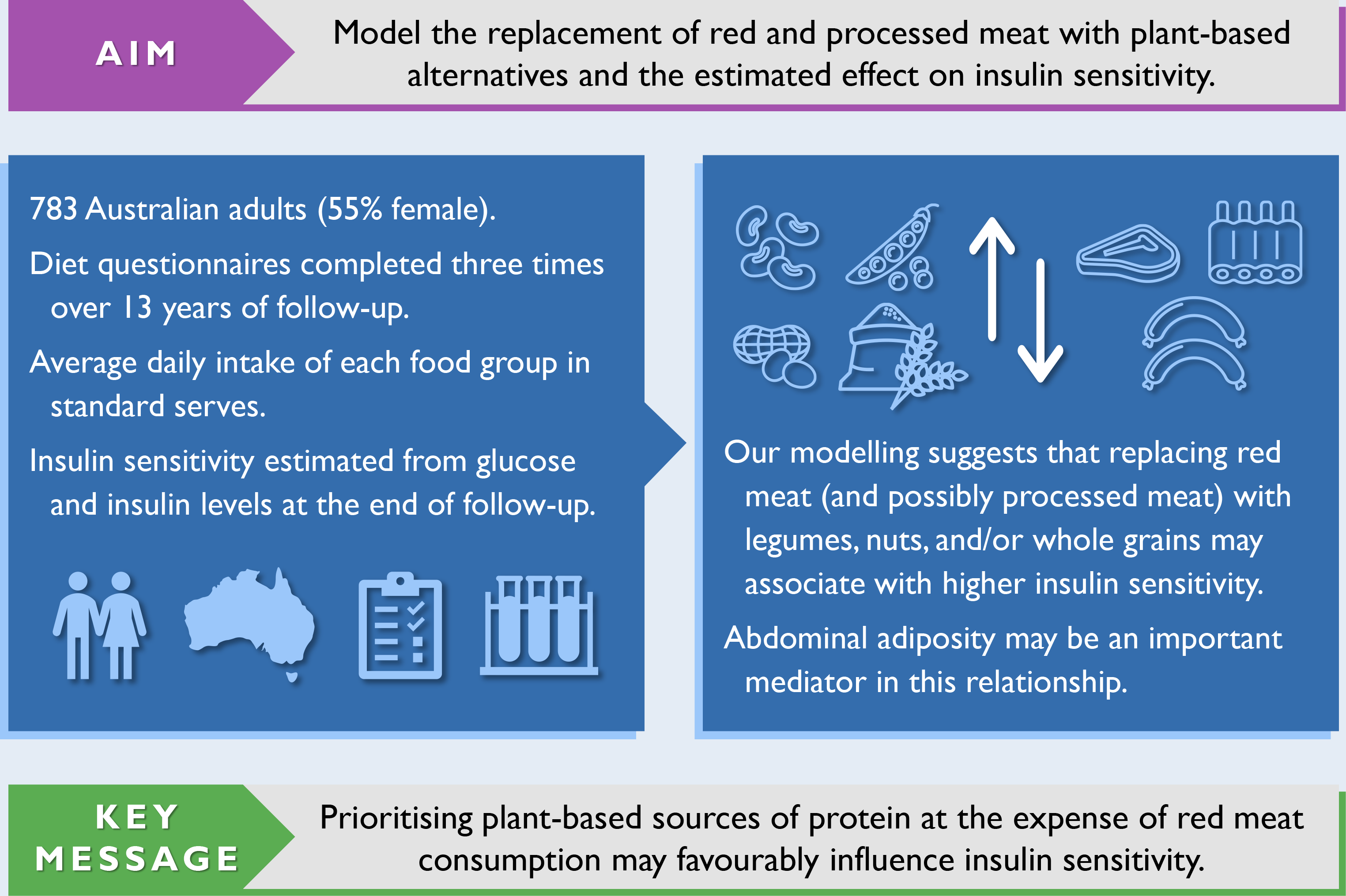
Nordic Nutrition Recommendations recommend reducing red and processed meat and increasing fish consumption, but the impact of this replacement on mortality is understudied. This study investigated the replacement of red and processed meat with fish in relation to mortality. Of 83 304 women in the Norwegian Women and Cancer Study (NOWAC) study, 9420 died during a median of 21·0 years of follow-up. The hazard ratios (HR) for mortality were estimated using Cox proportional hazards regression with analyses stratified on red and processed meat intake due to non-linearity. Higher processed meat (> 30 g/d), red and processed meat (> 50 g/d), and fatty fish consumption were associated with higher mortality, while red meat and lean fish consumption were neutral or beneficial. Among women with higher processed meat intake (> 30 g/d), replacing 20 g/d with lean fish was associated with lower all-cause (HR 0·92, 95 % CI 0·89, 0·96), cancer (HR 0·92, 95 % CI 0·88, 0·97) and CVD mortality (HR 0·82, 95 % CI 0·74, 0·90), while replacing with fatty fish was associated with lower CVD mortality (HR 0·87, 95 % CI 0·77, 0·97), but not with all-cause or cancer mortality. Replacing processed meat with fish among women with lower processed meat intake (≤ 30 g/d) or replacing red meat with fish was not associated with mortality. Replacing processed meat with lean or fatty fish may lower the risk of premature deaths in Norwegian women, but only in women with high intake of processed meat. These findings suggest that interventions to reduce processed meat intake should target high consumers.
Retinol binding protein (RBP) is used as a proxy for retinol in population-based assessments of vitamin A deficiency (VAD) for cost-effectiveness and feasibility. When the cut-off of < 0·7 μmol/l for retinol is applied to RBP to define VAD, an equivalence of the two biomarkers is assumed. Evidence suggests that the relationship between retinol and RBP is not 1:1, particularly in populations with a high burden of infection or inflammation. The goal of this analysis was to longitudinally evaluate the retinol:RBP ratio over 1 month of follow-up among fifty-two individuals exposed to norovirus (n 26 infected, n 26 uninfected), test whether inflammation (measured as α-1-acid glycoprotein (AGP) and C-reactive protein (CRP)) affects retinol, RBP and the ratio between the two and assess whether adjusting vitamin A biomarkers for AGP or CRP improves the equivalence of retinol and RBP. We found that the median molar ratio between retinol and RBP was the same among infected (0·68) and uninfected (0·68) individuals. AGP was associated with the ratio and RBP individually, controlling for CRP, and CRP was associated with both retinol and RBP individually, controlling for AGP over 1 month of follow-up. Adjusting for inflammation led to a slight increase in the ratio among infected individuals (0·71) but remained significantly different from the expected value of one. These findings highlight the need for updated recommendations from the WHO on a cut-off value for RBP and an appropriate method for measuring and adjusting for inflammation when using RBP in population assessments of VAD.
Whilst dietary cholesterol guidelines have waivered through the years with historic restrictions lifted for the majority of the general population, recommendations to reduce saturated fat intake have been the mainstay of dietary guidelines since the 1980s and were recently reinforced by the Scientific Advisory Committee on Nutrition (SACN). Cholesterol metabolism is complex, with saturated fat known to have a more significant contribution at raising levels of low-density lipoprotein (LDL) cholesterol, a well-established risk factor for cardiovascular disease (CVD). However, it is clear from metabolic research that hyper-responsiveness to both dietary cholesterol and saturated fat exists; hence, for specific subsets of the population, reductions in both nutrients may be indicated. With this in mind, the current article aims to provide an overview of the mechanisms underlying biological variation in responsiveness and introduces research currently underway which will hopefully identify simple biomarkers that can be used to predict responsiveness and permit tailored, personalised, dietary advice. Eggs are a well-known source of dietary cholesterol whilst being low in saturated fat. A common question encountered in clinical practice is must individuals limit intake to manage blood cholesterol levels. This article summarises key recent papers which confirm that eggs can be enjoyed as part of a healthy balanced diet, whilst highlighting the need for further research in certain population groups, e.g. in individuals with diabetes.
Systemic inflammation may contribute to the initiation and progression of type 2 diabetes mellitus (T2DM) through diet and lifestyle. We examined the association of dietary inflammation score (DIS), lifestyle inflammation score (LIS) and dietary and lifestyle inflammation score (DLIS) with T2DM and cardiometabolic risk factors among Iranian adults. In this study, we identified and recruited 619 patients with T2DM and 2113 without T2DM from 35 to 75 years old men and women in the baseline phase of the Sabzevar Persian Cohort Study. Using a validated 115-item semi-quantitative FFQ, we calculated a 19-component DIS and a 3-component LIS weighted by circulating inflammation biomarkers. The DIS, LIS and DLIS associations with diabetes were assessed by multivariable logistic regression analysis. The average age of the participants was 48·29 (sd 8·53) (without T2DM: 47·66 (sd 8·42); with T2DM: 50·44 (sd 8·57)). Individuals in the highest compared with the lowest tertiles of DLIS (OR: 3·40; 95 % CI 2·65, 4·35; Ptrend < 0·001), DIS (OR: 3·41; 95 % CI 2·66, 4·38; Ptrend < 0·001) and LIS (OR: 1·15; 95 % CI 0·90, 1·46; Ptrend = 0·521) had an increased risk of T2DM. For those in the highest relative to the lowest joint DIS and LIS tertiles, the results were OR: 3·37; 95 % CI 2·13, 5·32; Pinteraction < 0·001. No significant associations were found between DLIS and cardiometabolic risk factors, including blood pressure, liver enzymes and glycaemic and lipid profiles, except for waist circumference (P < 0·001) and waist-to-hip ratio (P = 0·010). A higher DIS and DLIS score was associated with a higher risk of T2DM, while the LIS score was not associated with T2DM risk.
Although the cardiovascular benefits of an increased urinary potassium excretion have been suggested, little is known about the potential cardiac association of urinary potassium excretion in patients with chronic kidney disease. In addition, whether the cardiac association of urinary potassium excretion was mediated by serum potassium levels has not been studied yet. We reviewed the data of 1633 patients from a large-scale multicentre prospective Korean study (2011–2016). Spot urinary potassium to creatinine ratio was used as a surrogate for urinary potassium excretion. Cardiac injury was defined as a high-sensitivity troponin T ≥ 14 ng/l. OR and 95 % (CI for cardiac injury were calculated using logistic regression analyses. Of 1633 patients, the mean spot urinary potassium to creatinine ratio was 49·5 (sd 22·6) mmol/g Cr and the overall prevalence of cardiac injury was 33·9 %. Although serum potassium levels were not associated with cardiac injury, per 10 mmol/g Cr increase in the spot urinary potassium to creatinine ratio was associated with decreased odds of cardiac injury: OR 0·917 (95 % CI 0·841, 0·998), P = 0·047) in multivariate logistic regression analysis. In mediation analysis, approximately 6·4 % of the relationship between spot urinary potassium to creatinine ratio and cardiac injury was mediated by serum potassium levels, which was not statistically significant (P = 0·368). Higher urinary potassium excretion was associated with lower odds of cardiac injury, which was not mediated by serum potassium levels.
Among food groups with putative benefits for brain structures, dairy products (DP) have been poorly studied. The sample included participants without dementia from the ancillary brain imaging study of the Three-City cohort who were aged 65+ years, had their DP intake assessed with a FFQ at baseline and underwent an anatomical scan 3 years (n 343) or 9 years (n 195) after completing the dietary survey. The frequencies of consumption of total DP, milk and cheese were not associated with brain structure. Compared with the lowest frequency, the highest frequency of fresh DP (F-DP) consumption (< 0·5 v. > 1·5 times/d) was significantly associated with a lower medial temporal lobe volume (MTLV) (β = −1·09 cm3, 95 % CI − 1·83, −0·36) 9 years later. In this population-based study of older adults, the consumption of F-DP more than 1·5 times/d was associated with a lower MTLV, which is considered an early biomarker of Alzheimer’s disease, 9 years later. This original study should be replicated in different settings before conclusions are drawn.
Developing economies are shaped by the current predicament of urbanisation and its impact on health is inevitable. In the post-pandemic times, India and South Africa witnessed a GDP growth rate of about 1·7 % and 1·9 %, respectively, while the developed economies like Europe and the USA have bounced back with more than 2 % GDP. The similarities and differences between India and South Africa provide potential candidates to study nutrition transition with the elements of urbanisation. In both countries, increased access to convenience foods is a consequence of the rapid expansion of small and medium enterprises, open international markets and expanding food supply chains. Also, there has been significant acculturation and people have moved away from traditional diets in these two countries. A spate of similar changes in the food environment is a telling sign of serious ill-health consequences in both countries. Generating evidence on causality is fundamental to informing policy. India and South Africa qualify as potential candidates to study the multiple burdens of malnutrition. Collaborating with different disciplines such as data sciences and capacitating analytic skills are key to progress in this direction.
Branched-chain amino acids (BCAA: leucine, isoleucine and valine) are three of the nine indispensable amino acids, and are frequently consumed as a dietary supplement by athletes and recreationally active individuals alike. The popularity of BCAA supplements is largely predicated on the notion that they can stimulate rates of muscle protein synthesis (MPS) and suppress rates of muscle protein breakdown (MPB), the combination of which promotes a net anabolic response in skeletal muscle. To date, several studies have shown that BCAA (particularly leucine) increase the phosphorylation status of key proteins within the mechanistic target of rapamycin (mTOR) signalling pathway involved in the regulation of translation initiation in human muscle. Early research in humans demonstrated that BCAA provision reduced indices of whole-body protein breakdown and MPB; however, there was no stimulatory effect of BCAA on MPS. In contrast, recent work has demonstrated that BCAA intake can stimulate postprandial MPS rates at rest and can further increase MPS rates during recovery after a bout of resistance exercise. The purpose of this evidence-based narrative review is to critically appraise the available research pertaining to studies examining the effects of BCAA on MPS, MPB and associated molecular signalling responses in humans. Overall, BCAA can activate molecular pathways that regulate translation initiation, reduce indices of whole-body and MPB, and transiently stimulate MPS rates. However, the stimulatory effect of BCAA on MPS rates is less than the response observed following ingestion of a complete protein source providing the full complement of indispensable amino acids.
Scalable methods are required for population dietary monitoring. The Supermarket Transaction Records In Dietary Evaluation (STRIDE) study compares dietary estimates from supermarket transactions with an online FFQ.
Design:
Participants were recruited in four waves, accounting for seasonal dietary variation. Purchases were collected for 1 year during and 1 year prior to the study. Bland–Altman agreement and limits of agreement (LoA) were calculated for energy, sugar, fat, saturated fat, protein and sodium (absolute and relative).
Setting:
This study was partnered with a large UK retailer.
Participants:
Totally, 1788 participants from four UK regions were recruited from the retailer’s loyalty card customer database, according to breadth and frequency of purchases. Six hundred and eighty-six participants were included for analysis.
Results:
The analysis sample were mostly female (72 %), with a mean age of 56 years (sd 13). The ratio of purchases to intakes varied depending on amounts purchased and consumed; purchases under-estimated intakes for smaller amounts on average, but over-estimated for larger amounts. For absolute measures, the LoA across households were wide, for example, for energy intake of 2000 kcal, purchases could under- or over-estimate intake by a factor of 5; values could be between 400 kcal and 10000 kcal. LoA for relative (energy-adjusted) estimates were smaller, for example, for 14 % of total energy from saturated fat, purchase estimates may be between 7 % and 27 %.
Conclusions:
Agreement between purchases and intake was highly variable, strongest for smaller loyal households and for relative values. For some customers, relative nutrient purchases are a reasonable proxy for dietary composition indicating utility in population-level dietary research.
Dogs are considered omnivores based on their evolution consuming diets including animal tissue. Few feeding trials evaluating the nutritional suitability of exclusively plant-based (vegan) diets in dogs have been published, and the efficacy of vitamin D2 in maintaining canine serum vitamin D levels has not been clearly determined. A blinded dietary trial included sixty-one healthy desexed adult dogs: thirty-one fed an experimental extruded vegan diet (PLANT) and thirty fed a commercial extruded meat-based diet (MEAT) for 3 months. Dogs were screened via veterinary examination and routine laboratory analyses prior to enrolment, at baseline and exit timepoints. Body composition was measured by dual-energy X-ray absorptiometry and blood was collected for vitamin D profiling. All dogs maintained health parameters, body weight and composition throughout the study. Dogs maintained on PLANT demonstrated a significant reduction in platelet count, creatinine, blood urea nitrogen and cholesterol, though values remained within normal reference ranges. Dogs fed PLANT also demonstrated a shift from vitamin D3 to vitamin D2 metabolites, though total vitamin D analogue levels were unchanged, with the exception of 24,25-dihydroxyvitamin D. Bone mineral content and density did not differ from baseline values. Health status was maintained in dogs fed PLANT and vitamin D2 appeared efficacious in maintaining serum total vitamin D concentrations and bone mineralisation. Findings support the hypothesis that PLANT was comparable to MEAT for maintenance of healthy adult dogs for at least 3 months and identified areas where further research is warranted to elucidate the potential risks and benefits of plant-based (vegan) diets.
Prior meta-analytic investigations over a decade ago rather inconclusively indicated that conjugated linoleic acid (CLA) supplementation could improve anthropometric and body composition indices in the general adult population. More recent investigations have emerged, and an up-to-date systematic review and meta-analysis on this topic must be improved. Therefore, this investigation provides a comprehensive systematic review and meta-analysis of randomised controlled trials (RCT) on the impact of CLA supplementation on anthropometric and body composition (body mass (BM), BMI, waist circumference (WC), fat mass (FM), body fat percentage (BFP) and fat-free mass (FFM)) markers in adults. Online databases search, including PubMed, Scopus, the Cochrane Library and Web of Science up to March 2022, were utilised to retrieve RCT examining the effect of CLA supplementation on anthropometric and body composition markers in adults. Meta-analysis was carried out using a random-effects model. The I2 index was used as an index of statistical heterogeneity of RCT. Among the initial 8351 studies identified from electronic databases search, seventy RCT with ninety-six effect sizes involving 4159 participants were included for data analyses. The results of random-effects modelling demonstrated that CLA supplementation significantly reduced BM (weighted mean difference (WMD): −0·35, 95 % CI (−0·54, −0·15), P < 0·001), BMI (WMD: −0·15, 95 % CI (−0·24, −0·06), P = 0·001), WC (WMD: −0·62, 95% CI (−1·04, −0·20), P = 0·004), FM (WMD: −0·44, 95 % CI (−0·66, −0·23), P < 0·001), BFP (WMD: −0·77 %, 95 % CI (−1·09, −0·45), P < 0·001) and increased FFM (WMD: 0·27, 95 % CI (0·09, 0·45), P = 0·003). The high-quality subgroup showed that CLA supplementation fails to change FM and BFP. However, according to high-quality studies, CLA intake resulted in small but significant increases in FFM and decreases in BM and BMI. This meta-analysis study suggests that CLA supplementation may result in a small but significant improvement in anthropometric and body composition markers in an adult population. However, data from high-quality studies failed to show CLA’s body fat-lowering properties. Moreover, it should be noted that the weight-loss properties of CLA were small and may not reach clinical importance.
The high levels of non-communicable diseases such as CVD and type 2 diabetes mellitus are linked to obesity and poor diet. This continuing emphasis on health in relation to food is proving a powerful driver for the development of cheap but palatable and more functional foods. However, the efficacy of such foods is often hard to prove in human subjects. Thus, a suite of tools has been developed including in silico and in vitro simulations and animal models. Although animal models offer physiologically relevant platforms for research, their use for experimentation is problematic for consumers. Thus, in vitro methods such as Infogest protocols have been developed to provide digestion endpoints or even an indication of the kinetics of digestion. These protocols have been validated for a range of food systems but they still miss the final absorption step. This review discusses the use of such in vitro models and what further steps need to be included to make the bioaccessibility determination more relevant to bioavailability and human health.