To save content items to your account,
please confirm that you agree to abide by our usage policies.
If this is the first time you use this feature, you will be asked to authorise Cambridge Core to connect with your account.
Find out more about saving content to .
To save content items to your Kindle, first ensure no-reply@cambridge.org
is added to your Approved Personal Document E-mail List under your Personal Document Settings
on the Manage Your Content and Devices page of your Amazon account. Then enter the ‘name’ part
of your Kindle email address below.
Find out more about saving to your Kindle.
Note you can select to save to either the @free.kindle.com or @kindle.com variations.
‘@free.kindle.com’ emails are free but can only be saved to your device when it is connected to wi-fi.
‘@kindle.com’ emails can be delivered even when you are not connected to wi-fi, but note that service fees apply.
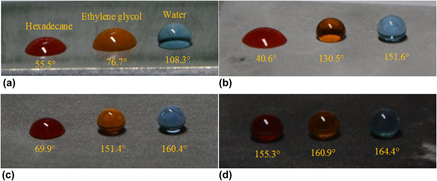
The micro-nano rough structure promotes the formation of superhydrophobic surfaces, while the formation of superoleophobic surfaces requires the support of re-entrant structures. Electrochemical etching and boiling water treatment methods were used to process the superoleophobic surface in the Al–Mg alloy substrate. The differences between the potential of the aluminum and the magnesium promoted the formation of the surface microstructure under the current stimulation, and the surface was formed into dense nanoscale needle-like coating after boiling water treatment. Scanning electron microscopy, energy dispersive spectroscopy, and contact angle measurement were performed to characterize the morphological features, chemical composition, and surface wettability, respectively. The so-prepared superoleophobic surfaces showed high contact angles and small sliding angles for water, ethylene glycol, and hexadecane. In addition, surface topography, reaction mechanism, and experimental parameters were also studied.
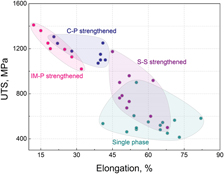
Classical alloy design strategies often aim to benefit from metastability. Examples are numerous: metastable transformation- and twinning-induced plasticity steels, cobalt or titanium based alloys, age hardenable aluminum alloys, and severe plastic deformed nanostructured copper. In each of these cases, superior engineering property combinations are achieved by exploring limits of stability. For the case of high-entropy alloys (HEAs), on the other hand, majority of present research efforts focus on exploring compositions that would yield stable single-phase structures. HEA metastability and its effects on microstructure and property development constitute only a relatively small fraction of ongoing work. To help motivate and guide a corresponding shift in HEA research efforts, here in this paper, we provide an overview of the research activities on metastability in HEAs. To this end, we categorize the past research on the topic into two groups based on their focus, namely, compositional and structural stability, and discuss the most relevant and exciting findings.
Herein, we report the detailed optoelectronic characteristics of low cost fabricated pristine and 1, 5, 10, and 15 wt% Mg-doped ZnO films on the FTO substrate (MZO/FTO) through the spin coating technique. High crystallinity and single phase of the film were confirmed by X-ray diffraction investigation. The average crystallite size was in the range of 46–78 nm. Homogeneous distribution of Mg doping in ZnO was approved by elemental mapping analysis. The fiber-like surface morphology was confirmed by the scanning electron microscopy analysis. Optical transparency was observed in the range of 40–80% for the fabricated films. The optical band gaps for direct and indirect transitions obtained from Tauc’s relation are in the range of 3.103–3.283 eV and 2.423–2.968 eV, respectively. It is also observed that the energy gap of MZO films decreases with an increase in Mg doping from 1 to 15%. The respective stable values of absorption and refractive indices are obtained in the range of ∼0.036–0.088 and ∼1.71–2.1. The linear and nonlinear optical susceptibilities as well as the nonlinear refractive index values were calculated. Additionally, Z-scan measurement was carried out at 532 nm wavelength. The nonlinear absorption coefficient and the imaginary part of third-order nonlinear susceptibility were estimated and corresponding values are obtained in the range of 0.35–123 (×10−5) cm/W and 0.084–29.7 (×10−8) e.s.u., respectively. Moreover, the optical limiting threshold values were obtained in the range of 2.57–6.34 kJ/cm2. The MZO/FTO films are showing strong optical limiting behavior compared to pristine. The output results suggest that MZO films are better contenders for optoelectronic applications.
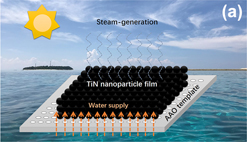
Given the global water challenges, solar-driven steam generation has become a renewed topic recently as an energy-efficient way for clean water production. Here, a hybrid plasmonic structure consisting of a top layer of TiN nanoparticles (NPs) and a bottom layer of mesoporous anodized alumina membrane (AAM) was rationally designed and fabricated. The top TiN NPs with broadband light absorption acted as a plasmonic heating layer, which converted the absorbed light to heat efficiently for interfacial water heating. The AAM acted as the mechanical support layer, guaranteeing the heat isolation and continuous water replenishment. With optimized thickness of the TiN top layer, a solar steam generation efficiency of 87.7% was achieved in this study. This efficiency is comparable or even higher than prior studies. The current work proves the capability of the TiN NPs as an alternative photothermal material.
Synchrotron X-ray diffraction was used to monitor the hydrothermal precipitation of akaganeite (β-FeOOH) and its transformation to hematite (Fe2O3) in situ. Akaganeite was the first phase to form and hematite was the final phase in our experiments with temperatures between 150 and 200 °C. Akaganeite was the only phase that formed at 100 °C. Rietveld analyses revealed that the akaganeite unit-cell volume contracted until the onset of dissolution, and subsequently expanded. This reversal at the onset of dissolution was associated with a substantial and rapid increase in occupancy of the Cl site, perhaps by OH− or Fe3+. Rietveld analyses supported the incipient formation of an OH-rich, Fe-deficient hematite phase in experiments between 150 and 200 °C. The inferred H concentrations of the first crystals were consistent with “hydrohematite.” With continued crystal growth, the Fe occupancies increased. Contraction in both a- and c-axes signaled the loss of hydroxyl groups and formation of a nearly stoichiometric hematite.
X-ray powder diffraction (XRD) data, unit-cell parameters and space group for 7-ethyl-14-nitro-camptothecin, C22H19N3O6, are reported [a = 10.987(5) Å, b = 10.941 (9) Å, c = 8.438 (2) Å, α = 71.321(6)°, β = 96.145(0)°, γ = 95.139(3)°, unit-cell volume V = 953.87 Å3, Z = 2, ρcal = 1.467 g cm−3, and space group P-1]. All measured lines were indexed and are consistent with the P-1 space group. No detectable impurities were observed.
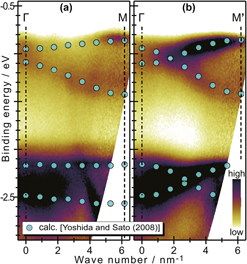
Electronic structures of single crystal pentacene are of great interest for the elucidation of charge carrier transport in organic semiconductor materials. Experimental observation of valence band dispersion was recently achieved on single crystal samples of pentacene; however, its intrinsic properties are still unresolved because past experiments were performed on specimens with surface oxides formed by exposure to the ambient atmosphere. In this work, X-ray photoelectron spectroscopy (XPS) and angle-resolved ultraviolet photoelectron spectroscopy (ARUPS) were conducted on single-crystal pentacene samples prepared without ambient exposure. The XPS results confirmed the reduction of the abundance of oxide impurities on the present samples. The ARUPS measurements clearly resolved the valence band structures of the single-crystal pentacene in four symmetry directions of the surface Brillouin zone, indicating anisotropy of at least a factor of 2.4 for the intermolecular transfer integral and hole effective mass at the valence band maximum.
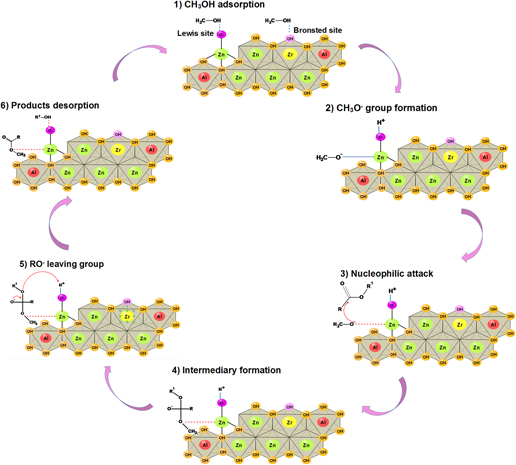
ZnAl–Zr(X) hydrotalcite-like materials were synthesized by co-precipitation using a Zn/Al molar ratio of 2 and Zr/Al(X) molar ratios of 0.0, 0.10, and 0.25. The effect of the activation temperature on the catalytic performance of these materials was analyzed, revealing that at relatively low temperature (200 °C), the collapse of the material structure is diminished, leading to FAME yields varying from 68 to 82%. This remarkable catalytic activity is related to the formation of hydrotalcite, zincite, and hydrozincite which in turn lead to the generation of Brönsted basic sites and Lewis acid–basic pairs. Incorporation of Zr+4 into the brucite-like structure of hydrotalcites enhances the basicity of ZnAl–Zr(X) catalysts, which correlates well with the increase in catalytic activity observed for these catalysts. The stability of the ZnAl–Zr(0.25) catalyst was further studied, showing insignificant deactivation after five subsequent reaction cycles. A simplified reaction scheme was proposed for the transesterification reaction over these materials.
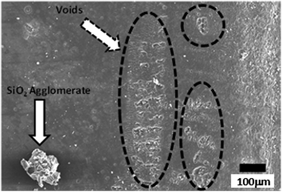
Three-dimensional (3D) printed poly (ethylene glycol) diacrylate (PEGDA) objects have been reinforced with 1%, 3% and 5% silica (SiO2) nanoparticles. Rheological characterizations were conducted for each formulation and 3D-printed using a stereolithographic apparatus (SLA) 3D printer. The tensile and compressive properties of the as-printed nanocomposites were investigated and compared with unreinforced samples. Additionally, the mechanical properties of the objects before and after swelling the samples in deionized water were compared with as-printed ones. Adding SiO2 increased the tensile and compressive strengths of the 3D-printed PEGDA. The tensile and compressive strengths of swollen PEGDA/SiO2 nanocomposite specimens were generally higher than the unswollen specimens.
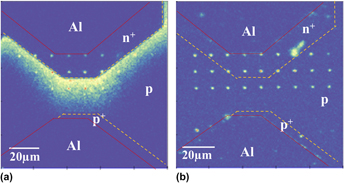
Single photon sources (SPS) are an important building block for realizing quantum technologies for computing, communication, and sensing. For industrialization, electrically controllable color centers acting as SPS are required. We have demonstrated the creation of electrically controllable silicon vacancies (VSis) in the SiC pn junction diode fabricated by proton beam writing (PBW). PBW was successfully used to introduce electrically controllable VSi without degradation of the diode performance. The dependence of the electroluminescence (EL) and photoluminescence (PL) intensities from VSi on H+ fluence revealed that the emission efficiency of EL is less than that of PL. For EL, the supply of carriers (electrons and/or holes) was restricted due to the resistive region around each VSi introduced by PBW. The results suggest that further improvement in the VSi creation process without defects acting as majority carrier removal centers (highly resistive region) and nonradiative centers by optimization of PBW conditions are key points to realize highly sensitive quantum sensors using VSi.
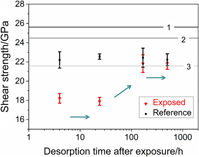
Hydrogen exposure has been found to result in metal embrittlement. In this work, we use nanoindentation to study the mechanical properties of polycrystalline tungsten subjected to deuterium plasma exposure. For the purpose of comparison, nanoindentation tests on exposed and unexposed reference tungsten were carried out. The results exhibit a decrease in the pop-in load and an increase in hardness on the exposed tungsten sample after deuterium exposure. No significant influence of grain orientation on the pop-in load was observed. After a desorption time of td ≥ 168 h, both the pop-in load and hardness exhibit a recovering trend toward the reference state without deuterium exposure. The decrease of pop-in load is explained using the defactant theory, which suggests that the presence of deuterium facilitates the dislocation nucleation. The increase of hardness is discussed based on two possible mechanisms of the defactant theory and hydrogen pinning of dislocations.
The elastic polymer composite embedded with carbon nanotubes (CNTs) is an ideal candidate for stretchable and flexible sensor fabrication due to the perfect combination between the excellent properties of CNTs and the high stretchability of the elastomer. A cube model of nanotube/polymer composite is constructed to comprehensively and theoretically analyze its electrical behavior, which is dominantly governed by the CNT network. The aspect ratio and alignment of CNTs significantly influence both the percolation threshold range and the electrical conductivity; however, the electrical conductivity of CNTs has little impact on the percolation threshold. The piezoresistivity of the composite is not only governed by the property of CNTs but also by the mechanical property of the polymer matrix, including the Poisson’s ratio and alignment of CNTs. The specific reasons why the composite resistance rises when it is stretched are investigated. Finally, one optimizing suggestion is given for making the CNTs/polymer composite with high sensitivity.
Cell morphology and relative density (ρrel) are two crucial intrinsic parameters controlling the mechanical properties of metal foams (MFs) and directly depend on their structure (closed/open-cell) and composition (affecting processing parameters). Here, we report on compressive studies of MFs of aluminum (Al) and 7075-T6 alloy processed via a customized route at strain rate, έ = 0.002 and 2.0 s−1. In both sets of MFs, the strength and apparent elastic modulus (E) monotonically increased with ρrel at both έ. At έ = 2.0 s−1, an increase in cell size (Cs) enhanced the strength of both sets of MFs, while at έ = 0.002 s−1, only the alloy foams showed strength increment. The densification strain (εd) of Al foams at έ = 0.002 s−1 monotonically decreased with increasing ρrel, whereas the alloy foams collapsed before the onset of densification. None of the MFs showed any particular trend of εd at έ = 2.0 s−1. The studies conclude that the mechanical properties of MFs with similar morphology, foam parameters, and processing route depend on έ and Cs. Absorption energy (W) and absorption efficiency (Im) of the two sets of MFs were also compared.
Multi-pass warm rolling with falling temperature was proposed and investigated to obtain AZ31 Mg alloy sheets with a fine-grained microstructure. The results indicated that the grain microstructure of AZ31 alloy sheets was successfully refined from 22.1 to 4.5 μm after multi-pass warm rolling with falling temperature and annealing. Compared to the as-received sheet, the multi-pass warm rolled sheets in annealed condition exhibited weaker (0001) basal texture intensity, which resulted in the significantly increased Schmid factor of 〈a〉 basal slip. After multi-pass warm rolling with falling temperature, the rolled sheets in annealed condition also exhibited much better mechanical properties, e.g., higher tensile strength, larger fracture elongation, and higher Erichsen value, especially the IE of 8-pass warm rolled sheet in annealed condition was significantly increased by ∼33% under the same thickness, which could be attributed to the refined grain microstructure and the weakened basal texture.
With the development of high-speed computers, networks, and huge storage, researchers can utilize a large volume and wide variety of materials data generated by experimental facilities and computations. The emergence of these big data and advanced analytical techniques has opened unprecedented opportunities for materials research. The discovery of many kinds of materials, such as energy-harvesting materials, structural materials, catalysts, optoelectronic materials, and magnetic materials, have been greatly accelerated through high-throughput screening. The utility of data-centric science for materials research is likely to grow significantly in the future. Unraveling the complexities inherent in big data could lead to novel design rules as well as new materials and functionalities.
In this study, we have investigated electron field emission (EFE) characteristics of Q-carbon at room temperature and above. At room temperature the Q-carbon requires only ~2.4 V/μm electric field to turn-on the EFE. The EFE properties of the Q-carbon composite structure improve with temperature by lowering the turn-on field and increasing the current density. At 500 K we observed a turn-on field of ~2.34 V/μm, and a maximum current density was found to be ~53 µA/cm2 at 2.66 V/μm. The Q-carbon field emitters also show very stable EFE characteristics (within 7% fluctuations) over time for current intensities between 7.5 and 47 µA/cm2.
In this paper, the melting of stainless steel 316L using Computational Fluid Dynamics to observe the melt pool characteristics is studied. The simulation model allows the observation of the molten pool flow during the selective laser melting process due to Marangoni's effect and recoil pressure. Furthermore, different parameters are tested to show their effects on the melt pool and track formation. Different laser powers, as well as scanning speeds, were used to study the effects they have on the melt pool characteristics. The results were used to determine the relationships between these factors and the melt pool characteristics.
Ongoing, rapid innovations in fields ranging from microelectronics, aerospace, and automotive to defense, energy, and health demand new advanced materials at even greater rates and lower costs. Traditional materials R&D methods offer few paths to achieve both outcomes simultaneously. Materials informatics, while a nascent field, offers such a promise through screening, growing databases of materials for new applications, learning new relationships from existing data resources, and building fast predictive models. We highlight key materials informatics successes from the atomic-scale modeling community, and discuss the ecosystem of open data, software, services, and infrastructure that have led to broad adoption of materials informatics approaches. We then examine emerging opportunities for informatics in materials science and describe an ideal data ecosystem capable of supporting similar widespread adoption of materials informatics, which we believe will enable the faster design of materials.