To save content items to your account,
please confirm that you agree to abide by our usage policies.
If this is the first time you use this feature, you will be asked to authorise Cambridge Core to connect with your account.
Find out more about saving content to .
To save content items to your Kindle, first ensure no-reply@cambridge.org
is added to your Approved Personal Document E-mail List under your Personal Document Settings
on the Manage Your Content and Devices page of your Amazon account. Then enter the ‘name’ part
of your Kindle email address below.
Find out more about saving to your Kindle.
Note you can select to save to either the @free.kindle.com or @kindle.com variations.
‘@free.kindle.com’ emails are free but can only be saved to your device when it is connected to wi-fi.
‘@kindle.com’ emails can be delivered even when you are not connected to wi-fi, but note that service fees apply.
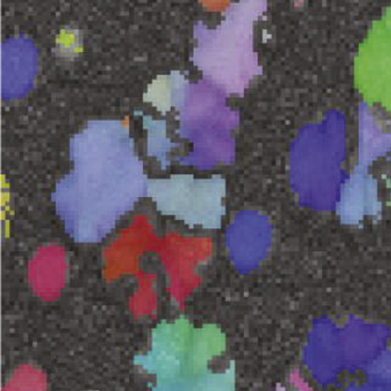
Strain path changes during clock rolling cause more serious interaction between adjacent grains, resulting in the occurrence of interactive regions (IRs) with random orientations. Furthermore, plenty of new grains with relatively random orientations are introduced by the subsequent annealing of these IRs. The morphology of the IR and the origin of random orientations were therefore investigated in this study, and the electron backscatter diffraction technique was used to characterize crystallographic orientations of nuclei and deformed matrices. A short-time annealing was imposed on a specimen to catch the transient nucleation behaviors. The results indicate that the orientations of nuclei are similar to their surrounding deformed matrices, especially the points with larger local-misorientation. Additionally, the shape of new grains depends on where it forms, and it is suggested that this fact mainly results from the great difference in stored energies between deformed matrices with {111} and {100} orientations.
Biosilica from living diatom microalgae has recently attracted the interest of the scientific community and found several applications in bio-nanotechnology. Among silica-maker organisms, diatom microalgae represent the most attractive marine microorganisms, featuring highly hierarchical, nanotextured and porous silica walls. These biologic structures, known as “frustules” are also chemically addressable via simple chemical synthesis. In this work, we propose new diatom-based hybrid materials consisting of biosilica extracted from living Thalassiosira weissflogii coated with polydopamine (PDA) films. The adhesion properties of the PDA were exploited to decorate the silica surface with silver nanoparticles. These multifunctional heterostructures can be useful for applications ranging from bioelectronics to biomedicine.
Open literature publications, in the period from 2010 to the end of January 2018, on refractory high entropy alloys (RHEAs) and refractory complex concentrated alloys (RCCAs) are reviewed. While RHEAs, by original definition, are alloys consisting of five or more principal elements with the concentration of each of these elements between 5 and 35 at.%, RCCAs can contain three or more principal elements and the element concentration can be greater than 35%. The 151 reported RHEAs/RCCAs are analyzed based on their composition, processing methods, microstructures, and phases. Mechanical properties, strengthening and deformation mechanisms, oxidation, and corrosion behavior, as well as tribology, of RHEA/RCCAs are summarized. Unique properties of some of these alloys make them promising candidates for high temperature applications beyond Ni-based superalloys and/or conventional refractory alloys. Methods of development and exploration, future directions of research and development, and potential applications of RHEAs are discussed.
We present for the first time the feasibility to recover the stiffness (here shear modulus) distribution of a three-dimensional heterogeneous sample using measured surface displacements and inverse algorithms without making any assumptions about local homogeneities and the stiffness distribution. We simulate experiments to create measured displacements and augment them with noise, significantly higher than anticipated measurement noise. We also test two-dimensional problems in plane strain with multiple stiff inclusions. Our inverse strategy recovers the shear modulus values in the inclusions and background well, and reveals the shape of the inclusion clearly.
Cationic PEGylated nanogels based on poly(N,N-diethylaminoethyl methacrylate) (PDEAEM) were prepared varying the ratio of PDEAEM to polyethyleneglycol (PEG), the initiator, and the crosslinker; resulting in nanogels of different surface charge (zeta-potential) and hydrodynamic diameter. Nanogels without PEG (100% PDEAEM) and nanogels containing 45 wt.% of PDEAEM were cytotoxic to human colon cancer cell line (HCT-116). Nanogels containing 20 wt.% or less of PDEAEM provided with a PEG shell were non-cytotoxic even at a concentration of 1 mg/mL. These nanogels loaded with 5-fluorouracil turned to be cytotoxic provoking cell death by apoptosis. Nanogels were also studied loaded with gold nanoparticles.
Al–12.6Si was annealed at both 500 and 560 °C for different lengths of time in this study. Additionally, the effects of annealing treatment on the spheroidization of eutectic Si and the mechanical properties of the Al–Si alloy have been investigated. The morphology of these particles was described using surface shape factor (φ), and it was found that the optimal annealing time of Al–12.6Si at 500 and 560 °C is seven hours and five hours, respectively. The average size of the Si particles in the Al–Si alloy annealed at 500 °C is less than that of the particles at 560 °C. The roundness of the Si particles within the Al–Si alloy annealed at 500 °C is slightly better than that at 560 °C. The elongation of the alloy apparently increases, while the tensile strength of the Al–Si alloy decreases. The tensile strength and elongation of the eutectic Al–Si alloy annealed at 500 °C is higher than that at 560 °C.
BiFeO3 (BFO) p-type semiconducting nanofibers were deposited on fluorine-doped SnO2 substrates by a combination of electrospinning (BiFeO3) and spin-coating (Fe2O3) procedures. Photocurrent density values of BFO nanofibers which increased with the annealing temperature to values six times larger were obtained. Different amounts of BFO nanofibers (5, 10, and 25 wt%) were also integrated into α-Fe2O3 films. The photocurrent density of the α-Fe2O3/BFO nanofiber films had the highest value for a 10 wt% BFO nanofibers. The anisotropy in charge transport due to the underlying nanofibrous pathways which prevented the charge carrier recombination was the main cause for the enhancement of the photocurrent density.
In this study, a novel shape memory polymer (SMP), eggshell membrane (ESM), with macroscopic mesh structures and microscopic crosslinked protein fibers, has shown water-stimulated shape recovery characteristics. Our results show that the collagen triple-helical molecular chains and disulfide-rich motifs in the ESM function as net-points retaining essential structures during deformation, while hydrogen bonds play a key role as switch units for shape recovery through water stimulation. We also demonstrate that programmable shape recovery characteristics of ESM can be obtained by modulating the number of net-points. This study may inspire the design of new programmable SMPs.
The solute equilibrium partition coefficients (ki) of C, Si, Mn, P, and S in high sulfur steel during the solidification process were investigated by the thermodynamic calculation. The effect of MnS precipitation on ki was explored. The results showed that the precipitation of MnS inclusion would influence the concentrations of solutes Mn and S, leading to the changing of ki. Due to the precipitation of MnS, the kC and kS decreased first and then increased with temperature decreasing, while kSi, kMn, and kP changed monotonously. The impacts of solidification temperature on kSi and kMn were greater than that on kC, kS, and kP. With the increase of S content, kC, kSi, and kP increased while kMn and kS decreased. Whereas, an opposite effect was found with the increase of Mn content. The order of influence extent by S and Mn contents was kSi > kS > kMn > kC > kP.
Biomimicry is a desirable quality of tissue engineering scaffolds. While most of the scaffolds reported in the literature contain a single pore size or porosity, the native biological tissues such as cartilage and skin have a layered architecture with zone-specific pore size and mechanical properties. Thus, there is a need for functionally graded scaffolds (FGS). EHD-jet 3D printing is a high-resolution process and a variety of polymer solutions can be processed into 3D porous scaffolds at ease, overcoming the limitations of other 3D printing methods (SLS, stereolithography, and FDM) in terms of resolution and limited material choice. In this paper, a novel proof of concept study on fabrication of porous polycaprolactone-based FGS by using EHD-jet 3D printing technology is presented. Organomorphic scaffolds, multiculture systems, interfacial tissue engineering, and in vitro cancer metastasis models are some of the futuristic applications of these polymeric FGS.
In the past decade, nanomechanical techniques have become ubiquitous for mechanical measurement concurrently with the discovery of high-entropy alloys (HEAs). Different from large-scale testing, small-scale measurements offer quantitative details about mechanical behavior of materials at the micro/nanoscale, presenting new opportunities to probe fundamental nature of HEAs. This article will review the literature on using versatile nanomechanical tools for HEA studies, including nanoindentation, microcompression, high-temperature deformation, fracture measurement, and in situ electron microscopy. With these approaches, many interesting phenomena and properties of HEAs have been unveiled, for example, properties about incipient plasticity, strain-rate sensitivity, creep, diffusion, size-dependent strength, and fracture, which are difficult, or impossible, to be measured in macroscopic experiments. Despite current literature only focusing on a few HEA compositions and several methods, as nanomechanics and HEAs are developing rapidly, a new avenue of research is to be exploited. The article concludes with perspectives about future directions in this field.
In Part I, equal channel angular extrusion (ECAE) was demonstrated as a novel, simple-shear deformation process for producing bulk forms of the low ductility Fe–Co–2V (Hiperco 50A®) soft ferromagnetic alloy with refined grain sizes. Microstructures and mechanical properties were discussed. In this Part II contribution, the crystallographic textures and quasi-static magnetic properties of ECAE-processed Hiperco were characterized. The textures were of a simple-shear character defined by partial {110} and 〈111〉 fibers inclined relative to the extrusion direction, in agreement with the expectations for simple-shear deformation textures of BCC metals. These textures were observed throughout all processing conditions and only slightly reduced in intensity by subsequent recrystallization heat treatments. Characterization of the magnetic properties revealed a lower coercivity and higher permeability for ECAE-processed Hiperco specimens relative to the conventionally processed and annealed Hiperco bar. The effects of the resultant microstructure and texture on the coercivity and permeability magnetic properties are discussed.
This work presents a critical review of the application of CALPHAD techniques in the development of high entropy alloys (HEAs) and complex concentrated alloys (CCAs). This assessment covers three major themes: thermodynamics of mixtures and stability, retrospective thermodynamics, and predictive thermodynamics. Based on statistical and thermodynamic analysis, we assess the concept of entropic stabilization. A brief description of the major accomplishments of the CALPHAD technique applied to explain the stability and microstructure of HEAs and CCAs is presented. We describe the role of CALPHAD and its integration with other design tools, such as physicochemical criteria, data mining, and optimization techniques, to accelerate the discovery of new materials. Finally, we recommend future efforts in the development of the next generation of HEAs and CCAs in connection with the design of their microstructures, with an emphasis on precipitation strengthening and twinning-induced or transformation-induced plasticity (TWIP, TRIP).
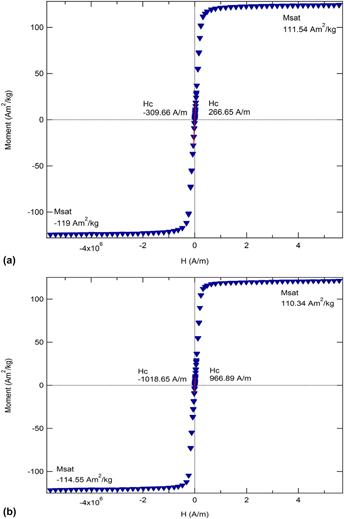
The influence of heat treatment (homogenization) on the microstructure, mechanical behavior, and soft magnetic properties of a face-centered cubic (fcc)-based high-entropy alloy (HEA), Fe29Co28Ni29Cu7Ti7, fabricated by casting, was investigated in detail. The as-cast Fe29Co28Ni29Cu7Ti7 HEA was composed of a primary fcc phase containing coherent dispersed L12 nanoprecipitates and trace amounts of a needle-like phase. The tensile yield strength (σ0.2), ultimate strength, and total elongation of the as-cast alloy are 917 MPa, 1060 MPa, and 1.8%, respectively. Following homogenization, the alloy having a single fcc phase shows a decrease of ∼ 55% in yield strength and a decrease of ∼ 36% in ultimate strength; however, the total elongation is increased from 1.8 to 52%. Saturation magnetization (Msat) is decreased from 111.54 to 110.34 Am2/kg, by contrast, coercivity (Hc) is increased from 266.65 to 966.89 A/m. The dissolution of precipitates and grain growth are mainly responsible for the changes in magnetic properties and mechanical behavior.