To save content items to your account,
please confirm that you agree to abide by our usage policies.
If this is the first time you use this feature, you will be asked to authorise Cambridge Core to connect with your account.
Find out more about saving content to .
To save content items to your Kindle, first ensure no-reply@cambridge.org
is added to your Approved Personal Document E-mail List under your Personal Document Settings
on the Manage Your Content and Devices page of your Amazon account. Then enter the ‘name’ part
of your Kindle email address below.
Find out more about saving to your Kindle.
Note you can select to save to either the @free.kindle.com or @kindle.com variations.
‘@free.kindle.com’ emails are free but can only be saved to your device when it is connected to wi-fi.
‘@kindle.com’ emails can be delivered even when you are not connected to wi-fi, but note that service fees apply.
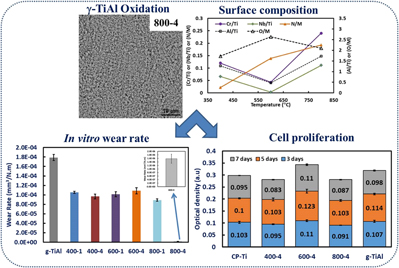
In this investigation, an electron beam melting-processed γ-TiAl alloy (Ti–48Al–2Cr–2Nb, at.%) was oxidized in air to improve its in vitro tribological, electrochemical, and biocompatibility properties. The γ-TiAl alloy samples were oxidized at 400, 600, and 800 °C for 1 and 4 h. The oxidized layer thickness, composition, and surface morphology found to change with oxidation temperature. The oxidation thickness varied between 1.29 ± 0.2 and 2.18 ± 0.2 μm. The primary oxides on the surface were Al2O3 and TiO2 with minor concentrations of Cr2O3, Nb2O5, and nitrides of Ti. The surface hardness of the alloy increased by 1.7-fold with increasing temperature from 400 to 800 °C with 1 h soaking, and at 4 h, the maximum hardness was 12.26 GPa. The high hardness of the oxidized γ-TiAl alloy resulted in two orders of magnitude lower wear rate than the bare γ-TiAl alloy. Oxidation at 800 °C for 4 h resulted in significant reduction in corrosion current and no passivity breakdown was observed. In vitro cell culture experiments, using mouse preosteoblast cells, revealed high cell density on the oxidized γ-TiAl alloy, suggesting its enhanced cell proliferation compared to the bare γ-TiAl alloy and CP-Ti.
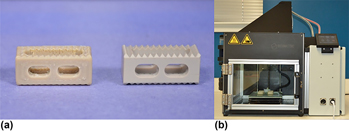
Recent advances in the additive manufacturing technology now enable fused filament fabrication of polyetheretherketone (PEEK). A standardized lumbar fusion cage design was 3D printed with different speeds of the printhead nozzle to investigate whether 3D-printed PEEK cages exhibit sufficient material properties for lumbar fusion applications. It was observed that the compressive and shear strength of the 3D-printed cages were 63–71% of the machined cages, whereas the torsion strength was 92%. The printing speed is an important printing parameter for 3D-printed PEEK, which resulted in up to 20% porosity at the highest speed of 3000 mm/min, leading to reduced cage strength. Printing speeds below 1500 mm/min can be chosen as the optimal printing speed for this printer to reduce the printing time while maintaining strength. The crystallinity of printed PEEK did not differ significantly from the as-machined PEEK cages from extruded rods, indicating that the processing provides similar microstructure.
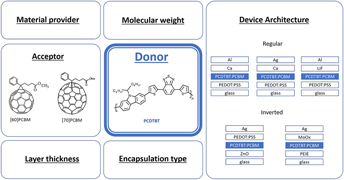
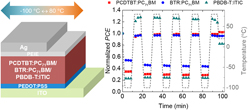
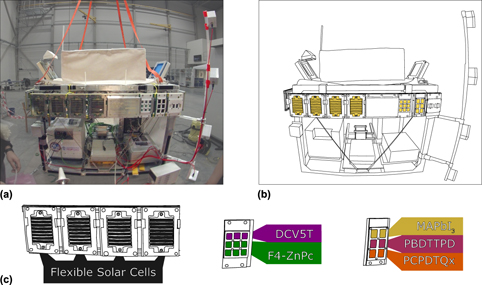
We present a side-by-side comparison of the stability of three different types of benchmark solution-processed organic solar cells (OSCs), subject to thermal cycling stress conditions. We study the in situ performance during 5 complete thermal cycles between −100 and 80 °C and find that all the device types investigated exhibit superior stability, albeit with a distinct temperature dependence of device efficiency. After applying a much harsher condition of 50 thermal cycles, we further affirm the robustness of the OSC against thermal cycling stress. Our results suggest that OSCs could be a promising candidate for applications with large variations and rapid change in the operating temperature such as outer space applications. Also, a substantial difference in the efficiency drops from high to low temperature for different systems is observed. It suggests that maintaining optimum performance with minimal variations with operating temperature is a key challenge to be addressed for such photovoltaic applications.
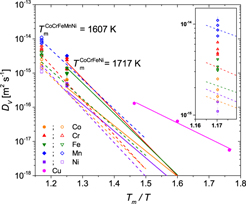
High entropy alloys are multicomponent alloys, which consist of five or more elements in equiatomic or nearly equiatomic concentrations. These materials are hypothesized to show significantly decreased self-diffusivities. For the first time, diffusion of all constituent elements in equiatomic CoCrFeNi and CoCrFeMnNi single crystals and additionally solute diffusion of Mn in the quaternary alloy is investigated using the radiotracer technique, thereby the tracer diffusion coefficients of 57Co, 51Cr, 59Fe, 54Mn, and 63Ni are determined at a temperature of 1373 K. The components are characterized by significantly different diffusion rates, with Mn being the fastest element and Ni and Co being the slowest ones. Furthermore, solute diffusion of Cu in the CoCrFeNi single crystal is investigated in the temperature range of 973–1173 K using the 64Cu isotope. In the quaternary alloy, Cu is found to be a fast diffuser at the moderate temperatures below 1273 K and its diffusion rate follows the Arrhenius law with an activation enthalpy of about 149 kJ/mol.
Thiazolidinones present a wide range of useful applications especially in the biological aspect. Based on these facts, the compound of interest 2-(α-naphthyl)-3-(α-pyridinyl)-1,3-thiazolidine-4-one (C18H14N2OS), was synthesized via multi-component reaction with the aim of obtaining a compound that would show activity against fungi and bacteria. The synthesis of 2-(α-naphthyl)-3-(α-pyridinyl)-1,3-thiazolidine-4-one, was carried out from the respective α-aminopyridine with α-naphthylaldehyde and α-mercaptoacetic acid, under reflux in dry toluene for 8 h, obtaining a solid compound. Molecular characterization of the compound was carried out by infrared spectrometry, mass spectrometry, and nuclear magnetic resonance. The study of the crystallization and the calculation of the unit-cell constants were determined by the technique of X-ray diffraction of polycrystalline samples. It was determined that the compound crystallizes in a monoclinic system with space group P21/c [No. 14] and the constants of the unit cell a = 11.958 (3), b = 9.675 (4), c = 12.661 (4) Å, β = 96.960° (2), V = 1454.01 (Å3).
TiO2 nanomaterials with platelet or nanosheet morphologies can offer improved properties for photocatalytic applications, but established methods to produce them typically require structure-directing agents since anatase-phase TiO2 does not have a layered structure. In the present work, the preparation of TiO2 nanosheets by the chemical oxidation of TiS2 nanosheets is demonstrated. Electrochemical exfoliation of bulk TiS2 into TiS2 nanosheets, followed by the hydrothermal treatment at 180 °C for 14 h is performed. The results show that polycrystalline TiO2 nanosheets with the anatase structure are formed, and that the nanosheet morphology can still be maintained after the hydrothermal treatment. The TiO2 nanosheets show good photocatalytic activity for the degradation of methylene blue, but the performance is negatively affected by the residual carbon black that was needed in the TiS2 electrode to enable electrochemical exfoliation. These results show that conversion of TiS2 nanosheets to TiO2 nanosheets is a promising synthetic strategy but highlights how the interfacial properties of the obtained materials could be affected by ancillary components in the preparation method.
One of the key aims of the OSCAR project (Optical Sensors based on CARbon-materials)—in the framework of the REXUS/BEXUS program—was to explore the use of organic-based solar cells for (aero)space applications through the in-flight investigation of devices’ performance during a stratospheric balloon flight. Next to the in-flight experiments, complementary lab stability assessment tests were performed. In this contribution, both the in-flight and lab experimental methodology and the corresponding technical aspects will be discussed in detail. Furthermore, attention will be paid to the issues of packaging and radiation. The importance of the OSCAR-balloon experiment is not only that it has demonstrated for the first time the use of organic-based solar cells in (aero)space conditions but also that it can be considered as the pioneering start of specific stability assessment methodologies for organic-based solar cells for (aero)space applications.
Polycrystalline samples of Ca2Zn2(V4O14) (I) and Pb2Cd2(V3O10)(VO4) (II) were synthesized using the nitrate–citrate method (I) and conventional solid state reaction (II). The structural refinement based on X-ray powder diffraction data showed that the crystal structure of (I) is characterized by monoclinic symmetry with unit-cell parameters a = 6.8044(1) Å, b = 14.4876(3) Å, c = 11.2367(2) Å, β = 99.647(1)° [space group P21/c (No. 14), Z = 4], and the crystal structure of (II) is triclinic with unit-cell parameters a = 7.03813(6) Å, b = 12.9085(1) Å, c = 6.99961(5) Å, α = 90.7265(5)°, β = 96.3789(5)°, γ = 94.9530(6)°, V = 629.470(8) Å3 [space group P$\bar 1$ (No. 2), Z = 2].
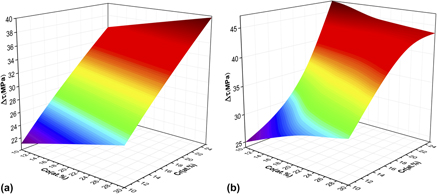
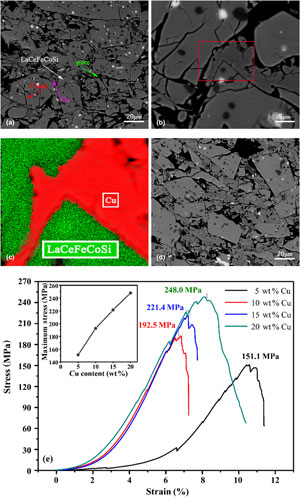
We report on a novel processing route to prepare La0.8Ce0.2(Fe0.95Co0.05)11.8Si1.2/Cu bulk composites by low-temperature hot pressing. With increasing copper content, the compressive strength of the composites first decrease and then increase owing to the buffering effect of copper, but the magnetocaloric effect reduces to some extent. Copper addition improves the thermal conductivity of the composites, which compensates for the decrease in thermal conductivity due to porosity. A relatively large entropy change of 5.75–7.19 J/(kg K) at 2 T near the Curie temperature (249 K), good thermal conductivity of 7.51–15.55 W/(m·K), and improved compressive strength of 151.1–248.0 MPa make these composites attractive magnetic refrigeration materials.
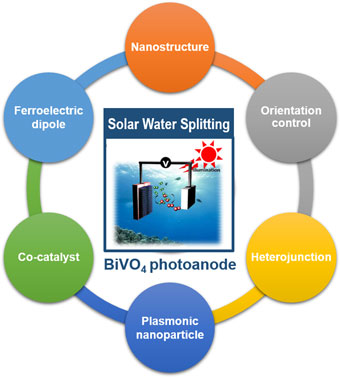
Bismuth vanadate (BiVO4) is regarded as a viable material for water oxidation due to various benefits such as visible light absorption, low production cost, and resistance to photocorrosion. Recently, numerous attempts have been adopted to improve the performance of BiVO4. In this work, we highlight the important strategies that have been made for improving the performance of the photoanode material, such as fabricating nanostructured electrode, controlling reacting facet, stacking with other materials, utilizing plasmonics, loading co-catalyst, and controlling the interfacial band bending with ferroelectrics. Taking advantage of the strategies, highly efficient BiVO4 photoelectrodes could be demonstrated. Finally, we discuss the perspective of BiVO4-based photoanodes.
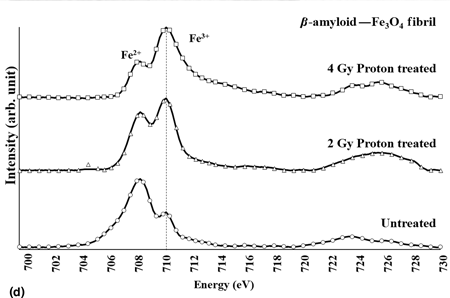
In in vitro separate compartment model of neuronal cells and extracellular iron oxide nanoparticles (IONs)–amyloid complexes, a traversing proton-induced Coulomb nanoradiator effect (CNR) was found to break up the ION–amyloid fibrils and to induce redox changes in the IONs. We found that the CNR effect caused the conversion of redox-active iron (II) into redox-inactive iron (III) as well as the disruption of the ION–amyloid fibrils without significantly damaging normal neuronal cells. Our observations suggest a non-invasive redox inactivation and β-amyloidolyis-based therapy of neurotoxic Aβ plaque involving a traversing proton Coulomb nanochelator that would not substantially impact normal neuronal cells.
Nacre-mimetic (PE/TiO2)4 nanolayered composites (NLCs) with the nanocrystalline TiO2 layer thickness less than 30 nm and different thickness ratios of inorganic/organic layers were successfully prepared by using layer-by-layer self-assembly and chemical bath deposition method. Mechanical properties, especially fatigue properties of the NLCs with different thickness ratios were evaluated. The elastic modulus, hardness and fracture toughness, strain amplitude to fatigue limits of the NLCs reached 27.78 ± 5.69 GPa, 1.33 ± 0.31 GPa, and 4.16 ± 0.20 MPa m1/2, respectively. Fatigue performance of the NLCs in the high and low cycle fatigue regimes was optimized by tailoring the thickness ratio of the TiO2/PE layers. The PE/TiO2 NLCs with the larger thickness ratio of ∼3 has the high fatigue limit (the critical strain amplitude of 0.0853%) in the high-cycle fatigue regime, while that with the smaller thickness ratio of ∼1 and ∼0.5 are of the good fatigue strength in the low-cycle fatigue regime. The basic mechanism for the enhanced fatigue performance is elucidated.
In this paper, we show a novel method to obtain small size textures usable in crystalline silicon (c-Si) solar cells. SiO2-based glass microparticles are mixed with a conventional KOH-based alkaline solution for making the textures. Using this mixing method, the texture size can be drastically reduced from 10 to ≤2 µm (0.3–2 µm). In addition, the process time and c-Si loss during the texture formation are reduced from 25 to 2 min and from 20 to 2 µm, respectively. Thus, the process is applicable to c-Si with thickness down to 50 µm. High-quality passivation showing the effective minority carrier lifetimes (τeff) larger than several ms and effective antireflection coating are possible on the new textures. The process is named “microparticle-assisted texturing (MPAT) process”, and its features are also demonstrated.
In the recent past, two-dimensional (2D) nanocrystalline (NC) transition metal dichalcogenides such as MoS2 received a great deal of attention due to their extraordinary physical properties. There has been a great interest to study the defects present in MoS2 NCs, which alter the material’s catalytic, electrical, and magnetic properties. This work reports paramagnetic point defects present in the hydrothermally grown 2H–MoS2 NCs. X-band electron spin resonance (ESR) spectroscopy has been used to identify the defects which contain unpaired electron spins in the as-prepared and Ar-annealed MoS2 NCs. At least seven ESR signals were detected originating from four inequivalent paramagnetic defect sites such as adsorbed oxygen species, sulfur vacancies, thio-, and oxo-Mo5+. Upon Ar-annealing, most of these defects did not survive, instead conduction ESR signal was observed. This work signifies the importance of employing ESR spectroscopy and broadens the knowledge in identifying the atomic defects in MoS2 NCs.
In this study, nano-hydroxyapatite (n-HAp) of average crystallite size ∼8.15 ± 4 nm of hexagonal geometry with size ranging between 14 and 50 nm was synthesized in laboratory at room temperature by using suitable sources of calcium and phosphate ions and using triethanolamine. Mesoporous bioactive glass (MBG) was synthesized by using cationic surfactant cetyl trimethyl ammonium bromide of the SiO2–CaO–P2O5 glass system. After calcination at 650 °C, MBG powders were having a zeta potential of −16.5 mV (pH ∼9.1), median particle size ∼75 nm, and specific surface area 473.2 m2/g. An aqueous suspension of DNA was used to disperse both n-HAp and MBG and further subjected for analysis including absorbance, circular dichroism spectroscopy, UV-melting, and isothermal titration calorimetry. Absorbance spectroscopy indicated that an equilibrium binding was obtained between both materials and DNA in solution phase. Due to the addition of the nanomaterial, molar ellipticity of DNA was changed revealing that the materials were interacted with DNA. From UV melting characterization, there is a shifting of the melting temperature of DNA in the presence of MBG and n-HAp, respectively, suggesting that the nanoparticles stabilized DNA helix to a considerable extent.
The electrochemical technique has been used to prepare aluminum-doped zinc oxide (AZO) films on FTO substrates using zinc nitrate and aluminum chloride precursor solution at 70 °C. The crystal structure, surface morphology, optical and electrical features of AZO films were examined at different potential voltages from −1.7 to −2.3 V in the initial solution. Structural studies of the deposited films were carried out through X-ray diffraction; the AZO films exhibited a polycrystalline nature with hexagonal structure, and crystals preferentially grew along the (002) orientation. The morphology of the deposited films was characterized by scanning electron microscopy (SEM), and the images showed that the spherical- and nanorod-shaped particles are uniformly distributed on the entire AZO film surface. The average size is found to be in the range of 45–70 nm by SEM and 28–32 nm by using the Scherrer’s rule. The EDS spectrum confirmed the chemical composition of Zn, O, Al, Sn, and F elements over the film surface. The optical properties were studied using a UV-visible spectrophotometer, and the deposited film showed the highest optical transmittance of ∼80% in the visible range for −1.7 V. The calculated energy gap of the AZO films decreases from 3.09 to 2.97 eV with increasing potential voltages. AZO thin films have been studied using photoluminescence to identify the film’s optical quality with respect to the wavelength range. The electrical properties were studied by the room temperature Hall effect system, and the observed low resistivity (ρ) is 1.58 × 10⁻² (Ω cm) for the film deposited using a −2.1 V potential voltage.
In this project, we described the production of chrysin-loaded L-phenyl alanine (Phe)-coated iron oxide magnetic nanoparticles (chrysin@Phe@IOMNs). chrysin@Phe@IOMNs were characterized by X-ray diffraction, thermogravimetric analysis, fourier transform infrared spectroscopy, vibrating sample magnetometer, and transmission electron microscopy techniques. Next, hemocompatibility and biocompatibility of Phe-coated IOMNs were determined by hemolysis and MTT assays on HFF-2 and HEK-293 cell lines, respectively. Finally, the anticancer activity of chrysin@Phe@IOMNs was examined on MCF-7 cell line. The outcomes direct that as-prepared nanocarriers are nontoxic and biocompatible and also chrysin@Phe@IOMNs are appropriate for chrysin delivery and other hydrophobic therapeutic agents.
Manufacturing of advanced functional materials should also rely on the green chemistry principles like utilization of natural renewable resources. Marine environment offers plenty of renewable raw materials like chitin and its derivative chitosan. The paper presents how urea treatment has influenced several textural, chemical, and electrocatalytic properties of N-doped activated carbons (N_ACs) obtained from chitosan and chitin. The materials were subjected to an activation procedure (with different activators) as well as nitrogenation by premixing the precursors with water solutions of urea. Raw and premixed precursors were carbonized in the temperature range of 700–800 °C. The urea treatment resulted in a spectacular increase in the nitrogen content by weight (up to 68%) and an improvement of the surface area (up to 42%) along with total/micro-/mezo-pore volume (up to 49%). Some urea-modified N_ACs were capable of reducing oxygen in an alkaline solution as effectively as a Pt-loaded carbon material. The highest number of electrons transferred to O2 molecule was found to be equal to 3.76 for a chitosan derived sample. This ability of chitosan and chitin derived N-rich activated carbons was studied by means of the method named rotating ring disc electrode.