To save content items to your account,
please confirm that you agree to abide by our usage policies.
If this is the first time you use this feature, you will be asked to authorise Cambridge Core to connect with your account.
Find out more about saving content to .
To save content items to your Kindle, first ensure no-reply@cambridge.org
is added to your Approved Personal Document E-mail List under your Personal Document Settings
on the Manage Your Content and Devices page of your Amazon account. Then enter the ‘name’ part
of your Kindle email address below.
Find out more about saving to your Kindle.
Note you can select to save to either the @free.kindle.com or @kindle.com variations.
‘@free.kindle.com’ emails are free but can only be saved to your device when it is connected to wi-fi.
‘@kindle.com’ emails can be delivered even when you are not connected to wi-fi, but note that service fees apply.
Nanoindentation has been used to measure the elastic modulus of 5 and 18 μm thick high-purity vapor deposited polycrystalline lithium films at 31 °C. Over indentation depths ranging from 150 to 1100 nm, the modulus is found to vary with film thickness from 9.8 GPa ± 11.9% to 8.2 GPa ± 14.5%. These results are well within the range of lithium's orientation dependent elastic modulus, which spans approximately 3.1 to 21.4 GPa. The measured values may also indicate (111) and (100) texture for the 5 and 18 μm thick films, respectively. The potential effects of pileup and surface contamination are found to be negligible if any at all. Small but discernible changes in damping capability near the free surface may provide insight into the subsurface defect structure and the potential for localized heating. Numerous experimental challenges are addressed and key metrics are used to validate the measured elastic modulus.
A numerical nanoindentation model was developed using the Material Point Method (MPM), which was chosen because it can handle both large deformations and dynamic contact under the indenter. Because of the importance of contact, prior MPM contact methods were enhanced to improve their accuracy for contact detection. Axisymmetric and full 3D simulations investigated the effects of hardening, strain-rate dependent yield properties, and local structure under the indenter. Convergence of load–displacement curves required small cells under the indenter. To reduce computation time, we used an effective nonregular grid, called a tartan grid and describe its implementation. Tartan grids reduced simulation times by an order of magnitude. A series of simulated load–displacement curves were analyzed as “virtual experiments” by standard Oliver–Pharr methods to extract effective modulus and hardness of the indented material. We found that standard analysis methods give results that are affected by hardening parameters and strain-rate dependence of plasticity. Because these parameters are not known during experiments, extracted properties will always have limited accuracy. We describe an approach for extracting more properties and more accurate properties by combining MPM simulations with inverse methods to fit simulation results to entire load–displacement curves.
Single-crystal-like TiO2 is claimed to be a very promising material among various catalysts. In this study, the (N,F)-co-doped single-crystal-like TiO2 was prepared by a new molten mixing process in which the mixed nitrates were used both as a morphology modifier and an N-doping agent at the same time. The prepared samples also had well-developed (001) facet due to the addition of HF. The HF can also be an F doping agent to the material. The co-doping of N and F can diminish the band gap of TiO2 from 3.05 to 2.93 eV, therefore visible light can be used effectively by the material. In addition, NO and fluorine ions existing on the surface of the sample can also help its photocatalyticity. Therefore, the photocatalytic performance of the as-prepared sample was effectively improved.
Calibration of the prototype Planetary Instrument for X-ray Lithochemistry (PIXL) selected for Mars 2020 has commenced with an empirical derivation of the X-ray optic transmission profile. Through a straightforward method of dividing a measured “blank” spectrum over one calculated assuming no optic influence, a rudimentary profile was formed. A simple boxcar-smoothing algorithm was implemented to approximate the complete profile that was incorporated into PIQUANT. Use of this form of smoothing differs from the more conventional approach of using a parameter-based function to complete the profile. Comparison of element-specific correction factors, taken from a measurement of NIST SRM 610, was used to assess the accuracy of the new profile. Improvement in the low- to mid-energy portion of the data was apparent though the high-energy region diverged from unity, and thus, requires further refinement.
Induced pluripotent stem cells (iPSCs) offer the possibility to accelerate tissue reconstruction through cell differentiation. The use of iPSCs in bone tissue engineering is promoted by next generation scaffolds which guide bone tissue repair and provide specific cues and molecular recognition to enhance differentiation as well as the bone forming ability of these cells. However, bone tissue repair faces additional challenges such as requirement for a consequent bone vasculature and exhaustion of stem cells in the aging adults. In this context, iPSC reprogramming seems to be unaffected by age and they have better pro-angiogenic potential as well as proliferation rate. The benefits of iPSCs using polymeric scaffolds include access to humanized in vitro models, triggering bone tissue reconstruction through a supply of bone cells via differentiation, compensating mesenchymal stem cells age-related deficiencies in osteodegenerative diseases, and enhancing angiogenesis.
ZnO-based oxides are promising for thermoelectric energy generation at elevated temperatures. We study electrical transport properties of Ni-doped ZnO applying the density functional theory, indicating increase of the electrical conductivity (σ) and decrease of the Seebeck coefficient (S) due to Ni-doping, in full accordance with experimental results. We calculate the temperature-dependent σ and S applying the Boltzmann transport theory, approximating the electron relaxation time, τe. Good agreement with experimental data is obtained considering both temperature and energy dependence of τe. This yields explicit expressions for τe and provides us with powerful predictive tool assessing electronic transport in ZnO.
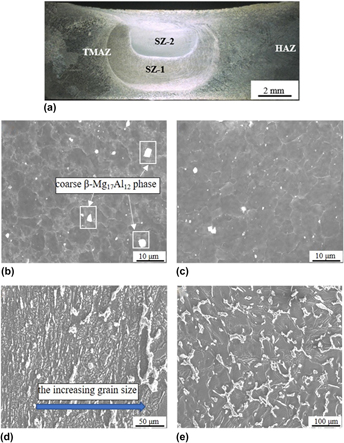
The effect of equal-channel angular pressing (ECAP) at various temperatures (310, 330, and 350 °C) on precipitations and strengthening mechanisms of Mg–9Al–1Si alloys was investigated. The results indicated that the average grain size decreased gradually with decreasing of ECAP temperature. The distribution of the Mg2Si phase changed a little when the ECAP temperature increased. However, the different morphologies of β-Mg17Al12 phase were observed, including continuous and uncontinuous precipitation of particles at 310 and 350 °C. The continuous β-Mg17Al12 phase was hardly found and the refined β-Mg17Al12 phase was distributed dispersedly in the matrix at 330 °C. Thus, the mechanical properties of the Mg–9Al–1Si alloy was optimum: ultimate tensile strength and elongation were ∼350.8 MPa and ∼14.77%, respectively. It can be deduced that both grain refinement strengthening and precipitation strengthening play significant roles in strength increment of the alloy during the ECAP process. However, precipitation strengthening is the predominant mechanism.
The soft magnetic alloy Fe–Co–2V, also known as Permendur-2V or Hiperco® 50A, was subjected to equal channel angular extrusion (ECAE) at 750–850 °C using two processing routes. Hiperco is a trade name of Carpenter Technology Corporation. ECAE, which is a severe plastic deformation process, refined the grain size to about 1.5–3 μm, compared to 25–70 μm for the conventional Hiperco® bar. The fine-grain microstructure is homogenous throughout the ECAE material, from center to edge, due to the simple-shear ECAE process. Fine-grained Hiperco® has previously only been obtainable in the sheet form. ECAE resulted in yield and tensile strengths of 650–700 MPa and 900–1400 MPa, respectively, representing a 2–3-fold strength increase compared to the conventional bar. The yield strength was demonstrated to fit well to the Hall–Petch relationship established using previous reports on the strength of conventional bar and sheet materials. High ductility, up to 18%, was obtained in the ECAE processed billets and attributed primarily to the partially disordered bcc crystal structure upon quenching from ECAE.
Laser-assisted material extrusion was used in this study to realize high-performance 3D printing of semicrystalline polymers. A CO2 laser device was simply integrated into a traditional fused deposition modeling printer to supply the laser. The sample’s surface temperature was changed by controlling the laser power during printing, and thus the interlayer shear strength and crystallinity could both be effectively controlled. By implementing the laser-assisted process, the optimal interlayer shear strength of poly(ether ether ketone) (PEEK) could be improved by more than 45%, and the degree of crystallinity of PEEK was simultaneously improved by up to 34.5%, which has approached to the typical crystallinity of 35%. Therefore, the process provides a very effective solution for additive manufacturing of semicrystalline materials and helps clearly to establish a controllable mapping relationship between the laser parameters and material properties.
To increase the corrosion prevention of stainless steel implant and fast recovery due to new bone-cell formation at the orthopedic implant site, in the present investigation, a trilayered (with bioceramic interlayer sandwiched between innermost passivated surface and outermost polymer coating) 316L stainless steel (SS) implant was designed and investigated. It was inferred that this new designed implant invokes faster and more bone-cell formation than uncoated commercially available 316L SS implants. Faster bone-cell formation at the coated implant site reduces the initial threat of implant corrosion. The electrochemical corrosion study proved that this model of coated implants is able to prevent corrosion up to 90% better than uncoated commercially available 316L SS. Subsequently, preclinical studies in the rabbit bone defect model (which included histology, radiology, fluorochrome labeling, push-out test, and scanning electron microscopy taken after 45 and 90 days) proved higher rate of new bone tissue formation and better push-out strength between tissue in contact and the coated implant. The toxicological study of vital organs like liver, kidney, and heart also exhibited no abnormality. The outcome of the experimentations indicates suitability of this trilayered 316L SS implant for bone repair and healing.
Herein we describe the use of a new DNAzyme/graphene hybrid material as a biointerfaced sensing platform for optical detection of pathogenic bacteria. The hybrid consists of a colloidal graphene nanomaterial and an Escherichia coli-activated RNA-cleaving DNAzyme and is prepared via non-covalent self-assembly of the DNAzyme onto the graphene surface. Exposure of the hybrid material to E. coli-containing samples results in the release of the DNAzyme, followed by the cleavage-mediated production of a fluorescent signal. Given that specific RNA-cleaving DNAzymes can be created for diverse bacterial pathogens, direct interfacing of graphene materials with such DNAzymes represents a general and attractive approach for real-time, sensitive, and highly selective detection of pathogenic bacteria.
A novel, alloy-agnostic, nanofunctionalization process has been utilized to produce metal matrix composites (MMCs) via additive manufacturing, providing new geometric freedom for MMC design. MMCs were produced with the addition of tungsten carbide nanoparticles to commercially available AlSi10Mg alloy powder. Tungsten carbide was chosen due to the potential for coherent crystallographic phases that were identified utilizing a lattice-matching approach to promote wetting and increase dislocation interactions. Structures were produced with evenly distributed strengthening phases leading to tensile strengths >385 MPa and a 50% decrease in wear rate over the commercially available AlSi10Mg alloy at only 1 vol% loading of tungsten carbide.
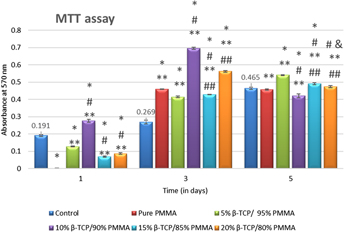
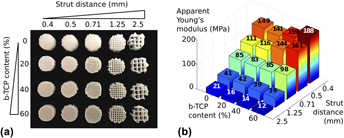
PMMA/β-TCP composites were evaluated to be suitable for laser sintering earlier, but the possible after effects are not known yet. Effects of sintering on the biological nature and the influences of critical compositions and process parameters have not been investigated so far. The current research attempts this, first identifying experimentally the most suitable laser process conditions for the specific grades of PMMA and β-TCP and then subjecting single layer sintered samples to FTIR analysis and in vitro studies involving MTT and ALP assays, alizarin red S tests, and real-time PCR analyses. While the laser interactions are not detrimental, the biological responses are generally positive proving the selective laser sintering of PMMA/β-TCP composites to be a potential approach for specific medical applications.
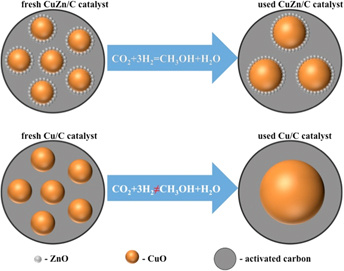
In this work, activated carbon was modified by ammonium persulfate and used as the catalyst support for CO2 hydrogenation to methanol. Then CuO and/or ZnO were loaded on the support by a facile wet-impregnation method. The obtained CuZn/C, Cu/C, and Zn/C catalysts were characterized by a series of characterization techniques including N2 physisorption, X-ray diffraction (XRD), X-ray photoelectron (XPS), and scanning and transmission electron microscopies (SEM and TEM). XRD and XPS results showed that ZnO affected the reduction of Cu2+. The TEM results showed that Cu particles were 14–18 nm for the fresh catalysts CuZn/C and Cu/C. ZnO particles were too small to be identified by TEM. The used catalysts CuZn/C and Cu/C had particle sizes of 10–25 nm and 50–60 nm, respectively. The enhanced methanol synthesis performance by ZnO could be ascribed to the morphology effect and slowing down the Cu particles sintering during the reactions.
The microstructure evolution of high nitrogen austenitic steel wires under various annealing times and drawing temperatures was carefully characterized. Special attention was paid to the widely distributed twins and the nanoprecipitates at twin boundaries (TBs) in high nitrogen stainless steels (HNSSs). The results of microhardness indicated that the traditional Hall–Petch (H–P) equation, which only took the role of grain boundaries into account, was unsuitable. A new H–P equation that connected grain size, twin density, precipitates at TBs, and microhardness in HNSS was established for the first time and showed to be in good agreement with the experimental results. By analyzing the strained regions near TBs, a model describing the precipitation of nano-M23C6 carbides on coherent twin boundaries and incoherent twin boundaries was proposed. In addition, the influence mechanism of the nano-M23C6 at TBs on microhardness was discussed.
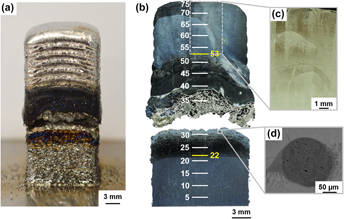
Functionally graded materials (FGMs) in which the elemental composition intentionally varies with position can be fabricated using directed energy deposition additive manufacturing (AM). This work examines an FGM that is linearly graded from V to Invar 36 (64 wt% Fe, 36 wt% Ni). This FGM cracked during fabrication, indicating the formation of detrimental phases. The microstructure, composition, phases, and microhardness of the gradient zone were analyzed experimentally. The phase composition as a function of chemistry was predicted through thermodynamic calculations. It was determined that a significant amount of the intermetallic σ-FeV phase formed within the gradient zone. When the σ phase constituted the majority phase, catastrophic cracking occurred. The approach presented illustrates the suitability of using equilibrium thermodynamic calculations for the prediction of phase formation in FGMs made by AM despite the nonequilibrium conditions in AM, providing a route for the computationally informed design of FGMs.
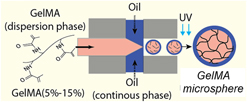
3D printing has been shown to be a robust and inexpensive manufacturing tool for a range of applications within biomedical science. Here we report the design and fabrication of a 3D printer-enabled microfluidic device used to generate cell-laden hydrogel microspheres of tunable sizes. An inverse mold was printed using a 3D printer, and replica molding was used to fabricate a PDMS microfluidic device. Intersecting channel geometry was used to generate perfluorodecalin oil-coated gelatin methacrylate (GelMA) microspheres of varying sizes (35–250 μm diameters). Process parameters such as viscosity profile and UV cross-linking times were determined for a range of GelMA concentrations (7–15% w/v). Empirical relationships between flow rates of GelMA and oil phases, microspheres size, and associated swelling properties were determined. For cell experiments, GelMA was mixed with human osteosarcoma Saos-2 cells, to generate cell-laden GelMA microspheres with high long-term viability. This simple, inexpensive method does not require the use of traditional cleanroom facilities and when combined with the appropriate flow setup is robust enough to yield tunable cell-laden hydrogel microspheres for potential tissue engineering applications.
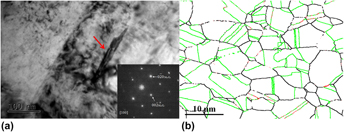
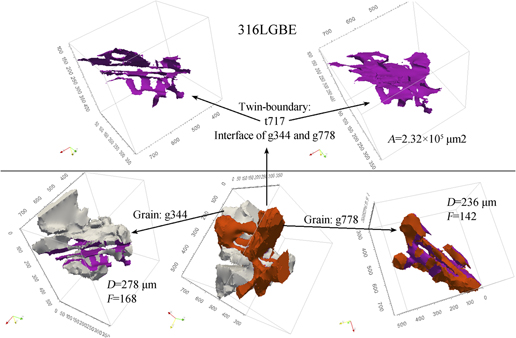
The three-dimensional microstructures of two conventional 316L stainless steels and a grain boundary (GB)-engineered version of the same steel have been characterized by using serial sectioning and electron backscatter diffraction mapping. The morphologies, area fractions, and number fractions of twin boundaries (TBs) were measured and compared, and the random boundary connectivity was evaluated. Although two-dimensional observations suggest that TBs are planar, occluded twin-grains and tunnel-shaped TBs were also observed. In addition, some large and morphologically complex TBs were observed in the GB-engineered sample, and these TBs were responsible for the increase in the twin area fraction that has been reported in past studies. While GB engineering increased the boundary area fraction, the TB number fraction was almost unchanged. Because the GB engineering process changed only the area fraction and not the number fraction, the connectivity of random boundaries was not disrupted.